
A remarkably honest and perceptive essay from M.J. Olgin who, after spending six months touring revolutionary Russia, explains why in the midst of war, famine, privation, and dictatorship the masses of workers remained loyal to the Communist Party and the new state.
‘Mechanics of Power in Soviet Russia’ by Moissaye J. Olgin from The Toiler. No. 177. June 25, 1921.
The problem of power is the most perplexing one in the Russian situation. What is it that keeps the Communists in control? How is it possible that a party of 600,000, of whom only a fraction are active, can maintain a dictatorship over 125 millions under the most trying conditions? “Why do they not overthrow the Bolsheviki?”
The conditions are trying, indeed. There is hunger in Russia. Not hunger for bread and potatoes, perhaps, but hunger for the most ordinary necessities of life. There is no white bread in the cities of Russia, and very little meat or butter or sugar or fat. Milk and eggs are being given only to children, seldom to the sick. Throughout my six months’ sojourn in the Russian provinces, I saw no chocolate, no oranges or lemons, no coffee, no real tea, no cake. No tramways are running in the cities of Russia, no lamps are burning in the streets, outside of Moscow. In the winter, water pipes are bursting, canalization and sewage systems collapse, misery and hideous sufferings are inflicted on millions. There is a scarcity of medicines and soap, and an abundance of disease. The peasants have enough to eat, yet rural Russia is clamoring for salt and kerosene and cotton fabrics and nails and plows and scythes.
There is no personal liberty in Russia. The peasant is forced to yield part of his crops to the state without receiving the equivalent in manufactured goods. The peasant is moreover obliged to do menial work of the crudest kind: cutting wood for the railways, carrying it to the stations, loading and unloading cars. The workingman is bound to his factory or mine; his remuneration is fixed by agencies of the state; he cannot move without permit from the labor organization which is controlled by the state; he cannot go on strike; his very participation in a labor union is a duty, not merely a right. True it is that the peasants pay no taxes and receive about two-thirds of the national output of industries free of charge; true it is that the workman is secured a “steady job” and as much food as can be obtained by the state; yet labor, in village and town, is under semi-military rule, and personal freedom is incompatible with martial law.
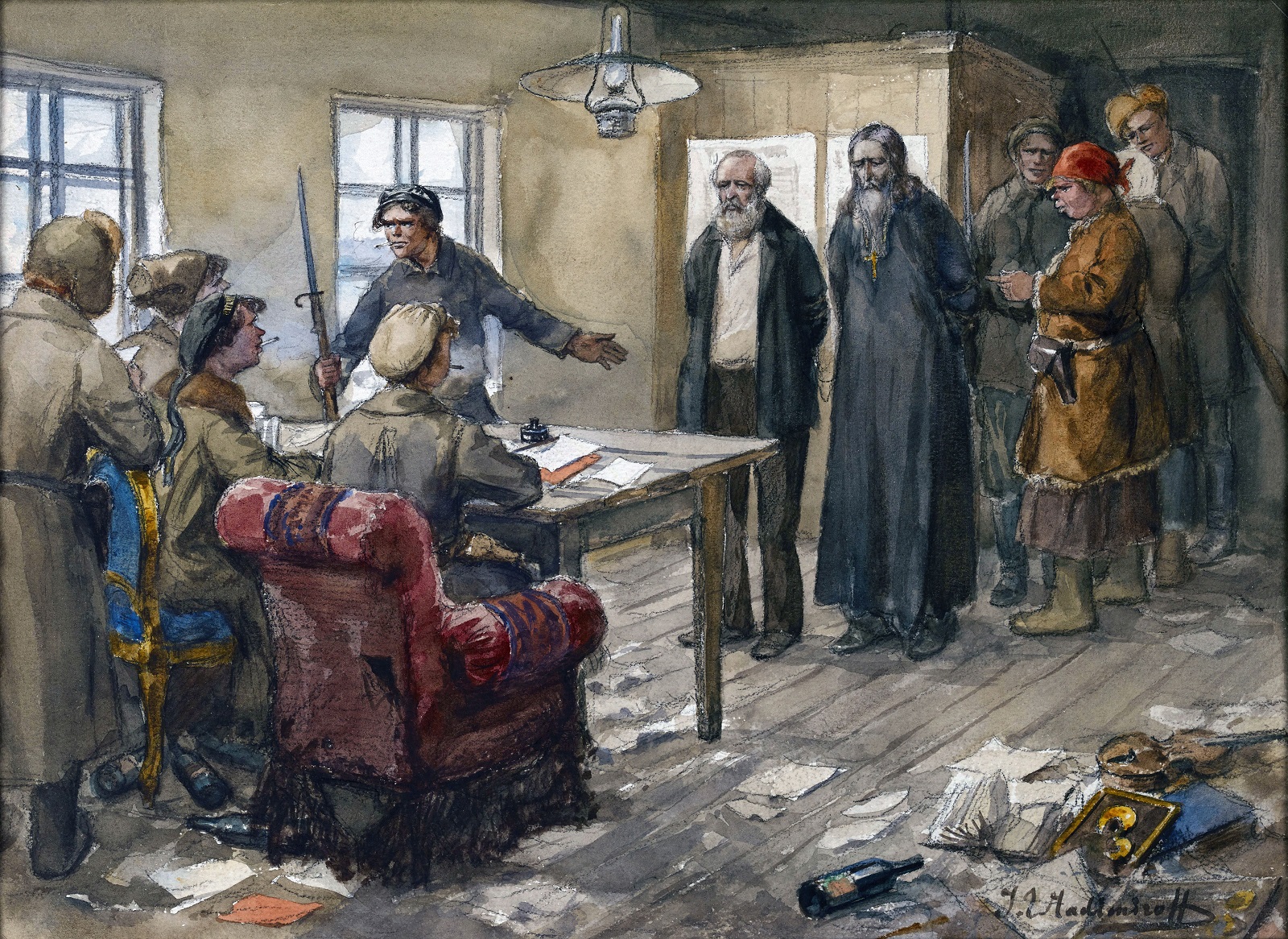
There is no political freedom in Russia. Not only the bourgeois parties who lost every foothold in the country are under the ban, but even outspoken Socialists, the Mensheviki and Socialists-Revolutionaries, their Left Wing not excluded, are deprived of the means for political campaigns. They have not been actually outlawed, but they may not issue news- papers magazines or pamphlets. They are not silenced at general “non-partisan” meetings or conventions, yet they are forbidden to call open meetings of their own. They are hardly tolerated. Their headquarters are often raided; their very existence depends upon the mercy of the party in power…There is no equality in Soviet Russia. Food, the life-giver, denuded in Russia of its cultural embellishments, stands out in all its primeval importance. And this omnipotent factor is being handled not according to the canons of equality, but as an expedient in socio-political struggles. The worker in the essential industries receives more than the worker in the less essential; the member of the Communist party is better provided than the Non-Communist, the friend better than the opponent. This may be imperative from the standpoint of state administration, yet the numerous privileges would hardly tend to decrease the bitterness of the ordinary citizen whose soul has been scarred and battered by numberless privations…
EXPLANATIONS OF COMMUNIST POWER.
Why, then, do the Russians not overthrow the Communist rule?
A number of explanations should be dismissed from the start as obviously false. “Terror” has been advanced as being the chief weapon of Communist control. True it is that the methods of the Soviet administration are implacably harsh. This will hardly surprise anybody familiar with the requirements of social discipline under stress of war. Yet the success of compulsory measures ultimately depends, everywhere, upon the loyalty of the army. It is apparent that the Communists are able to rule Russia only insofar as the Red army obeys their command. Why, then, does the Red Army obey? There were some three millions of armed men in Russia at the end of 1920, with thousands of officers from the ranks at their head. By what miracle of shrewdness or meanness did a fraction like 600,000 manage to keep control over millions of armed sons of the masses? The popular reply is ready at hand: This is an army of mercenaries, abundantly fed and comfortably kept amid an ocean of destitution, so that they will remain faithful to their masters and keep the masses in subjection. In the light of my observations this appears absurd. I traveled throughout Russia from west to east and visited many of the Red barracks, both in the provinces and in Moscow. The bread rations I found never to exceed a pound and a half a day, meat was not on the ordinary menu, dinner consisted of soup and porridge, with a smaller and inferior quantity of the same food left over for supper. Of luxuries the Red army knew none, and good coats and boots were received only by those who went to the front–immediately before departure. There was nothing in the life of the barracks that would suggest an attempt at bribing the Red force. And the bulk of them were real, full-blooded Russians, no Chinese, and no Letts, and no Bashkirs, as was suggested by many a clever reporter. All those millions, certainly loathing the war, and still more loathing to suppress the revolts of their own brothers in the rural districts, in either case remained obedient to the orders of the ruling party. I have heard of no serious mutinies in the army. There were none to my knowledge.
Another explanation explains no more. The Russians are dumb, it was said; they are inarticulate and slavish by nature; whoever happens to brandish the whip will secure obedience at small cost. The present temper of the Russian masses is in plain contradiction to this characterization. Six years of war and four years of revolution have wrought deep changes in the minds of the people. They have learned many a social and political lesson. Everywhere they discuss the actions of their administration. They are deeply interested in the business of the nation. They are stirred. They are alert. Sometimes they are loudly clamoring. Certainly, those who saw–as I did last December–a peasants’ conference of over 3,000 delegates flaunting in Lenin’s face the over rigorous handling of the food problem will forever dismiss the idea of mute obedience on the part of the masses.
THE REAL SOURCE OF POWER.
Power in Russia is based, not on passivity, but on a final acquiescence after a great deal of deliberation and even resistance. Political equilibrium in Russia does not resemble a dead weight, crushing every obstacle underneath. It rather resembles a sensitive scale constantly losing and constantly regaining its balance.

This equilibrium is entirely due to the program of the Russian revolution and to the character of the Communist party. The October revolution embodied a certain number of principles: nationalization of the land with equitable distribution among the agricultural population (whether on the basis of long term holding or otherwise is a secondary problem), nationalization of the means of industrial production, nationalization and socialization of real property in the cities, and this program, whatever its necessary modifications, remains ingrained in the minds of the Russians even at present. It is this social program, and not the system of voting, whether universal or by soviets, that is considered the of the main achievements of the revolution. It certainly is this social program and not the franchise (at present nearly universal) that even for the outside world marks the difference between Kerensky and Lenin. To the Russians, social revolution is no mere abstraction. They are in the midst of the greatest social change in the history of mankind. The Central Executive Committee of the Russian labor unions occupies the former conference hall of the Moscow nobility. Clubs of the Red army men have been established in the mansions of the former industrial barons. The largest and most modern apartment houses are occupied everywhere by families of workers. The factory knows no owner The land knows no owner. Theatres, museums, concert halls, schools, universities have been thrown open to workingmen and peasants. Eighty-one per cent of the Executive Committees of the Soviets, the actual local administration, are former clerks, workingmen and peasants. The majority of the Communist party itself consists of Red army men, workers and a few peasants. The man of the masses, hampered in all possible ways prior to the revolution, actually feels himself in a new situation. He may at times scoff at the harangue of a Communist who declares that the workingmen and peasants are now “their own masters.” He may perchance compare this tempting declaration with the necessity of working overtime in the essential industries or with compulsory peasant labor for the state. Yet, fundamentally, he is aware of a great change. He has come to the top. He is a new man. Everything is being done in his name and for his welfare. In principle he is the master. He enjoys the fruit of the revolution, no matter how irksome his everyday existence may be. He dreads to think of the recent past.
CLASS DIFFERENCES WIPED OUT.
One has to live in Russ a to realize this fundamental fact. Even in appearance the “lower classes” used to be distinguished from the intelligentsia and the men higher up. Now the difference has disappeared. Everybody wears the garb of the poor. College professors and bricklayers look alike. A factory hand in the role of a Commissar may be even better dressed than the former manager of the concern. This may not add to the happiness of the professor or the engineer, but it certainly thrills the man of the rank and file. Immediate want, anxiety, fatigue, rigid discipline and coercion may temporarily becloud his vision and make him forget the glory of his new state. Yet the consciousness is there. It is never erased. It affects his mind even against his will. He has risen to a new standing in society, he may in due course of time set an example to the world–and this he owes to the social revolution. This he knows well; it is too palpable to be overlooked. Whoever fails to realize this enormous fact in the life of revolutionary Russia is apt to blunder in the most pitiful way. To him the Russians must seem a herd of terrified cattle drivery by the club of a madman. The fact is, that only because the Communist party remained faithful to the principles of the October revolution, could it become the driving force in Soviet Russia. The revolution created a basis, the Communist party supplied the living spirit for the attempt at constructing a new society out of chaos. The masses followed because, immediate suffering notwithstanding, they consciously or subconsciously cherished the idea of this new order.
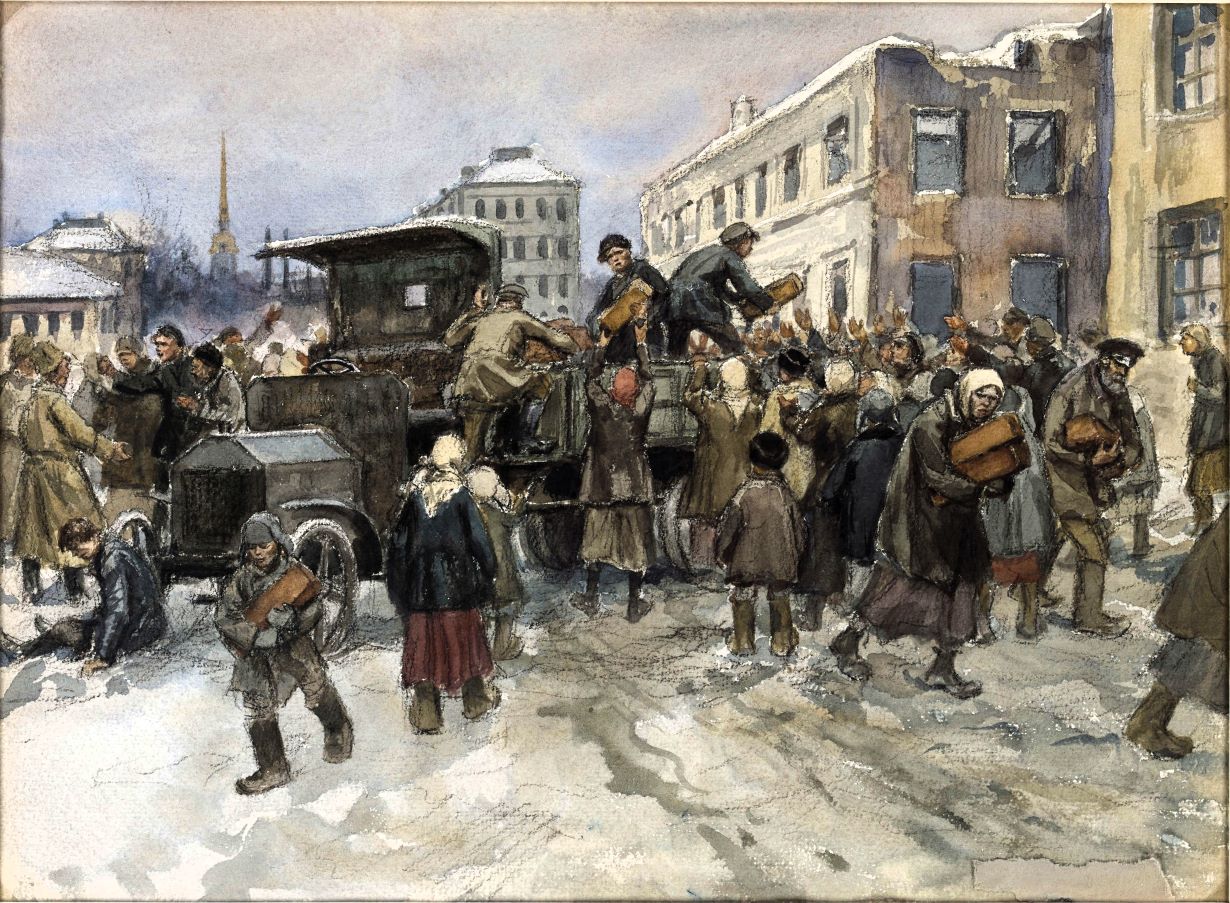
The Communist party grew in power because, out of the many factions of Socialists in Russia, it alone accepted the October revolution. When “All power to the Soviets” became a fait accompli the Socialists-Revolutionaries, the Mensheviki and all the other “friends of the masses” immediately withdrew. They were disgusted. They had not a vestige of faith in the rule of the Soviets. They strenuously opposed the October revolution, failing to recognize that it was not an uprising of the Bolsheviki, but a hurricane like movement of the masses. The field was left to the Bolsheviki. They were the only organized group working with the Soviets, i.e., with the workingmen, soldiers and peasants, at that historic juncture. They naturally filled the most important offices. They occupied the strategic positions. They became indispensable in the management of the country. They acquired the experience of administration. In the course of time the inertia of power came to their assistance. There is inertia in political power when people grow to recognize a certain group as the natural leaders.
A PARTY OF ACTION.
Inertia alone, however, is a poor support in turbulent times. The Communists could not manage to live on the merits of the past. Their main strength his program, and is in the present, always in the present. They are the only political party in Russia which has a program for every day, for every hour. They may err (as with management of industries by committees), they may underestimate a tendency (as with abolition of small trade), they may overreach themselves (as with last summer’s march on Warsaw), yet they have always the courage and candor to acknowledge an error and take a new path. They are never afraid of their errors, and in the most crucial moments they are always ready with a new plan of action, a new series of measures, a clearly defined line which, in their opinion, must save the country and the revolution. They never forsook the principles of the revolution. At a time when some of the Mensheviki and Socialists-Revolutionaries were conspiring with the White generals in Russia and with the interventionists abroad, at a time when others, the Left Wing, were untiringly complaining and whining, secretly cherishing the utopia of a return to pre-October times, the Bolsheviki alone vigorously defended, never seriously deviating from them in the construction of their program. By this they gained immensely in the esteem of the masses.
The Communists are the only party of action. They do not rely upon an abstract program any longer, they always appeal to concrete action. Whether it is the organization of the Red army, the repair work in railroad shops, the raising of crops or the reconstruction of the Donetz coal mines; whether the task is to fight the Whites at the front, to fight the fuel famine by cutting wood, to fight epidemics by a campaign of cleanliness or to fight illiteracy by schools for adults,–they always demand work, strenuous, ardent, exhausting work. They set the example themselves. They do not theorize, they work. They say to the peasant, “Put your hand to this work or that, if you wish to increase the produce of your land; help us carry out this task or that, if you wish to get in due time manufactured goods in return for your crops.” They say to the workman, “Here is work for you, make an effort to do it, if you wish to secure a fair living for yourself and freedom from bondage for your class.” They say to the Red army man, “We hate war, just as you do, but war was forced on us, therefore we have to see it through, and therefore keep firm, fight to the last ditch.” The driving force of the Communists lies in their always setting an example. Their methods may be harsh and their manners often high-handed, yet nobody would blame them for shifting the burden on to others; not even an enemy would assert that they shrink from work. In a country where inefficiency is habitual and administrative laziness was a byword, this must have a colossal influence with the masses.
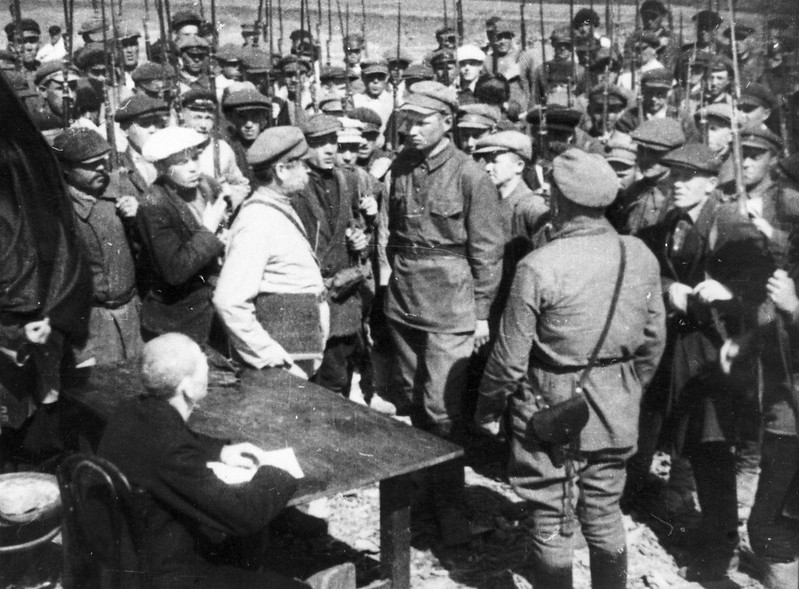
The Communists never eulogize, never try to gloss over a distressing fact. I have the impression that they sometimes paint the picture too black in order to alarm and stir the people to greater efforts. What they always do is to put the facts before the masses squarely. They are not afraid of the facts. Even mismanagement and lack of efficiency is acknowledged by them in dealing with the people. They call it “the expenses of the revolution,” caused by the transition of the means of production from one social class to another, yet they admit the fact. They are ready to take suggestions from the ranks. They call upon the governed to come and control. Workmen’s and peasants’ control groups have been organized everywhere, and the doors, and the books and the machinery of each branch of the administration are open to them. The Communists have laid bare before the country the workings of the state mechanism, of the industrial mechanism, of the military mechanism. They urge everybody to see, to learn and improve. They can afford to be sincere. In their truthfulness is their strength. In a country where officialdom used to dwell in the clouds and the work of “government” was a sacred awe-inspiring mystery for the ordinary man, this plain, matter-of-fact frankness must be a relief.
ENLARGING THE INDIVIDUAL VIEW.
“First persuasion, then coercion,” said Lenin. Persuasion means educating citizens to an understanding of national affairs. This work of education is conducted on a stupendous scale. Groups of people who never had the remotest idea of state problems are now drawn close to the limelight of national life and made to realize their part in it and their responsibility for its progress. There is hardly a corner in Russia where the educational sweep is not awakening the most backward to new thought and new strivings. “Middle” peasants, poor peasants, Red army men, railroad men, peat diggers, mine operators, peasant women, everybody is made an object of propaganda, and propaganda in Russia is a means of making people think in national terms…”Go and do it yourself” is not the least weapon in the Communists’ arsenal. Their practice is to draw ever new groups and layers of people into participation in the management of national affairs. Lack of knowledge or experience is no obstacle with them: people may learn as they work. Youth is rather an asset; youth has no fear, it is not easily discouraged and it has that divine contempt for traditions which gives absolute freedom. The western observer would be astounded to find plain blacksmiths managing large industrial plants, to see youths of twenty-one in command of army divisions, to discover important administrative departments under the supervision of former peasants. As the crisis in Russia became more acute, as the front demanded the best trained and most reliable men, as the army absorbed ever larger numbers of productive workers, and as the resources in mar power of the better quality were heavily drawn upon,–new men and women from the masses constantly rose to responsible positions. In the labor unions, in the Soviet organizations, in the Communist party, in the factories and mines, hosts of newcomers filled the gap. In a short time many became experts in their respective realms, shouldering responsibility for the public weal. “To make every housewife a manager of the state” is no empty phrase with the rulers of revolutionary Russia.
Where persuasion fails, coercion is applied. Coercion is not the cause, but the expression of power. Coercion is more severe in Russia than elsewhere in the world because the government there is closest to the people. Whatever may be said about the voting system or the shrinking of the Soviets under stress of war (efforts are now being made to restore the Soviets to their former power), whatever may be the deviation of the Soviet regime under Communist rule from what is known as “democracy” in the western world, the Russian government knows no barriers between itself and the masses. In fact, it is a mass government. “Ochlocracy” it was contemptuously named by opponents. This is true in one respect; the ochlos is here inseparably woven with the government and its ruling party. It is this absence of a clear demarkation line between government and governed that makes the most stringent measures appear less noxious than they did under autocracy. Coercion here assumes the aspect of self-willed effort, obedience seems self-restraint. The services demanded and exacted by the Communists in Russia would be impossible elsewhere. They would seem monstrous even to the Russians shaken by revolutionary storms, if it were not for the fact that they are accepted, consciously and unconsciously, as a series of self-imposed restrictions. Denial of a free press (if not of free speech) to the opposition, arrests of suspected counter-revolutionaries and execution of active plotters may be horrifying to an outsider, yet they seem natural acts of self-protection on the part of a society bent on carrying through a most difficult historic task and desirous of warding off any disturbance that might diminish its strength.
MASSES MAKERS OF OWN DESTINIES.
The machinery of power which now exists in Russia cannot be understood unless we hold clearly before our eyes that all coercion takes place in a society where class privileges, have been, in principle abandoned; that coercion takes place not in the name and on behalf of a social group or class, but in the name of the masses themselves and for their ultimate good; that those who exercise power do not derive any benefit for themselves aside from the consciousness of power enjoyed by individuals as administrators (material advantages in the form of better salaries or a minimum of comfort are slight; private gain is a crime and heavily punished); that the rank and file are not only admitted but strongly urged to join in the work of administration and, consequently, to share the enjoyment of power; and that the final, the most irrefutable, the all-silencing argument, in war and peace, in town and village, admit hunger and fatigue is, “Will you suffer counter-revolution to be victorious? Are you ready to give up the fruits of the October overthrow?”
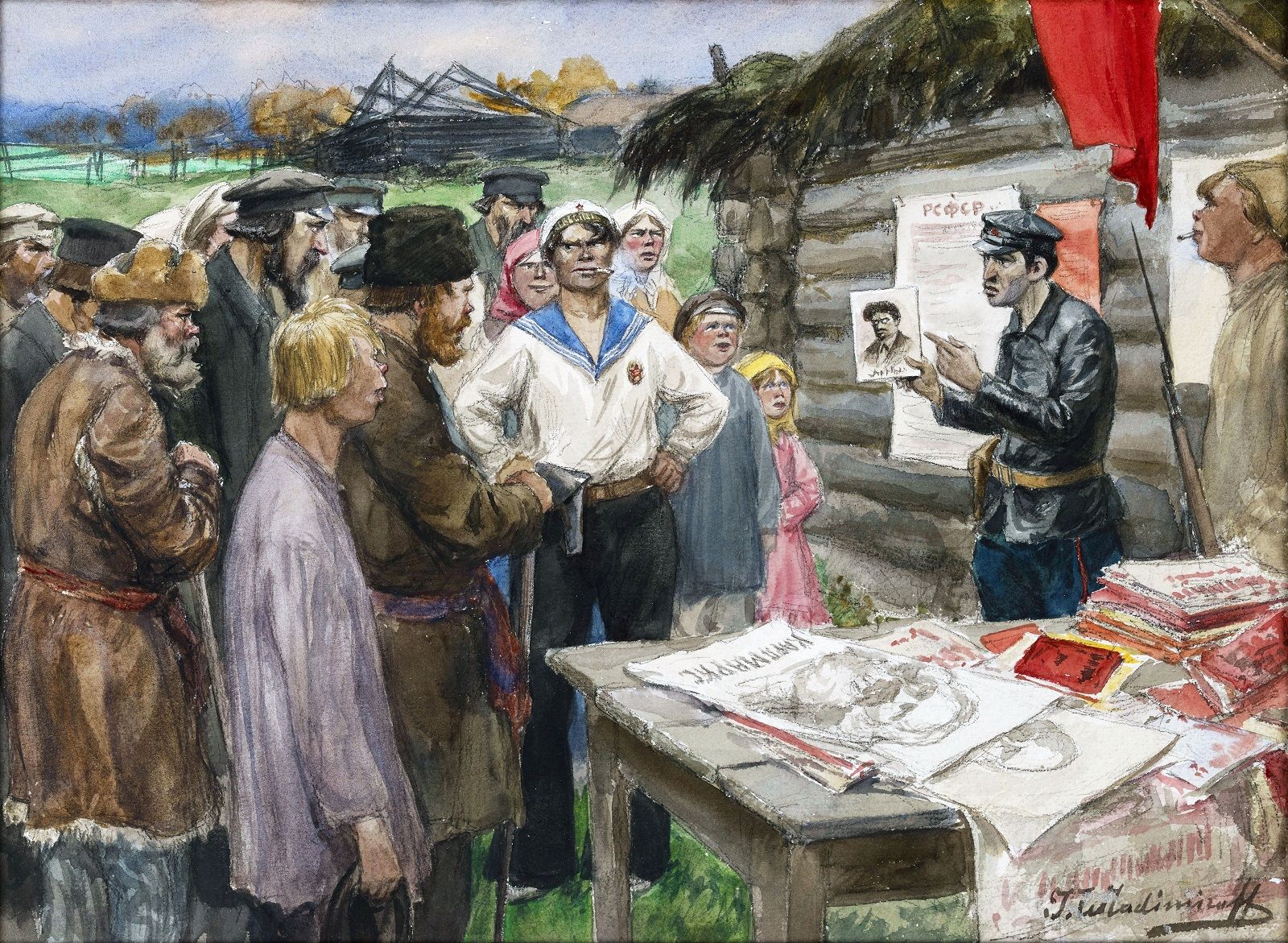
Above all, closest to the minds of the masses, is the consciousness of the fact that it is their own country. Unity between city and village may have been due to a peculiar historic combination of forces, which will not last; new cooperation between peasant and workman, on a plane higher than primitive self-defense, may require new efforts and new re adjustments; the rights and immunities of the city the course population may assert themselves in the course of time and demand a revision of tactics; further concessions may be granted to knowledge, genius, or unusual achievements; the entire system may undergo modifications as it adapts itself to peaceful work and a program of reconstruction. Yet, what marks the new era, what has carried the revolution through in the midst of colossal trials, is the new consciousness of the masses, and their awareness of becoming the makers of their own destinies. Out of the darkness of ages, out of slavery and despair, they have risen to a spot where strong fires are blazing. Their heat may be scorching at times, yet the horror of darkness is compelling. Torn between hope and misery, between pride in the revolution and semi-starvation every day of the year, the Russian citizen harbors two souls within his breast–that of the revolution and that of the counter-revolution. When alone, left to individual feelings, confronted with mean realities of a miserable existence, he is morose, he is embittered, he blames the administration, he is even ready to disobey, to make obstacles, to revolt. When together with others, when a member of a social aggregation, a conference, a convention, a meeting, a unit of the army, his social feelings gain the upper hand, and the final decision is always in favor of the revolution. To keep this social sense alive is the main task of the Communist party, and because it has performed this social service it has become the most potent force in revolutionary Russia.
The Toiler was a significant regional, later national, newspaper of the early Communist movement published weekly between 1919 and 1921. It grew out of the Socialist Party’s ‘The Ohio Socialist’, leading paper of the Party’s left wing and northern Ohio’s militant IWW base and became the national voice of the forces that would become The Communist Labor Party. The Toiler was first published in Cleveland, Ohio, its volume number continuing on from The Ohio Socialist, in the fall of 1919 as the paper of the Communist Labor Party of Ohio. The Toiler moved to New York City in early 1920 and with its union focus served as the labor paper of the CLP and the legal Workers Party of America. Editors included Elmer Allison and James P Cannon. The original English language and/or US publication of key texts of the international revolutionary movement are prominent features of the Toiler. In January 1922, The Toiler merged with The Workers Council to form The Worker, becoming the Communist Party’s main paper continuing as The Daily Worker in January, 1924.
PDF of full issue: https://www.marxists.org/history/usa/pubs/thetoiler/n177-jun-25-1921-Toiiler-rsz-chronAM.pdf
 Revolution's Newsstand