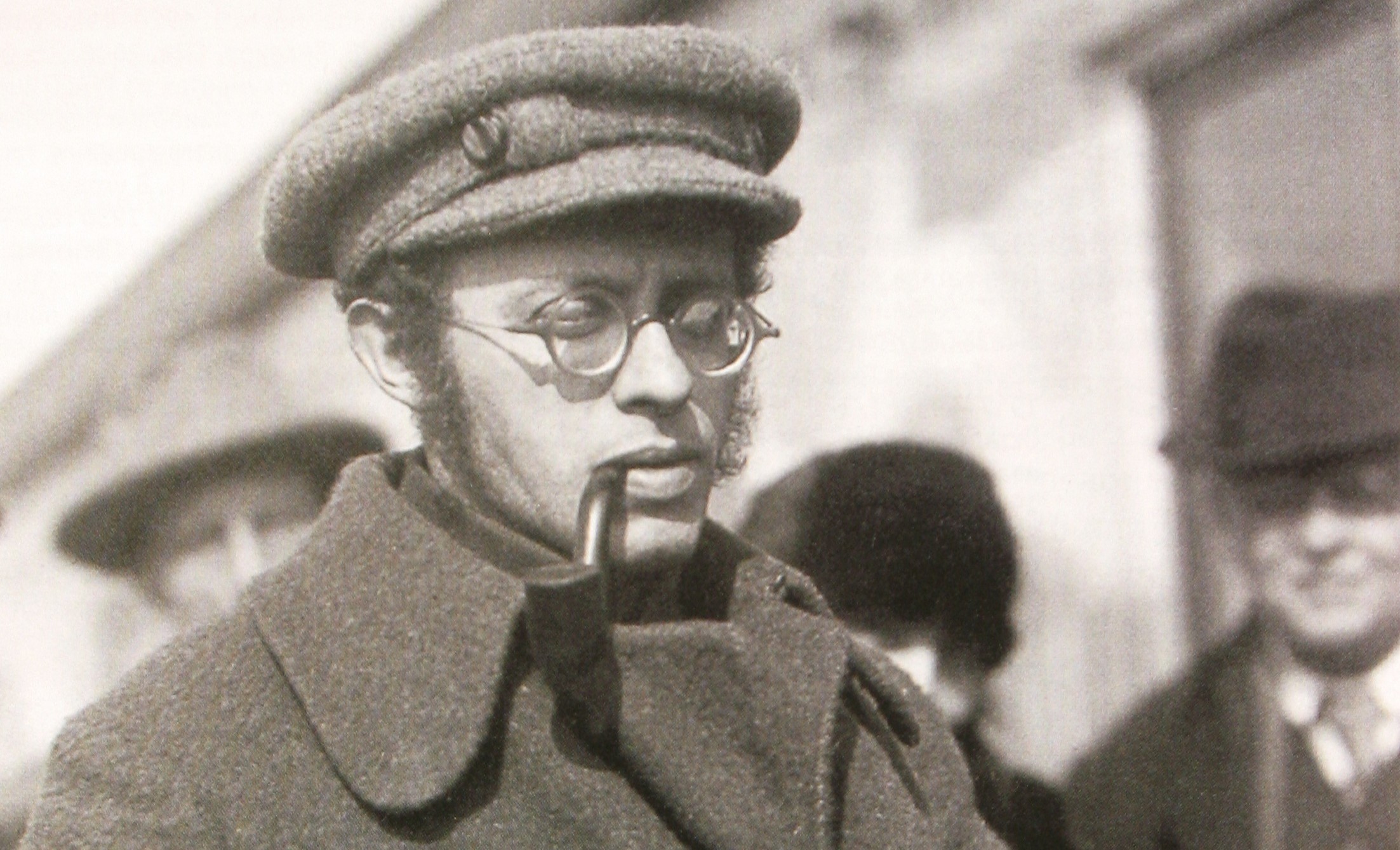
Karl Radek’s reputation as a great writer was deserved, and made by articles like this one. In 1923, Ramsay MacDonald formed Britain’s first Labour government with a minority in Parliament and dependent on Liberal support. Radek analyzes that first government and the particular and peculiar aspects of Britain’s reformist labor movement.
‘The British Labour Government’ by Karl Radek from Communist International. Vol. 2 No. 3. May, 1924.
I.
WHEN the October Revolution broke out in Russia, and under its heroic influence Communist parties began to spring up in the west, and when later the thrones of the Hohenzollerns and the Hapsburgs followed the house of the Romanoffs into the rubbish heap into which history had consigned them, the centrists of Western Europe, headed by Otto Bauer, declined to call upon the revolutionary workers to follow the lead of the workers of Russia, arguing that in world affairs the decisive factor was not agricultural Russia, but the industrial west; that it was the revolution in England or America which would decide.
This “Marxism” either implied the profound truth that it was easier to bring about Socialism in an industrial country, but that the old lady history had capriciously chosen the most difficult course and was not starting from the mark, or it was a call to the revolutionary workers of Continental Europe not to move until the revolution had broken out in England. The latter, of course, it was. Herr Bauer and his colleagues used Marxism as an argument for not making a revolution. The great teachings of Marx served them as a pretext for betraying the interests of the proletariat of their own country and the cause of the workers of the world.
The only conclusion which a true Marxist could draw from the fact that it was harder to bring about Socialism in agricultural Russia than in industrial England should have been the slogan: “Proletarians of industrial Germany, Austria and Czecho-Slovakia, unite with the proletarians of Russia, create a mighty agrarian and industrial combination stretching from Vladivostok to the Rhine, and from the Finnish Gulf to the blue waters of the Danube, capable of feeding itself and clothing itself and of confronting reactionary capitalist Britain with a revolutionary giant, who with one hand would disturb the secular tranquility of the East and with the other beat back the pirate capitalism of the Anglo-Saxon countries.” If there were anything that could compel the English whale to dance, it would have been a union of revolutionary Russia with a revolutionary Central Europe. But the bourgeoisie, with the help of the Social-Democrats, stifled the Central European revolution. The development of the world proceeded at a more moderate pace, but nevertheless the British whale knew no peace.
England, in spite of its powerful expansion during the seventies, is moving down an inclined plane. This mighty power, which holds more than four hundred million people in its grip, could live peacefully only as long as it remained the greatest of the industrial powers, and only as long as the rest of the world was its market for raw materials and food. But this dream of Bright and Cobden was shattered by the industrial development of Germany, the United States and Japan. The last two decades before the war practically revolutionised the conditions for the development of England. World capitalism has entered into its imperialist phase, the fight for world markets, not only with the aid of cheap goods, but also with the aid of mighty land forces and of floating iron machines capable of flinging thousands of tons of explosive materials. The British lion tried to save itself by a leap. It adopted the system of the great sea monsters, the dreadnoughts. But its example was followed by all the other imperialist powers. It was easier for them than for old England to adopt dreadnoughts, as it is easier for a backward country to adopt the most up-to-date machinery, because it has not accumulated capital in the form of obsolete machinery. England could not wait until financial difficulties would hold up the expansion of foreign fleets. She was compelled to make a second leap, to prepare for an armed catastrophe, to enter into war. But alas, the leap was a fatal one. She emerged from the war a member of the syndicate of victors. She had annihilated the German navy, which is now lying at the bottom of the Scapa Flow. In Africa and Asia she pilfered all that she required; she seized the German colonies. of East Africa and thus made possible the union of Cairo and the Cape by railway. She seized Mesopotamia, and set up a vassal kingdom in Arabia and thus created the conditions for the union of Cairo and Calcutta by railway. But alas, she was so damaged economically that she was unable to export sufficient capital to the annexed portions of the earth to guarantee her control of them.
Moreover, the war, which it was prophesied would be a war of dreadnoughts, saw the development of the small sea pirates, the illusive submarines. If the English gave the submarines a name which expressed the feelings they inspired they would call them memento mori. The British Empire is a complicated organism distributed over the whole globe, and united by fine nerves of communication, along which move vessels bearing cotton from India, Egypt and America, grain from Canada and Argentine, timber from Russia and oil from the Dutch Indies. Every submarine is a menace to the vital nerves of Britain. And the sub- marines are so easily built, the enemies of England have so many harbours from which these pirates may sally forth at night to fall upon British vessels, and submit the British. island to a blockade ten times more severe than that to which Britain subjected Germany. And indeed is England still an island? No. Even this defence has vanished. The fellow of the submarine fleet is the air fleet, the development of which has been one of the great achievements of the world war. Even during the war, London concealed herself in a cloak of darkness from the hovering Zeppelins which flung visiting cards of dynamite into old Albion. British imperialism is surrounded by enemies. It is feeling the earth trembling beneath its feet and a cancer eating into its vitals.
More than 300 millions live beneath the yoke of British domination in India, the chief prey of British imperialism. In his book on the Expansion of England, the preacher of the gospel of British imperialism, Professor Seeley, asks: How did we conquer this continent? How do we govern it? He gives the explanation of the miracle as to how some ten thousand foreigners rule over 300 million Hindoos. There are several hundred nations living in India, each speaking a language unknown to the others. The English defeated one nation by the help of the others, and ruled over the lot. But time passed and presently India was united by a network of iron roads. The language of the enemy, the excellent British language, became a bond which united the Indian intelligentsia. The necessity for a native bureaucracy made it necessary to set up schools in which the Indian intelligentsia came under the influence of British ideas of democracy and freedom. John Stuart Mill began to enflame the Hindoos, worthy John Stuart Mill, whose works can be found in any English library. The British bourgeoisie, with its habitual shrewdness, decided to buy over the ruling class of India. It had at one time, with the aid of honours, bought the various Indian princes, leaving them the appearance of power and sparing their interests. It now decided to buy over the young Indian bourgeoisie. but the scheme was spoilt by the cunning mechanism of capitalist development. The Indian bourgeoisie is already beginning to fear its own workers and its own peasants, who timidly, but surely, are moving to the front of the historical stage. It would not be loathe to come to terms with British imperialism for the joint exploitation of the Indian workers and peasants. But the essential condition for the development and strengthening of the Indian bourgeoisie is a customs tariff to protect the cotton mills of Calcutta and Bombay from the cheap products of Lancashire. Moreover, there is growing up a class of lower Indian intellectuals who are being mercilessly exploited by the British bureaucratic system, which demands of them extremely difficult work for very low pay. Thousands of them are unable to find employment at all, and there is nothing more dangerous than a man who reads much and eats little. An army staff and an officer corps for an Indian national revolution is thus being created. They are still ignorant of the right path the struggle must take, they are still full of Utopian ideas regarding the independence of India, but the joy of England will be no greater if the workers and peasant masses of India enter the movement with absurd ideas. They will learn the right way to fight in the course of the struggle.
While an uprising of the colonial slaves of Britain is fermenting, within her own stronghold unemployment is gnawing at the organism of British capitalism. Everybody who has carefully studied the problems of Britain has emphasised that there is no greater danger for British imperialism than unemployment. Unemployment means death for a country which depends exclusively upon industrial labour. Moreover, in England, owing to the defence the sea offers to its borders, militarism has been only feebly developed. This fact has always compelled the ruling class of England to lighten the financial burden falling upon the ruling class of England and to think of their stomachs in its customs policy. Unemployment, however, demands either that the financial burden should be increased, or that the dam against the revolutionary wave should be strengthened. The unemployment from which Britain is now suffering is the result of causes which will not rapidly disappear; namely, the destructive effects of the war upon world trade and the purchasing power of the country, the growth of American competition, and so on. It may be said that the whole home and foreign policy of England is bound up with the problem of overcoming unemployment. When in 1922 Lloyd George and Briand met at Cannes in the South of France, and the French representative said that France was suffering from the devastation of her northern provinces, Lloyd George asked whether the English factories which were not working, although they had not been destroyed by the enemy’s artillery, were more cheerful to contemplate for England.
The British bourgeoisie is faced with the problem of either bringing peace to Europe and creating the conditions for the development of British trade, or else perishing. But what hinders the solution of this problem? It demands the removal of the consequences of war in the continent of Europe. If the reparations policy laid down at Versailles, by British and French imperialism, is carried through, Ger- many will have to force her workers to work for beggarly wages, increase the production of cheap goods and fling them on the markets; in other words, become a competitor. If, however, Germany refuses, and France begins to exploit the Ruhr Basin, this will not only not decrease the menace of competition for England, but will even lay an iron foundation for French hegemony in Europe. France, with her foot upon the breast of Europe, will find means for increasing the military menace to England tenfold. A competition of armaments will still further increase Britain’s financial burden. But how is France to be made to abandon this policy? The necessary conditions for the solution of the reparations problem is that England should forego the repayment of the French debt. This would mean the perpetuation of the tremendous burden England has to bear in the form of payments on the national debt. The British ruling class cannot make up their mind to this. They are paying millions of pounds for the maintenance of the unemployed, thirty million pounds in payment of the debt to America, 270 million pounds in payments on the National Debt. They are not in a position to make presents to the French bourgeoisie. The development of trade with the East and the South-East of Europe, and the problem of Russia and the Near East demand not renunciation of old debts, but investments of new capital. Agricultural countries develop rapidly only by being colonised, i.e., by the import of men and capital. Left to themselves, they can develop only very slowly. British capital demands the stimulus of rapidly developing new markets. But where is the necessary capital for this purpose to be obtained? Private capital flows to places where it can earn the maximum of profit in the shortest possible time and with the least possible risk. work for profit to be derived decades ahead. situation of England does not permit her to adopt a more far-seeing policy than private capital. The Eastern and South-Eastern problems are bristling with difficulties for British capitalism. With the help of the Conservative Party it set out on a new path, to unite the colonies more securely and to feed on their blood. But it is meeting opposition not only from colonies such as India, which are striving for independent economic existence, not only from colonies such as Canada and Australia, which are developing their own industry and turning towards the United States, which is better able than Britain to defend them from Japan, but also from its own bourgeoisie, which is aware that the British colonies will make concessions to the British industrial bourgeoisie only if the latter is prepared for the benefit of their agriculture to increase the cost of living of the English masses.
The coalition of the right wing English Liberals and the Conservatives collapsed in the search for an issue from the unprecedented home and external crisis. The united Liberal Party has proved itself too feeble and too discredited to take power. And so out of the simmering cauldron there rose the soap bubble of the British Labour Government. When in 1908 the Turkish revolution triumphed without bloodshed, it was welcomed by the Austrian opportunist, Leitner, as an example of how a revolution should be made, while, in his opinion, the Russian revolution of 1905 was an example of how a revolution should not be made. The Mensheviks of all countries are to-day encircling the curly head of Ramsay MacDonald and the bald pate of Sydney Webb, with a crown of laurels and exclaiming “Behold, how the working class comes into power in a democratic country! The march of its iron columns does not terrify the delicate nerves of the English ladies. Its representative is received by the king, who voluntarily sacrifices an old traditional ceremonial and permits him to appear in ordinary evening dress instead of in white silk breaches. Behold a revolution which, far from terrifying and startling the wives of the British lords, has persuaded many of them to enter the service of the leader of the Second International, Ramsay MacDonald, and not make the least attempt at sabotage!”
II.
This is not the place for recalling the history of the British Labour Party, with which our readers are no doubt well enough acquainted. We shall only examine briefly the ideas and the point of view of the Labour Party and its leaders. Let us begin with the latter. The leaders of the Labour Party can be divided into four groups. The first group consists of trade union leaders whose outlook is purely Liberal. Men like Thomas, Henderson, Clynes and Tom Shaw might easily find a place within the Liberal Party, where they would act as the advocates of the workers, or rather, as Liberal agents within the working class, compelled to a certain extent to recognise its will and its interests. Some of them, such as Henderson, are Liberals working among the workers, others, such as Tom Shaw, are workers sincerely convinced that the proletarian revolution is impossible, and that it is necessary, within the capitalist society and by democratic methods, to maintain a certain standard of living and a certain minimum of human requirements for the working class. The second group consists of Labour politicians adhering to varying reformist tendencies. Here we find Fabians who believe that it is necessary to permeate Liberalism by Socialism, by extending municipal enterprise, nationalising those industries which are ripe for it (of course, by purchase) and improving the democratic bureaucratic machine. Here we find guild Socialists, a mélange of syndicalist criticism and contemporary democracy, proud-honest cooperativism and reformist beliefs in the possibility of avoiding revolution. Here also belong Parliamentary reformists of the usual European cut, and people who will prove the impossibility and uselessness of revolution from a half-baked biological and even zoological point of view. The third group consists of revolutionary-minded Labour politicians; but they are innocent of all theory and therefore get themselves hopelessly entangled in the legs of the opportunists. When the English bourgeois press attempted to frighten MacDonald by references to the wild men from the Clyde, the Daily Herald replied with the query: “Can you find a Lenin or a Trotsky among them?” No, there is no Lenin or Trotsky among them. There is not a man among them whose baggage contains more than the goodwill to defend the interests of the working class by every possible method, including revolution. But they are incapable of working for revolution; they have never learnt how to.
The fourth group are Labour Party leaders who did not arise out of the Labour movement, but passed into it from Liberalism, having convinced themselves of its ability to fight imperialism and to carry through those social reforms without which it is impossible to save Germany from revolution. Some of them, like Trevelyan, are pure pacifists. Others, like Brailsford, the former foreign editor of the Liberal Nation, attempt to understand the nature of Socialism and honestly to defend the interests of the working class, believing that it is the sole representative of peace and progress. This numerically small group is of very great importance, since behind it stands the growing mass of intellectuals who are passing into the Labour Party.
And what of the ideas and views of the working class masses belonging to the Labour Party? Here we find a nucleus consisting of members of the Independent Labour Party, pupils of Socialist Sunday Schools, representatives of religious and sectarian Socialism. They are the Socialist leaven of the English Labour movement. These few thou- sand workers represent the loyal guard of the Socialist fight and are the soul of the Labour Party. They spare no efforts in distributing the meagre Labour papers and Socialist pamphlets; they carry on Socialist propaganda at street corner meetings and trade union meetings, to which they sacrifice their Sundays and holidays. But they lack a complete knowledge of Marxism, they lack revolutionary self-confidence. The history of England is the best illustration of the theory of the class struggle, the best illustration of the capitalist methods of exploiting the masses, from colonial plundering and the merciless shooting down of workers, to the opening of drawing rooms to the talented representatives of the working class and shameless bribery and corruption. This stream of blood and sweat, concealed by the hypocritical phrases of history, the reformists have used in their propagandist literature as an example of the harm that is done by the class struggle, and to illustrate the possibility of bringing Socialism about by gradual democratic means. The fatuous tracts of the MacDonalds and Snowdens are supported by concrete and known facts from the history of England, whereas the Communist publications preach revolutionary ideas in the abstract, or are illustrated by examples from ancient history or from the history of Soviet Russia. Honest working class members of the Independent Labour Party, who, during the war, proved their revolutionary outlook, are distributing Quaker reformist pamphlets, believing that thereby they are propagating Socialism.
The mass of the workers are in a state of profound ferment. It is necessary only to remember the waves of strikes that passed over the country during and after the war, and the fact that the Labour Party, which in opposition to the huge newspaper trusts of Lord Rothermere and Lord Beaver- brook, has been able to put out one feeble little daily, and at the elections in 1919 secured two million votes and at the elections in 1922 four million votes, in order to see clearly that a process of class definition is going on among the working masses of England. The four million workers who voted with the Labour Party were not Communists, and not even Socialists. How could they become Socialists when there was no Socialist agitation or propaganda to formulate their feelings and to explain to them the meaning of events? after the sufferings which the Moloch of war had brought upon the workers of England, and in spite of the hopes that the bourgeoisie would, in compensation for their sufferings, make concessions which would permit them to live like human beings, their wages since 1921 have decreased by £10,000,000 per week, and their standard of living has declined in comparison with the pre-war period. This was accompanied by tremendous unemployment. The lesson of experience taught them to feel that the interests of the working class were not compatible with the interests of the bourgeoisie, and that a special Labour Party was necessary, capable of fighting for their interests.
And how did the Labour Party propose to fight for the interests of the working class? It expounded to the English proletariat the programme of reformist democratic Socialism, i.e., that a majority of the British electors must be won over by propaganda. This is possible because the majority consists of workers. The British working class is not alone in its democratic views, since, according to the leaders of the Labour Party, the British capitalists will submit themselves to the decision of the majority. Of course, they attempted with the aid of bombs flung from aeroplanes, to obtain for themselves the democratic consent of the Mesopotamians and the Hindoos, but in civilised England such things are impossible. The fact that in 1848 the old wolf Wellington kept sufficient troops under arms in London in order to drown in blood a mere demonstration of Chartists has been struck out of the history books of the British Labour Party. It is prepared rationally and humanely to assist British capitalism to reconcile itself with Socialism. This Socialism must come about very slowly; as everybody knows, when a sheep is roasted on a small slow fire, it gets used to it. Will not British capitalists recognise the right of the State to impose taxation? Of course they will; they have always recognised it. And therefore, taxes can be increased until the workers will be relieved of paying the war debt and will not be obliged to live in kennels. And if four railway companies can combine into one and issue new shares in place of old ones, then why cannot the State combine them and itself pay the dividends to the capitalists and improve the situation of the workers by means of the saving effected by a centralised administration and technical perfection? The English capitalists are not expected to renounce the possession of the colonies. The Labour Party, of course, is against exploitation of the colonies which is accompanied by bloodshed, but supposing it refuses to exploit India, will not some other power seize upon her? India, of course, cannot govern herself. She is not sufficiently civilised. If the English troops are recalled from India, then the Hindoos will immediately start cutting each other’s’ throats. Of course, it was a bad thing when General Dwyer shot down the Indians at Amritsar; the colonial regime must be humanised. But this will not affect profits. As early as the 18th century, it was proved by the economists and philosophers that Labour carried on under the menace of the lash was the least productive. A human regime in the colonies will only serve to increase the productive capacity of the population, and that, of course, will increase profits.
The British Labour Party has still not the majority of the English electorate on its side. At least a half of the workers vote for the bourgeois parties. The Labour Party came into power thanks to the fact that the Conservatives, although in the elections of 1923 they obtained 700,000 more votes than the Labour Party, were nevertheless defeated. Only 30 per cent. of the electorate voted for their programme. The Liberals refused to support the Conservative Party. They themselves received 220,000 less votes than the Labour Party. The king was therefore obliged to request the leaders of the Labour Party to form a Cabinet. As one of them truly remarked, they have managed to become the government, but they are not in power.
Three courses were open to the Labour Party. One was, when coming into power, to lay their fundamental demands before Parliament, in a simple form, which would be understood by the workers, at the same time carrying on an energetic campaign in the country for the reformist programme of the Labour Party in the event that if the two bourgeois parties united against the Labour Party, they would dissolve Parliament and attempt to secure a majority. The second course was to form a coalition with the Liberals and come to an arrangement with them as to the reforms which they would have to introduce under the pressure of the petty-bourgeois masses of the electorate. The third course was to attempt to remain in power without an open coalition with the Liberals, to tread safely and not to attempt to carry through radical reforms. The Labour Party leaders chose the third course. The first was repugnant to their nature. To adopt a demonstrative policy in Parliament, to make a stormy attack in order to win a majority of the electors, would mean an appeal to Acheron. But to bring the working masses into motion might have the result that they would entirely go beyond the bounds of democracy and legalism. They could only be aroused by a passionate preaching of their class interests. Demands would have to be put forward which would stir the working class to the depths. Men, who, throughout the war and since the war have been extinguishing the revolutionary movement of England, are not now in a position to rekindle it. The section in the Labour Party which advocated this policy was defeated. Neither could the Labour Party leaders form an open coalition with the Liberals, in spite of the fact that last year when the Labour Party conference voted against a coalition with the Liberals, one of the London weeklies, which supports the Labour Party, The New Statesman, declared that when the time comes to form a government, this resolution would disappear like the snows of last year. The primitive class consciousness of the working masses had become considerably strengthened. Not only Asquith, the Liberal lemonade seller, but also the cunning fox, Lloyd George, who, in a moment of need, can adopt a more plebian tone than any British Communist, had become completely bankrupt in the eyes of the workers. Ramsay MacDonald followed a known path, he followed the example which had first been given to the Second International by Scheidemann and Haase in 1918. They were cunning enough to form a coalition government with the bourgeoisie even while a Soviet Government existed. On the first floor sat the Social-Democratic Council of Peoples’ Commissaries, and on the second floor the bourgeois ministers, the War Minister, General Gruener, who called the strikers filthy curs, the Colonial Governor, Solf, who, when Foreign Minister for Kaiser Wilhelm, brought about the break with Soviet Russia and had the police expel Comrade Joffe, etc., etc. Ramsay MacDonald included in his government Lord Haldane, the former Liberal secretary, who prepared the British army for war, Sir Sidney Olivier, former governor of Jamaica, whose conduct in this capacity called for only one criticism, namely, that he did not go to church on Sundays, General Thompson, and finally, Lord Chelmsford, former Viceroy of India. These Liberal and Conservative grandees in the Labour Government were in- tended to prove to the British bourgeoisie that Ramsay MacDonald did not intend to shatter the foundations of British imperialism. Thus, in actual fact, we have a coalition government of representatives of the Labour Party and representatives of the imperialist bureaucracy, standing for the interests of finance capital.
Correspondingly, the policy of the government is a policy of marking time. In spite of the hubbub it raised about the capital levy for the purpose of wiping off the national debt, the Labour Party is going to use the Conservative Budget for the next year. More, it declares that it has no intention of raising the question of the capital levy, since this question was not a decisive factor at the elections and on it the Labour Party has not a majority of the electors behind it. The question of unemployment is entirely ignored, the outcries against war have ceased, the pacifist tears are dried. The whole world is now expecting a bold step on the road to disarmament. Both the working classes and the bourgeois governments of all countries know perfectly well that a new war is brewing. General Hamilton, author of a book on the Russo-Japanese War, says that in the next war aeroplanes will hover over towns like vultures. Civilians have no idea of the destructive power of the modern bombs. He, as a man who understood war, was in favour of peace and reconciliation between nations. If resort is made to arms, England and Europe will suffer a catastrophe a hundred times greater than the Japanese earthquake. This is the opinion of the best known representative of the bourgeoisie not only in England, but everywhere. The bourgeois world has arrived at an impasse. It knows very well that it is going headlong to ruin, but has not the determination to pull itself up. Mutual mistrust and the interests of small capitalist groups are driving it into a fresh war. If the British Labour Government, courageously brought forward the question of disarmament, in which it would have the full support of the Soviet Government, it would not only bring the workers of the whole world into the struggle, but would also kindle a powerful movement among the petty bourgeoisie. The Liberals would not dare to oppose such an initiative, since they are supported by a large section of the petty bourgeois voters. But the MacDonald Government will never decide to take this step from fear of its revolutionary consequences. It will continue to arm, deceiving the workers by rejecting for the time being the construction of the naval base at Singapore, although everybody who is following world politics knows that the project has been renounced only because it is now unnecessary to British imperialism: Japan has been so enfeebled by the earthquake that the construction of a Singapore base at the present time is unnecessary.
The policy of the Labour Government will permit it to remain in power only as long as the Conservatives and Liberals find it suits their own purposes. They need a breathing space in order to restore order in their ranks and to give the workers time to become disillusioned with their Labour Government. By depending upon their complaisance the Labour Government is losing the chance of winning a majority of the electors by a courageous, although reformist, policy.
III.
The coming to power of the British Labour Party has aroused the hopes of the reformists throughout Europe. Hungarian Social-Democrats, who at one time helped Vice-Admiral Horthy to come to power, and who now complain of the inhumanity of the Hungarian counter-revolution, are being drawn to London. The eyes of the German Social-Democrats are turned towards London; having lost all hope in Uncle Sam, having pledged all their cards, they are now sitting on their haunches or waiting for the consolation of the uncle from London. Even the Polish Social-Democrats come to London to assure MacDonald, the friend of peace, that when they welcomed the march of Marshal Pilsudsky upon Kiev, it was solely from love of peace and hatred for the dictatorship of the proletariat, which Ramsay MacDonald had himself denounced in many books and speeches. But the Labour Party will deceive its Second International friends as they deceived it. When the German Social- Democrats came into power, the Social-Democrats of all countries hoped that they would put an end to nationalist counter-revolution in Germany, that they would inspire the German people with the democratic pacifist spirit and root out the spirit of nationalism and militarism. But as we know, they, on the contrary, became the foster parents of German counter-revolution.
The reformist epidemic affected even certain Communist parties and Communist writers. The Communist Party of Great Britain sent an address of welcome to the British Labour Government. Comrade Ravenstein, a very good Communist, went so far as to declare in the Dutch Tribune that the coming to power of the Labour Party was in a certain sense an event of no less importance than the October Revolution in Russia. The October Revolution in Russia was the conquest of power by the working class. The actual coming into power of the English working class would be more significant than the coming to power of the Russian working class was, since British capitalism is ten times more powerful than Russian capitalism was in pre-war days. But alas, the so-called Labour Government of England by no means signified that the English working class has come into power; it is not even the beginning of the fight for power. It is simply indicative of the great crisis which has overtaken British capitalism, in face of which the leaders of the Labour Party are no less helpless than the British bourgeoisie. At the very best the Labour Government is only a faint hint of a great fact, namely, that the working class, and the working class alone, is destined to put an end to the crisis. The task of world Communism is to take advantage of the impending bankruptcy of the British Labour Government in order to render the workers of the world more class conscious, to use this great historical opportunity to prove to them that there is no salvation except in a determined class struggle. The British Communists, of course, can perform this task only by criticising the Labour Government at every step, at the same time supporting every movement of the working class or section of the working class directed towards compelling the Labour Government to fight. Not false congratulations (we do not think for a moment that our British comrades believed that Henderson and MacDonald were capable of conducting the class struggle)-but cold, calm and pensive criticism, the organisation of the forces of the Labour class, in order to bring pressure to bear upon the Labour Government–that is the task of the Communist Party of Great Britain. Only to the extent that the Party is capable of carrying out this task will it be able to take advantage of the bankruptcy of the Labour Government in order to win over the masses to its side. For the first time in history the British Communists have been given the opportunity of transforming themselves from a sect into a mass party of the proletariat. Every step they therefore take with regard to the Labour Government must be cautiously and carefully considered.
The ECCI published the magazine ‘Communist International’ edited by Zinoviev and Karl Radek from 1919 until 1926 irregularly in German, French, Russian, and English. Restarting in 1927 until 1934. Unlike, Inprecorr, CI contained long-form articles by the leading figures of the International as well as proceedings, statements, and notices of the Comintern. No complete run of Communist International is available in English. Both were largely published outside of Soviet territory, with Communist International printed in London, to facilitate distribution and both were major contributors to the Communist press in the U.S. Communist International and Inprecorr are an invaluable English-language source on the history of the Communist International and its sections.
PDF of full issue: https://www.marxists.org/history/international/comintern/ci/new_series/v02-n03-1924-new-series-CI-riaz-orig.pdf
 Revolution's Newsstand