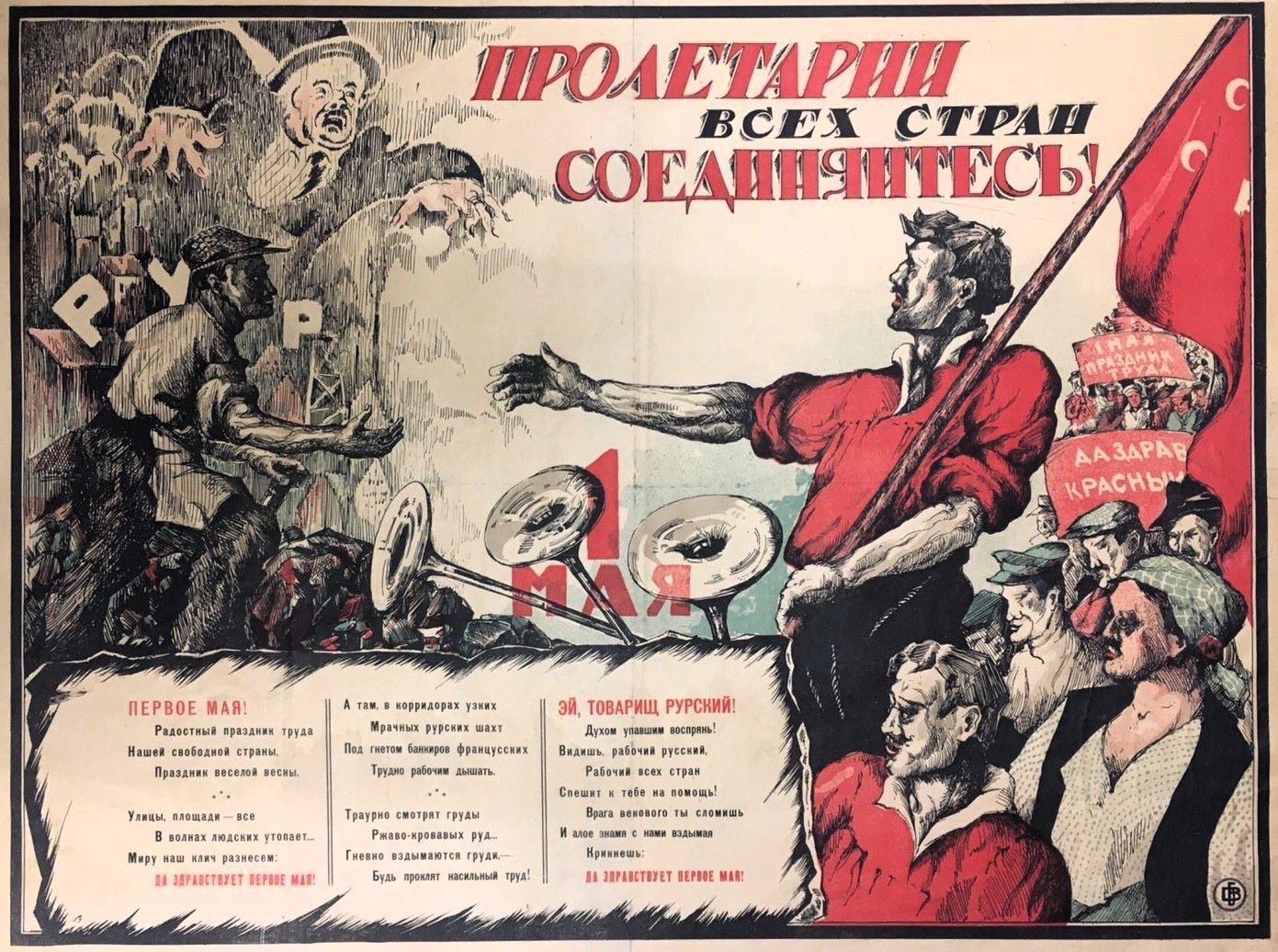
As stirring a legal treatise as has ever been made, and an important document in revolutionary history. Proclaiming the basic principles and objectives of the new state internally and externally, and to legally codify its work, this declaration, drafted by Lenin, was adopted on January 12 1918 by the 3rd All-Russian Congress of Soviets of Workers’ and Soldiers’ Deputies. Later that year the Declaration was made the first section of the original Constitution of the Russian Soviet Federative Socialist Republic.
‘Declaration of Rights and Duties of Toiling Humanity’ from Class Struggle. Vol. 2 No. 4. September-October, 1918.
We, the laboring people of Russia, workmen, peasants, Cossacks, soldiers and sailors, united in the councils of the Workmen’s Soldiers’, Peasants’ and Cossacks’ Delegates, declare in the persons of our plenipotentiary representatives, who have assembled at the All-Russian Congress of Soviets, the following rights and duties of the working and despoiled people:
The economic subjection of the laboring classes by the possessors of the means and instruments of production, of the soil, machines, factories, railways and raw materials — those basic sources of life — appears as the cause of all sorts of political oppression, economic spoliation, intellectual and moral enslavement of the laboring masses.
The economic liberation of the working classes from the yoke of Capitalism represents therefore the greatest task of our time and must be accomplished at all cost.
The liberation of the working classes must and can be the work of those classes themselves, who must unite for that purpose in the Soviets of the Workmen’s, Soldiers’, Peasants’ and Cossacks’ Delegates.
In order to put an end to every ill that oppresses humanity and in order to secure to labor all the rights belonging to it, we recognize that it is necessary to destroy the existing social structure, which rests upon private property in the soil and the means of production, in the spoliation and oppression of the laboring masses, and to substitute for it a socialistic structure. Then the whole earth, its surface and its depths, and all the means and instruments of production, created by the toil of the laboring classes, will belong by right of common property to the whole people, who are united in a fraternal association of laborers.

Only by giving society a socialistic structure can the division of it into hostile classes be destroyed, only so can we put an end to the spoliation and oppression of men by men, of class by class; and all men — placed upon an equality as to rights and duties — will contribute to the welfare of society according to their strength and capacities, and will receive from society according to their requirements.
The complete liberation of the laboring classes from spoilation and oppression appears as a problem not locally or nationally limited, but as a world problem, and it can be carried out to its end only through the united exertions of workingmen of all lands. Therefore, the sacred duty rests upon the working class of every country to come to the assistance of the workingmen of other countries who have risen against the capitalistic structure of society.
The working class of Russia, true to the legacy of the International, overthrew their bourgeoisie in November, 1917, and, with the help of the poorest peasantry, seized the powers of government. In establishing a dictatorship of the proletariat and the poorest peasantry the working class resolved to wrest capital from the hands of the bourgeoisie, to unite all the means of production in the hands of the socialistic state and thus to increase as rapidly as possible the mass of productive forces.
The first steps in that direction were:
1. Abolition of property in land, declaration of the entire soil as national property, and the distribution of it to the workmen without purchase money, upon the principle of equality in utilizing it.
2. Declaration as national property of all forests, treasures of the earth and waters of general public utility, and all the belongings, whether animals or things, of the model farms and agricultural undertakings.
3. Introduction of a law for workmen’s control of industry, and for the nationalization of a number of branches of industry.
4. Nationalization of the banks, which heretofore were one of the mightiest instruments lor the spoliation of society by capital.
5. Repudiation of the loans which were contracted by the Czar’s government upon account of the Russian people, thereby to deal a blow to international capital as one of the factors chiefly responsible for the war.
6. Arming of the laborers and peasants and disarming of the propertied classes.
7. Besides all this, the introduction of a universal obligation to work, for the purpose of eliminating the parasitic strata of society, is planned.
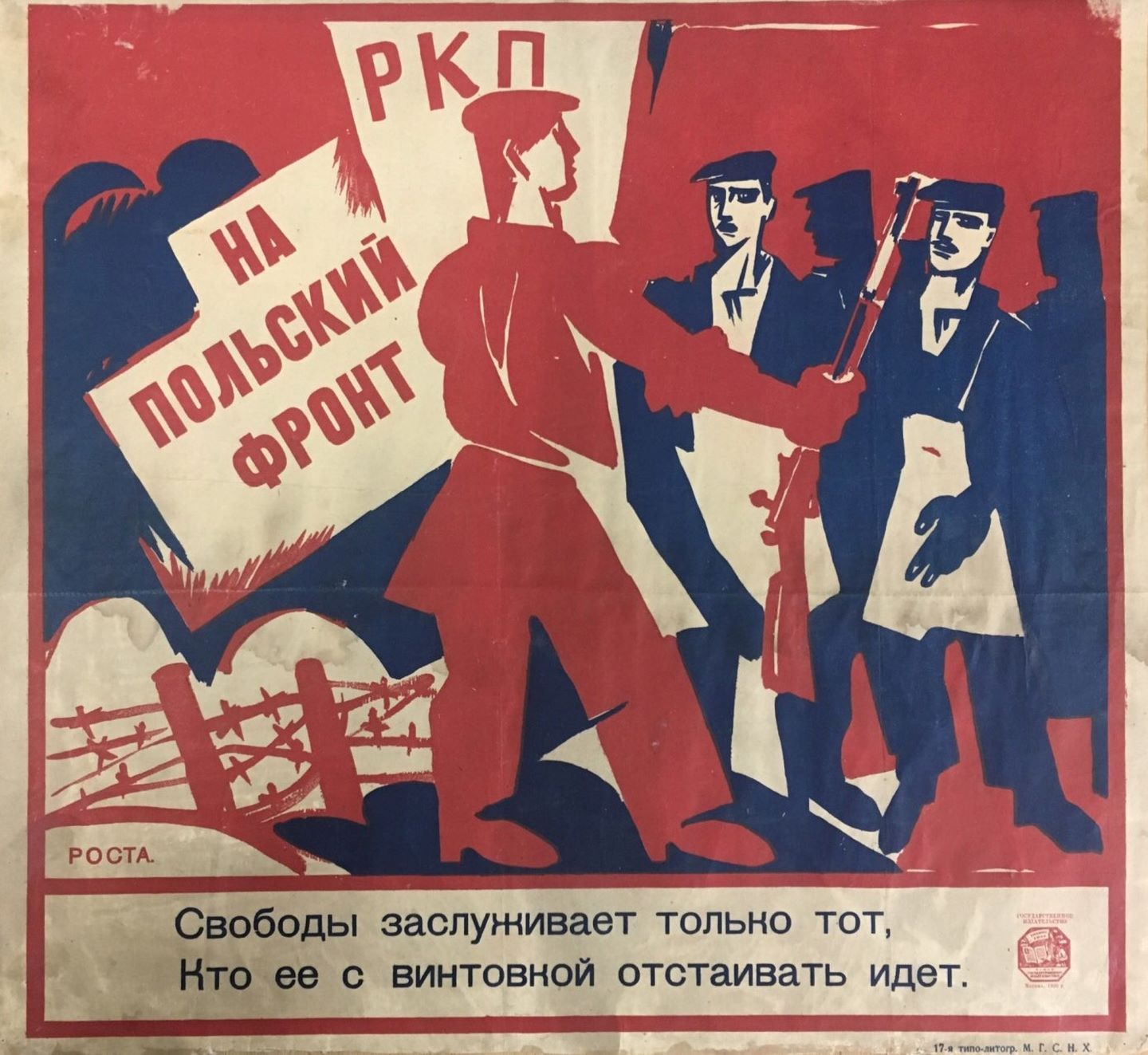
As soon as production shall have been consolidated in the hands of the working masses, united in a gigantic association, in which the development of every single individual will appear as the condition for the development of all men; as soon as the old bourgeois state, with its classes and class hatred, is definitely superseded by a firmly established socialistic society, which rests upon universal labor, upon the application and distribution of all productive forces according to plan, and upon the solidarity of all its members, then, along with the disappearance of class differences, will disappear also the necessity for the dictatorship of the working classes, and for state power as the instrument of class domination.
These are the immediate internal problems of the Soviet Republic.
In its relations to other nations the Soviet Republic stands upon the principles of the first International, which recognized truth, justice and morality as the foundation of its relations to all humanity, independent of race, religion or nationality.
The Socialistic Soviet Republic recognizes that wherever one member of the family of humanity is oppressed all humanity is oppressed, and for that reason it proclaims and defends to the utmost the right of all nations to self-determination, and thereby to the free choice of their destiny.
It accords that right to all nations without exception, even to the hundreds of millions of laborers in Asia, Africa, in all colonies and the small countries who, down to the present day, have been oppressed and despoiled without pity by the ruling classes, by the so-called civilized nations.

The Soviet Republic has transformed into deeds the principles proclaimed before its existence. The right of Poland to self-determination having been recognized in the first days of the March revolution, after the overturn in November the Soviet Republic proclaimed the full independence of Finland and the right of the Ukraine, of Armenia, of all the peoples populating the territory of the former Russian Empire, to their full self-determination.
In its efforts to create a league — free and voluntary, and for that reason all the more complete and secure — of the working classes of all the peoples of Russia, the Soviet Republic declared itself a federal republic and offered to the laborers and peasants of every nation the opportunity to enter as members with equal rights into the fraternal family of the Republic of Soviets (through action taken) independently in the plenipotentiary sessions of their Soviets, to any extent and in whatever form they might wish.
The Soviet Republic has declared war upon war, not only in words but also in deeds; and in doing so it formally and in the name of the working masses of Russia announced its complete renunciation of all efforts at conquest and annexation, as well as all thought of oppressing small nations. At the same time the Soviet Republic, to prove the sincerity of its purposes, broke openly with the policy of secret diplomacy and secret treaties, and it proposed to all belligerent nations to conclude a general democratic peace without annexations or indemnities, upon the basis of the free self-determination of peoples. That standpoint is still firmly adhered to by the Soviet Republic.
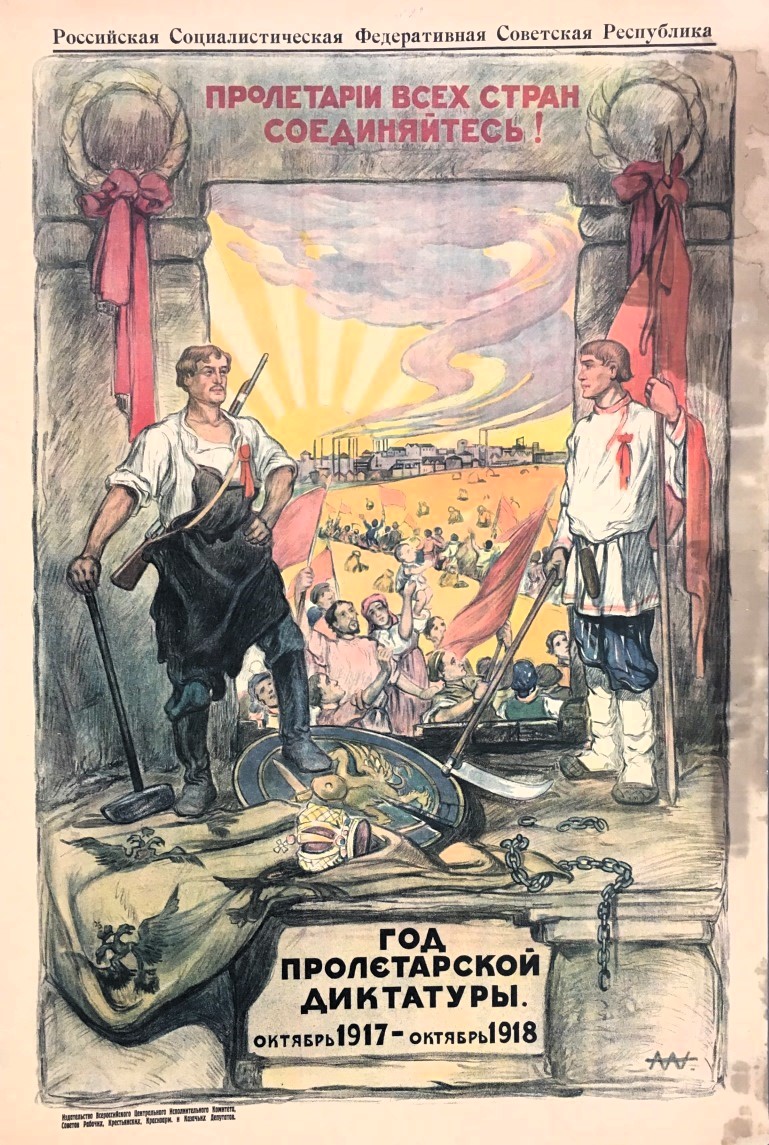
Compelled by the policy of violence practised by the Imperialisms of all the world, the Soviet Republic is marshalling its forces for resistance against the growing demands of the robber packs of international capital, and it looks to the inevitable rebellion of the working classes for the solution of the question of how the nations can live peacefully together. The international Socialist revolution alone, in which the laboring people of each state overthrow their own imperialists, puts an end to war once for all and creates the conditions for the full realization of the solidarity of the working people of the entire world.
Taking its stand upon the principles of the International, the Soviet Republic recognizes that there can be no rights without duties and no duties without rights, and therefore proclaims at the same time with the rights of the working classes in a rejuvenated society the following outline of their duties:
1. To fight everywhere and without sparing their strength for the complete power of the working classes, and to stamp out all attempts to restore the dominion of the despoilers and oppressors.
2. To assist with all their strength in overcoming the depression caused by the war and the opposition of the bourgeoisie, and to cooperate in bringing about as speedy a recovery as possible of production in all branches of economy.
3. To subordinate their personal and group interests to the interests of all the working people of Russia and the whole world.
4. To defend the Republic of the Soviets, the only socialistic bulwark in the capitalistic world, from the attacks of international Imperialism without sparing their own strength and even their own lives.
5. To keep in mind always and everywhere the sacred duty of liberating labor from the domination of capital, and to strive for the establishment of a world-embracing fraternal league of working people.
In proclaiming these rights and duties the Russian Socialist Republic of the Soviets calls upon the working classes of the entire world to accomplish their task to the very end, and in the faith that the Socialist ideal will soon be achieved to write upon their flags the old battle cry of the working people:
Proletarians of all lands, unite!
Long live the socialistic world revolution!
The Class Struggle is considered among the first pro-Bolshevik journal in the United States and began in the aftermath of Russia’s February Revolution. A bi-monthly published between May 1917 and November 1919 in New York City by the Socialist Publication Society, its original editors were Ludwig Lore, Louis B. Boudin, and Louis C. Fraina. The Class Struggle became the primary English-language theoretical periodical of the Socialist Party’s left wing and emerging Communist movement. Its last issue was published by the Communist Labor Party of America.
PDF of full issue: https://www.marxists.org/history/usa/pubs/class-struggle/v2n4sep-oct1918.pdf
 Revolution's Newsstand