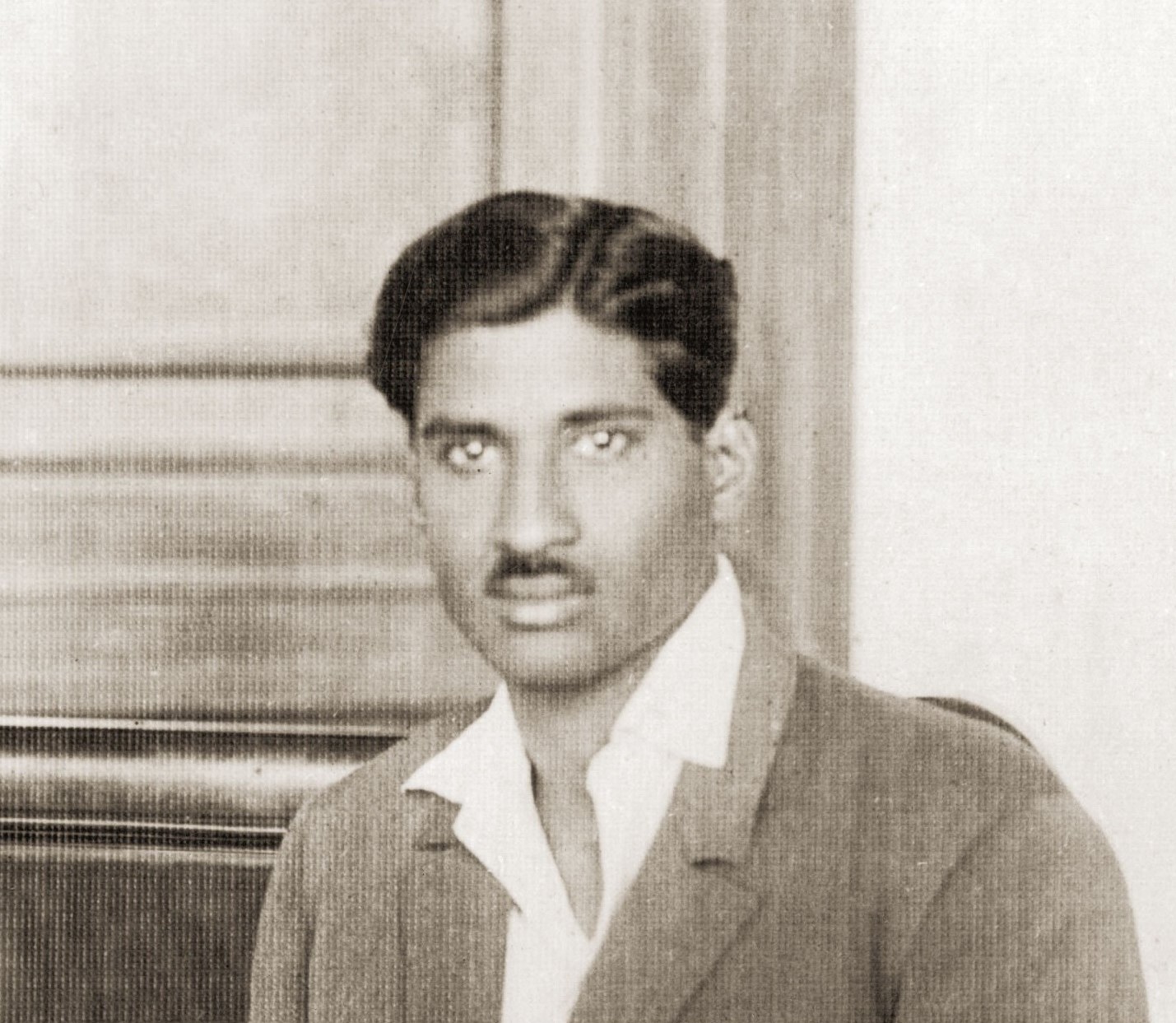
M.N. Roy writes the limits of the Labour Party’s ‘Left Wing,’ always circumscribed by imperial interests, in addressing demands for Indian self-determination.
‘The British Labour Party and India’ by M.N. Roy from International Press Correspondence. Vol. 6 No. 10. January 28, 1926.
While the MacDonald Government made it clear that the official attitude of the British Labour Party towards India differed very little from that of the bourgeoisie, the Left Wing position has been rather ambiguous. The Left Wing leaders from time to time protested against extraordinary repression and generally criticized imperialism. They also expressed their sympathy with the Indian nationalists. But it has always remained doubtful how far the Left Wing leaders of the British Labour Party would go in the way of practically supporting India’s demand for freedom. There have been instances indicating that the Left Wing did not stand for the programme of giving India full and unconditional right of self-determination. One of such instances was the severe condemnation by Col. Wedgwood of the Gandhi movement of non-cooperation, not owing to its reactionary social outlook, but because of its mass composition and revolutionary potentialities. Another instance has been Lansbury’s frank and persistent declaration in favour of retaining India inside the British Empire, instead of having her break away from it. On many other occasions Left Wing leaders have condemned any revolutionary tendency in the Indian Nationalist Movement.
At last the veil has been lifted. The Left Wing leaders have made it clearly known how far their sympathy for India’s aspiration will go. Their proposal is contained in a draft bill brought before the British Parliament by Lansbury, Wedgewood, Bromley, and several others. This bill has been framed on the basis of the so-called Commonwealth of India Bill which was last year presented to the British Labour Party by Mrs. Besant. In drafting the Commonwealth of India Bili, Mrs. Besant was supported by a comparatively small section (loyalist) of the Indian bourgeoisie. In the beginning, the left nationalist groups (Swarajists, Non-cooperators, revolutionary nationalists) refused to subscribe to Mrs. Besant’s draft bill. Eventually the Swarajists’ through C.R. Das and Gandhi, expressed their desire to subscribe to the bill, if its passage in the British Parliament was guaranteed.
The sum and substance of Mrs. Besant’s bill was that India would be granted the status of a self-governing dominion (inside the British Empire like Canada, Australia, South Africa, etc.) by an Act of the British Parliament. The bill prepared by the Left Wing leaders of the British Labour Party does not go even that far. Formally it grants the status of a self-governing dominion, but, in reality, the political rights granted by the bill leave India entirely under imperialist domination.
The main features of the bill are 1. The British Viceroy appointed by the English King will still retain the absolute power; 2. the Viceroy will appoint and dismiss his ministers; 3.-He will have the right to dissolve the parliament elected by the people; 4. in addition to the autocratic pro-consul there will be another check upon the rights of the parliament: it will be a Senate representing the landed aristocracy, big capitalists and higher bureaucrats; 5. All the provincial governors will be appointed by the Viceroy.
These are the “measures of freedom” that would be permitted to the Indian people even by the Left leaders of the British Labour Party. If credence is to be given to rumours, the majority of the Party led by MacDonald will not support the bill. They evidently consider the bill to be too strong a dose of freedom to suit the Indian stomach. The majority of the party led by MacDonald might still prove themselves sturdier defenders of the Empire than the Tories. Because there is hardly anything in this bill which is essentially more than the British bourgeoisie are prepared to grant. As a matter of fact, the Left Wing leaders have given concrete expression to their support and sympathy for India’s aspirations fully in conformity with the programme of British Imperialism. There is no doubt about it that the post-war crisis of capitalism has imposed upon imperialism a somewhat reconstructed colonial policy. The underlying principle of this policy is to win over a larger section of the Indian bourgeoisie by economic concessions and political reforms. Many economic concessions have already been made in order to convince the Indian bourgeoisie that capitalist development of India could proceed (even with unexpected rapidity) with the co-operation and under the hegemony of Imperialism. Consequently the Indian bourgeoisie have reduced their political demands to extreme moderation. Of late, Imperialism has been manoeuvring to find a way of granting this moderate demand of the Indian bourgeoisie without losing prestige. This moderate demand was incorporated in the Commonwealth of India Bill brought to England by Mrs. Besant. The Bill of the Left Wing leaders of the Labour Party contains a still more moderate version of that demand. The Left Wing leaders have acted in a statesmanlike way. They have not acted prematurely. They have brought forward a concrete proposal of reforms in India just at the moment when the bourgeoisie are also in favour of some reform; and they have formulated the reforms on the lines that are known to be more or less acceptable to the British bourgeoisie.
It is hardly necessary to analyse the bill to expose its worthlessness. It does not give the Indian people any political right. The economic aspect of the question is totally left out. How can India govern herself and be governed by British Imperialism through the Viceroy at the same time? The bill does not answer this question. The parliament granted by the bill will have no more power than the present one, even if the electorate is enlarged. (I am not informed whether the bill touches the Franchise Question at all). If the parliament will be based upon a larger electorate, then by the fact. that the Viceroy. is given. the, right to dissolve it, makes the Viceroy a more powerful autocrat than he hitherto has been. The result will be an apparent increase of the element of’ self-government, but an essential increase of British absolutism in the Government of India. As a matter of fact, in essentials, this bill is hardly an improvement upon the Reforms granted in 1919, notwithstanding the term Dominion status.
Owing to their lamentable timidity and deep-rooted imperialist prejudice, the Left Wing leaders have produced a plan of Indian reform which fails to go anywhere near the very minimum demand of the Indian people. This plan might secure the approval of the most loyalist section of the Indian bourgeoisie but will certainly be rejected by the majority of the people.
International Press Correspondence, widely known as”Inprecorr” was published by the Executive Committee of the Communist International (ECCI) regularly in German and English, occasionally in many other languages, beginning in 1921 and lasting in English until 1938. Inprecorr’s role was to supply translated articles to the English-speaking press of the International from the Comintern’s different sections, as well as news and statements from the ECCI. Many ‘Daily Worker’ and ‘Communist’ articles originated in Inprecorr, and it also published articles by American comrades for use in other countries. It was published at least weekly, and often thrice weekly.
PDF of full issue: https://www.marxists.org/history/international/comintern/inprecor/1926/v06n10-[mis-p148]-jan-28-1926-Inprecor.pdf
 Revolution's Newsstand