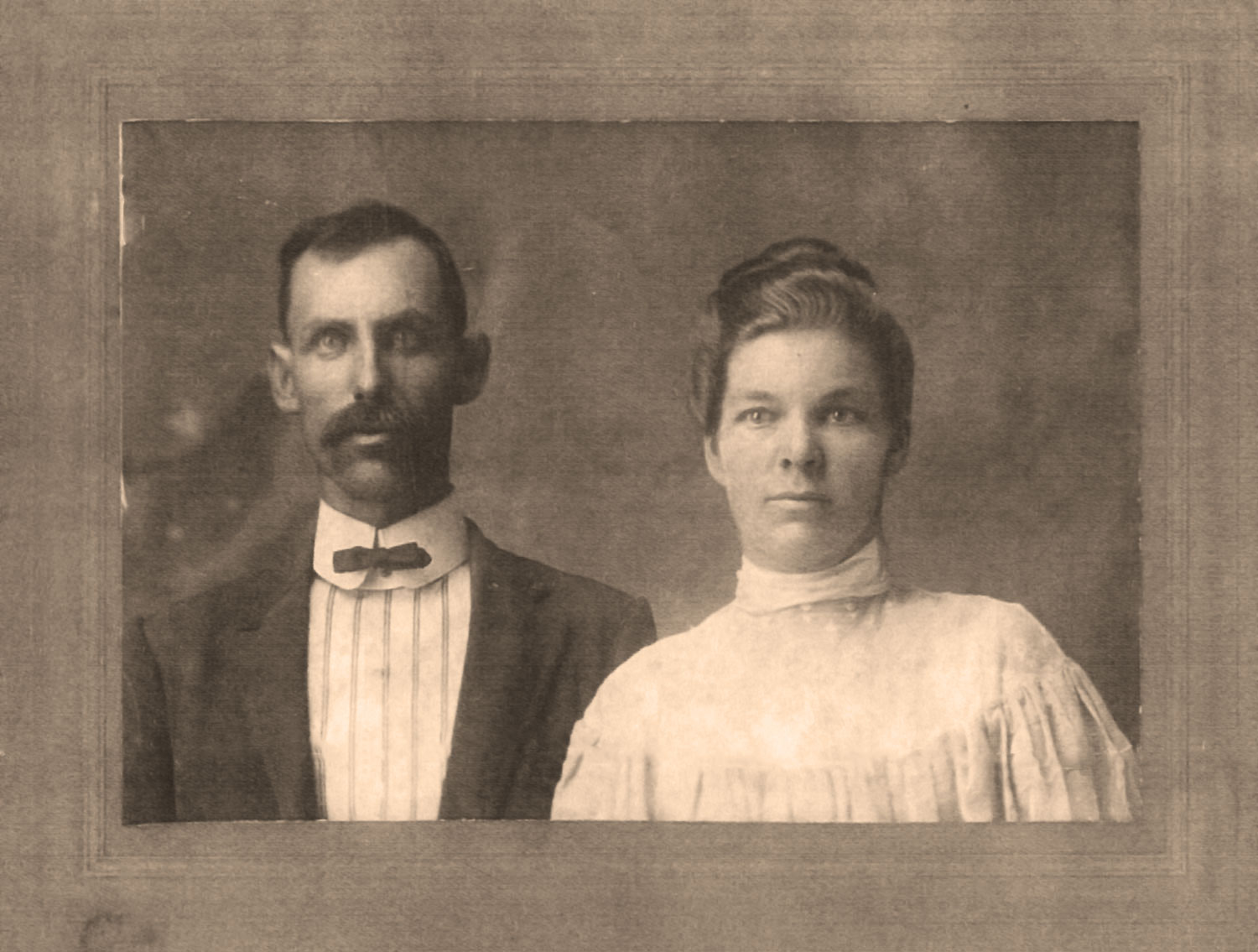
Emma Goldman writes the obituary of her comrade Ross Winn. Southern-based Winn was one of the leading anarchist writers and publishers in the U.S. of his age. He died in 1912 of tuberculosis at 41.
‘Ross Winn’ by Emma Goldman from Mother Earth. Vol. 7 No. 7. September, 1912.
THE inexorable master, Death, has again visited T the Anarchist ranks. the Anarchist ranks. This time its victim was Ross Winn, one of the most earnest, sincere, and able American Anarchists.
Never has the power of the Ideal been demonstrated with greater force than in the life and work of this man, Ross Winn. For nothing short of a great ideal, a burning, impelling, all-absorbing ideal, could make possible the task that our dead comrade so lovingly performed during a quarter of a century.
Born in Texas 41 years ago, of farmer parents, young Winn was expected to follow the path of his fathers. But the boy had other dreams, dreams extending far beyond the confines of his parents’ farm; far beyond his immediate ties. His were dreams of the world, of humanity, of the struggle for liberty. He was possessed by a passionate longing to learn the printing trade, and by means of it to carry a message to mankind. His father, however, was opposed to such “foolish” notions, but Ross could not be daunted either at the age of 16, or during the rest of his life. He worked as a farm hand and picked cotton, and out of his meager earnings he bought for himself a small hand press. It was at a time when plutocracy, drunk with power, was about to put to death the men whose ideas were to serve as a beacon light in the life of Ross Winn—the Chicago Anarchists. Verily, Spies was prophetic, “The voices in the grave will speak louder than those you strangle today.”
Voltairine de Cleyre and Ross Winn—two native children of America heard the strangled voice, and forthwith set themselves to keep alive the work for which our brave comrades had died.
Ross Winn immediately made himself conversant with the philosophy of Anarchism, which found in him a powerful, uncompromising, and daring exponent. Soon after the death of our Chicago comrades, he revived the Alarm, founded by Albert Parsons and later published by Dyer D. Lum.
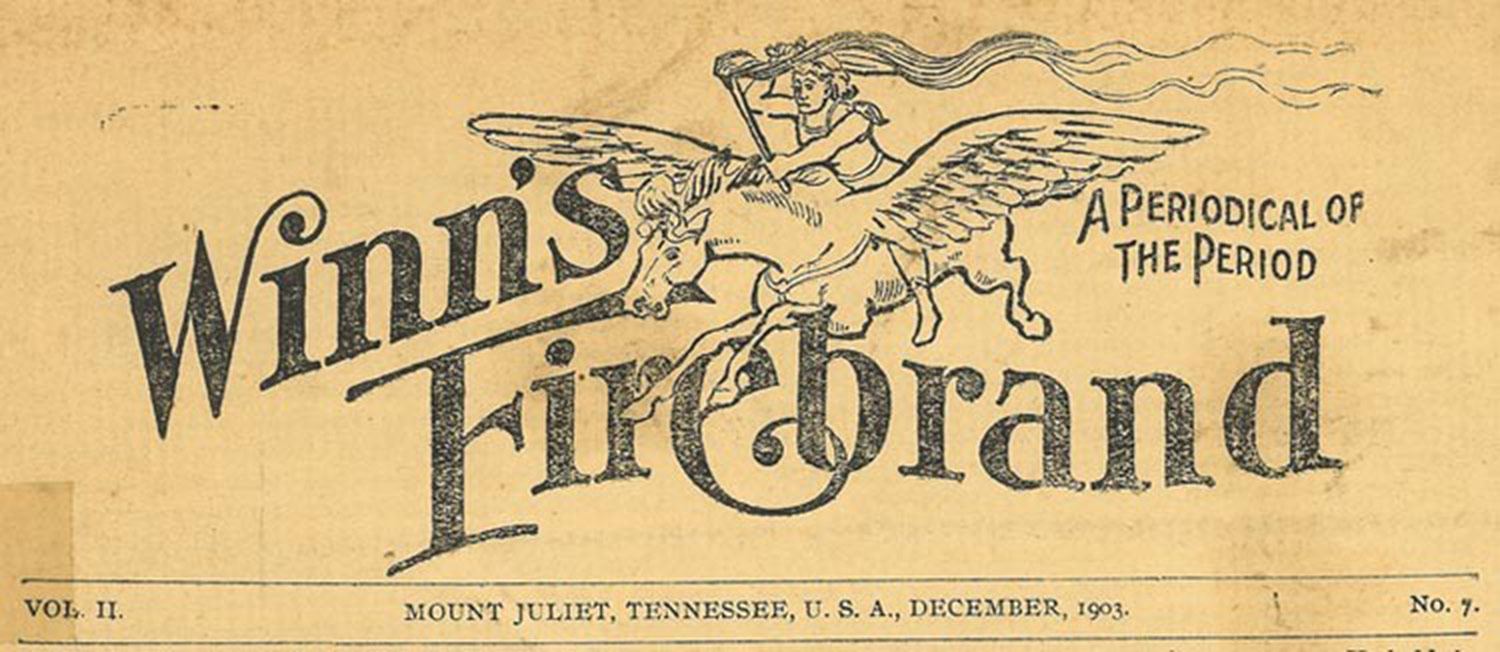
Always harassed by poverty that later caused his illness and death, our comrade was often compelled to discontinue his publishing work. But never for very long. Thus we find him again at the helm in 1894, issuing a little paper called the Co-operative Commonwealth; then in 1898, the Coming Era; in 1899, Winn’s Freelance. Pressed by adverse economic conditions, our comrade at this time was forced to suspend his publication, contributing, however, meanwhile for the Free Society, published by the Isaac family. But in 1909 Winn again resumed his own publication, Winn’s Firebrand, which he subsequently called the Advance, and later the Red Phalanx.
Always his one supreme passion was a paper, to arouse, inspire, and educate the people to a higher conception of human worth. So intense was that passion, that we find our comrade preparing copy on the very last day before his death for the August issue of his paper, from which we reproduce some of Winn’s trenchant editorials. I met our comrade in Chicago, in 1901, and was deeply impressed with his fervor and complete abandonment to the cause,—so unlike most American revolutionists, who love their ease and comfort too well to risk them for their ideals.
Ross Winn was of the John Brown, Albert Parsons, and Voltairine de Cleyre type. He lived and worked Only for his ideas and would have gone to the gallows with the same fortitude. But fate decreed that he Should die a hundred deaths. Three years ago our comrade fell a victim to the disease of the poor—tuberculosis. He had little faith in doctors, and he tried nature instead. Unfortunately one cannot live on nature alone, especially when one has a wife and child. And so Ross Winn had to return to civilization. In Mount Juliet, Tennessee, assisted by his devoted companion, Gussie Winn, and cheered by his child, Ross Jr., he eked out a miserable existence, and kept up his propaganda. Last year, however, his condition made work impossible, but he was too proud to ask assistance from his comrades even. It was through his wife that we learned of their terrible plight and immediately raised a small sum, which might have kept him in comfort for a while. But the only thing that meant comfort for Ross Winn was the spreading of his beloved ideas. And so he spent sixty dollars—a fortune to the little family—on a new printing outfit, and the Advance was again resumed.
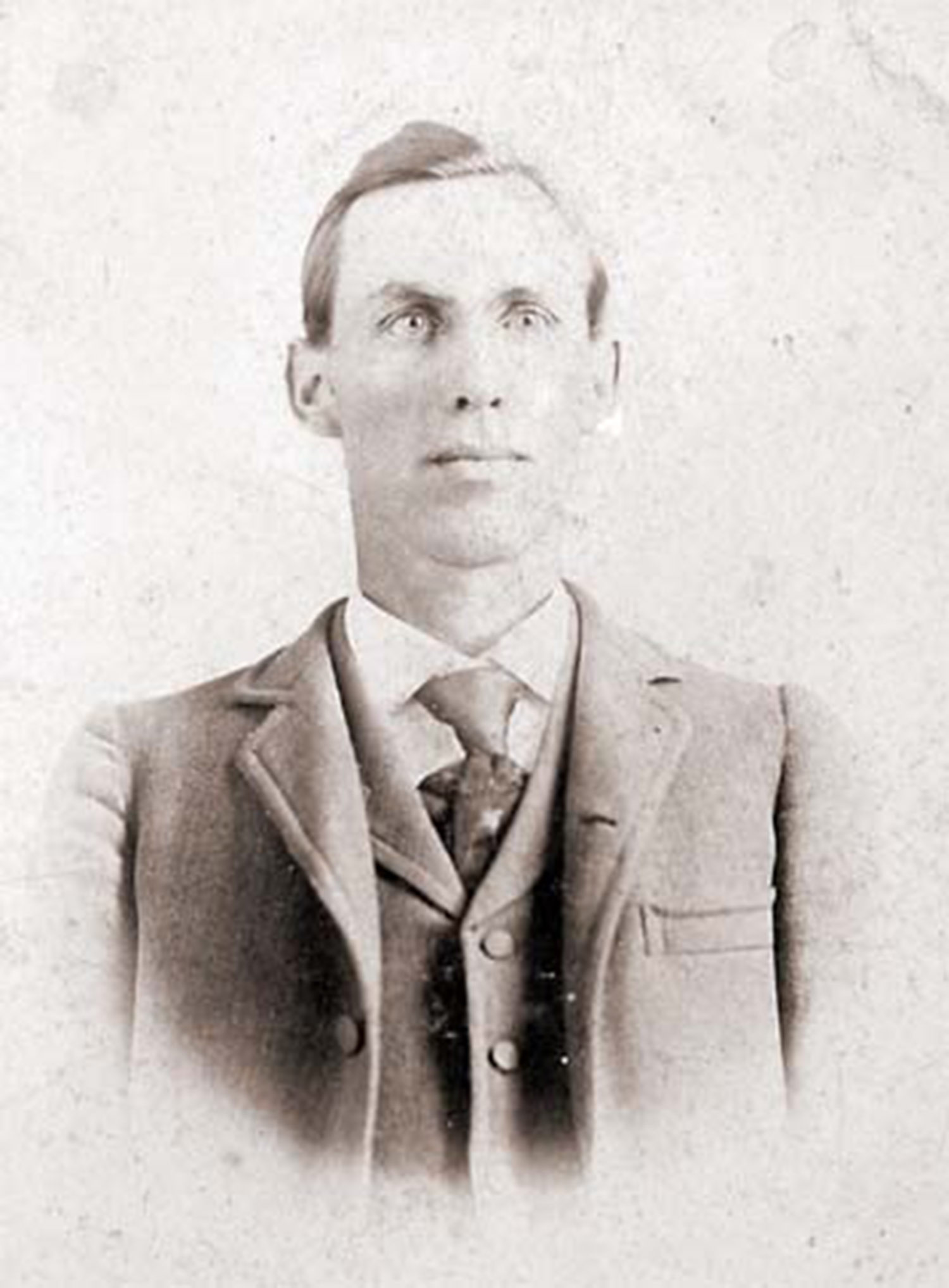
It was this that helped more than medicine or nature to prolong the life of our tireless comrade. And then the end came. In the early morning hours of August 8th, the inexorable master, Death, stilled the fervent, burning heart of Ross Winn. Only faithful Gussie and their boy were with him. The good Christian neighbors had no use for the heretic. Poor fools! How could they fathom the beauty and love that permeated the man whom they had feared in life and shunned in death.
He is beyond them now, but not so his boy, whom next to his ideals he loved most, and whom he had hoped to save from Christian kindness and patriotic beneficiency. Ross Winn is beyond it all; but we are still here, not only to continue his work with the same ardor and devotion as he, but also to bring to his child, even in a small measure, the comradeship and care of his father.
At the death of Ross Winn, nine dollars was all that was left to his family.
Their need is great and immediate. I therefore earnestly urge that a fund be raised at once to assist the family of our dead comrade. Contributions can be sent direct to Gussie Winn, Route 3, Mount Juliet, Tennessee, or in care of Mother Earth.
It is only through the manifestation of solidarity that we can prove the living force of the ideas and ideals for which Ross Winn lived, worked, and struggled.
Mother Earth was an anarchist magazine begin in 1906 and first edited by Emma Goldman in New York City. Alexander Berkman, became editor in 1907 after his release from prison until 1915.The journal has a history in the Free Society publication which had moved from San Francisco to New York City. Goldman was again editor in 1915 as the magazine was opposed to US entry into World War One and was closed down as a violator of the Espionage Act in 1917 with Goldman and Berkman, who had begun editing The Blast, being deported in 1919.
PDF of full issue: https://archive.org/download/mother-earth/Mother%20Earth%20v07n07%20%281912-09%29%20%28c2c%20Harvard%20DSR%29.pdf
 Revolution's Newsstand