
Informative piece on the newspapers and magazines of the Japanese Communist Party in the early 1930s.
‘The Revolutionary Press of Japan’ from International Press Correspondence. Vol. 12 No. 56. December 15, 1932.
The central organ of the Communist Party of Japan, “Sekki”, (Red Flag) published its 100th number on October 15. The publication of “Sekki” began in 1928 after the first mass arrest of the leading functionaries of the C.P.J. which had been driven underground. In spite of unceasing persecution, “Sekki” was the winner in all conflicts with the police and gendarmes, owing to its reliance on the enthusiasm and loyalty of the workers and peasants to the cause of the revolution.
After the second breakup of some of the chief organisations of the C.P.J. in April 1929, “Sekki” again became the centre and the organising backbone for the organisations of the C.P. of Japan and played a prominent role in the reorganisation of the ranks of the Communist Party.
In 1932, “Sekki” achieved a new and tremendous victory. As the result of a mass campaign to collect money for the “Sekki”, the paper has appeared regularly once in 5 days in the form of a printed newspaper.
The formation of a “Sekki” printing plant made it technically possible to convert “Sekki” into a real mass paper.
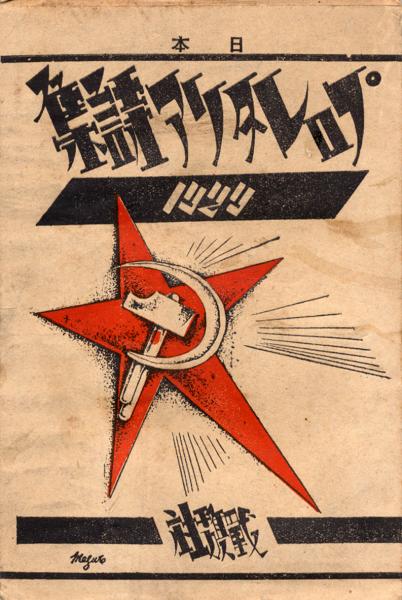
The paper is printed in thousands of copies, and reaches a great number of readers. In most factories, mines and villages there are circles of worker correspondents of “Sekki” who are united around their own wall newspapers which grow up utilising the experience accumulated by the central organ. At present “Sekki” is carrying on a campaign for the further increase of its circulation and for making it into a three-day paper.
In the jubilee number, “Sekki” publishes an appeal from the editors of the paper to the oldest Bolshevik paper “Pravda” and the central organ of the C.P. of China “Huntsi” (Red Flag). In the appeal to “Pravda” it says:
“Dear comrades of ‘Pravda’. You will understand the tremendous tasks which face the C.P. of Japan. Japanese imperialism leads the counter-revolutionary international interventionist front against the U.S.S.R.–the fatherland of the toilers of the whole world. Japanese imperialism is shamelessly plundering China.
“The monarchy and the capitalist class are enslaving and exploiting the workers and peasants by colonial methods. The workers and peasants are deprived of the most elementary rights. Rebellion against oppression by the revolutionary masses is punished by imprisonment and death. In such circumstances the C.P.J. is carrying on a struggle against imperialist war, for the overthrow of the monarchy, for rice, land and freedom, for the people’s revolution and the formation of the worker’s and peasants’ government.
“’Sekki’ is publishing its 100th copy under the slogan of the consolidation and extension of this struggle. ‘Sekki’ organises this struggle to convert imperialist war into civil war and organises the development of the struggle for the defence of the U.S.S.R. ‘Sekki’ organises the struggle against the slaughter of the revolutionary vanguard which is being carried out at the orders of the Mikado.
“The workers and peasants of Russia, under the leadership of the Bolsheviks, overthrew Tsarism and established the dictatorship of the proletariat. At present the construction of socialist classless society is going on in the U.S.S.R. During the whole of this heroic struggle, “Pravda” was one of the chief weapons of the Bolsheviki.
“The Japanese workers and peasants look on the struggle of the workers and peasants of the U.S.S.R. as a model for their own actions and study their path of revolution and liberation. In the same way, “Sekki” looks on “Pravda” as its prototype and sets itself the aim of becoming the “Pravda” of revolutionary Japan.”
‘Sekki’ is not alone in the struggle for the Bolshevisation of the C.P.J. and the organisation of the workers and peasants. The C.P.J. has published a monthly organ “Tokensetsusha” (Party construction) since June 1st, 1931, dealing with questions of the building of the Party.
In the first number of the journal, the editors write as follows on the tasks of “Tokensetsusha”:
“The chief task in leading the revolutionary struggle of the worker and peasant masses is the overcoming of the existing backwardness of the tempo of Party construction. For this purpose we must greatly accelerate the Bolshevisation of the Party, carry on a determined struggle against opportunism which has deeply rooted itself in the Party.
“The study and utilisation of revolutionary practice is the best means of struggle for Bolshevisation. The central monthly organ of the Party “Tokensetsusha” will make all Party members acquainted with concrete figures on Party construction, with the concrete and practical work of individual Party members and in its pages will carry on the exchange of experience, opinions and practical proposals which may be useful for the Bolshevisation of the Party.
“The central organ of the Party “Sekki” already appears once in 5 days. In addition the Party proposes to issue a theoretical journal, the monthly “Bolshevik”. Together with these organs “Tokensetsusha” will show the concrete activity of the organisers and agitators of the Party in the factories, villages and barracks.
“All the workers, peasants and soldiers must become readers of “Tokensetsusha” and look on the material of the journal as a lever of Leninist self-criticism so as to be able to utilise the journal as a guide for everyday work.
“Thus, the first number of the journal appeals to all readers with the slogan:
“For the Bolshevisation of your revolutionary practice, for the strengthening and consolidation of Leninist leadership in the factories, mines, villages, barracks and battleships.”
In the first number of the journal there was much interesting material from the revolutionary practice of the C.P.J. In particular, the history of the concrete leadership of the successful strike of the Tokyo underground railway workers was set out in detail.

One of the most experienced and most authoritative organisers of circles of readers of “Sekki” in factories and mills gave his experience.
Further, there is given a diary of a Communist functionary participating in the election campaign on the eve of the parliamentary elections. Two articles deal with the practice of the Party organisers in the villages, and a short estimate is given of the struggle of the tenant peasants in the village of Urusima in the prefecture of Niigata. The number contains concrete material on the strike of the food workers. Finally, the number gives the experience in organising the children of the tenant peasants fighting against the landlords.
The practical significance of the first number of “Tokensetsusha” is undoubtedly tremendous. The second number of the journal which appeared with great delay–August 29, almost 3 months later–dealt with 3 basic questions: The agrarian revolution, the International Red Day of August 1st and the struggle against imperialist war.
Three articles dealt with the question of the agrarian revolution and the concrete practice of the peasant movement. While giving concrete examples of the struggle of the workers in the machine shops of Niigata and the acute struggle of the peasants in the prefecture of Niigata, the journal emphasises that the Communists and the district organisation of the C.P.J. were unable to link up the struggle of the workers and peasants and to merge them into one whole. A considerable number of peasants in the prefecture are organised and carry on the struggle under the leadership of real revolutionary elements. The same applies to the metal workers of Niigata, but nevertheless the possible contacts were not established.
Examples of the incorrect understanding of the real tasks in the villages are given in the second article on the peasant movement. In one of the villages about 30 tenant peasants, led by the left wing of the Peasant League “Dzenkoku Nomin Kumlai” who had cultivated about 60 chobu of land for 6 years refused to pay rent. The landlord and the local, authorities retreated before the solidarity of the peasants and took no measures to levy the rent. As a result, the population of the village are in much better conditions than the surrounding villages who remained on one side and took no part in the struggle of their neighbours. One of the village organisers of the Party who had been in this village returned to the centre and reported: “Everything is in order in the village, all are satisfied. They have obtained what they wanted, their feelings are good and the question may be considered to be finished with. The question of the right to own the land does not play any role. The rent is not collected. We do not need any organisational work there because the solidarity of the tenant peasants there is excellent”. The journal points out the mistakes of this point of view.
The revolutionary peasant movement led by the Party cannot restrict itself to the unstable success of refusing the payment of rent. The Party is working for an agrarian revolution, the complete remaking of agrarian relations, naturally not in some individual corner but on an all-Japanese scale. The population of this village must know that only a joint struggle with the other peasants and with the city Proletariat will ensure them the right of not paying rent to the landlord parasites. The peasant committee of the village can and must become the standard bearer of a movement for the expropriation of the land of the landlords, and only after this fundamental task has been carried out can we make the statement that everything is in order in this village.
The biggest mistake of the district committee was its failure to notice the absence of a political struggle in the village, being satisfied to establish that “the economic struggle is finished and there is nothing more to do.”
A similar underestimation of the political struggle took place in another place, in a village of the same prefecture. Here three poor peasants united in a commune–they joined together their property and debts and began to work the land in common, and to pay their debts to the money-lender in common. In both cases the common symptom was the absence of a political struggle, The “communards” also limited themselves to the economic struggle and did not think of the struggle against the landlord-capitalist state. The Communist Party, as represented by the district committee, was unable to give them the necessary aid, was unable to develop and lead the political struggle which will consolidate the victory of the peasants.
At the same time the journal points to the slow increase of the number of village wall newspapers. The number of readers of “Sekki” in the villages has increased, but the tempo of increase of the village papers has been very slow. “Tokensetsusha” points out the prominent importance of village newspapers containing material which is of interest to the readers, and calls on all Communists in the villages to pay the greatest attention to this question.
The journal puts forward the slogan “In addition to the reading of ‘Sekki’, every village must have its own village newspaper.”
In an article dealing with the experience of the celebration of August 1st, the journal gives vivid examples to illustrate the weakness of mass work by various organisations. Some organisations continue to underestimate the necessity of carefully preparing a plan for mass activity. In one district of Tokyo on August 1st, 1,000 workers turned up on time at the point which had been announced in advance for the anti-imperialist demonstration. Nevertheless the police succeeded in dispersing them, because the leaders who had not worked out a plan in advance did not know where and how to move the demonstrators who had assembled. Instead of having a route decided in advance, arguments commenced as to which streets the procession should march along, and the police were able to drive off the workers who did not know where to go.
The third basic problem-the conversion of the struggle against imperialist war into a mass movement of workers and peasants-is dealt with by “Tokensetsusha” in 3 separate articles. In addition to the various methods of work in the factories, villages and barracks, one of the authors describes his experience in forming an “association of visitors soldiers”. Often the soldiers are not allowed even a weekly day of rest and are kept locked up in the barracks.
The representatives of the association are welcome guests for the soldiers and are able to give them news and make them acquainted with the real state of affairs.
Another author describes the experience of winning over the soldiers who have returned from Shanghai and Manchuria. The workers of a factory or the peasants in a village organise meetings of welcome for the soldiers, and together with them discuss the events and the plans of the imperialists. The questions and answers at such meetings of welcome always give good results. The author gives a short description of a number of such meetings of welcome, affirms their usefulness, but points out that the Party has not yet succeeded in utilising them fully owing to their novelty and recommends that a plan should be discussed for raising this very promising commencement to a higher stage.
Finally, the journal contains material on the life of the sailors in the navy and a number of practical propositions on the methods of organising the sailors in the navy.
In this number of the journal, as in the first number, practical instructions are given regarding the organisation of the children’s movement.
On September 15th the C.P.J. commenced the regular publication of a fortnightly paper “Heisino Tomo” (The Friend of the Soldier), intended for distribution among the soldiers and sailors.
In the first number, the editors explain in simple language the history of the founding of “Heisino Tomo” and explain the basic aims of the journal.
“Heisino Tomo” was formed at the request of revolutionary soldiers and sailors who were deprived of the possibility of learning the real situation in the country and the real position of their families whom they have left in the villages or the towns.
“The bourgeois papers like ‘Asahi’ or ‘Nitsi Nitsi’ are not friends of the soldiers and sailors. They try to describe life in the barracks or on the warships as heaven. The soldiers and sailors well know how false these statements are.
“The bourgeois papers do not give any reply to the questions of the soldiers and sailors. For example, the soldiers are forcibly sent to the war in Manchuria. The authorities state in the newspapers that certain sums of money have been collected to assist the families of the conscripts. But the papers do not say why the wives and children of the conscript soldiers are hungry, as can be seen from the letters which the soldiers receive from home.
“The soldiers often ask the officers “what are we fighting for”? “Shall we live better if we win?” The officers usually reply: “Of course, if we can occupy Manchuria.” “But my mother, wife and children are starving now. Is it impossible to arrange for them to live better now and not in the future?” “Silence” is the answer. “You must fight in the interests of the whole country and it is not your business to argue.’
“The bourgeois papers do not give a single word about such conversations which frequently take place in Manchuria.
“In the barracks, the soldiers are subjected to humiliation and suffering. Why are the soldiers trained under such conditions? No paper gives an answer to this question. When a soldier has finished his time of service, he returns home. He is told that “in view of the depression he cannot be given his old job”. But the soldier has suffered for two years in the barracks “in the interests of the state” and has the right to demand work. The papers say nothing about this.
“The papers tell nothing of the tremendous difference between the Red Army and the Japanese army. Why can the workers and peasants of the U.S.S.R. become commanders, while in Japan officers can only be taken from among those who have money and who have been to school. Why are the Red Army men and the Red commanders comrades and brothers?
“In the Japanese army, the soldiers are taught that the army is needed to defend the interests of the state. In this case, how can you explain why the soldiers were compelled to shoot at peasants in the Gifu prefecture when they refused to repair the dam on the River Sai, which flooded the peasants’ fields after it had been repaired?
“Why were the soldiers forced to kill the leaders of the revolutionary workers’ movement during the 1923 earthquake? Not a single paper writes about this.
“When the workers are on strike or when the tenant peasants refuse to carry out the demands of the land- lords who are driving them from the land, the officers of the reserve compel the reservists to become strike-breakers and defenders of the landlords. None of the bourgeois papers tell us that these officers are the blood brothers of the factory owners and landlords, and op- press the masses together with them.
“Under such conditions, continues the newspaper, the front in Manchuria is being enlarged at the present time. The officers now openly state “soon we shall start a war against the Soviet Union”.
“We are driven into the cold of North Manchuria, we are compelled to leave our parents, wives and children, who are doomed to starvation in our poor huts without us. What shall we do? Neither “Asaki” or “Nitsi Nitsi” will reply to this difficult question.

“Heisino Tomos” replies to all these questions. It teaches the soldiers and sailors how to abolish such conditions. “Heisino Tomos” lives the life of the workers and peasants in soldiers’ uniform and points out the way for them. Make “Heisino Tomos” into your real friend! Read it together and discuss what you have read together! Ask any question which arises in your discussion, and “Heisino Tomos” will reply it.”
In calling on the soldiers to rally around “Heisino Tomos” the journal in the first number replies to all the questions raised in the preface from the editors which we have given above. The journal explains in detail the basic reasons of the Manchurian and Shanghai adventure of Japanese imperialism. A picture is also given of the preparations to form an anti-Soviet bloc of imperialist powers and the role of imperialist Japan in these preparations.
There is particular value in the facts which are given and the concrete statements about the energetic work of the employers in the munition factories in Japan who have received big orders, both in connection with the events in Manchuria and Shanghai and in connection with the preparations for a new war. The details on unpaid overtime work in these munition factories which are prospering under war conditions are particularly eloquent.
“Heisino Tomos”, together with the other organs of the C.P.J., will undoubtedly play a big role in the leadership of the workers and peasants of Japan who are becoming more and more revolutionary.
International Press Correspondence, widely known as”Inprecor” was published by the Executive Committee of the Communist International (ECCI) regularly in German and English, occasionally in many other languages, beginning in 1921 and lasting in English until 1938. Inprecor’s role was to supply translated articles to the English-speaking press of the International from the Comintern’s different sections, as well as news and statements from the ECCI. Many ‘Daily Worker’ and ‘Communist’ articles originated in Inprecorr, and it also published articles by American comrades for use in other countries. It was published at least weekly, and often thrice weekly. The ECCI also published the glossy magazine ‘Communist International’ edited by Zinoviev and Karl Radek from 1919 until 1926 monthly in German, French, Russian, and English. Unlike, Inprecor, CI contained long-form articles by the leading figures of the International as well as proceedings, statements, and notices of the Comintern. No complete run of Communist International is available in English. Both were largely published outside of Soviet territory, with Communist International printed in London, to facilitate distribution and both were major contributors to the Communist press in the U.S. Communist International and Inprecor are an invaluable English-language source on the history of the Communist International and its sections.
PDF of issue: https://www.marxists.org/history/international/comintern/inprecor/1932/v12n56-dec-15-1932-Inprecor-op.pdf
 Revolution's Newsstand