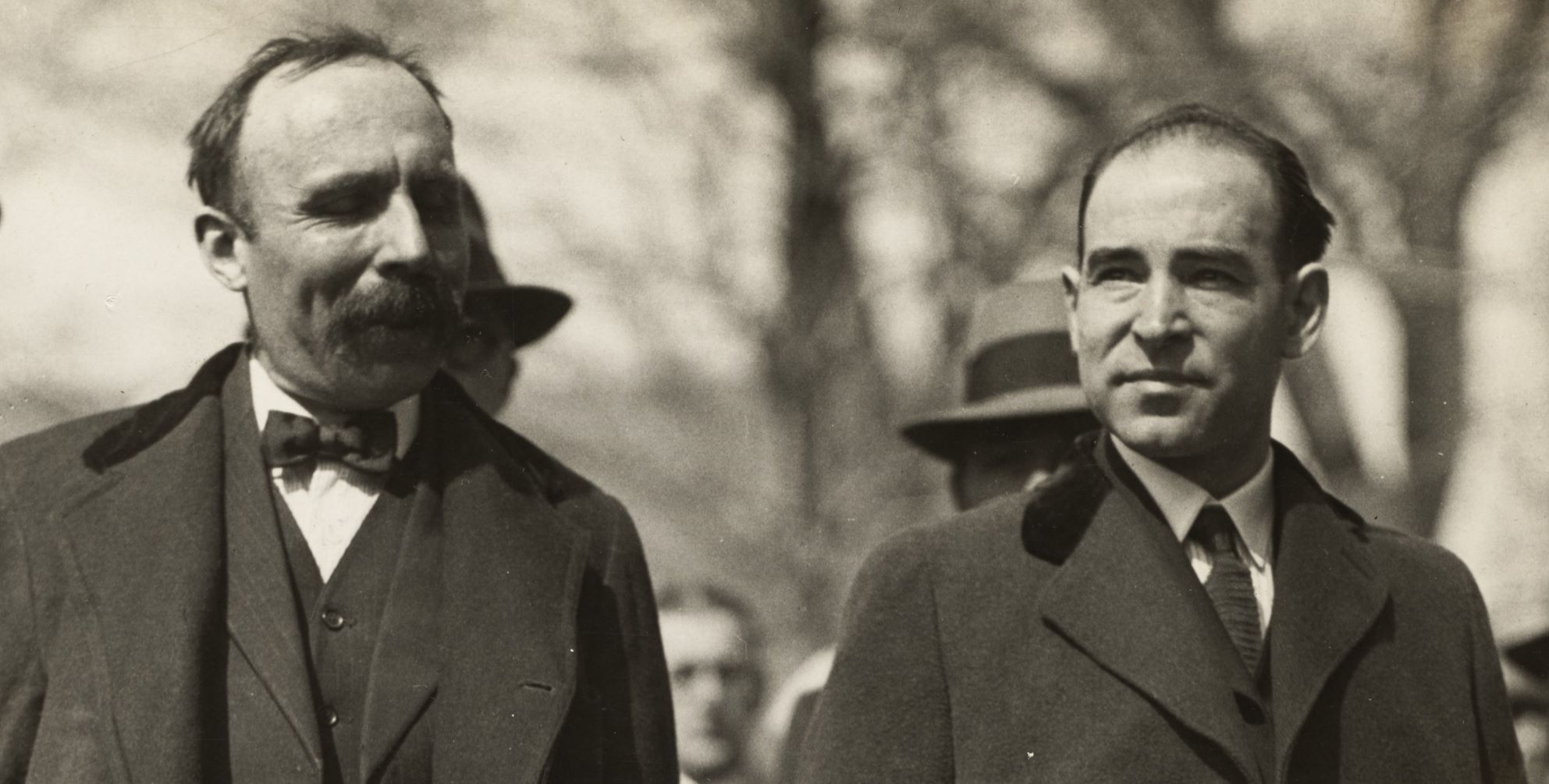
A defiant, moving statement from Sacco and Vanzetti to their comrades and supporters on hearing their appeal for a new trial was turned down. It would be another agonizing year of appeals and stays until they were judicially murdered on August 23, 1927.
‘The Testament of Those Who Are About to Die’ by Bartolomeo Vanzetti and Nicola Sacco from Labor Defender. Vol. 1 No. 8. August, 1926.
COMRADES, Friends, Workers!
I confess my weakness: I have committed the wrong of having hoped in the justice of the black gowns and of expecting justice from the judges of the supreme court of Massachusetts!
I had already drank to the brim the chalice of bitterness offered me by the world: I had been tried and sentenced twice for two crimes I never committed: I had been nailed to the cross of infamy for six years and had to suffer all sort of abuse and offense. However, they induced me, for a short time, to hope and faith and the vindication of my innocence. The masterful presentation of the case and the peroration of the illustrious Mr. Thompson before the supreme court, induced me to hope for a new trial which was recently granted to Madeiros by the same court because of a futile error on procedure by the judge who presided at the trial and the faith of Mr. Thompson himself, together with the faith and optimism of my nearest friends and comrades.
Yes, I committed this wrong and had this weakness. I wrote words of hope and encouragement to my sorrowing sister, to my aged father, and those whom I love and who love me.
But the unanimous answer of all the judges of the supreme court of this state cuts short every illusion and every hope. They want us dead, or at least conquered, at all costs. That answer demonstrated to all appearances that our case is being reduced to an attempt to whitewash Judge Thayer, regardless of moral or juridical reasoning.
“What do you want to do, what shall we do now?” my grieving friends asked me.
See here: Myself and Nicola think that you have all done for us more than we have deserved.
What to do now?
We do not wish to delude anyone nor delude ourselves. The refusal of a new trial is a coup de grace upon our heads. There is no doubt: they want us guilty at all costs.
Mr. Thompson has spoken to us of new evidence to present to Judge Thayer — it makes me laugh — and to some other supreme court judge, and of an appeal to the U. S. supreme court.
It would not be right or wise to pass judgment upon the uncertain future nor on the future actions of men, which are a mystery. But we have the right to our opinion and the duty to make it known. Given what has happened thus far, to hope of obtaining justice from the law and from the men of the law would be a stupid thing. The older ones among my prison mates often say that “There is no chance for a man in the state of Massachusetts, but that the supreme court of the United States is better than that of this state.”
We know that Judge Thayer and all the judges of the state supreme court to whom we have presented the numerous and convincing proofs of our innocence have answered with their thumbs down. Perhaps because we have given too many proofs in our favor.
No. It is of no use. Everything proves that new legal practices could do nought but put off the death sentence which hangs inexorably over our heads. We should have to wait and suffer yet, for who knows how long, until the final refusal of the United States supreme court in order to hear it said to us with a knowing judicial sophism: that we have had a just and impartial trail, that there is no reason to justify a new trial that our assassins merit the rewards and honors received and that we must burn on the electric chair! And this would signify the refusal of the U. S. supreme court.
Does it pay to suffer yet for another year or two to hear such a decision as this?
Does it pay to spend more money and to work hard for such a result?
On the other hand, if we give up the legal battle; if we surrender, the judge Thayer, will have well and ready his death sentence together with a beautiful little speech for the Occasion–for us more delightful than the electric chair.
To surrender thus, to die thus, is repugnant to say the least.
We could have recourse to suicide, freeing in this way and at one time you and us from more sacrifices and more wretchedness. But we shall not do it because suicide seems to us to be fleeing from our victorious enemy. If we must die, we shall die looking our enemy in the eye. May it never be said that we fled!
You see what a contrast of thought and sentiment this dark hour of passion and defeat throws us into. To surrender is repugnant to us; we have lost all faith in organized justice, and, let us admit, we are proud but also shameful of having cost you so much.
Further, we are perfectly aware that there is something in our cause that is above our persons; something superior to our beings and our lives; something that brings together our principles, all victims of the regime and the best portion of humanity.
For these reasons you are free to follow the dictates of your conscience, and we have the duty not to interfere.
Hence, everything being considered, we have decided to ask you to do or not to do that which you think well of doing or not doing for our legal defense.
Reaction triumphs over the unhappy land, desolate by the most horrible fratricide, and the enemy utilizes the propitious moment for its vengeance.
We tell you! Power is with you!
We assure you that the outcome of this unequal struggle does not in any way minimize our recognition of all that you have done for us–it is a great deal. Your solidarity is comforting to us.
We believe absolutely in the good faith Mr. of Thompson. His work shall remain an historical document. It was this reason that induced us to turn to a jurist of exceptional value when Thayer refused a new trial. We knew already that the judges of the supreme court could make any decision they liked; nothing can force them to give or refuse a new trial. It is not the fault of Mr. Thompson if they preferred to favor one of their, or rather two of their colleagues and the will of the big interests in this state to the detriment of two ragged Italians and rebels to boot. More so because they could do with us whatever they wished with impunity. See how the “Boston Post,” creature of the Plymouth Cordage Company, applauds the answer of the supreme court and clamors for a prompt execution of the sentence?
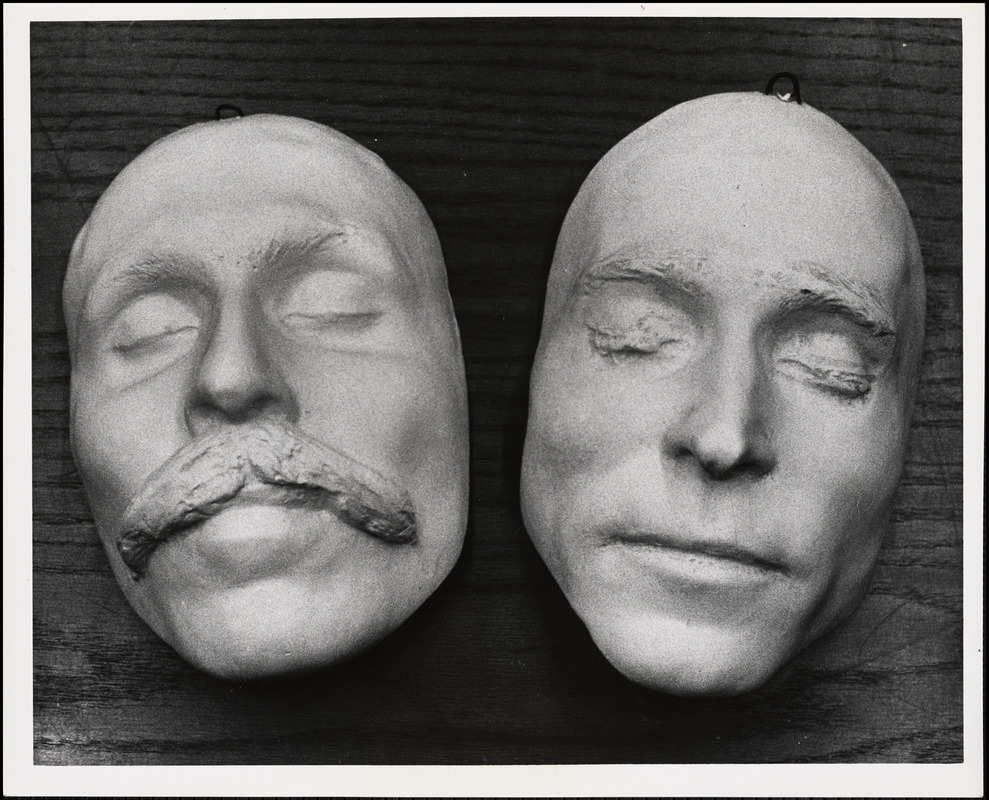
And rest assured that the executioner will lose no time. No.
With us dead, the danger of reprisal against our assassins will cease. For what purpose could it longer serve?
However, tho we must face supreme sacrifice, only with our lives can cease our faith that the day will come when our names will be avenged and avenged will be our blood.
Remember: Power is with you! Fraternally yours, Bartolomeo Vanzetti, Nicola Sacco.
Labor Defender was published monthly from 1926 until 1937 by the International Labor Defense (ILD), a Workers Party of America, and later Communist Party-led, non-partisan defense organization founded by James Cannon and William Haywood while in Moscow, 1925 to support prisoners of the class war, victims of racism and imperialism, and the struggle against fascism. It included, poetry, letters from prisoners, and was heavily illustrated with photos, images, and cartoons. Labor Defender was the central organ of the Scottsboro and Sacco and Vanzetti defense campaigns. Not only were these among the most successful campaigns by Communists, they were among the most important of the period and the urgency and activity is duly reflected in its pages. Editors included T. J. O’ Flaherty, Max Shactman, Karl Reeve, J. Louis Engdahl, William L. Patterson, Sasha Small, and Sender Garlin.
PDF of full issue: https://www.marxists.org/history/usa/pubs/labordefender/1926/v01n08-aug-1926-LD.pdf
 Revolution's Newsstand