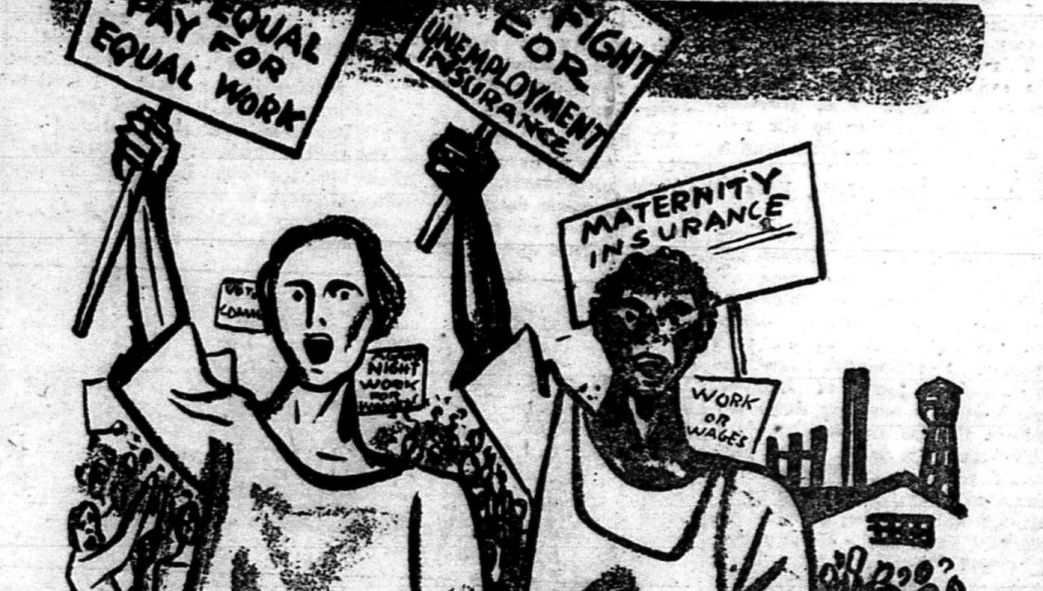
One of the changes that accompanied of the Third Period’ transformation of the Trade Union Educational League to the Trade Union Educational League and the creation of ‘red unions’ was the greater stress given to organizing women and Black workers. At the T.U.U.L.’s founding convention in 1929, a new Women’s Department was established. Its tasks laid out below.
‘Women Must Be Organized for Class Struggle’ from Working Woman. 1 No. 3. December, 1929.
Carry Out Decisions of Cleveland Convention
The Cleveland Convention of the T.U.U.L. decided that one of the most important tasks confronting us in the building of a strong and powerful labor movement in this country is the organization of the mass of the working women.
The rationalization of industry, the simplification of machinery is bringing in an ever larger number of women workers not only into the light industries but the heavy industries as well. Recent statistics show that there are today eight and one-half million women workers employed in industry who are subjected to the most fierce speed-up system and are used by the bosses as tool to undermine the wages of the male workers.
In accordance with the decision of the convention, a National Women’s Department has been organized. Similar departments will be established amongst women in the various local leagues, unions, and national T.U.U.L. committees. The plan for the organization of these committees and their functions as worked out by the National Women’s Committee is as follows:
1. Every district and local T.U.U.L., as well as every trade and national committee must immediately organize a women’s committee, consisting of active women as well as men workers, to be under the supervision of a responsible comrade.
2. These women’s committees to be represented on the various sub-committees of the union and particularly on the Organization Committee, since one of the chief tasks will be work amongst unorganized women.
3. A special research bureau to be organized for the purpose of gathering information with regard to women workers in the particular industry and locality, this to be used as a basis for our propaganda and to be compiled and forwarded to the National Women’s Department.
4. Every official publication or bulletin is to have a special Women’s section, to be in charge of a press committee whose duty it shall be to encourage workers’ correspondence from women and to edit the Women’s section.
5. Special educational activities to be organized for the purpose of training women for active work these comrades to be planted in the important shops and factories employing women workers in large numbers.
6. The Women’s Department of every industry and locality to draw up an economic program in line with the general program of demands of the T.U.U.L. to be adjusted to the specific conditions in the particular industry and locality.
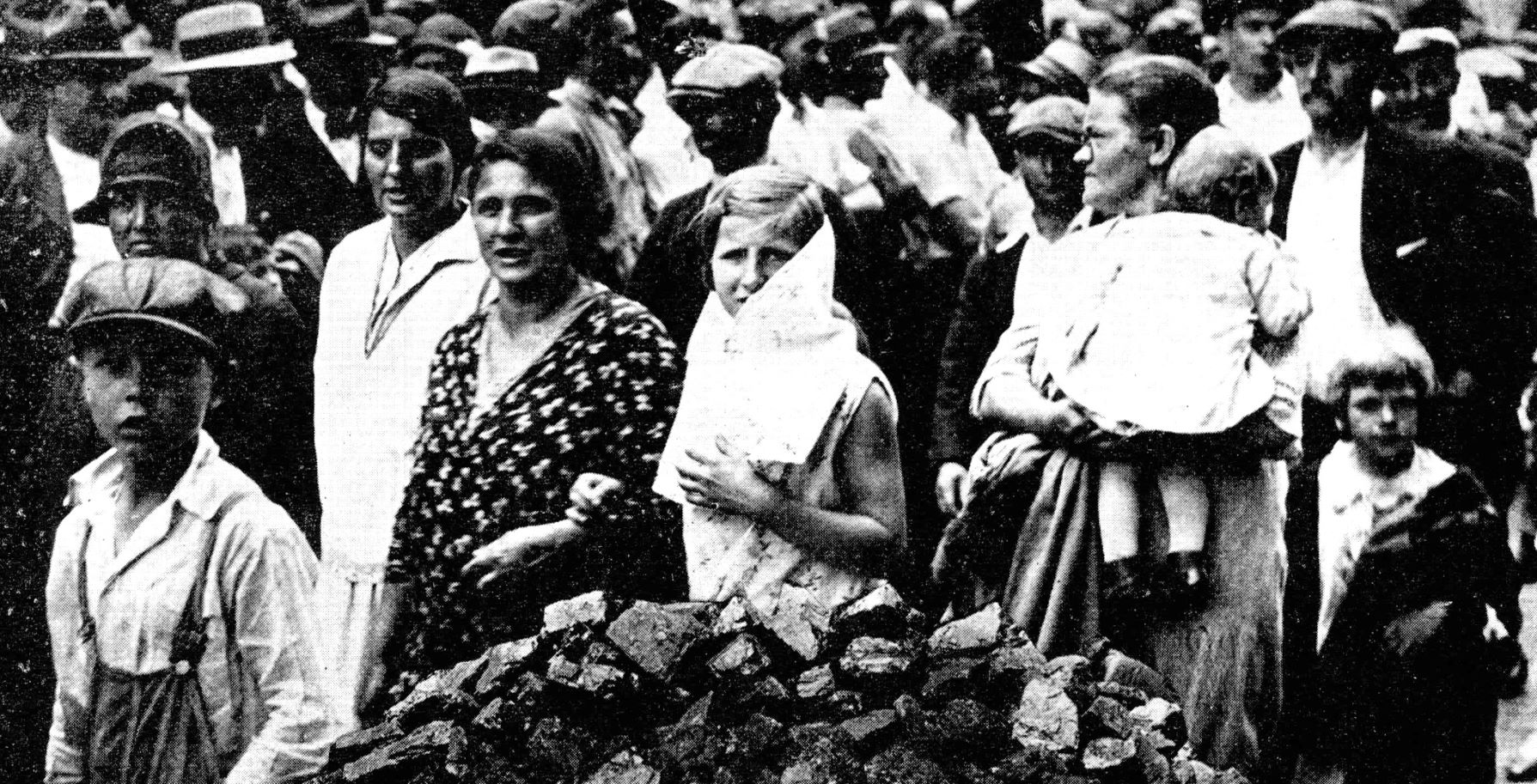
7. The Women’s Department to arrange special women’s conferences for the purpose of stimulating organization work amongst women and drawing them more actively into the work.
8. These conferences are to work out plans for the organization of shop circles both in the organized as well as the unorganized shops, whose aim it shall be to carry on general agitation amongst the women workers, to penetrate the unorganized shops and to bring the various issues of the T.U.U.L. into their respective shops.
In all these activities particular stress must be laid on work amongst Negro women, who because of racial prejudices are even more ruthlessly exploited and are discriminated against not only by the employers but also by the existing reformist unions to a much greater extent than the white women.
The Working Woman, ‘A Paper for Working Women, Farm Women, and Working-Class Housewives,’ was first published monthly by the Communist Party USA Central Committee Women’s Department from 1929 to 1935, continuing until 1937. It was the first official English-language paper of a Socialist or Communist Party specifically for women (there had been many independent such papers). At first a newspaper and very much an exponent of ‘Third Period’ politics, it played particular attention to Black women, long invisible in the left press. In addition, the magazine covered home-life, women’s health and women’s history, trade union and unemployment struggles, Party activities, as well poems and short stories. The newspaper became a magazine in 1933, and in late 1935 it was folded into The Woman Today which sought to compete with bourgeois women’s magazines in the Popular Front era. The Woman today published until 1937. During its run editors included Isobel Walker Soule, Elinor Curtis, and Margaret Cowl among others.
PDF of full issue: https://www.marxists.org/history/usa/pubs/wt/v1n03-dec-1929-WW.pdf
 Revolution's Newsstand