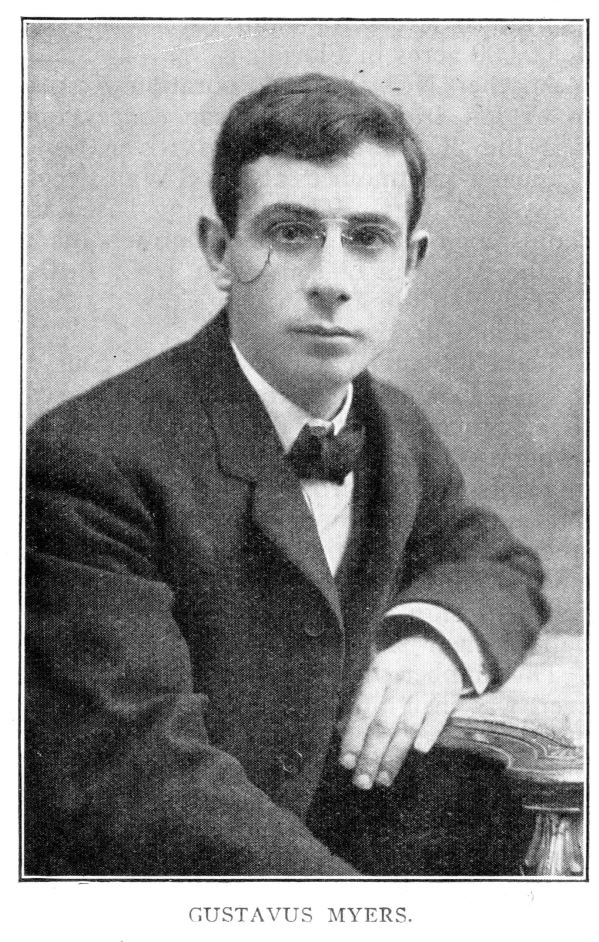
Gustavus Myers was a prolific writer detailing the minutia of capitalist wealth accumulation, political influence, and corruption. Here is a classic example of his work, and essay looking at the history of the Democrat and Republican Parties in the run-up to 1912’s presidential election for ISR.
‘Capitalist Political Parties’ Gustavus Myers from the International Socialist Review. Vol. 13 No. 1. July, 1912.
NONE of the capitalist political parties represent the interests and aspiration of the working class. This is a truth so patent that it would not be necessary to state it were it not that these parties have by one means or another duped large numbers of workers. Capitalist political parties are not organized and financed to serve the interests of the workers. They profess to do this, it is true, and it has been those very professions which have so grievously and disastrously misled the mass of workers. To get the votes of the workers, industrial and rural, certain so-called: issues and campaign sentiments have been regularly shouted for popular effect. Long since the workers should have learned the costly lesson that as far as they are concerned these alleged issues were merely counterfeits. Capitalist parties can, and do, purchase batches of votes to swing elections; and to this extent competition while nearly extinct in the industrial field is still gloriously active between the Republican and Democratic parties. These parties have not as yet formed a holding company for the control of corrupt votes. Since both parties stand for the perpetuation of the capitalist regime and its accompanying wage-slavery system, it is not necessary for them to do this. Whichever party wins, the working class inevitably loses, and inasmuch as our capitalists are extremely practical men, and care for results only, the outcome one way or another, so far as the success of either party may go, is equally satisfactory. The Republican and Democratic parties are the two main political organizations of the capitalist class. But frequently adjuncts and auxiliary side-issue parties arise which although the capitalists pretend to oppose vociferously, are their allies. In this category are “reform” and “radical” parties. They well serve the purposes of capitalism in giving a pseudo-outlet for popular discontent, yet the capitalists are thoroughly aware that they are subservient, ephemeral factors, in no wise endangering capitalist supremacy. For one of the many instances of this fact it is only necessary to consider the career of that lightning-change vaudeville performer, Hearst, who swings his blind and befooled followers one year in “independent” lines, the next fastens them to the Republican party, and the year after transfers their votes to the Democratic organization. The “principles” of such demagogues as Hearst fit in very well with capitalist purposes.
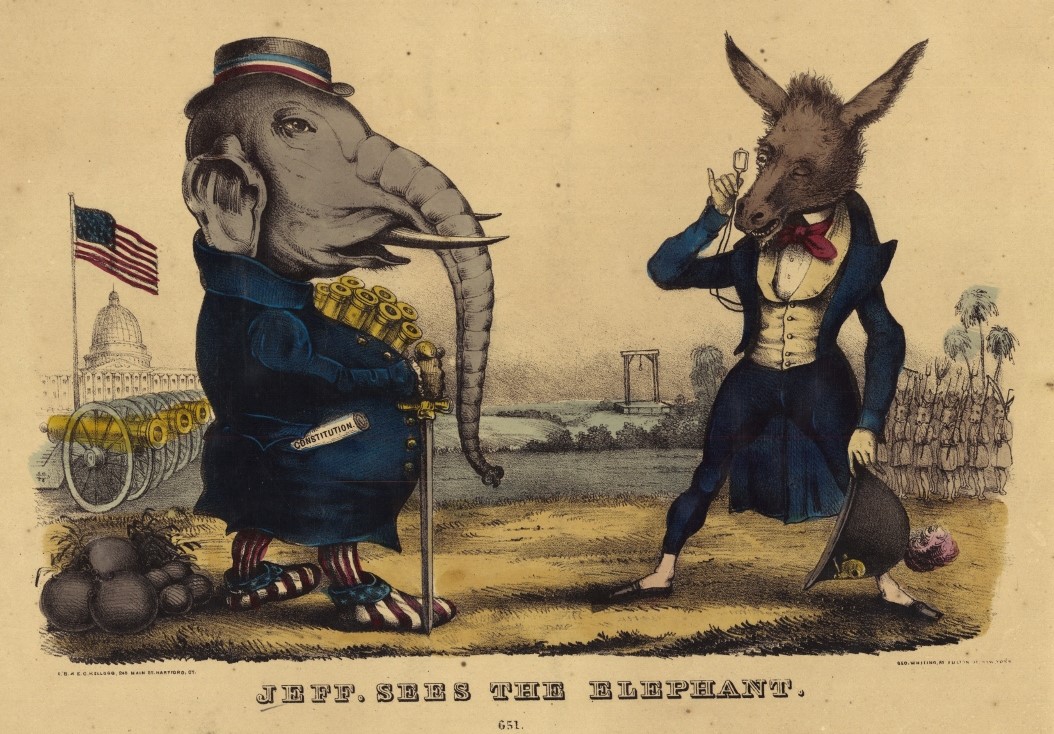
For the purposes in hand the capitalists are fully aware that two big political parties ordinarily serve their ends much better than one party. With two political organizations both standing for the same system, both supported by the capitalists, they can confuse and divide the workers. If the mass of workers are dissatisfied with conditions, the Democratic party can assure them that it is the fault of the Republican administration, and that if they vote the Republicans out and the Democrats in, all will be blissful. And vice versa. As between these parties this see-saw game is continually played and to packed houses. The worker turns from one ambushed enemy, only to find himself in the clutches of another. It has been a highly profitable exercise of strategy for the capitalists, who have grown continuously richer and more powerful, and a sorry and disastrous experience for the workers who have been despoiled and exploited at every turn.
But the capitalist political parties well know that it would be the supremest folly for them to advertise from the housetops what they really stand for and who controls them. With the immense funds at their disposal, they can corrupt a certain number of slum or rural voters, and often snatch a close election. The number of purchasable votes, however, is small compared to the immense total of voters. The great majority of voters cannot be reached by money; they vote according to what is called conviction. Consequently, they must be won over by all the arts of persuasion. That relatively small number of voters who get incomes from stocks and bonds, from land or similar sources, do not require persuasion. They are already intelligently class conscious; they know that either or both Republican or Democratic parties stand for their interests and the continuance of the good things of life for them. But if the capitalist political parties, or their “reform” or “progressive” offshoots, succeeded in getting only these votes, they would be reduced to a cipher.
To get and keep control of the powers of government it is essential for those parties to annex the working class vote. By hook or crook the workers must be shackled to the spiked chariot of capitalism so that they cannot think or act independently for themselves. Always, therefore, at election time the same inspiring sight is presented. All capitalist political parties vie with one another in their disinterested solicitude for the worker. All loudly proclaim their undying concern for his welfare, and make elaborate expositions, professions and promises.
If the Republican party is in power it gravely assures the working class that it was never better situated than it is now, and to prove its altruistic contention it monopolizes the “full dinner pail” as its emblem. Thousands of newspapers and periodical editors, political “orators,” college professors and clergy echo the refrain; they love to extol the satisfaction of a full dinner pail—they, not one of whom ever was forced to make its acquaintance. To see a parasitic editor, lawyer, professor or preacher sitting on the curb and eating a cold meal from a dinner pail would be an entrancing sight, yet not an impossible one; we may have the pleasure of witnessing that particular and most memorable spectacle.

The road to office and power via the dinner pail argument route has been an effective one, but so highly is the privilege of eating from it respected, that the capitalist commanders of political parties have never been so unfeeling as to transgress it; they leave the pail to the workers, while they, sacrificing souls, content themselves with luxurious meals the price of each of which would keep a working-class family in food for perhaps a week. Not a few of our magnates who so lavishly contribute to the campaign funds of the capitalist political parties have adopted crests, coats-of-arms, etc., but we have not observed that any of them has selected the dinner pail. No doubt, this abstention arises from motives of extreme delicacy in not venturing to appropriate a thing that belongs by right to the working class. Whoever knew the magnates to appropriate anything? Not they, honest souls.
If the Democratic party happens to be in national power, which nowadays is not often, it points to the Republicans as the horrible example of graft, maladministration, breeder of swollen fortunes and pauperism and propagator of all evils and vices. The pure and noble patriots of Tammany Hall—that bulwark of the Democratic party—and of other Democratic rings, come angelically forth and discourse their sweet strains. Away with corruption, down with political rottenness! Elect us, they say, and the country will be saved from ruination.
Between the various political parties there are, of course, differences. But these differences in nowise concern the interests of the working class. They are fundamentally shallow, superficial differences which reflect the conflict of interests among different sets of capitalists. Bear in mind, first of all, that political parties and their backers and adjuncts represent not dreamy phrases but distinct economic forces. The Republican party of today is the successor of the Federalist party, which stood for the aristocratic propertied class and its interests. The Democratic party’s predecessor was the original Republican party of Jefferson’s time which represented the small shopkeeper and the developing capitalist at a time when the old landed aristocracy was the dominant and all-powerful factor. Neither represented the working class or cared for it, as is abundantly shown by the oppressive laws passed against the worker. For fifty years after the adoption of the Declaration of Independence, for example, the workers had to struggle to get the right to vote. They could be thrown in jail for small debts; striking was a criminal conspiracy, and their leaders were often ruthlessly imprisoned whenever they tried to organize for better conditions.
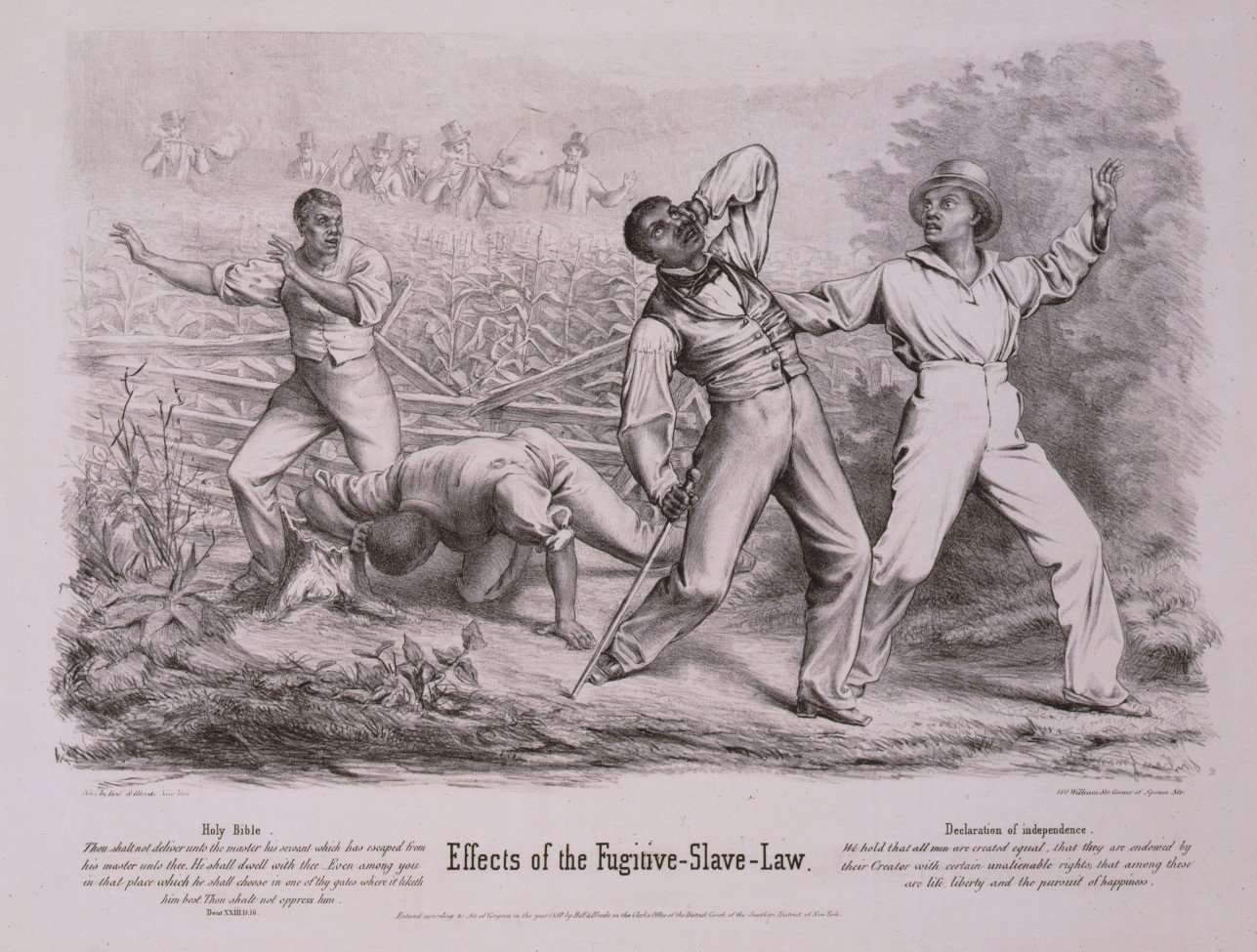
The Republican party of early days underwent a change of name by which it was called Democratic party. When the issue of negro-slavery became acute, the Democratic party stood for the perpetuation of the chattel slave system. But in the North, which had become a great manufacturing region, negro slavery had become unprofitable, and therefore it passed into disuse. The capitalist owners of the factories found that so-called free white labor was a much cheaper form of labor than chattel slave labor. Immigration was pouring in from Europe, and surplus labor was becoming abundant. The factory owner did not have to care for his white workers when they were sick, disabled or old. He did not have to go to the expense of seeing that they were well fed and tolerably housed. Unlike the negro slaves they were not property. The factory owner could throw them out on the rubbish heap whenever it suited his purpose. When he found it desirable to close down his factory he could do so. He did not have to care for his workers. If they starved it meant no loss to him. Others could be secured in their places.
Thus a conflict set in between the two systems—the pseudo free white labor system of the North, and the chattel slavery system of the South, both of which were antagonistic to the other. The chattel slavery system was an expensive one, although the southern plantation owners did not appreciate this great economic fact. One or the other had to go; inevitably that which had to succumb was the chattel slavery system, which was the economically inferior of the two. А new political party was needed to represent the demands of the northern factory owners, and thus it was that the Republican party was organized. It was the lineal descendant of the Whig party which had succeeded the Federalist party, but it contained new infusions of strength from the ranks of those opposed to chattel slavery. A divided Democratic party in 1860 gave it control of the National Government, and precipitated the Civil War.
Always, also, there have been certain other apparent differences, or rather issues, between the capitalist political parties. These issues arose purely from conflicting capitalist aims. In Jackson’s time elections were contested and won on the issue of whether one big central bank should control the funds of the nation, or eight hundred state banks. The political parties fought fiercely over this question, and the mass of workers were duped into taking sides.
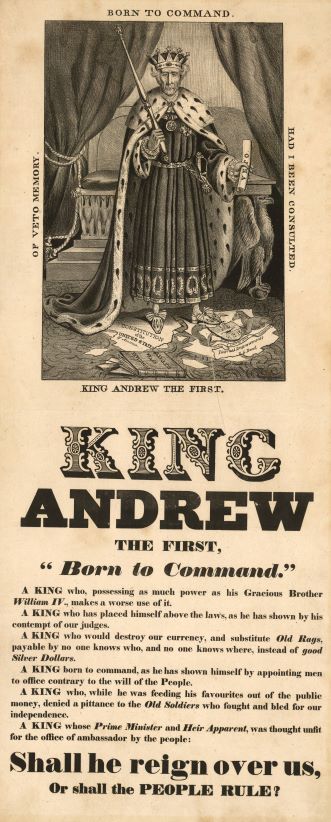
But when the state bankers finally won, the intelligent workers found that they had been pawns. Capitalist fortunes grew greater, while on the other hand the working class was exploited fully as much as before; jobs were as hard to get, and hideous conditions drove large numbers of workers into premature death from want and worry and disease. For the workers nothing had been changed, except that as fast as primitive tools were abandoned and machinery substituted, they became increasingly the slaves of the machines. The very inventions that under a rational system should have lightened the burdens of the worker, were converted into means for making his life harder, and forcing him to be absolutely dependent upon the will of the capitalists owning the machines. Quite true, the workers, after long struggles, strikes and privations succeeded in getting shorter hours and in some cases higher wages. Such improvements in working conditions were obtained in the face of opposition from capitalist political parties, but the cost of living advanced much more than their slight increase of wages.
Always keep the working class divided—that has ever been the motto of capitalist political parties. At any cost they must be kept from uniting politically and economically in aggressive class conscious action. One means of disrupting and drugging their organization has been to buy off certain of their leaders with political offices or other profitable favors; and this method has been effectively used to this very day. Just as a half century ago or more the policy was begun of appointing labor leaders to political office, so today we have seen Samuel Gompers, John Mitchell and others allying themselves with the Civic Federation, that sinister capitalistic enemy of the working class; and the roster of national, state and municipal office holders shows many a former labor leader filling political posts paying considerable salaries. Capitalist political parties give nothing for nothing; when you see a labor leader getting an appointive political job, you may be sure that it is given for service rendered.
If the workers had been intelligently class-conscious, this could not have happened. If they had been as keenly alive to the action their interests demanded, as, the capitalists have been of their interests, they would long ago have seen the folly of continuing to vote into power capitalist officials who have proceeded to order out police and militia against workers striving for better conditions, and issue decrees and injunctions, backed by imprisonment against the workers. So long as the mass of workers kept on blindly voting capitalism into power they could not consistently complain when some of their leaders sold out by bargaining for office under Republican or Democratic administrations. In the Socialist party, the militant class conscious organization of the workers, it is impossible for any “leader” to sell out anything, if such a contingency can be imagined; the moment he would even depart from strict working-class action, he would be summarily expelled, as happened recently to Mayor Shook of Lima, Ohio. He would take out nobody but himself and the organization would be the stronger for his expulsion.
But although there have been certain weak or purchasable labor leaders, or leaders who after years of sincere effort, finally surrendered to the pressure brought upon them by capitalist interests, the action of those leaders could not influence all of the working class. There are today some 32,000,000 wage earners in the United States of whom some millions are voters; there will be more when women get suffrage generally. The great mass of the workers have been cajoled, duped and deceived by clouds of dust, called issues, which the capitalist parties raise.

One of these everlasting “issues” is the tariff question. It is a hoary old confidence game, and has been successfully played for more than a century. There is no need of delving into its intricacies. It originated in conflicting interests of capitalists and landowners at a time when the factories were newly established.
The mill and factory owners raised the pathetic cry that they would go into bankruptcy if they were not protected by a high tariff. But they did not elaborate on that point so much. No, indeed. Like the industrial trust owners of today, they, unselfish souls, were not concerned about themselves. Far from it! What excited their deepest commiseration was the thought of what would become of the workers if the factories should have to close down. How tearfully they pleaded the cause of the downtrodden worker, who, with his family, would have to starve if he could get no work! Their noble hearts bled at the frightful thought! It was the worker’s fate that concerned them so poignantly; and many a doleful picture they and their political representatives drew of the indescribable extremities to which the worker would be reduced if the tariff were reduced.
While the factory capitalists and their retainers were thus pleading, the agricultural capitalists—the plantation and farm owners and all of the capitalists deriving profit from conditions in those regions—were saying the precise opposite. They, not deriving profits from factories, were interested in importing goods as cheaply as they could. But they, too, like the factory owners, disavowed any great intention of advocating the aims of their own interests; it was always the interest of the laborer.
Now, astonishing as it seems, this antiquated tariff confidence operation is being still used to gull the working class, and divide it on the political field. The workers are regularly assured by one set of capitalists that if they do not vote for high tariff wages will be reduced and factories close. How strange that the capitalists never think of their own interests! Somehow they have contrived to possess themselves of billions of dollars in trust stocks and bonds—which mean ownership of vast factories—but, of course, these immense fortunes, greater than the world ever knew, must have come as a present from Heaven. These capitalists who (at election time) express such deep interest in the worker and are so solicitous that he should not vote against his interests—these capitalists seem to be men of too superhuman a virtue ever to have lied, tricked, stolen or exploited to get their huge fortunes. They unquestionably have a wireless connection with Providence.
Every election time the same old wearisome farce is presented—a revival performance where the workers are the marionettes and the capitalists pull the strings. Volumes of speeches, volumes of lying statistics, miles of editorials are emitted. For whose benefit? And who pays for it? All of this costly business—and a campaign costs money—is paid for by the big contributions of the big capitalists. Self evidently, the workers do not directly foot the bill; they have a hard enough time existing. What, indeed, impels the capitalists to be so magnificently generous? Is it for the purpose of educating the workers and saving them from the consequences of their own ignorance and folly?
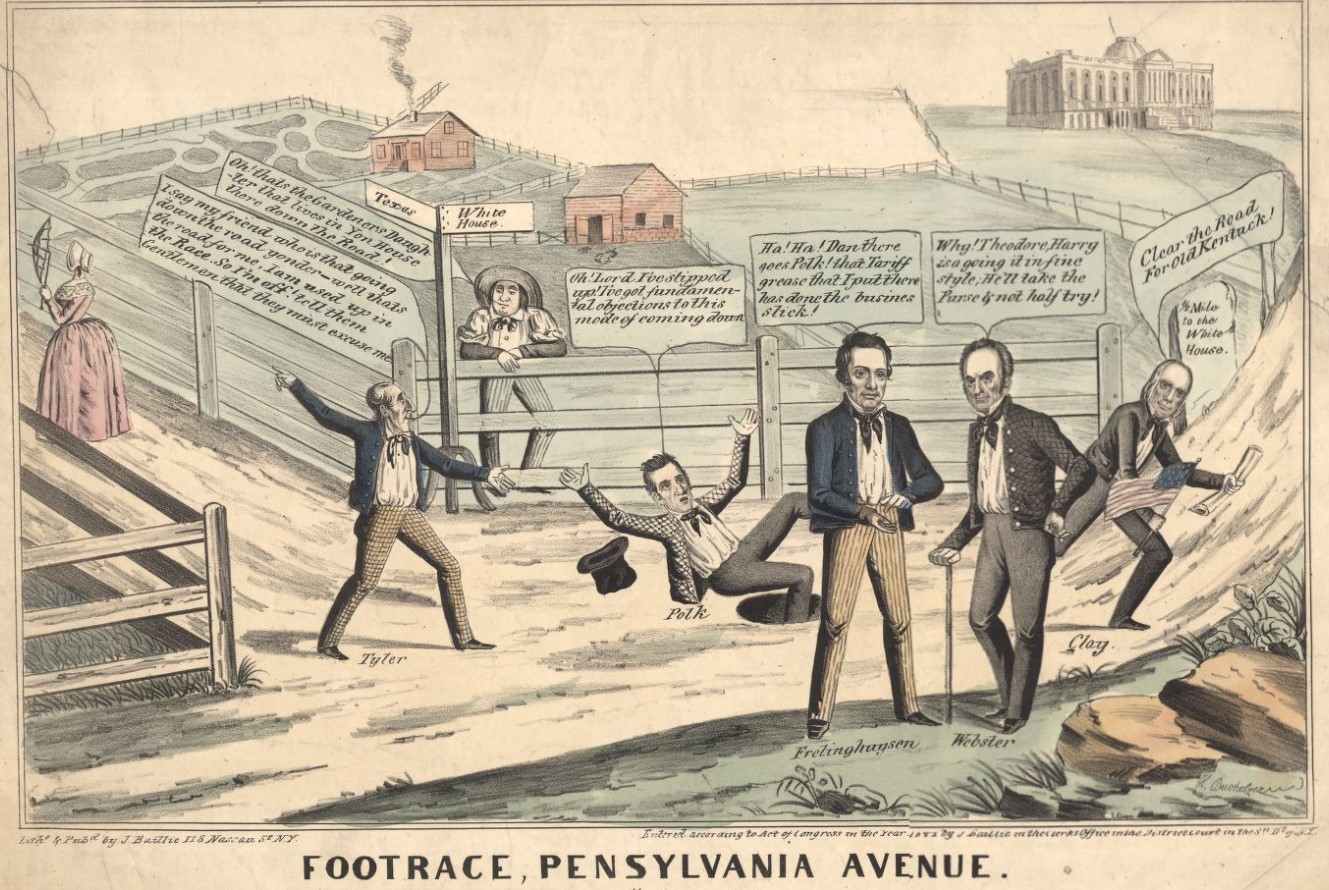
Let us consult a few conspicuous examples. When Harrison, a Republican, was elected in 1888, Andrew Carnegie was one of the prominent contributors to his high tariff campaign. In 1892 Carnegie & Company gave notice to their workers in the steel plants at Homestead, Pa., that they intended reducing wages. The Amalgamated Iron and Steel Workers rejected this proposed move. Carnegie retaliated by discharging all workers refusing to accept the company’s terms. Then came a virtual lockout. Meanwhile, expecting a strike, the company had built around its workers a fence three miles in circumference, and twelve feet high upon a parapet three feet in height. On the fence was strung barbed wire. The company then proceeded to import nonunion workers, and at the same time it conveyed three hundred Pinkerton detectives by water to the works. These Pinkertons brought boxes of arms and ammunition with them. Learning of their approach, a crowd of strikers sought to prevent them from landing, but the Pinkertons entrenched themselves behind a wall of steel rails and firing began. Seven of the Pinkertons and strikers were killed and many other strikers wounded. Troops were later sent into Homestead and eleven more workers were shot and killed.
This, in brief, is the story of the HomeStead slaughter—an edifying example of what one of the highest-protected industries did to workers striving for better conditions. What was done then was only a beginning for since that time the Steel Trust has proved its extreme solicitude for the workers’ welfare by practically succeeding in smashing union organization in certain of its plants. The strike at McKees Rocks, Pa., was another of the many examples of what kind of “protection” the workers receive.
Following the Homestead affair, a Democratic national administration was elected. Cleveland went into the White House— Cleveland, the opponent of high tariff, and the platitudinous apostle of “tariff reform.” Great things were again promised for the workers, but this time their paradise was to be under a low-tariff, instead cf a high tariff regime,
A little more than a year after Cleveland was re-elected, the strike at the Pullman works, at Chicago, began on May 11, 1894, followed by the great railway workers’ strike. The poor Pullman Company pleaded that it was forced to reduce the wages of its workers an average of one-fourth, the company was distributing only a trifle of $2,280,000 a year in dividends to its stockholders, and it felt quite poverty stricken with an additional surplus of $25,000,000 undivided profits. Its workers who had to occupy the company’s houses and buy gas, water, etc., supplied by it, could not see the logic of the company’s position. The extortions practised upon them were such that after the company deducted rent and other charges from their wages, many of the workers received in their bi-weekly checks from four cents to $1, over and above their rent. These facts sworn to before the U. S. Special Commission appointed to investigate the strike, and the company could not disprove the statements.
When the American Railway Union ordered a general strike, President Cleveland hurried United States troops to the scene of the strike to intimidate the strikers. This he did notwithstanding the fact that it was illegal to do so unless requested by the Governor of the states. And not only had Governor Altgeld made no such request, but he had protested against the invasion by the military. Despite Altgeld’s protest the troops were sent and kept there.
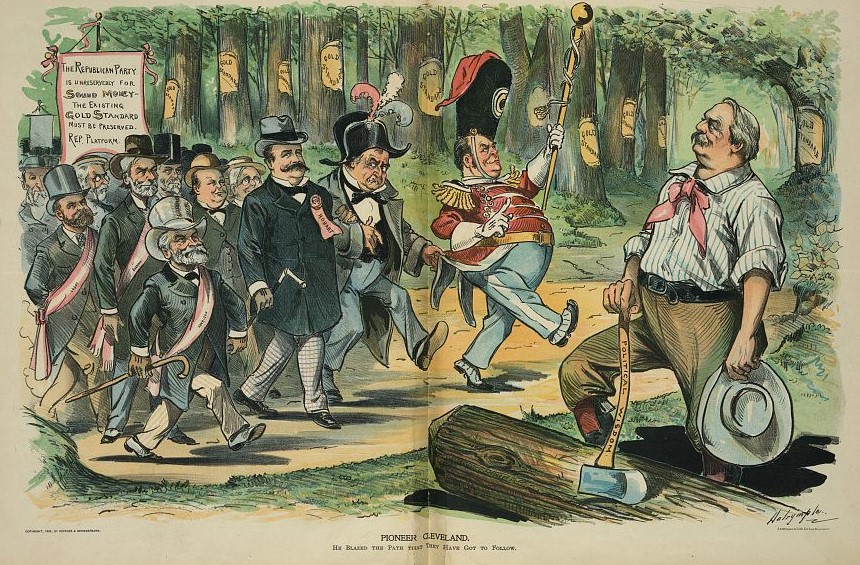
Another shuffle came three years later in the political farce, and McKinley succeeded Cleveland. McKinley was another high tariff prophet; great were the promises held out to the working class and an entrancing picture was drawn of the wonderful prosperity high tariff would bring to the workers. Prosperity came, it is true, but it was a prosperity exclusively confined to the big capitalists. Huge trusts were organized, and billions of dollars of profits rolled in. But what of the workers? Again deluded. Strikes and lockouts continued just the same. Tariff had been dinned into the ears of the workers year after year, but what was the net result so far as the working class was concerned? Leaving out of consideration previous years, we shall give merely one aspect of the result in the nineteen years from 1881 to 1900. In those nineteen years there were 22,793 strikes and 1,005 lockouts in the United States. Where was that promised prosperity for the working class?
Gulled again, were the mass of workers when Roosevelt went into office. More tariff talk reverberated; the workers were again fooled by catchwords and black arts. Still the cost of living went up out of all proportion to the slight increase wrested in wages. The workers found it harder and harder to snatch a livelihood. Just as other Democratic and Republican officials ordered out troops against striking workers, so did Roosevelt, when, for instance, he summoned the militia, during his term of Governor of New York, against the Croton Dam strikers, and when, as president, he ordered out the regular troops against the striking miners in the west. So far as the interests of the workers were concerned, Roosevelt was talk, talk, talk. He, like other politicians, posed as “a great friend of labor.” Talk is cheap, but deed is what counts. And in deed Roosevelt aggressively served the interests of the big capitalists every moment.
Strikes and lockouts and armies of unemployed continued; they persist at this very moment, and will continue as long as the capitalist system does. The report has been going the rounds of the press that there are 6,000,000 unemployed persons in the United States. Assuming this figure to be an exaggeration, all of the reports of state labor bureaus, municipal departments and charity societies nevertheless, show that the number of unemployed is enormous. Meanwhile the only solution or remedy that Taft has to offer is to-suggest the comical notion that certain tariff duties should be revised! As though tinkering with the tariff could provide a rational system whereby unemployment, exploitation and poverty would be effaced.
Even, however, when the deluded workers vote for revision of tariff, they are again fooled as they were when the Wilson bill was passed during Cleveland’s second administration, and as has happened since. The farce is a grievous one for the workers. Two of the highest protected industries, for instance, are the woolen and cotton; the average rate of tariff protection in both has been about 100 per cent, but two years ago the tariff on cotton was increased 200 per cent. Yet what of the “protection” to the workers? The facts causing the recent strike of the textile operatives at Lawrence, Mass., should be a final lesson to all such workers as are still befooled by the bogus tariff issue. In 1911, the American Woolen Company distributed to its _ small clique of stockholders $2,800,000. But the 25,000 operatives received an average weekly wage of how much? Six dollars a week—six a week in the busy season, and less in the slack months. Quite true, some workers receive more, but that was the average wage. Their ingenuity must have been severely taxed to find ways and means of spending that magnificent sum.

Of what use has all this tariff fanfaronade been to the working class? It has been of the greatest service to the capitalists in enabling them to beguile and divide the working class into supporting capitalist parties, and bewildering and paralyzing the workers from seeing that their only emancipation lay in solid working class action to overthrow the capitalist system. And so it has been with all of the other “issues” raised by capitalist parties; their effect has been precisely the same in giving more power to capitalism in order to despoil the workers.
If further tangible proof of this fact is sought, only one of a thousand proofs need be considered. Who have issued injunctions against labor unions? Who have declared unconstitutional hundreds of laws— and they were but makeshift laws at that—designed to improve somewhat the condition of the worker? And who, on the other hand, have handed down thousands of decisions favorable to capitalists?
Why, who else have done it but the judges? Whether the judges have been Republican, Democratic or “Reform,” they have all acted as enemies to the working class. They have been put on the bench to do that very thing. The organizations which elected them or caused them to be appointed are capitalist organizations. They get their big contributions from magnates and corporations; no one can be so senseless as to believe that capitalists give millions of dollars without absolute assurance that the goods contracted for will be delivered. These goods are municipal, state and federal officials, legislatures and congress, judges and president and president’s cabinet. Capitalists are not visionaries. They want the possession of all governing powers by means of which they can get their laws and decisions, as well as to use the armed power of the government against the working class.
Nearly all of the time the capitalists are discreet enough not to reveal their purposes. They talk “patriotism” and “national honor,” “honest government” and such phrases—anything to mask their real acts and aims. But now and then some capitalist in an unguarded moment will divulge the truth. “In a Republican district,” testified Jay Gould, “I was a Republican; in a Democratic district, a Democrat; in a doubtful district I was doubtful; but I was always for Erie.” Н.О. Havemeyer, head of the Sugar Trust (which, it will be remembered, by the way, stole millions of dollars in customs frauds), put the case fully as clearly. Asked by a United States Senate Investigating Committee if he contributed to state campaign funds, he frankly replied; “We always do that. In the state of New York, where the Democratic majority is between 40,000 and 50,000, we throw it their way. In the state of Massachusetts, where the Republican party is doubtful, they have the call. Wherever there is a dominant party, wherever the majority is very large, that is the party that gets the contribution, because that is the party that controls local matters.”
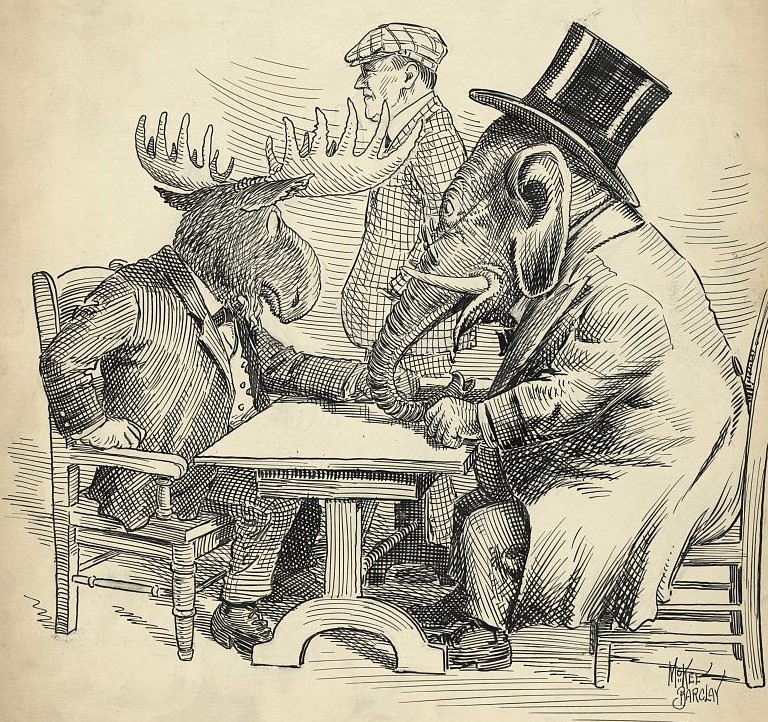
Of course. Republican, Democratic, “Reform” and “Progressive” parties differ in external shades only. At times one may appear a little more reactionary or a bit more “advanced” than the others, but they all stand for the continuance of the capitalist system. Capitalists being hard-headed, practical men, are never deceived as to who serves their interests. They well know that the most gigantic graft of all is the graft that they seize as profits on the workers’ wages; they take the bulk of the worker’s produce, and give him back a bit in the form of wages barely enough to subsist upon. They know that whatever “reforms” any of their political parties may advocate, not one of them is opposed to the wage system. Equally as keenly do they realize that the mission of the Socialist party, and its implacable aim, is to overthrow the whole capitalist system, branch and root. The reactionary capitalist’ politician does not want to disturb the wage graft system at all, while the “progressive” capitalist is not less bent upon maintaining it, but seeks to make it a little more presentable. Both believe in the capitalist class, and both are venomously opposed to the working class stepping in control of political and economic power, and proceeding to establish an industrial democracy whereby all class lines and the horrors of the present system will be abolished.
The Republican party stands at all times for the trusts and the big capitalists. The Democratic party oscillates between representing the little capitalists and the big. When Bryan ran originally as its candidate, it stood for the little capitalists as against the trusts, but later the magnates captured its majority of delegates by force of money, and it stood for the big capitalists. The “reform” parties of all brands are alternates for the capitalists, whenever the latter see a majority getting tired of the old political parties. As for the “progressives” they are even more reactionary than the other parties, in that they seek to break up centralized industries and restore the obsolete period of competition. All of these parties approve of the fundamentals of the present order, which fact is conclusively demonstrated by their coalescing wherever the Socialist party—the party of the working class—gets strong enough to threaten their control of the machinery of power.
Workers of America have you not been cajoled and deceived long enough? The capitalist class is your bitterest enemy, and yet the majority of you have kept on voting it into a power which it mercilessly uses against you. The capitalist class uses the newspaper periodical and newspaper press, the church and every other established institution to influence and hold your minds, and by making slaves of your minds seeks to make slaves of you. Is it not time that you awoke in your might and threw off the shackles? The capitalists are few, and you are many, but by paper titles backed by the armed power of government, they hold the industries and resources of the country, and keep you in bondage. Nothing stands between you and complete economic freedom but enlightenment. Think and act!
The International Socialist Review (ISR) was published monthly in Chicago from 1900 until 1918 by Charles H. Kerr and critically loyal to the Socialist Party of America. It is one of the essential publications in U.S. left history. During the editorship of A.M. Simons it was largely theoretical and moderate. In 1908, Charles H. Kerr took over as editor with strong influence from Mary E Marcy. The magazine became the foremost proponent of the SP’s left wing growing to tens of thousands of subscribers. It remained revolutionary in outlook and anti-militarist during World War One. It liberally used photographs and images, with news, theory, arts and organizing in its pages. It articles, reports and essays are an invaluable record of the U.S. class struggle and the development of Marxism in the decades before the Soviet experience. It was closed down in government repression in 1918.
PDF of full issue: https://www.marxists.org/history/usa/pubs/isr/v13n01-jul-1912-ISR-gog-ocr.pdf
 Revolution's Newsstand