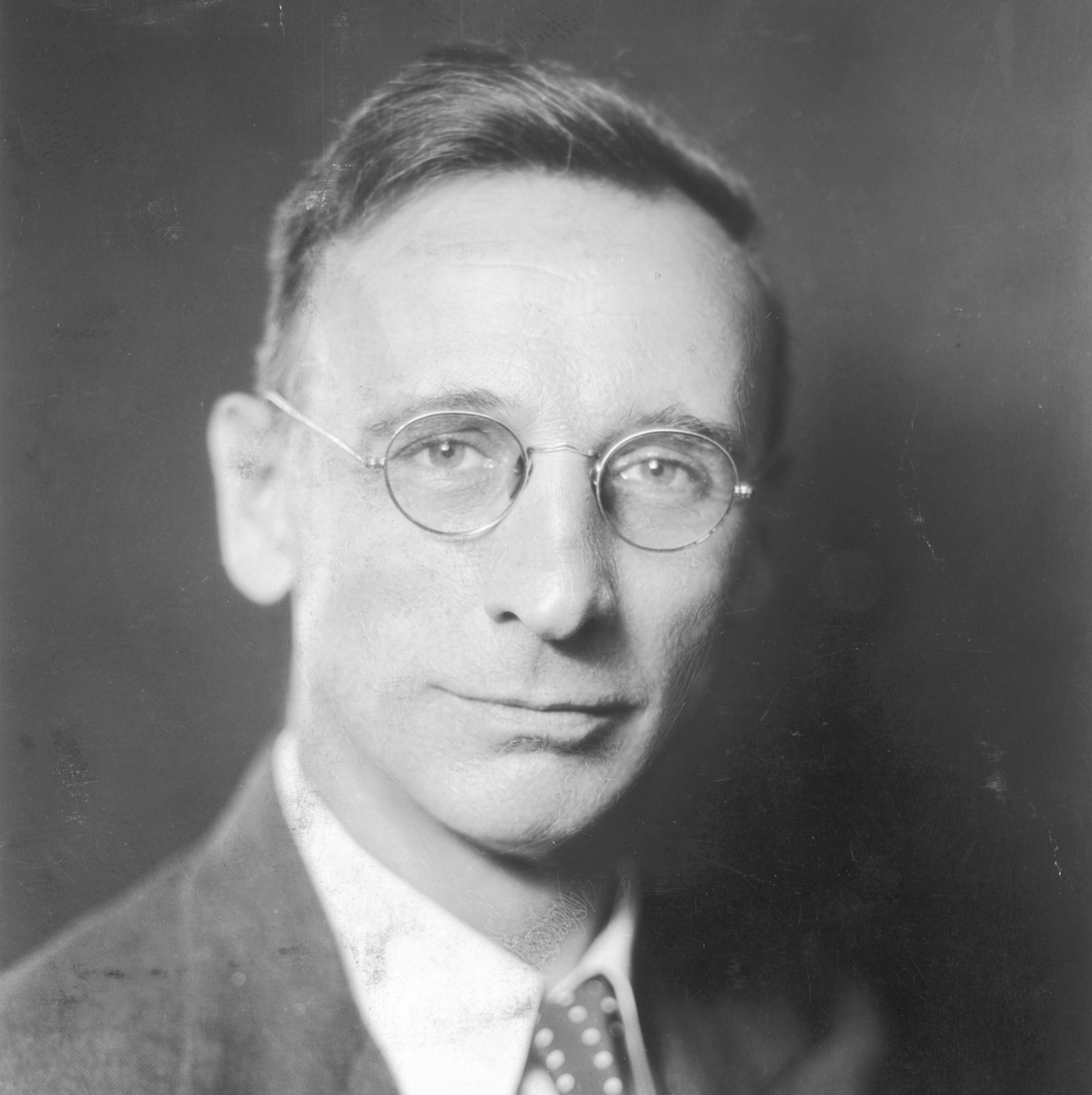
Still a fundamental task of the labor movement, organizing the unorganized in the largest workplaces in the country. A.J. Muste’s companion of ‘The Kind of Unionism the WILL Organize the Basic Industries.’
‘The Kind of Unionism That Will NOT Organize the Basic Industries’ by A.J. Muste from Labor Age. Vol. 16 No. 4. April, 1927.
One proposition all the wings, shades and elements in the American labor movement seem agreed, namely that we must organize the unorganized. It is a colossal problem, as my readers well know. A few groups of workers in this country are well or fairly well organized—the transportation brotherhoods on the railroads, the building trades, the printing trades, and the anthracite miners. Until recently the soft coal miners belonged in this group, but this seems to be no longer the case.
On the other hand, we have a large number of industries in which there is very little if any effective trade union organization. In this list come textiles, iron and steel, automobiles, agricultural machinery, electrical equipment, the metal industries in general, public utilities, meat packing, the food industries, transport and others. Leaving aside textiles and mining which constitute cases by themselves, the other unorganized industries just mentioned present certain common characteristics. First they are basic industries, basic in the sense that they employ millions of workers, in the sense that stopping them would quickly and seriously affect the entire life of the nation, in the sense that they are key industries in an advanced industrial system. Second, these industries are all trustified, or far on the way to trustification. They are centrally controlled by small groups. Third, not only is each of these industries in itself trustified and highly centralized, but all of them together are in the hands of the big banking houses. Fourth, they represent colossal aggregations of wealth, beyond the dreams of other countries or other generations. Fifth, mass production marks them all. Their tendency is either to get along without workers almost entirely, except a few relatively skilled technicians, or to make the work of human beings purely mechanical, tightening nut No. 999, or something like that, 900 times a day. Sixth, practically all these industries are marked by a carefully worked out “scientific” labor policy— high wages (or what looks like them), relatively short hours, personnel departments to fit the man to the job and the job to the man, sanitary and well lighted shops, welfare work, employee representation plans, and so on—capitalism on its good behavior, none of your sweat shops, starvation wages, insulting workers, and such like crude stuff of the old management! Seventh (seven is a perfect number) every one of these industries is definitely and defiantly anti-union. When possible, graciously and politely so. When necessary, bitterly, relentlessly and brutally so. Company Unions, Open Shops, American Plan, Industrial Democracy, anything you please except trade unionism.
In these industries are the workers to be organized. When you begin to think of organizing them, the outlook is none too encouraging. When all allowances are made, the A. F. of L. lost membership last year, and in view of what is happening in the needle trades, for example, will probably lose again this year. It is noteworthy also that once again this past year, not a single gain was registered by the unions having jurisdiction in any of the big industries we are talking about. And this we may point out without joining the company of those whose favorite pastime is throwing mud at the American labor movement in general. What kind of labor movement could with some hope of success tackle the job of organizing these basic industries?
We begin by laying down six propositions as to the kind of labor movement that will not organize them.
1. The basic industries will not be organized by a labor movement that says it cannot be done. There is a lot of talk that amounts to that even on the part of people whose heart is in the right place. You cannot organize today because the workers are too well off. You cannot organize because they are not well enough off. You cannot organize because they are too well off to be very sore, and not well enough off to have any nerve. You cannot organize—for any one of a hundred reasons they seem to be ready to fire at you from every side. Nothing was ever done by a man or a movement starting out with that kind of a song.
It is to be feared that there are some who, whether they are clearly aware of it, or not, have passed from saying that it cannot be done to not caring whether it is done or not, who are content to divide the territory with the financial interests, leaving the basic industries to the latter, as long as the trade unions are left comparatively safe and free in the limited field they now occupy. That is certainly the trap into which the “it can’t be done boys” are bound to fall eventually.
Imagine the British labor movement confronting masses of unorganized, unskilled workers in 1889 saying it can’t be done. Imagine Gompers in 1881 wailing it can’t be done.
2. The basic industries will not be organized by a labor movement that expects the bosses to do the organizing for it. There is a very real sense in which trade unionism must be “sold” to the employer, the management, and the public, and we can afford to pay more attention to this problem than in the past. Nor does an honest and aggressive trade unionism imply being insulting to employers and such like childishness. I am not referring critically to certain specific cases where for various reasons an employer has become convinced that he ought to deal with a bona fide union and “persuaded his workers to organize”. It is merely silly for a union to turn down any chance to organize and serve workers.
But a union is primarily something to be sold to workers, not to anybody else. A bona fide union is like liberty, something you cannot force on people from without, something you cannot slip into their pockets when they are looking the other way. It is something the workers have to build and in some sense fight for.
Barring the rarest exceptions, the boss will not organize a union. If he does, he will not do it right. And you do not make a company union into a honest-to-God trade union by changing the sign on the plate glass window in front.
3. The basic industries will not be organized by a labor movement chiefly bent on being respectable or on being thought respectable by those who are its relentless enemies. A union does not need to put on airs of being tough, hard-boiled, awfully red, or something of that sort in order to prove to itself and to the world that it is real. But no man or movement ever accomplished anything by concentrating attention on what it must not do, on offending nobody, on not seeming to be queer or what not. A going concern needs a program. If it wins, it will be respectable. If it loses, it won’t help it any to be respectable. Respectability is not a program nor a battle cry.
The basic industries will not be organized by a labor movement that is afraid of education or superior to it. Some of the leaders of our movement are making intelligent use of expert service of various kinds, as any modern executive would do—statisticians, economists, financial experts, teachers, psychologists, engineers. They are heartily backing the movement for a more thorough education of the leadership and the rank and file. But there are others who permit a general fear of anything that makes a noise like an intellectual to keep them from efficient administration, and who render lip service only to workers’ education.
In a few cases, this is perhaps a plain honest fear of losing their own jobs. Sometimes it arises from that unjustified feeling of inferiority that a man who has worked with his hands is apt to have toward anyone who is slick with his tongue or pen. Sometimes opposition or indifference to education comes from laziness, the desire to let well enough alone, the vague fear that anything new, anything that has not been done before must be dangerous. Whatever the cause for such an attitude may be, the basic industries will not be organized by a movement that is afraid of or superior to education.
The boss is not afraid of education. He spends millions of dollars in equipping schools to train his people. He uses expert service of all kinds, and pays a big price for it. The unions who are to organize the basic industries have to match wits with these fellows. The job cannot be done haphazard, piecemeal, by the old methods. All kinds of factors, economic, social, psychological have to be taken into account. The campaign for a great trustified industry has to be planned as minutely, as skillfully, as expertly as a war campaign. It requires trained leadership and widespread education among the rank and file.
And to say that new methods are needed in the field of trade union organization today is no more a reflection upon the leadership of the past than to say that a steel mill cannot be operated by the methods in use fifty years ago, is a reflection upon the steel masters of that earlier day.
5. The basic industries will not be organized by a leadership wedded to an arbitrary idea of craft unionism. That principle was set forth in so many words by responsible A. F. of L. leaders at the last convention in Detroit and embodied in resolutions adopted there. One need not be any particular type of industrial unionist to say this, nor need one favor the wiping out or ignoring of craft lines where they exist; still less need one be indifferent to the spirit of craftsmanship or good workmanship. But the fact is that modern developments are simply wiping out the workers’ “skill” in the old sense of that term, and trade unionism in developing its structure, adapting it to conditions of today, as it has adapted it to changed conditions in the past, must take account: of that fact, as company unionism, by the way, has done.
There is a tendency to avoid the dilemma created for some unions by deliberately giving up the effect to organize the unskilled and semi-skilled, and setting about to “build a union of the skilled only.” You can’t hold the unskilled any way, we are told. Now there is a sense in which the skilled worker in any industry must constitute the backbone of the union. But to confine the union to them, and to give up the organization of the unskilled for a bad job is fatal for two reasons. In the first place, the number of workers retaining a craft in the old sense are so few that if our unions are confined to them, we should have unions but not a labor movement. Unions would be strictly limited “job trusts” like islands in the midst of a huge, raging sea of disorganization, company unionism and open shoppery. In the second place, what has happened in the basic industries is happening also in the skilled trades. Here too, for example, machinery is being rapidly introduced. And as President Noonan of the Electrical Workers pointed out a short time ago, the same company union, open shop interests that control such industries as the General Electric are now also buying control of the great building and construction firms and are introducing their well known labor policies into the building trades too, as fast as they think they can get away with it.
6. The basic industries will not be organized by a trade union movement that is the tail to a political kite. Both so-called conservatives and so-called radicals have sinned on this point. There are conservative labor bodies in the country, for example, that are practically nothing but adjuncts to some Republican or Democratic party machine. Labor organizations have to concern themselves with political matters in order to get legislation that will benefit the workers and prevent legislation unfavorable to them and to their unions. But for labor bodies to use politics in order to get something for the workers is one thing; for them to become the tools of politics, dominated by a political boss, the tail to the kite of somebody’s political machine, is a very different thing. No labor body to which that has happened will do anything to organize big industry.
On the other hand, one finds sometimes the tendency to subject the trade union movement to the domination of some working class political party. That course is just as fatal. Once again let there be no misunderstanding. There is nothing treasonable to the trade union movement about believing in a labor party or working for its establishment. There is much to be said for the proposition that the existence of a labor party might be of a tremendous help in organizing the basic industries, in developing a sound, aggressive, constructive labor psychology among the workers of America. But a political movement cooperating with an economic movement, functioning alongside of it is one thing; a political movement seeking to control the economic movement for its own ends, or permitting the trade unions to be primarily a battle field for fighting it out about social, political, religious, economic theories is a very different thing. American unions that fall into that trap will not organize the basic industries either.
What is needed is—but that is the subject for six propositions that we hope to submit for consideration next month.
Labor Age was a left-labor monthly magazine with origins in Socialist Review, journal of the Intercollegiate Socialist Society. Published by the Labor Publication Society from 1921-1933 aligned with the League for Industrial Democracy of left-wing trade unionists across industries. During 1929-33 the magazine was affiliated with the Conference for Progressive Labor Action (CPLA) led by A. J. Muste. James Maurer, Harry W. Laidler, and Louis Budenz were also writers. The orientation of the magazine was industrial unionism, planning, nationalization, and was illustrated with photos and cartoons. With its stress on worker education, social unionism and rank and file activism, it is one of the essential journals of the radical US labor socialist movement of its time.
PDF of full issue: https://www.marxists.org/history/usa/pubs/laborage/v16n04-apr-1927-LA.pdf
 Revolution's Newsstand