
Mikhail Pavlovitch continues his series on nefarious history behind the Panama Canal.
‘The Panama Canal and American Protectionism’ by Mikhail Pavlovitch from New Review. Vol. 1 No. 9. March 1, 1913.
It is a notable fact that American capitalists are by no means satisfied with the natural advantages, due to geographical position, which the Panama canal offers them. These advantages they wish to increase by purely artificial means. This is the one dark spot on the bright tableau which the opening of the great route presents to the world.
The United States government is trying in all possible ways to prevent Europe from deriving any benefit from the canal. While the canal does not shorten the distance between the European coast and the continents of Asia and Australia, it does bring Europe nearer to San Francisco, Valparaiso, and other American ports on the Pacific. Thus the distance between Plymouth and Callao will be shortened by 4,000 miles, between Plymouth and Valparaiso by 1,500 miles. And though New York will gain still more in the shortening of its routes, that is not enough for the greedy capitalists of America.
On August 7, 1912, by a majority of 47 votes to 16, the United States Senate voted in favor of a bill which (1) entirely prohibits passage through the canal to vessels owned by railroads and engaged in coastwise trade between United States ports; (2) completely exempts from charges for passing through the canal vessels plying coastwise between United States ports; and (3) abolishes tolls on American men-of-war, and also merchant-men whose owners bind themselves to place them at the disposal of the United States government in case of war.
This bill is a most cynical violation of the solemn promises made so many times by the United States with regard to opening the canal on terms of equality for all nations. Likewise is the new bill in violent contradiction with the Hay-Pauncefort treaty of 1901. Article III, of that treaty reads as follows:
“The canal shall be free and open to the vessels of commerce and war of all nations observing these Rules, on terms of entire equality, so that there shall be no discrimination against any such nation, or its citizens or subjects in respect of the conditions or charges of traffic, or otherwise. Such conditions and charges of traffic shall be just and equitable.”
This is perfectly clear. The spirit and the letter of it are not subject to diverse interpretations. The regulation of the Panama canal is identified with the regulation of the Suez canal, which is accessible to all nations on equal terms. Taft has during his whole career as a statesman prated so much about respect for existing conventions and treaties and about settling all international disputes and conflicts by arbitration, that he now has to resort to sophistry to justify his attitude toward the question of canal tolls. It is true, admits Taft, that we have given a promise to open the canal to vessels of all nations on equal terms. But “all nations” must be construed all foreign nations exclusive of the United States, which has built and fortified the canal at its own expense without the participation of other countries and therefore cannot be deprived of the natural right to manage the canal at its own pleasure.
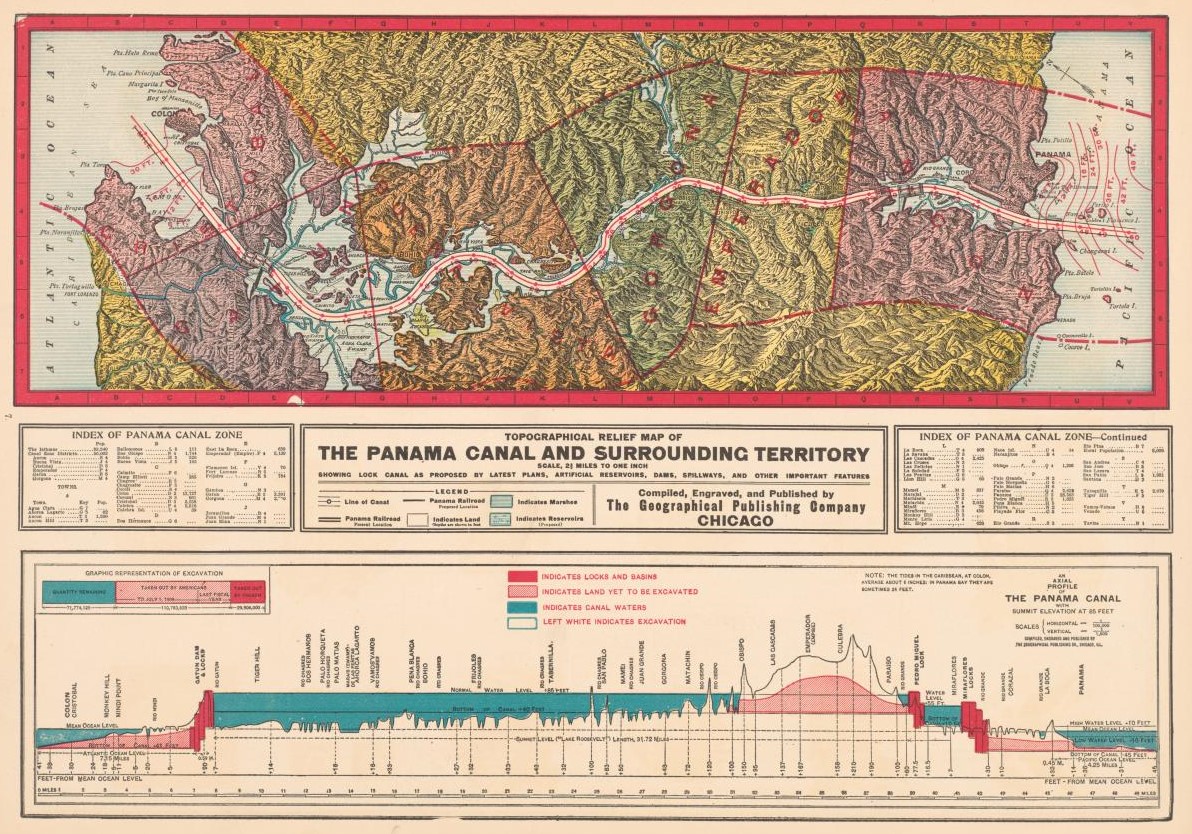
So the canal is treated as “inland American waters,” absolute jurisdiction over which naturally belongs to the government of the United States. This is a heaven-crying distortion of the Hay-Pauncefort treaty.
Another sophistry of Taft and his partisans, which illuminates the question from an opposite angle, is as follows: The exemptions and prohibitions formulated in the bill apply not to the vessels of this or that nation, but to definite voyages and classes of vessels, regardless of the flag under which these vessels might be sailing. Thus it might appear that the new bill did not grant any special advantages to American vessels.
Let us analyze the bill. The first clause entirely forbids the use of the canal to vessels owned by railroads. This is directed chiefly against Canada, whose Canadian Pacific Railway owns a great fleet of steamers, and may perhaps be intended to punish her for rejecting the treaty of reciprocity projected by Taft which aimed at weakening the bonds uniting Canada and England and paving the way for tariff-union between America and Canada and, ultimately, annexation of the latter. It is well- known what an impression was created throughout Canada and England by Roosevelt’s revelations of Taft’s utterances regarding Canada. Quoting Taft’s letter to him in January, 1911, Roosevelt, who, in his fight against his adversary, did not stop short at any means, even at divulging state secrets, tried to show that Taft, but a tool in the hands of the bosses and the trusts, had conceived an anti-Canadian plot and was pursuing a policy of adventure toward a neighboring country. And indeed, from the letter which Taft was forced to make public it is manifest that the President views the tariff agreement as a means that would lead to the absorption of Canada by the United States. Taken in conjunction with the unwise declaration of Representative Clark as to the inevitable annexation of Canada in the near future, and with Congressman Bennett’s absurd proposal to begin negotiations with England for the annexation of Canada, Taft’s letter stirred up alarm in England as well as in Canada. The Liberal Canadian ministry, headed by Sir Wilfred Laurier. which had aimed at demolishing the tariff wall between Canada and the United States, suffered utter defeat at the September elections of 1911 and was succeeded by Borden’s Conservative ministry. In order to strengthen their positions, the Canadian Conservatives, who had come forward as champions of national independence and the retention of the bond with Great Britain, shrewdly availed themselves of the American imperialists’ rash utterances. Many organs of the Canadian press, which had formerly supported the policy of rapprochement with the United States, now greeted warmly the words of Mr. Forster, who declared in his Ottawa speech that “the facts disclosed buried reciprocity forever,” since there had been brought to light “an attempt at our independence and our bond with England, which we shall never forget.” Utter failure was the result of the American imperialists’ attempt to weaken the ties binding Canada and England by means of a tariff agreement that should annex by economic means this completely autonomous English colony to the United States.

In the first clause of the Canal Bill the American imperialists “donned their fighting gloves” against the Canadian government and began an offensive war against their Northern neighbor. The Canadian Pacific Railway Company owns a whole fleet of steamers in both oceans, while the American railroads have al-most no steamers of their own, except one company which owns three. In general it must be remembered that so far the merchant fleet of the United States has played a very insignificant role in the foreign commerce of the republic. Thus according to official data, in 1910 this fleet conveyed but 8.7 per cent. of the total tonnage of the foreign commerce of the United States. This fleet which has been too weak to oppose foreign competition, will henceforth be put on a privileged basis. Canadian-Pacific steamers will lose the chance of using the Panama canal. The western provinces of Canada, its entire Pacific coast, will thereby be placed at extreme disadvantage in comparison with the Pacific coast of the United States. In order to send their agricultural products to the European market, the western provinces of Canada will be obliged either to carry them over the trans-continental railways, a distance of several thousand miles or to send them by steamers that will have to sweep the entire Pacific coast of the American continent from North to South, in order to go up again northward by a long route. In this way western Canada’s agricultural products will be in no position to contend in the European markets with the competition of the United States and will be practically driven out of Europe. By this bill, all western Canada will be similarly cut off from Brazil and Argentina, the entire Atlantic coast of South America.
Clause II of the bill completely exempts from canal toll the vessels plying coastwise between American ports. But the point is that foreign vessels cannot engage in coastwise trade, this being under American law the privilege of vessels flying the American flag. In this way the fleet of the United States which plays a trifling role in foreign commerce, holds undivided sway in commerce between American ports. Clause II, like Clause I, will be of exclusive advantage to the American merchant fleet. Nay more, American vessels sailing from Europe to western America will need but to call on their voyage, say at New Orleans, and as vessels sailing from one American port to another, they will pay no charges in passing through the Panama canal. Thus in both foreign and domestic commerce the American fleet will be placed on a privileged basis.
Clause III of the bill, freeing from toll the merchant vessels which in time of war will be placed at the disposal of the United States government, is naturally inapplicable to foreign ships. As for the American steamship companies they will all give such a pledge gladly. Thus the practical result will be that the entire American merchant fleet will enjoy the right of free toll through the canal. Clearly the above bill, signed by President Taft on August 20, 1912, is a direct violation of the treaty of 1901. This bill establishes in disguised form discrimination for vessels of different nationalities It caused an outburst of indignation not only in the English and Canadian press, which vainly demanded that the question be submitted to the Hague tribunal for arbitration, but also in many organs of the American press. Several influential newspapers criticised the bill as a blot on American honor. But of course these fiery protests and appeals to American honor did not affect the American protectionists. who hinted that the opponents of the bill did not at all care for great national interests, but were paid to look out for the interests of the railroad companies, which feared that a considerable share of freight would be taken from the transcontinental lines.
At all events the above bill is a challenge to all Europe. In this regard the imperialistic point of view as to the essence of contemporary international law has been stated most frankly by Senator Cummins of Iowa. In his speech during the discussion of the bill he declared that America must not mind the agreements signed by her and that the sword ought to be the only possible judge in all conflicts.
Having broken the Hay-Pauncefote treaty, the United States threw the gauntlet not only to Great Britain, which has made formal protest, but to all Europe. This justifies us in saying that in the question of Panama, the American bourgeoisie is applying the out-of-date Russian method of fighting competition. Ardent champions of the open-door principle in Asia, the American capitalists are not content at home with high protective duties on all foreign products, and are now building a customs-house for all Europe at the Atlantic entrance to the Panama canal, thus practically closing it to all European navigation. However, there can be no doubt that as soon as the relations between England and France on the one hand, and Germany on the other improve–and in that direction the Panama policy of the American imperialists can play a part–the protectionists of the United States will have to throw the Panama gates wide open to the European merchant ships.
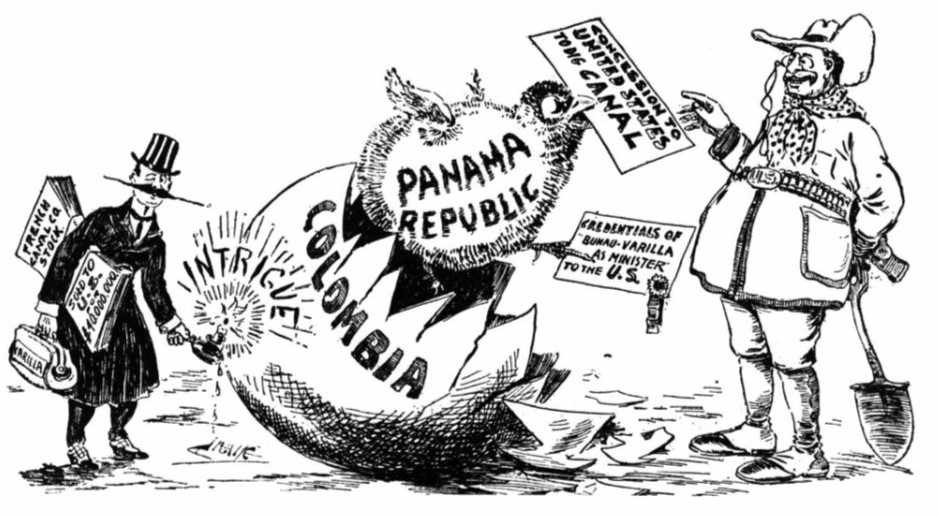
At all events the energy with which many English, German and French steamship companies are preparing for the canal opening proves that Europe will not yield its positions in South America so easily to the United States. There are indications, even now, that certain European governments will grant premiums, openly or secretly, to those of their ships that pass through the canal. Thus the American protective system regarding the canal will result but in a more acute economic struggle with Europe, will bear no positive fruit, and will fall as an extra burden upon the American proletariat. The building of the canal cost the colossal sum of $400,000,000. The payment of interest on the sums expended, on the maintenance of the canal, on military expenditures for the defense of the canal–all this will cost $30,000,000 a year at the least. Yet the revenues of the canal will be extremely insignificant as compared with that sum. This will not be denied by any one who has studied more or less attentively the question of possible future traffic through the canal. This protectionist canal bill, then, is in the nature of a challenge to all Europe. It will work only to the advantage of a coterie of capitalists. But upon the great masses of the American people who will have to pay annually from twenty-five to thirty million dollars out of their own pockets for the maintenance of the canal, it will fall as a heavy burden.
*On February 17, Senator Root’s proposed amendment to the Panama Canal law, to repeal the provision giving free passage to American coast-wise ships, was rejected by the Senate Committee on interoceanic canals. It is believed that this will prevent action in the Senate at this session. Ed. N.R.
The New Review: A Critical Survey of International Socialism was a New York-based, explicitly Marxist, sometimes weekly/sometimes monthly theoretical journal begun in 1913 and was an important vehicle for left discussion in the period before World War One. Bases in New York it declared in its aim the first issue: “The intellectual achievements of Marx and his successors have become the guiding star of the awakened, self-conscious proletariat on the toilsome road that leads to its emancipation. And it will be one of the principal tasks of The NEW REVIEW to make known these achievements,to the Socialists of America, so that we may attain to that fundamental unity of thought without which unity of action is impossible.” In the world of the East Coast Socialist Party, it included Max Eastman, Floyd Dell, Herman Simpson, Louis Boudin, William English Walling, Moses Oppenheimer, Robert Rives La Monte, Walter Lippmann, William Bohn, Frank Bohn, John Spargo, Austin Lewis, WEB DuBois, Arturo Giovannitti, Harry W. Laidler, Austin Lewis, and Isaac Hourwich as editors. Louis Fraina played an increasing role from 1914 and lead the journal in a leftward direction as New Review addressed many of the leading international questions facing Marxists. International writers in New Review included Rosa Luxemburg, James Connolly, Karl Kautsky, Anton Pannekoek, Lajpat Rai, Alexandra Kollontai, Tom Quelch, S.J. Rutgers, Edward Bernstein, and H.M. Hyndman, The journal folded in June, 1916 for financial reasons. Its issues are a formidable and invaluable archive of Marxist and Socialist discussion of the time.
PDF of issue: https://www.marxists.org/history/usa/pubs/newreview/1913/v1n09-mar-01-1913.pdf
 Revolution's Newsstand