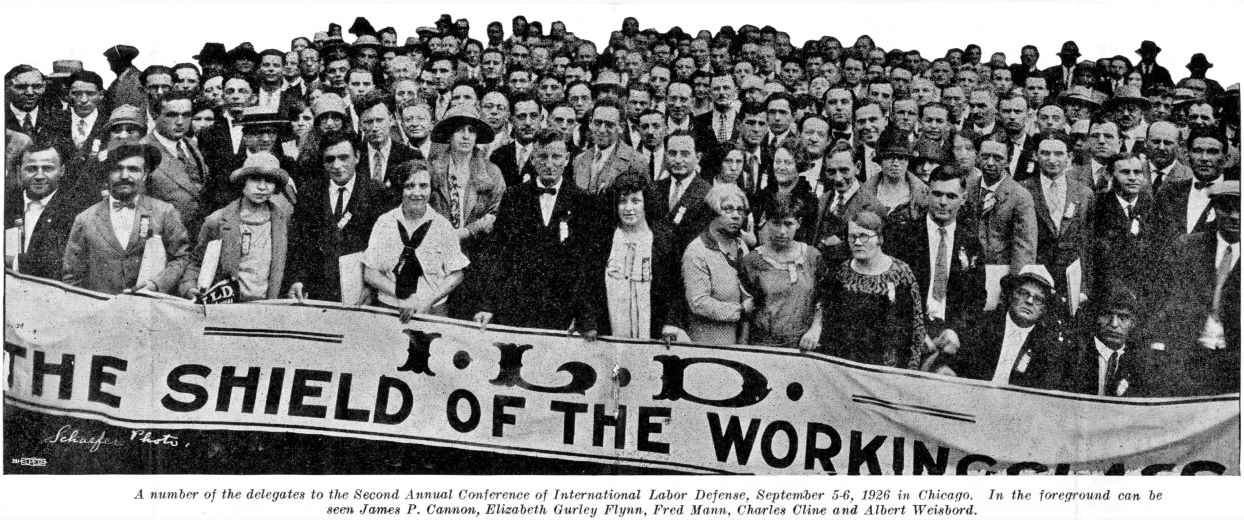
Martin Abern, then Assistant National Secretary of the I.L.D., gives a report on its many activities for the first six months of 1928.
‘Building the International Labor Defense’ by Martin Abern from Labor Defender. Vol. 3 No. 8. August, 1928.
EVEN the briefest review of the work of International Labor Defense for the past six months shows the varied and intense character of the activities and campaigns of the organization. It indicates also that the I.L.D. is steadily strengthening the confidence that increasing numbers of workers throughout the country have towards it.
SEVENTY NEW BRANCHES FORMED
According to applications received by the national office of I.L.D. from the beginning of 1928 to July 1st, 70 new branches have been organized, averaging 20 members each. The Hungarian and Italian sections were organized and developed. Among the important activities were:
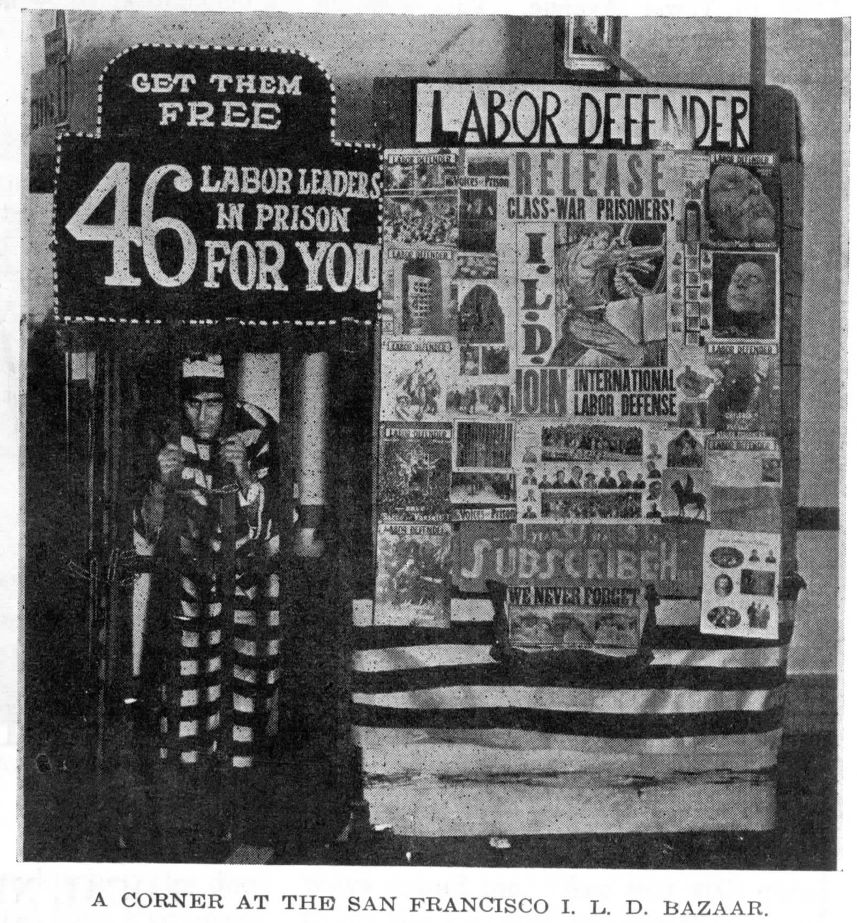
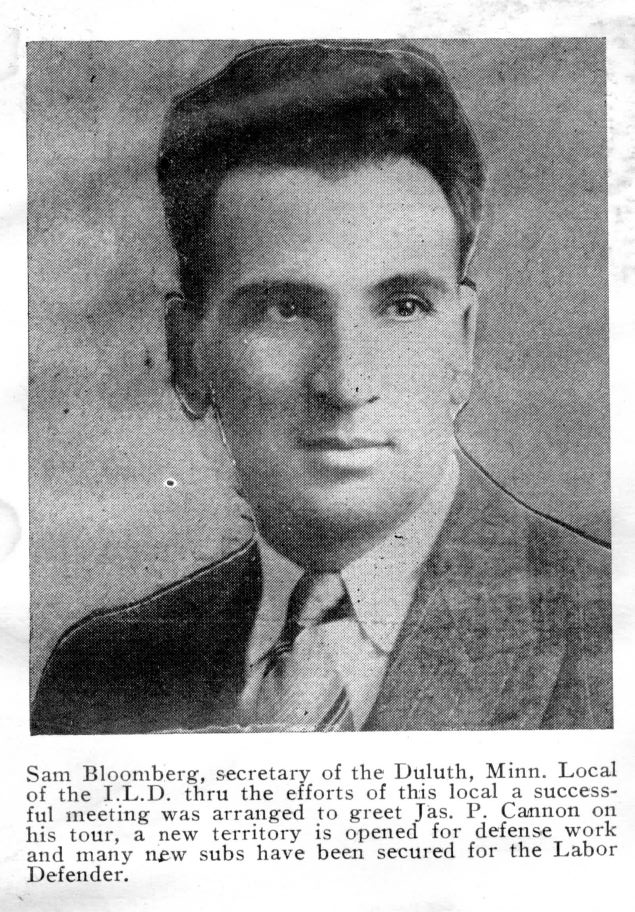
A. The national tour in 35 cities and nearly 50 meetings against the American frame-up system by James P. Cannon, coupled with a three months’ subscription drive for the Labor Defender. The tour also laid the basis for the Mooney-Billings campaign and the Centralia prisoners’ campaign. A California district conference was held during this tour at San Francisco to dramatize the forthcoming campaigns. The tour was highly successful.
B. An illustrated lecture tour by Max Shachtman, editor of the Labor Defender, on Revolution and Counter-Revolution in China, in 30 cities. A successful tour, and it demonstrated the value of illustrated forms of propaganda.
C. A national tour against Polish fascism by David Bogen, special Hromada representative. A special committee against Polish Fascism with I.L.D. as the main force was organized for the campaign and tour. An intensive propaganda was conducted and several hundred dollars were raised for Polish prisoners.
D. Special campaigns, consular mass meetings, protests, etc. on behalf of Bela Kun and special trials in Italy were organized and are still continuing.
E. The circularization in the campaign to provide books for labor prisoners had a special dramatic and propaganda appeal and value and attracted much attention. The idea has been adopted by the Red Aid of Germany.
F. Among the literature issued was: 1. An eight page folder on the Bonita-Mendola-Moleski case, selling at one cent. 20,000 copies were printed. 2. A four page leaflet, “What Is the International Labor Defense,” 150,000 in English, 20,000 in Italian, and by arrangement with the Jewish section in Chicago, an edition in Jewish. Labor Defender posters were also published.
G. Bonita-Mendola-Moleski Defense. A special defense committee with I.L.D. as the driving power was organized. The national office had a representative in the field almost continuously. I.L.D. aided in raising funds for this committee and expended some $700 directly in the case, as donations, organizers, etc.
DEFENDER CIRCULATION GROWING
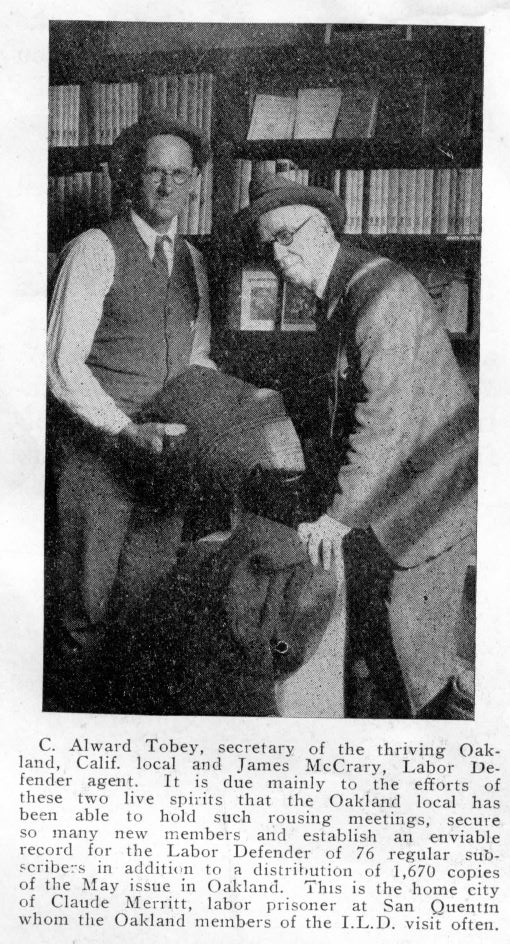
Labor Defender. The circulation of the Labor Defender, as a result of a systematic development of policy and campaign has grown phenomenally since January 1st. Briefly, the circulation has increased from 10,000 in January to 22,000 with the July issue, a special Mooney-Billings issue. The subscriptions have increased from 1500 to 5500. The bundle increases have been from 8500 to 16,500. The 22,000 circulation (printing is only according to actual orders) is greater than that of almost any other radical labor organ.

Our analysis shows that this development for swiftly increasing circulation will continue and we have set 30,000 as our January 1, 1929 goal. We might say that we propose to maintain the low ten cents price of the magazine and therefore must continue publication as yet at a slight loss until the magazine’s circulation grows a bit more. There is, however, a much higher cost involved in publishing a labor pictorial than other kinds of publications. The circulation which is being attained by the Labor Defender is also a demonstration of the broad support for I.L.D. and too, that with a systematic organization drive and policy the circulation of a labor publication can be substantially increased. The membership of I.L.D. is increasing and the Labor Defender increase in circulation must serve as a base for even more members.
The I.L.D. is also conducting at the present time a number of campaigns. Among these are:
IN FOREFRONT OF MINERS’ DEFENSE.
1. The miners’ defense campaign. The hundreds of arrests in various sections of the coal regions have confronted the I.L.D. with special difficulties. In addition to the activities conducted on behalf of the Colorado miners’ defense, and the Bonita-Mendola-Moleski defense in the anthracite coal regions, the main miners’ defense activity exists in Ohio, Pennsylvania, West Virginia and Illinois. The national office thus far has borne the major cost in financing the defense of the miners. In the Ohio and West Virginia territory a special miners’ defense drive with the issuance of a special miners’ defense stamp has been carried on by the Cleveland secretary in order to speed the raising of funds. Rather than a special national miners’ defense drive which might affect the relief work, the I.L.D. entered into a special week for relief and defense for the miners, with the National Miners’ Relief Committee, for the week of July 22nd to 29th and which, it is expected, will thereby make it possible to cover the cost for miners’ defense cases.
2. In the New Bedford textile strike there are some 72 cases of textile workers on hand. The national office has helped to defray costs in the textile region; the burden for the New England district is heavy. But in an endeavor to meet the actual needs a special textile defense and relief week is being conducted from July 15th to July 22nd, in the New England territory. The national office has sent representatives to Pittsburgh from time to time to aid and advise in the work. A full time worker was paid in Colorado during the period of the strike. The Labor Defender has steadily dealt with the miners and textile strikes as major campaigns and has called for support. The Labor Defender has been circulated widely in the mining regions and also is being extended in the textile regions. From reports coming to the national office from various locals much money and relief in the form of clothes, etc., has gone directly to the National Miners’ Relief Committee or the W.I.R. and here and there the impression has prevailed that funds sent to the relief organizations also covered defense. The national office has tried to clarify always the functions of relief and defense work.
FOR MOONEY AND BILLINGS
3. A major campaign which I.L.D. hopes to develop into the largest campaign in its history and to secure the freedom of Mooney and Billings is the campaign now being conducted for these two fighters. This campaign is already gaining impetus swiftly. The labor press is using our material more extensively and even the capitalist press, including the New York World, the New York Telegram and the New York Graphic, mentioning only the New York papers, have used our pictures and press material and there has been editorial comment. A full program for the Mooney-Billings campaign has been worked out, many points of which have already been executed.
4. Another major campaign is the one for the release of the Centralia prisoners, for which a program has been developed and is also now being carried out. This campaign is well under way and the I.L.D. is most active in it. The prisoners themselves, their closest adviser and friend, Elmer Smith, and I.W.W. elements are working closely with us. A special provisional committee, made up of the broadest labor and liberal elements is in existence for this campaign and is developing more, to begin with, in the northwestern states. Special mention must be made of the excellent work of comrade Charlotte Todes, Seattle I.L.D. secretary, who is also secretary of the united front Centralia Committee. The press, generally, has been quick to back up material on this campaign. The Labor Defender naturally is now also devoting considerable space to these two campaigns.
$15,000 SPENT FOR DEFENSE
Finances. Since January 1st, to approximately July 1st, about $15,000 have been expended by I.L.D. for the numerous cases, prisoners’ relief, bail costs, etc. Of this amount, approximately $4,000 has been paid directly and the cost borne wholly by the local organizations. The remaining $11,000 expenses have been paid by the national office directly and indirectly. Of this $11,000, approximately $8,000 has been paid out in cash by the national office and $3,000 broadly, has been borne by the national office, in the application of local accounts on the Labor Defender, etc. Our reserve fund for the various cases has now been depleted and this affects our immediate situation, particularly among the miners and textile workers, but which we hope the textile relief and defense drive and the miners’ relief and defense drive will overcome.
Among the major expenditures since January 1st, has been over $2,100 for the Woodlawn, Pa., steel workers’ case which involves the right of legal existence of the Workers (Communist) Party of America in Pennsylvania. This case must now be taken to the State Supreme Court and another $1,500 must immediately be raised for the printing of the records and for lawyers’ fees. If necessary, I.L.D. proposes to carry these cases to the United States Supreme Court in an effort to prevent imprisonment. In the Cheswick, Pa., coal miners’ cases, arising out of a Sacco-Vanzetti demonstration, we have expended over $600 since January 1st. The A.C.L.U. has aided in these cases.
The monthly prisoners’ and families’ relief has cost about $3,000. The Bonita case expenditures have been over $700. Bail premiums and interest thereon, etc., have been about $1,500. $210 has been sent in recent weeks for textile defense and over $500 has been expended in connection with the Ohio, Pennsylvania and West Virginia cases, and of course the remaining legal fees and expenses therewith are yet to be met.
THE MINERICH CASE
The Minerich anti-injunction case, it is planned, will be carried if necessary to the United States Supreme Court. Deportation cases, anti-imperialist and anti-militarist cases, etc., etc., make up other large costs. We have just succeeded, with the help of the American Civil Liberties Union, in cancelling the bonds on about 150 of the Passaic textile cases, with the exception of Weisbord’s. There must be an immediate expenditure of $725 for lawyers’ fees and costs and the payment of thousands more as premiums on the bonds to the surety company before these cases can finally be liquidated.
In addition, we are now taking steps in connection with the Michigan cases in an endeavor to bring the cases to an issue in one manner or another.
This report serves to show an active and growing movement of labor defense in the United States, and that wherever workers are arrested and persecuted for their activities on behalf of labor, the shield of the I.L.D. will be there to meet and resist capitalism’s attacks and to afford the worker the fullest possible protection and support.
Labor Defender was published monthly from 1926 until 1937 by the International Labor Defense (ILD), a Workers Party of America, and later Communist Party-led, non-partisan defense organization founded by James Cannon and William Haywood while in Moscow, 1925 to support prisoners of the class war, victims of racism and imperialism, and the struggle against fascism. It included, poetry, letters from prisoners, and was heavily illustrated with photos, images, and cartoons. Labor Defender was the central organ of the Scottsboro and Sacco and Vanzetti defense campaigns. Not only were these among the most successful campaigns by Communists, they were among the most important of the period and the urgency and activity is duly reflected in its pages. Editors included T. J. O’ Flaherty, Max Shactman, Karl Reeve, J. Louis Engdahl, William L. Patterson, Sasha Small, and Sender Garlin.
PDF of full issue: https://www.marxists.org/history/usa/pubs/labordefender/1928/v03n08-aug-1928-LD-ORIG.pdf
 Revolution's Newsstand