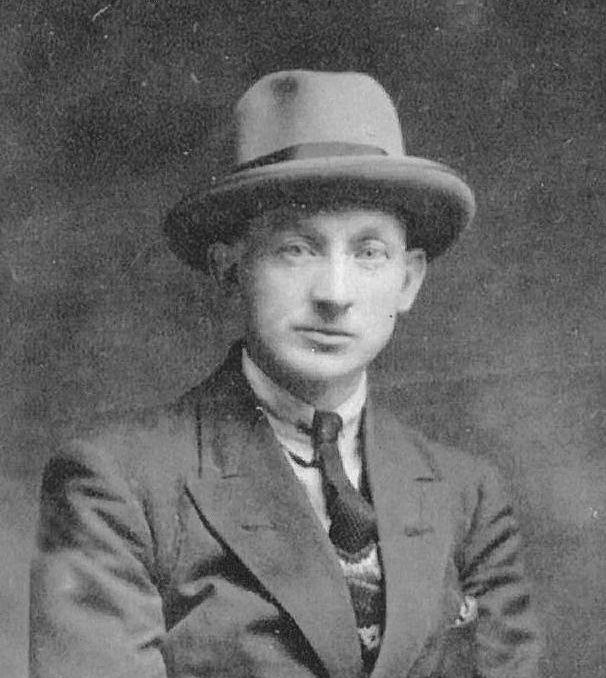
Jack Carney, who was also a founder of the U.S. Communist movement, was delegate of the Irish Workers League to the 6th World Congress of the Communist International in 1928. There he spoke in two discussions; on the danger of imperialist war and the revolutionary movements in the colonies. Both interventions below.
‘Ireland at the Sixth Comintern Congress: Speeches by Jack Carney’ from International Press Correspondence. Vol 8. Nos. 61 & 72. September 11 & October 17, 1928.
Discussion on the Danger of Imperialist War
At the outset let us not overlook the main fact in regard to the vital problem of war, and that is, that the masses are not opposed to war. In our discussions let us not forget this vital factor in our campaign to prevent world war.
In the event of a war between America and England, which is more imminent than we think, fully 75% of the workers of the Irish Free State will be pro-American. The penetration of the Irish Free State by means of finance capital will pave the way for an unofficial understanding between Southern Ireland and America. On the other hand we will witness a strengthening of the British garrison in the North. It is not for nought that the American Navy visits the South of Ireland and that the British Navy follows with a visit to the North. The position of the Party in Ireland will be a difficult one, but it will be met.
The question of the Irish working class in Britain has been mentioned for the first time by Comrade Murphy. Let us examine this class in Britain. They form the basic elements among the unskilled workers of the chemical industry. In Silvertown, London, Newcastle-on-Tyne and Widnes, in Liverpool, all great centres of the chemical industry, are owned by the Imperial Chemical Industries, Ltd. This is a position of strategic importance. In the next war it is a position that must demand our attention. On the docks you will find in such ports as Liverpool and London a very high percentage of the Irish working class. On the docks you will find a similar high percentage of the stokers and seamen. Owing to the personnel of the army let us not forget that the first revolt within the British army took place in India, when in 1916 the Connaught Rangers revolted against the execution of their fellow countrymen in Dublin, Ireland. The position of the Irish working class in Great Britain is one that requires immediate attention organisation not declamation must be our slogan. We have recently had wholesale attacks upon the Irish working class in Britain. We have had a deputation to Joynson Hicks demanding the enactment of immigration legislation against the Irish. The British Party could have utilised this situation to bring the Irish workers nearer to the Party. This is mentioned in a friendly spirit in order to direct the attention of the Party to the possibilities of organising work. If our work is to be successful it must depend upon our success in reaching them.
The delegates are aware of the part the Irish played in the anti-conscription campaign of Australia; the work with the French-Canadians in Canada, and similarly in other parts of the Empire. The sections in the Colonies must be reminded of these events so that they can be drawn upon for support in a campaign against war. The limited time at my disposal of necessity compels me to omit many phases of our propaganda against war. We must not repeat the mistakes of the world war. We must not again permit comrades to fight their own battle when by an organised resistance they can be more effective. We will have to approach our fight against the next war with the feeling that it is a fight for power, that is, approach it with the responsibility of men and women taking over control,
In conclusion, I trust this Congress will devote a little more attention to the work of the Irish working class, whether in Ireland or elsewhere.
Discussion on the Revolutionary Movement in the Colonies.
Comrade Murphy, in the debate on the speech of Comrade Bukharin mentioned that there had been an omission regarding Ireland. We find a similar omission on the question of colonial policy, and I think the Comintern must cease to disregard Ireland. It is also necessary for Communist Parties in the metropolitan countries to understand the relationship to the movements in the colonies.
The Communist Party of Britain is of the opinion that in any action directly connected with the colonies and the Empire the Mother Country that the initiative and responsibility rests in the main, upon the colonial Parties. This is the view that was adopted at the Profintern Congress against the protest of the Irish delegation. It is a wrong view, which should find no place in the Comintern.
In Ireland we have British trade unions. The men who delivered letters were members of a British union, the Post Office Workers. The British trade union officials decided to give up these Irish workers to the Irish unions. The men and women shop-assistants in the food stores were also delivered over to the Irish Unions. But the British trade union leaders will not agree that the men who belong to the Railwaymen’s Union, the men who transport soldiers and munitions in times of civil war, are organised in Irish unions, they want to keep them under British direction. These leaders are part of British imperialism in Ireland. And this Congress should make it obligatory for the British Party to take up in its trade union programme and in its immediate work, the demand for the withdrawal of British unions from Ireland. We are working on these lines. It is a hard task. We find the Irish employers boosting the British unions. Irish railway managers will rather negotiate with Thomas than with Larkin, and so the British unions are industrially against us politically they stand as a menace to the Irish workers. Therefore, the Irish Party urges that this demand for the withdrawal of British unions shall not be sidetracked.
Comrade Heller dealt with the attempted penetration of the Indian movement by the British Trades Union Congress. The British workers should raise the slogan “Hands off the Indian Trade Unions”. But the British Trade Union Congress is trying to gain control over one or two unions in India and they will play the same role in India as they are playing in Ireland. We should not lose sight of this fact.
At the II. Congress, Comrade Lenin told of a conversation with a Finnish worker, who said to Comrade Lenin: “There is now a clear understanding among us revolutionary workers that when the hour strikes, it will be necessary to settle accounts with the White Social Democrats first, then we can proceed to fight the bourgeoisie.”
“These simple sentiments”, declared Comrade Lenin, “constitute a political maxim.” In 1923, when Comrade Larkin returned from America, that was the basis of his policy. We find the Labour Party in Ireland on the side of the Free State, directly imperialist. It demonstrated that at the British Empire Conference when it voted against self-determination for India. But the Fianna Fail is anti-imperialist; the Irish Republican Army is anti-imperialist, and the Irish Workers’ League is also anti-imperialist, all these constituting the elements working in Ireland against British imperialism. We fight against imperialism together, maintaining our identity on the basis of a real united front. In the elections we said: Fight for the Irish Workers’ League first; secondly, fight for the Fianna Fail.
The British Party in the elections of 1927 advised the workers of Ireland to fight for the Irish Workers’ League, and then for the Social Democrats. This is a great political mistake. It shows there is a lack of understanding on the part of our British comrades of the position in Ireland. You cannot associate with those who are lackeys of imperialism, just as the British Party cannot associate with the lackeys of imperialism in England. In the fight against imperialism you cannot associate with anybody who is part and parcel of the imperialist camp.
Speaking on the Programme, Comrade Garlandi of Italy mentioned that slight attention has been given to the agrarian problems; in dealing with the colonial policy, we must deal with the question of the peasantry. We in Ireland are confronted with the same problem. In the Irish Free State there are 436,000 agricultural holdings, 67% of these are ranged from 30 acres down. The C.I. has given us no lead in the question of dealing with this peasant problem. We have said to the peasants: “refuse to pay rents”. We have told them that when a Workers’ and Peasants’ Government is established they will give them better machinery. We shall mortgage off their land, we can prevent the bankers from exploiting them, but what is the peasant going to do now? How are we going to engage in our immediate work with the peasantry? These questions must be answered.
There ought to be more delegations from the peasants to the U.S.S.R. The illiteracy of the peasants renders it very difficult for us to make propaganda amongst them, but if they could come here to Russia and see how the agrarian policies are carried out, it would be very effective.
We, in Ireland, are going to have, at the end of next year, the electrification of Ireland by the development of what is know as the Shannon Scheme. There is the penetration of Ireland by American capital. The opposition party of De Valera is pro-American. The Free State Party is pro-British. The question will be that in the next war, we will have on the one side the employing class being for Great Britain and on the other side, 75% of the masses pro-American. In a country like Ireland there must be more propaganda amongst the Irish in America and amongst the Irish in Britain also. The responsibility for creating a revolutionary proletariat and peasantry in Ireland must not be left to the Irish Party, but the American Party and the British Party, working through the Comintern can assist us in Ireland to create a revolutionary machinery to overcome British imperialism.
International Press Correspondence, widely known as”Inprecor” was published by the Executive Committee of the Communist International (ECCI) regularly in German and English, occasionally in many other languages, beginning in 1921 and lasting in English until 1938. Inprecor’s role was to supply translated articles to the English-speaking press of the International from the Comintern’s different sections, as well as news and statements from the ECCI. Many ‘Daily Worker’ and ‘Communist’ articles originated in Inprecor, and it also published articles by American comrades for use in other countries. It was published at least weekly, and often thrice weekly.
PDF of full issue: https://www.marxists.org/history/international/comintern/inprecor/1928/v08n61-sep-11-1928-inprecor-op.pdf
PDF of issue 2: https://www.marxists.org/history/international/comintern/inprecor/1928/v08n72-oct-17-1928-inprecor-op.pdf
 Revolution's Newsstand