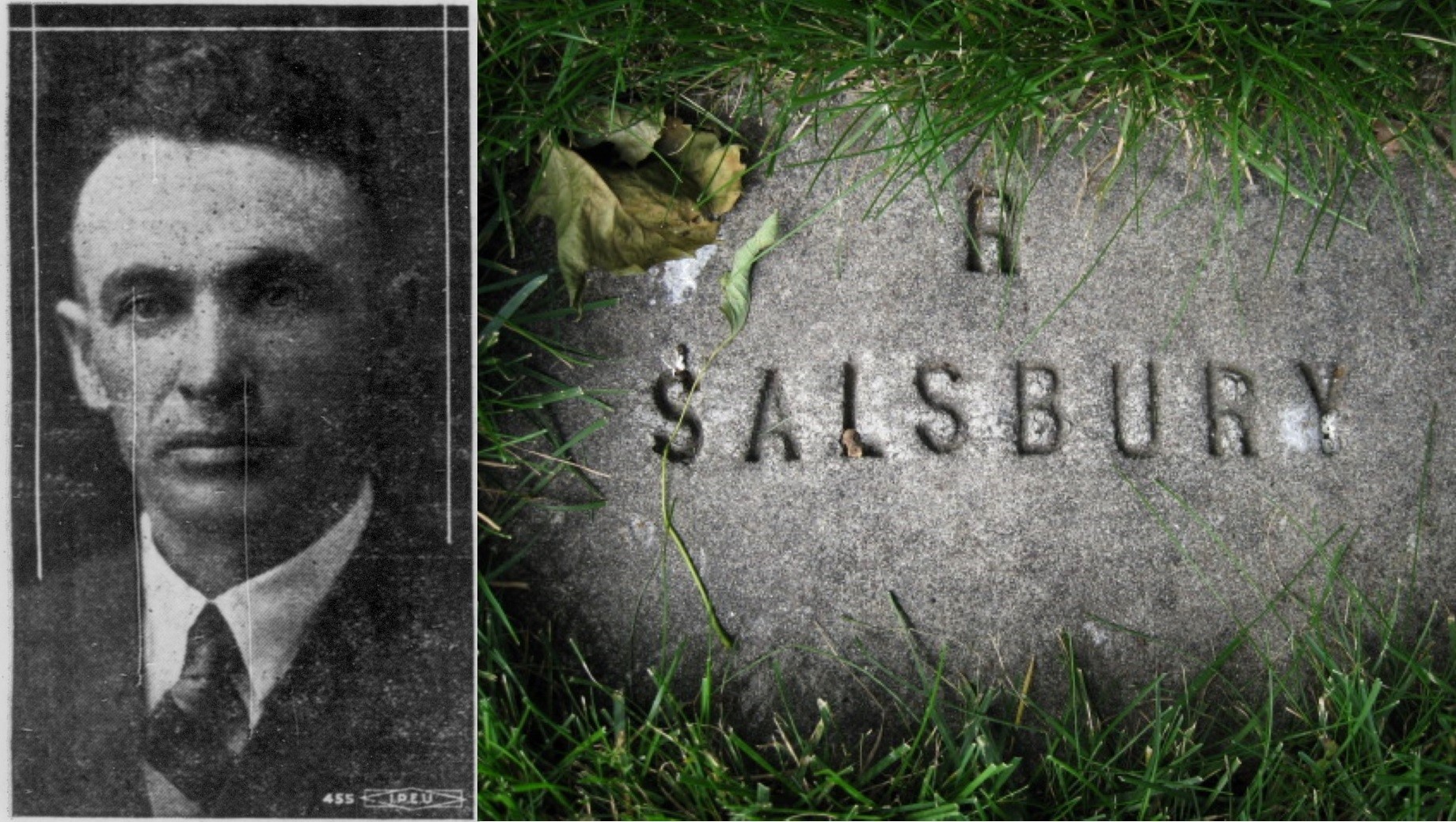
Rodney Salisbury, the wobbly sheriff, was a dirt farmer from the Dakotas who joined the I.W.W. and Socialist Party before the war, became a Communist and was elected Sheriff of Sheridan County, Montana. A central figure in the Farm Holiday Movement and editor of the venerable ‘Producers News,’ Salisbury was a close comrade of T.J. O’Flaherty; both worked on the newspaper and were expelled as ‘Trotskyists.’ Salisbury followed O’Flaherty in rejoining the Party, running for Montana governor in 1932, only to quit again with the Popular Front. His long-time comrade Charles Taylor pays his respects.
‘Rodney Salisbury–A Model Revolutionist’ by Charles E. Taylor from Socialist Appeal. Vol. 2 No. 28. July 9, 1938.
(The following article on the death of Rodney Salisbury by Comrade Taylor, one of his closest co-workers, contains so much interesting and inspiring detail about Rodney’s life and work that we have deemed it best to publish it in place of the article Comrade Cannon planned to write.-Ed.)
Rodney Salisbury was a comrade whose place just cannot be filled in the great struggle. of the workers for justice and liberty. This is particularly true of the agricultural workers of whom he was one, and whose problems he understood so well by reason of his life and associations. It seemed to be a strange play of fate that Salisbury came to his old home town and county, the scene of much of his life work, to die. He had been doing some organizational work for the Farm Holiday Association in North Dakota. On his way back to Western Montana he came to Plentywood to visit comrades and old associates, local members and sympathizers of the Socialist Workers Party, of which he was a charter member.
The old Farmer-Labor Temple, even the gallery, was packed at his funeral with old associates, workers and farmers, many of whom had come from long distances. The casket was buried in flowers. The simple and sincere eulogies were spoken by Salisbury’s oldest and most intimate friends and political associates, Peter J. Gallagher and Charles E. Taylor, who reviewed his life and work, and the principles to which he was devoted and for which he worked with untiring energy and unselfishness.
A Son of the Soil
Rodney Salisbury was born on a farm at Rio, Wisconsin, May 2, 1888, the son of farmers, poor. When he was still a small boy, his father bundled the wife and babies into a covered wagon and with Rodney to help drive the horses went overland to Brinsmaide, Benson County, North Dakota. There he took a homestead on the virgin prairies and undertook to carve out a farm and home for his family on the frontier, as his fathers had done before him. Rodney experienced all the hardships and privations of the average pioneer homesteader’s son, plus those which fall to the older son under such circumstances.
In 1909, when Rodney had just come of age, he filed on a homestead near the village of Raymond, built himself a shack, got a team and busted the sod, as he had helped his father do at Brinsmaide. He worked in the harvest fields and cooked on the threshing rigs. In the winter he cooked in cafes in Plentywood, in the spring he broke more sod with his earnings and seeded more crops. And this was the round of his life as the years went by.
Linked Up With the I.W.W.
In 1907 he heard about the trials of Moyer, Haywood, and Pettibone, of the Western Federation of Miners. He started to read the old Appeal to Reason, which led the fight in the defense of the miners’ officials. His soul was fired by this trial, reports of which he read in detail.
The first organization Rodney Salisbury ever joined was the Industrial Workers of the World (I.W.W.). He loved this for what it had been to his dying day. It was his alma mater. He knew the Wobbly songs by heart. He joined the agricultural section of the I.W.W. shortly after it was created. He was an organizer and local leader, and many migratory harvest workers still remember him from coast to coast, wherever old-time “Wobblies” can be found. They knew his courage, daring and initiative, and his class consciousness and class loyalty. The next organization he joined was the old Socialist Party. He regarded Eugene Victor Debs with great admiration, naming his second son for the great Socialist labor leader. Again in the Socialist party he was an organizer, and an indefatigable worker and propagandist. And much was the Jimmie Higgins work he did. He always had a dollar for the cause.
Promoted a Socialist Paper
In his early manhood Rodney married Emma Ryan, of Minnesota, who came into the county as a school teacher and taught at the school near his homestead. Emma Salisbury was a good wife, companion and teacher, who sympathized with and joined him in his revolutionary outlook. Of this union there were born Michael in 1914; the twins Jardis and Janis, in the autumn of 1917; Eugene Victor in 1919; Camilla in 1922, and Patrick in 1925.
In the summer of 1917 the members of the Socialist Party organized the Peoples Publishing Company and prepared for the launching of the Producers News in Plentywood in the spring of 1918 as a Socialist county paper. Salisbury did yeoman service in the promotion of this enterprise, as in everything else undertaken by the party. The success of the publication, which at one time was a power in Montana and Dakota and the wheat section generally, was in no small way due to his efforts.

By the time the paper was published, most of the Socialists in the area, where the party was strong, had joined the Nonpartisan League, the nation was in the midst of the World War, the St. Louis convention of the Socialist party had drafted its famous war manifesto. Debs was on trial, as were the Socialist leaders at Chicago and the leaders of the I.W.W. Salisbury had taken an unequivocal stand against the war, as had many another connected with the promotion of the paper. The terror was at its apex. It was decided to make the proposed Socialist paper the local organ of the N.P.L. At this time the writer, a Socialist from northern Minnesota, became connected with the Producers News, as editor. He got out the first issue of the paper in the midst of the terror, met Rodney Salisbury, and was from the very first aligned with him politically.
Fights for the Persecuted
Rodney Salisbury, in the midst of this fight, came definitely into political activity. He helped organize and raised the money for the defense of those arrested, locally and nationally, on espionage and “criminal syndicalism” charges. In this struggle, when it was almost a life and death matter, Salisbury showed his courage and mettle. He worked night and day, facing every situation without flinching, always leading and never asking anyone to do a thing that he was not himself prepared to go ahead in. All of the local prosecutions were defeated, and hundreds of dollars were raised for the defense of the class prisoners.
In 1922, Salisbury was elected sheriff, was re-elected in 1924 and again in 1926. As sheriff of Sheridan county, Montana, he became known to the workers all over the West. The Wobblies were at home in Sheridan county, and the jail was always open to the wanderers, where the beds were kept clean and the bathtub ready. Also the big range in the jail was at the service of workers, who always had free access to the larder supplied out of the pocket of the sheriff. Fellow-worker Salisbury was one sheriff who used his office all the time for the protection of the workers and the dispossessed farmers.
Was Charter Member of C.P.
In the autumn of 1921 a local unit of the Communist party was organized in Sheridan county. Salisbury was one of the charter members. When Tom O’Flaherty was the associate editor of the Producers News, he and Salisbury became close associates. It was then that Salisbury first became somewhat acquainted with the developments in the Communist party in the Soviet Union and in the United States. He became what was termed a “Trotskyite” as soon as he came to any understanding of the issues. But, hoping for the eventual reconciliation of the errors in the party, after dropping out of the party for a time, he rejoined and carried on under the idea of unity.
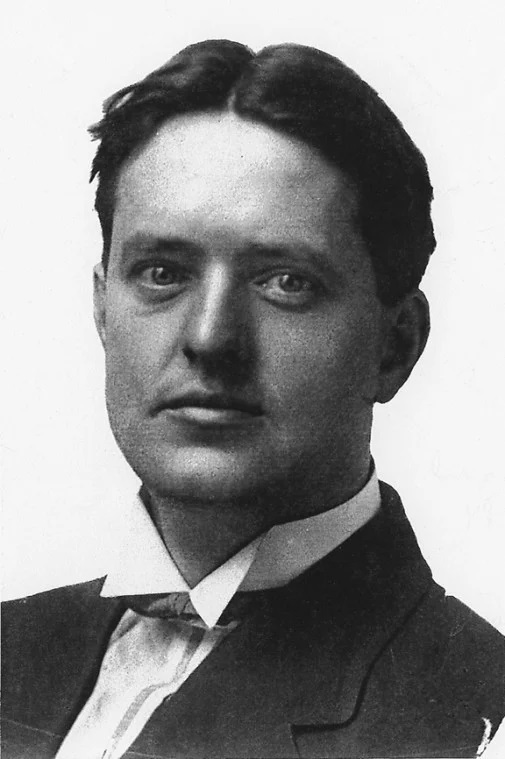
In 1932 he toured Montana as the Communist candidate for governor, receiving a splendid vote, especially in northeastern Montana. In 1934 Salisbury and Pete Gallagher and others of the old members left the party in disgust. By the Fall of 1934 the party was torn asunder and all of the old veteran members were out.
In the early spring of 1935, at the annual convention of the Holiday Association of Montana, Salisbury was unanimously elected president of that organization, which office he was still holding at the time of his death. Many were the successful demonstrations against foreclosures and evictions, and for relief of the poverty-and-drought-stricken farmers and unemployed workers under his leadership, or under his direction, throughout the out the wide borders of the state of Montana. Nobody could put a faking politician on the spot more effectively than Rodney Salisbury. Many grateful farmers from North Dakota came miles to attend Salisbury’s funeral.
Class Conscious to the Core
Comrade Salisbury was possessed of a charming personality, coupled with dynamic energy. He was class conscious to the core. He hated exploitation of any sort, and fearlessly denounced it. He despised capitalism and all it stands for. He could not reconcile himself to the right of any man or group of men to rule another man or group of men. He instinctively aligned himself with the underprivileged and the oppressed and unfortunate, no matter how unpopular the victim or how great the cost to himself.
Rodney Salisbury was devoted to principle. He was more concerned with being correct than with the number aligned with him or the popularity of the cause. He was never afraid to be in the right with two or three, nor was he awed or afraid in the presence of organized and powerful opposition.
After becoming disillusioned with the Stalinist party, fierce and effective, persistent and unrelenting was the war he conducted against this betraying and misleading group, and none testify to this better than the Stalinists themselves. When the Socialist Workers Party was organized he was at the convention in Chicago last December doing his bit.
Rodney Salisbury is dead. He died in harness as every revolutionist would wish to die. He now rests on the hillside at Missoula, Montana, beside his twin daughter Janice, whom he loved so dearly.
What a shock his death was to those who really knew and understood this great man, this true and loyal leader of the workers, this class-conscious and faithful revolutionist! All those who knew Rodney Salisbury, loved him or hated him, depending much upon their class position. What a grief his demise is to his comrades, his friends, his fellow workers, who have been associated with him so long in the revolutionary movement! His death is a great loss to the revolutionary cause to which he was so devoted, but the inspiring example of his life remains.
There have been a number of periodicals named Socialist Appeal in our history, this Socialist Appeal was edited in New York City by the “Left Wing Branches of the Socialist Party”. After the Workers Party (International Left Opposition) entered the Socialist Party in 1936, the Trotskyists did not have an independent publication. However, Albert Goldman began publishing a monthly Socialist Appeal in Chicago in February 1935 before the bulk of Trotskyist entered the SP. When there, they began publishing Socialist Appeal in August 1937 as the weekly paper of the “Left Wing Branches of the Socialist Party” but in reality edited by Cannon and other leaders. Goldman’s Chicago Socialist Appeal would fold into the New York paper and this Socialist Appeal would replace New Militant as the main voice of Fourth Internationalist in the US. After the expulsion of the Trotskyists from the the Socialist Party, Socialist Appeal became the weekly organ of the newly constituted Socialist Workers Party in early 1938. Edited by James Cannon and Max Shachtman, Felix Morrow, and Albert Goldman. In 1941 Socialist Appeal became The Militant again.
PDF of full issue: https://www.marxists.org/history/etol/newspape/themilitant/socialist-appeal-1938/v2n28-jul-09-1938-SA.pdf
 Revolution's Newsstand