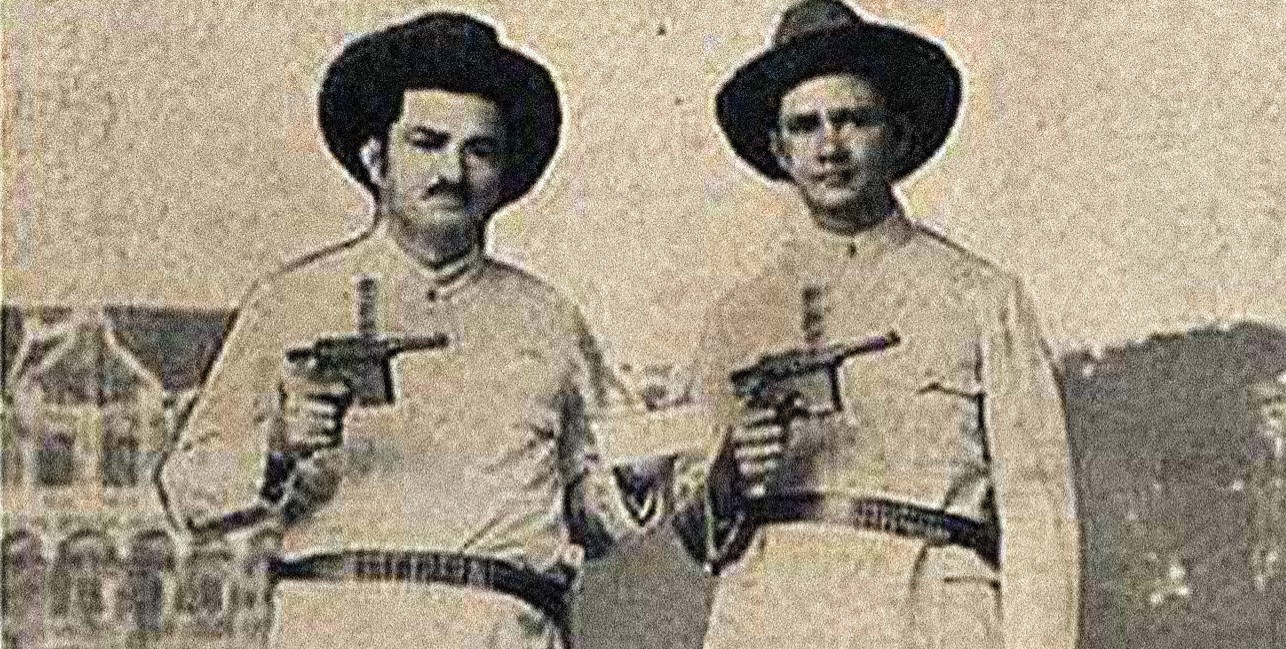
Gustavo Machado, a founder of the Partido Revolucionario Venezolano, forerunner of the Venezuelan Communist Party, describes the armed revolt he led against U.S.-backed dictator Juan Vicente Gómez in June, 1929.
‘The Revolt Against the Venezuelan Puppet Government’ by Gustavo Machado from The Daily Worker. Vol. 6 No. 237. December 10, 1929.
GUSTAVO MACHADO, secretary of the Venezuelan Revolutionary party, one of the leading participants in the revolt in June against the bloody dictatorship of Juan Vincente Gomez, puppet of American imperialism in Venezuela, just visited New York and gave the Daily Worker an exclusive interview of the events in Curacao.
“The revolution which broke out against Gomez,” said Machado, “originating in Curacao, a small island in the Caribbean Sea, off the coast of Venezuela, was a mass movement of 4,000 Venezuelan, Negro and Jamaican workers employed in the world’s largest oil refinery of the British controlled “Dutch Colonial Empire.”
For the first time the facts behind the uprising of workers and peasants against the iron-fisted 74-year-old dictator of Venezuela were brought out by a leader of the revolutionary forces.

“The Venezuelan Revolutionary Party, which led the revolt,” Machado said, “first captured the Williamstaadt fortress, the workers being armed with machetes alone, long knives used for harvesting. We made the Governor of Curacao, Dr. Fruyter a prisoner, together with the chief of police, known as the ‘tiger of Amsterdam.”
“We did not know, when we had him in custody of the revolutionary forces,” declared Machado, “that the tiger of Amsterdam” was the butcher of the Indonesian workers, or he would not have gotten off so safely.
“After storming the fortress and imprisoning the British-controlled Dutch governor and police chief, we collected what arms we could to make an effort to join the revolutionary forces in La Vela de Coro in Venezuela. Coro is a five-hour cruise from Curacao.
“The chief of police told us that only sufficient arms were kept on hand to shoot down striking workers. We took all the guns and ammunition we could lay our hands on, which were very limited; forced Herr Dr. Fruyter to sign a written order for our transportation on the American ship ‘Maracaibo,” commanded by the helpful Capt. Morris, to Coro, Venezuela.
“Thousands of the oil workers wanted to accompany us. But our arms were limited and we could take only 250.
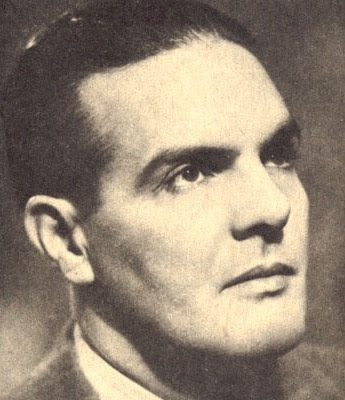
“The military leader of the revolutionary expedition was Gen. Rafael Simon Urbina, sympathizer of the Venezuelan Revolutionary Party. He was a fugitive in Curacao from the talons of the bloody Gomez. When the puppet Dutch authorities attempted to deport him to a miserable death at the hands of Gomez, the oil workers called a general strike. The action of the workers was successful in preventing Urbina’s murder.”
Machado was very modest in mentioning his part in the active fighting, but he and Urbina were the leaders of the rebellion.
“On arriving at La Lela Coro in Venezuela,” continued Machado, “we were met by a detachment of government forces led by General Lacle, vice-president of the State of Falcon, and a tool of Gomez.”
A battle was fought in which Lacle was killed. Ramon Torres, a refinery worker, who was leader of the vanguard in the fighting was killed, and Gustavo Ponte, a revolutionary student was severely wounded. Gen. Urbina, head of the revolutionary forces, decided not to take Coro. The peasants in Falcon, who wholeheartedly supported the revolutionary move, could be of little help because they were unarmed.
“It is the strategy of the dictator Gomez to arm his soldiers lightly because he does not trust his troops and takes every measure to prevent arms from falling into the hands of revolutionists when his soldiers are killed. He prefers using large numbers and having them killed than supplying them with sufficient arms that may fall in the hands of the rebellious workers and peasants.
“Our ammunition dwindled after one month of guerilla fighting,” explained Machado, “and we were forced to take to the mountains where we were given the protection of the peasants. Many of the peasants in Coro have been oil refinery workers, and are thoroughly in sympathy with the revolutionary forces.”
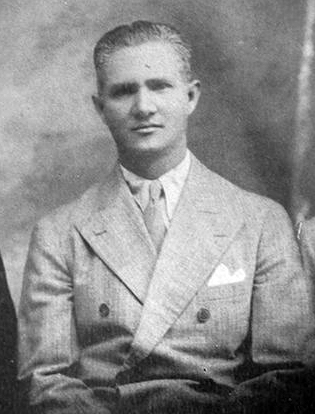
A reward of $20,000 each was put on the heads of Gustavo Machado, the secretary of the Venezuela Revolutionary Party, and Gen. Urbina, the military leader of the revolt. “Yet in spite of this tempting sum to starving peasants,” Machado said, “We were hidden and protected by the peasants.
“At the same time the Venezuelan Revolutionary Party was preparing attempted overthrow of the Gomez regime of terror,” declared Machado, “an expedition financed and engineered by the British Dutch Shell outfit, who oppose Gomez because of his leanings toward American imperialism, set out from Germany on the steamer ‘Falke.’ This petty-bourgeois adventurist pack was led by the Cumana military chief, Gen. Roman del Gado Chalbaud. One of his main pronouncements was that he would murder all Communists he could lay his hands on in Venezuela. Chalbaud lost his life in his futile attack on the Gomez government.
“Our failure to establish a workers and peasants government does not mean defeat of the revolutionary forces led by the Venezuelan Revolutionary Party. We have the support of the masses in Venezuela. The workers are with us and in spite of the reign of assassination and white terror we will triumph. Sufficient arms in the hands of the workers and peasants will spell the doom of the Gomez regime, and we call upon the American workers to fight our common enemy, who in a large measure is responsible for the perpetuation of the Gomez regime in Venezuela-American imperialism!”
The Daily Worker began in 1924 and was published in New York City by the Communist Party US and its predecessor organizations. Among the most long-lasting and important left publications in US history, it had a circulation of 35,000 at its peak. The Daily Worker came from The Ohio Socialist, published by the Left Wing-dominated Socialist Party of Ohio in Cleveland from 1917 to November 1919, when it became became The Toiler, paper of the Communist Labor Party. In December 1921 the above-ground Workers Party of America merged the Toiler with the paper Workers Council to found The Worker, which became The Daily Worker beginning January 13, 1924. National and City (New York and environs) editions exist.
PDF of full issue: https://www.marxists.org/history/usa/pubs/dailyworker/1929/1929-ny/v06-n237-NY-dec-10-1929-DW-LOC.pdf
 Revolution's Newsstand