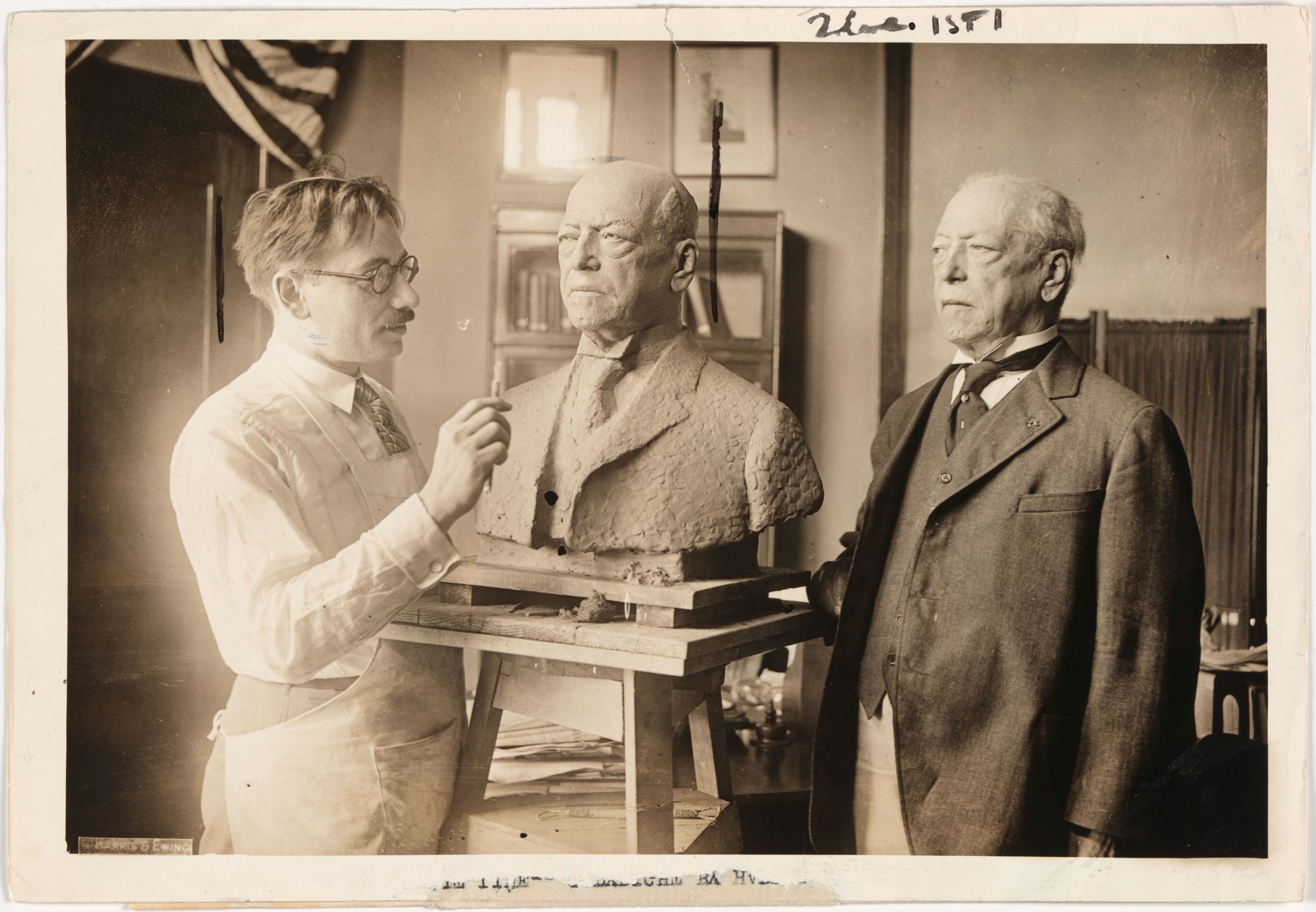
Foster breaks down the wretched mainstream union leadership that continues to plague the U.S. workers’ movement, looking at its social conceptions and program, with its long-term organizational and political degeneration.
‘Right Wing Trade Union Leaders’ by William Z. Foster from Misleaders of Labor. Trade Union Educational League, 1927.
For many years the trade union movement has been firmly in the grip of the right wing leadership, the traditional Gompers oligarchy. This ultra-reactionary machine has its base among the skilled workers in the building trades, the printing trades, the railroad unions, etc. Of recent years it has also conquered a dominant position in the United Mine Workers. It is the most thoroughly corrupted section of the trade union leadership.
(a) Social Conceptions of the Right Wing
The right wing leaders are firmly wedded in principle and practice to capitalism. This is the ideological expression of their corruption by the employers. They accept the capitalist system in all its essentials. Their philosophy is based on the theory of the community of interests of capital and labor. In a speech delivered on March 21, 1927, President Green categorically repudiates the class struggle, saying:
“It is my opinion that the so-called ‘irrepressible conflict’ which some economists claim exists between the employers and the employees can be terminated. Good judgment and reciprocal concessions in arriving at a settlement of industrial disputes can bring about a realization of this happy result.”
The right wing leaders make no proposals to abolish or drastically change the present social order. Their reformism is of the weakest type, and steadily grows weaker. It is essentially capitalistic. They have long been the bitterest opponents of everything progressive and militant in the trade unions. Even the yellowest brand of socialism is specifically rejected by them. In the Boston convention of the A. F. of L. Gompers voiced their condemnation of all things radical and revolutionary in the following repudiation of the socialists:
“Economically, you are unsound; socially, you are wrong; industrially, you are impossible.”
Endless quotations might be made from trade union conventions, officials’ speeches, labor papers, etc., to show the right wing bureaucrats’ acceptance of capitalism. The Baltimore Trade Unionist of Dec. 27, 1924, frankly expresses the opinion of the whole reactionary trade union leadership when it says: “We believe in a wage system based on the skill and energy of the workman.” This typical labor paper, in the same issue, publishes a platform, (expressive of the real viewpoint of the reactionaries) entitled, “Ten Commandments for Industry,” of which the following, addressed to the workers, are a few gems:
“Thou shalt not permit any of thy members to place the union card above our country’s flag.
“Thou shalt not deny to any man, at any time, in any place, the right to work as a free man and to receive wages as such.
“Thou shalt not demand for any worker a good day’s wage in return for a bad day’s service.
“Thou shalt honor and love thy government, for it is the people’s government, the best ever devised by man, and there is none other like it in the world.”
It is significant that these “Ten Commandments,” which endorse wage slavery, exploitation, chauvinism, and scabbery, were later printed with fulsome praise in the official organ of the company union of the Union Pacific Railroad. The slogan of this company union is the time-honored right wing watchword, “A Fair Day’s Pay for a Fair Day’s Work.” It takes an expert to find differences between the point of view of conservative trade unionism and company unionism.
Another typical labor paper, The Philadelphia Progressive Labor World, edited by the notorious labor faker, Frank Feeney, of Mulhall exposure fame, makes a good statement of the right wing policy in the following sloganized platform:
“Industrial peace, industrial cooperation, safe and sane unionism, progressive Americanism, a fair deal to employers, a fair deal to employees.”
The right wing trade union leaders are saturated with religious prejudices, dividing themselves between Ku Klux Klanism and such Catholic organizations as the Militia of Christ and the Knights of Columbus. They demoralize the workers with their mutually antagonistic religious maneuvers in the unions. A blatant chauvinism, unequalled in any other labor movement, runs rife among them. Consider the following blurb from the Sept., 1926, Typographical Journal:
“We Americans are the luckiest people on earth. We are an uproarious, howling success—some envious ones in Europe call it a scandalous success (then follows a fervid recital of our great wealth and the statement that) we have more money than we really can use.”
Or this typical nonsense from the official organ of the railroad unions, Labor of Oct. 2, 1926:
“Labor offers no apologies for basing its leading editorial on the Dempsey-Tunney match…it was a most satisfactory fight. Of the 115,000,000 people in the United States, at least 114,900,000 seem to have wanted Tunney to win. The reason is clear. When Dempsey stayed out of the war he damned himself. The American people will not forgive a slacker, and when the slacker is a professional fighter, his absence from the front is infuriating.”
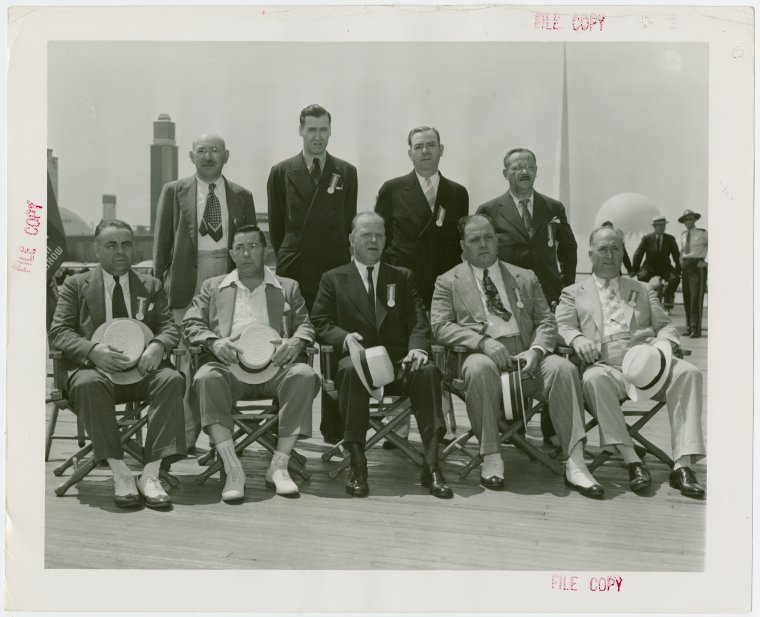
With no revolutionary outlook, without even a program of radical reformism, the dominant trade union leaders are visionless and un-idealistic. They look upon the labor movement not as a weapon for the liberation of the working class, but primarily as a means for themselves, personally, to gain an easy living. They are ignorant, corrupt, and narrowly materialistic. They are saturated with petty bourgeois conceptions. They have reduced to a science the selling out of the workers. They have bid a permanent good-bye to the work bench. Their plan is to get rich quick while the opportunity presents itself. They are all too often successful. The leaders of the American trade unions are not only “agents of the bourgeoisie in the ranks of the workers,” as Lenin calls them, but also often petty capitalists themselves.
(b) The Program of the Right Wing
The policy of the right wing trade union leadership, headed by such as Green, Lewis, Lee, Hutcheson, Woll, etc., is one of collaboration with the employers. This is based upon the subordination of the interests of the workers to those of the capitalists and the degeneration of the trade union leaders into agents for putting the employers’ policy into effect. In the past few years, as we shall see further along, this tendency has progressed so far that the employers, acting through the corrupted union leadership, are actually company-unionizing the trade unions: that is, devitalizing and degenerating them into little better than company unions.
At innumerable points the policy of the reactionary union leaders dovetails with that of the employers. The latter have their two big political parties, with their conservative system of economics, legislative programs, etc. The right wing leaders accept this whole political program almost in toto. They strive to keep the workers bound to the two capitalist parties and to prevent them from developing a political organization and program of their own. They support the imperialistic policies of the employers. They are important cogs in the capitalist political machine.
The employers are usually willing to make some concessions to organized skilled workers in order to break up their solidarity with the unskilled. The right wing union leaders fall in line with this policy of the employers and base their own program upon it. Consequently they refuse to organize the great masses of semi-skilled and unskilled workers. They tend to restrict the unions to the skilled and to manipulate these at the expense of the less skilled. The history of the American labor movement is filled with the betrayals of the unskilled workers by the skilled.
The employers habitually play upon every division in the ranks of the workers in order to weaken their fighting capacity. They set off Americans against foreign-born, whites against blacks, employed against unemployed, men against women, adults against youth. And in all these maneuvers they have the tacit support of the reactionary union leaders. The latter constantly foment chauvinism and nationalistic hatred, they bar Negroes from the unions and discriminate against them in the industries, they abandon the unemployed,1 they discriminate against women and young workers in the unions and in the shops—thus playing into the hands of the employers at every point.
It is a fundamental interest of the employers to speed up the workers as much as possible and thereby to exploit them the more. Although the tendency of the trade union movement everywhere from its inception has been to oppose this speed-up system, the trade union leaders during the past few years have yielded to it and are now working hand in hand with the employers, through the B. and O. plan and similar schemes, to drive the workers to still greater productivity. This surrender to the employers on the question of the speed-up is having the most profound effects in devitalizing the trade union movement, which will be explained as this book proceeds.
The employers are vitally interested in fighting against all developments toward class consciousness and militancy among the workers. In this the trade union leaders are their most loyal and effective allies. They are, if possible, even more rabidly opposed to revolutionary ideas and movements than many of the employers themselves. Their fanatical attacks against the left wing are unexampled in fury. They habitually allow themselves to be used as tools for the jailing and execution of militant leaders of the workers. In the Mooney-Billings case their record was one of cowardice and treachery from the beginning. It can be said that they are responsible for these militants remaining in jail. Their course was even worse in the world famous Sacco-Vanzetti case. They made no fight to save and free these labor martyrs. They contented themselves with merely adopting empty resolutions. In the critical weeks just prior to the execution, and with world labor aflame with protest and indignation at the approaching judicial murder, American labor leaders set themselves like flint against all strikes and mass demonstrations, which alone could have saved our martyrs. At the last moment they (A. F. of L., Chicago Federation of Labor, etc.) even sank to the depths of accepting the capitalist verdict of guilty against these comrades and proposed that their sentences be commuted to life imprisonment.
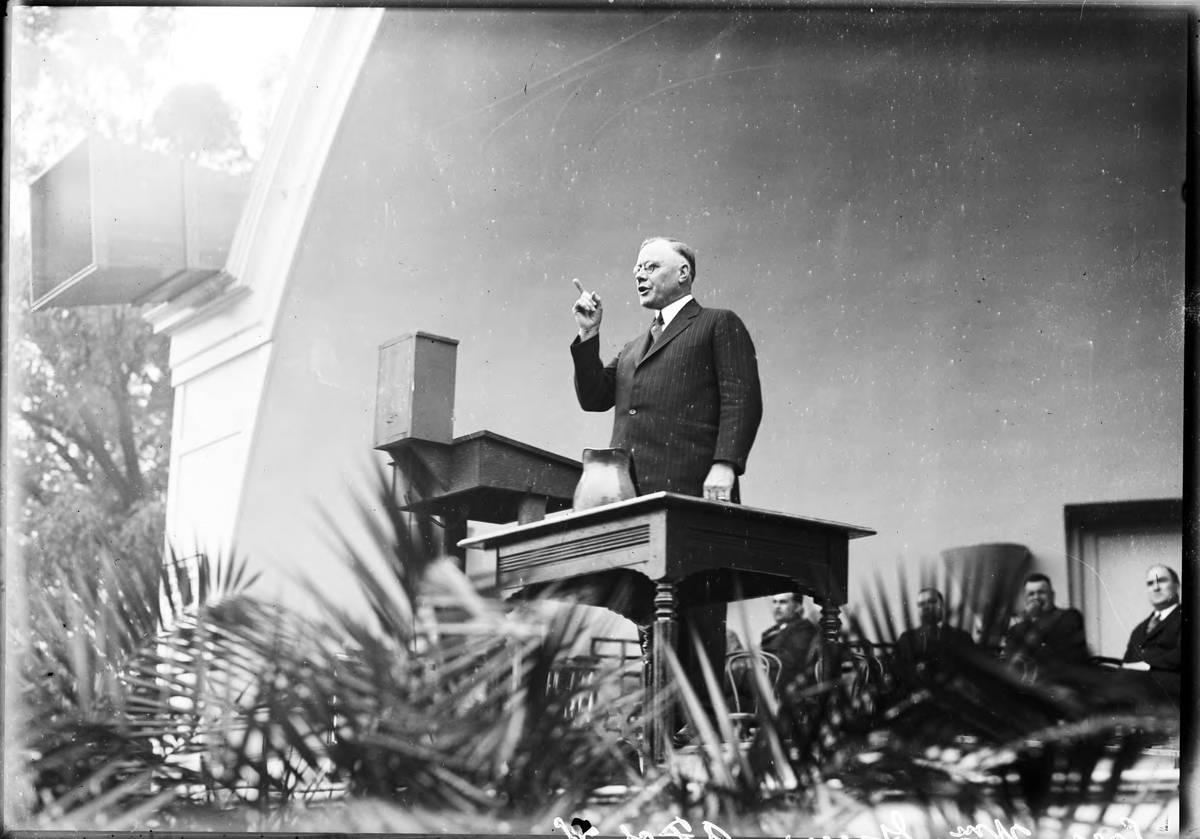
Summed up, the policy of the reactionary trade union leaders is to “cooperate” with (that is, to take instructions from) the employers and to refuse to fight them. They will not build up powerful mass unions nor infuse the existing organizations with a militant spirit. They destroy the solidarity of the workers and defeat their attacks against the employers. They confuse the workers with capitalist economics and bourgeois social conceptions. The result of their policy is to disarm the workers and to keep them exposed to an ever-increasing capitalist exploitation. In the truest sense they are agents of the capitalists.
(c) The Degeneration of the Right Wing
As American capitalism has gradually become consolidated and expanded into imperialism, the trade union leadership has fallen more and more under the sway of the employers. Never was capitalism in this country so strong, and never were the trade union leaders so subservient to it as now. The employer policy of controlling the trade union leadership has been eminently successful.
In the early days of capitalism in the United States, as in all other countries at a similar stage of development, the trade union movement was radical, if not definitely revolutionary. All the organizations were shot through with a fighting spirit. Especially was this the case during the period of great industrial expansion beginning a few years after the close of the civil war and running into the nineties when years of rapid industrial growth were alternated with years of devastating crises. This was an era of struggle, the bitter 1877 railroad strike, the spectacular rise and struggles of the Knights of Labor, the great 8-hour movement of 1885-6, the American Railway Union strike, the Homestead strike, etc., being typical of the militant and revolutionary spirit of the times.
Aside from outstanding ultra-reactionaries such as Powderly of the K. of L., the union leadership of the time quite generally reflected the aggressive mood of the workers. Nearly all were socialists or anarchists. Thus was a typical statement from W. H. Sylvis, founder of the National Labor Union and the Iron Molders Union, delivered in his union convention in 1865:
“Let me say to those who hold such language, and who are endeavoring by such means to frighten us into submission, that we are terribly in earnest, and that, sooner than turn back from the point we have reached, and the course we have marked out, we will accept the fearful issue. To us, this question is something more, something dearer, than constitutional ties or church relations or country itself, and the sooner those who are, by means the most dishonorable, attempting to destroy our organization come to understand our true feelings, and what we mean, the better it will be for all concerned.”2
Even Sam Gompers in his early days made pretenses to radicalism. In a letter to the National Labor Tribune in 1875 he said:
“Every political movement must be subordinate to the first great social end, viz., the economic emancipation of the working classes…Many persons hostile to the cause of labor have sought to bring this radical labor movement into disrepute by asserting that the movement is French, German, or Russian, but nothing could be further from the truth.”
Twelve years later in the New York Leader of July 25, 1887,3 Gompers expressed himself as follows:
“While keeping in view a lofty ideal, we must advance towards it through political steps, taken with intelligent regard for pressing needs. I believe with the most advanced thinkers as to ultimate ends, including the abolition of the wage system.”
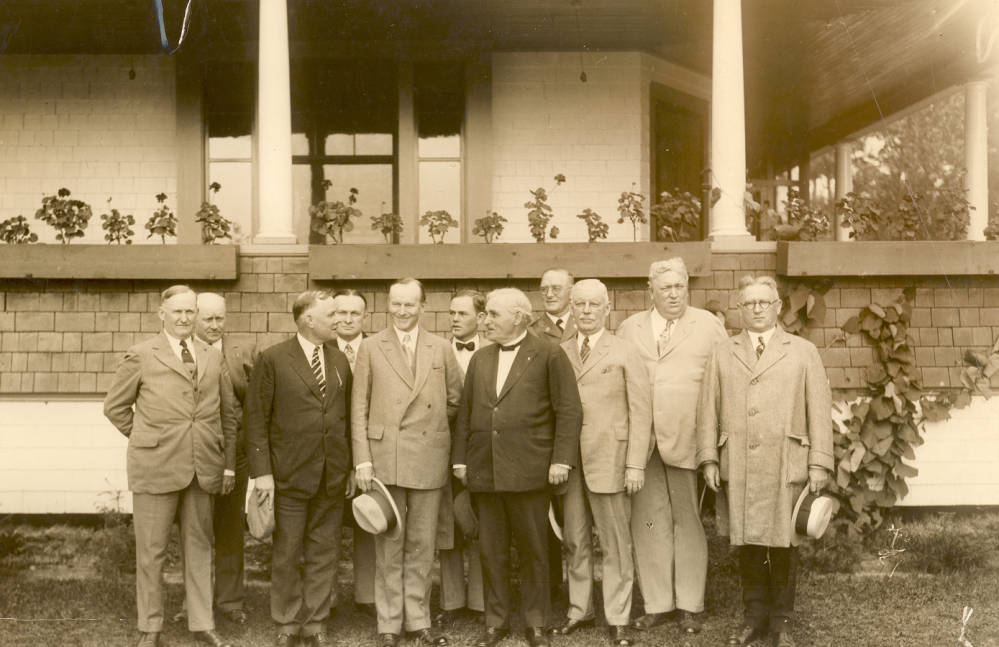
In the controversy between Marx and Lasalle on the role of the workers’ political and economic organizations in the class struggle, Gompers, already the spokesman of a large body of trade unionists, supported Marx in his own way. He denies, however, that he was ever a member of any revolutionary organization, stating that the Republican Party was the only party he ever belonged to, and that that was in his youth. On p. 82, Vol. 1 of his book, Seventy Years of Life and Labor, he says:
“Marx did not beguile himself into thinking that the ballot was all powerful. Perhaps the severest critic of socialism was Karl Marx and his denunciation of the socialists in attacking trade unionism has no superior even in our own time. He grasped the principle that the trade union was the immediate and practical agency which would bring wage earners a better life. Whatever modifications Marx may have taught in his philosophical writings, as a practical policy he urged the formation of trade unions and the use of them to deal with the problems of the labor movement.”
Gompers said many times that he learned German in order to read Marx’s “Das Kapital.” He professed a high regard for Engels, who at the time was following very closely developments in the United States. In his autobiography Gompers says (p. 388, Vol. 1), “I wrote a letter to Fred Engels, whom I regarded as a friend of the labor movement.”
Marx placed the proper emphasis upon both political and economic organizations and activities. But Gompers greatly underestimated political action and organization. Quoting an early document by himself (Seventy Years of Life and Labor, Vol. 1, p. 385), he says:
“I cannot and will not prove false to my convictions that the trade unions pure and simple are the natural organizations of the workers to secure their present practical improvement and to achieve their final emancipation.”
Here Gompers clearly indicates the beginnings of his later policy of crass trade union opportunism. His views were shared by the budding group of trade union leaders. Speaking of this period, David J. Saposs says:4
“From merely at first minimizing politics and cooperation they (the Gompersites) began to condemn these activities entirely, in order that trade union action might not be obscured.”
Yielding to the corrupting influences of expanding capitalism, the Gompers trade union group gradually drifted more and more into opportunism. Gradually they broke with the Marxians, the Lasalleans, and the anarchists. Pure and simple trade unionism, ignoring and rejecting the revolution and concentrating solely upon immediate demands, became the program of the dominant trade union leadership. From weak and indifferent advocates of reformist conceptions of the revolution, the Gompersites degenerated into rabid opponents of it.
The march of the trade union leadership to the right under the pressure and bribery of the employers was quickened in the years of reaction following the execution of the anarchist leaders of the great labor upheaval of 1885-7. It has continued apace ever since. In all these years the economic situation quite generally favored the development of the opportunistic program and handicapped the growth of a revolutionary labor movement. Capitalism, except for an occasional set-back, has gone steadily upwards, building an enormous system of industry and reaching its tentacles out to conquer the world’s markets. The employers have been able to furnish the workers relatively continuous employment. Wages and living standards, in comparison with those in other countries, have been favorable, especially for the upper layers of the working class. Out of their gigantic profits the employers could throw a few sops to the more skilled workers, enough to take the sharp edge off their discontent. The whole era was one adapted to reformism, and the opportunistic trade union leadership, rooted in a very fertile soil, flourished. Says Engels in Landmarks of Scientific Socialism, p. 179:
“As long as a method of production is in the course of development, even those whose interests are against it, who are getting the worst of this particular method of production, are highly satisfied. It was just so with the English working class at the introduction of the greater industry.”
During this long period the employers consciously and assiduously followed their program of establishing an influence and control over the conservative trade union leadership. They did this negatively by trying to crucify such militant leaders as Irons, Parsons, Debs, Haywood, etc., and positively by pouring out their many favors upon such pliant tools as Powderly, Gompers, Lee, Mitchel, Lewis, etc. They have succeeded with their policy. They have subjugated the trade union leadership almost entirely into their service, and have made these workers’ “leaders” into loyal defenders of the capitalist system. Especially is this so since the end of the ill-fated railroad shopmen’s strike in 1922. Since then, as we shall see further along, the heads of the unions have degenerated so fast and so far that now in many cases they are little better than Fascist agents, whose function it is to dragoon the working masses into still deeper and more helpless slavery to the employers.
As the years proceeded industry became more and more mechanized, the employers, with vastly increased accumulations of capital, constantly combined their forces, industrial, financial, and political. Manifestly the unions should have responded to these capitalistic developments by amalgamating their forces, broadening out to take in the unskilled and by launching a mass labor party. But the Gompers bureaucrats, tools of the employers, bitterly and successfully combatted such tendencies. They disarmed labor in the face of its enemies. They are largely responsible for the present crisis, with the antiquated unions retreating on every front before the aggressive and well-organized capitalists.
NOTES
1. Characteristically, when the bituminous mine operators put forth the theory that there were too many miners, Lewis of the U.M.W.A., instead of demanding a shorter work day and work week to take care of the unemployed, agreed that there were 200,000 miners too many, and that they had to be squeezed out of the industry.
2. Biography of W. H. Sylvis, p. 131.
3. John R. Commons: History of Labor in the United States, Vol. II, p. 458.
4. Left Wing Unionism, p. 19.
 Revolution's Newsstand