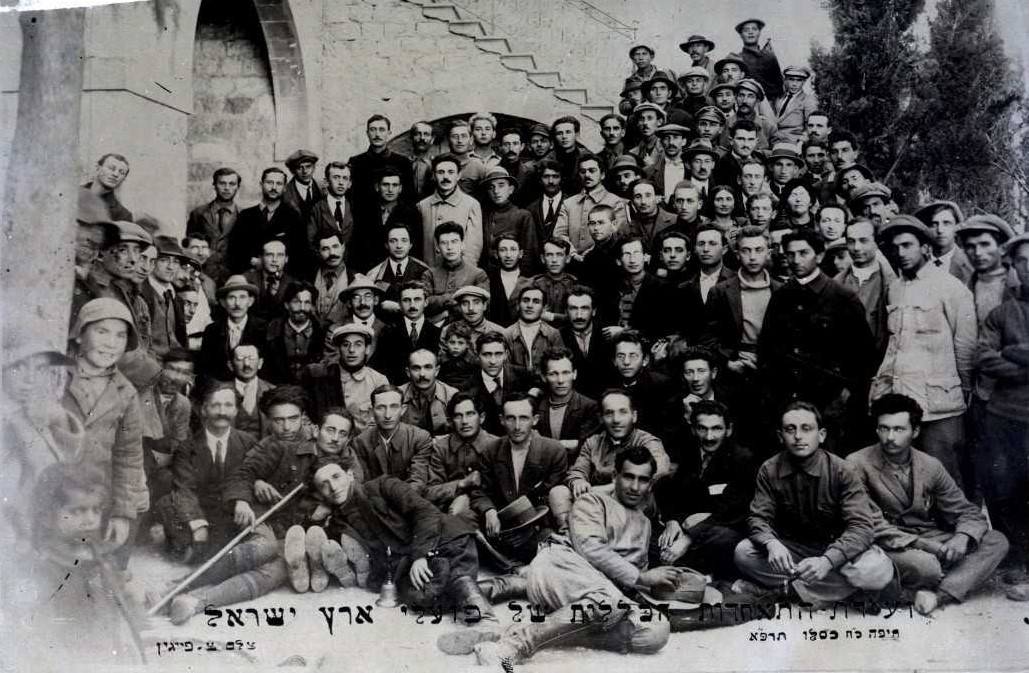
‘The Histadruth Congress in Palestine’ by Joseph Berger from International Press Correspondence. Vol. 7 No. 46. August 11, 1927.
According to the report of its Executive Committee, the “General Jewish Labour Organisation” (Histadruth) has about 25,000 members. Such a large number of organised workers would, in view of the smallness of the population of Palestine and the weak development of capitalism in that country itself and in the neighbouring countries, signify an almost invincible power, if this organisation really represented workers employed in big industry and if it defended the class interests of the workers. But as a matter of fact over a third of the members of the Histadruth are workers who have only recently immigrated from various European countries, are entirely without work and are living on the support provided by the Zionist organisation (five shillings per head per week); another third of the members belong to the co-operatives financed by the Zionist organisations, and only a small number of the Histadruth members are actual wage-earners, the greater part in small undertakings or in the Jewish agricultural colonies.
In addition there is the fact that the leaders of the Histadruth are Zionist socialists of various tendencies, who have an eye more to the interests of Zionist policy than the interests of the workers, and, instead of helping the class struggle of the Jewish and Arab workers against imperialism and the employers, have made it their programme “to realise Zionism by means of close co-operation with the leaders of the Zionist organisations.”
In accordance with this policy the third Congress of the “Histadruth”, which was held from 5th to 22nd of July in Tel-Aviv, was entirely dominated by the question whether Zionism was on the way to being realised and what conclusions the “Histadruth” must draw for its future work. In view of the disaster which Zionism has suffered in the last two years the leaders of Histadruth were obliged to admit that “at present it is bankrupt”. The most prominent leader of “Histadruth”, (he is at the same time an outstanding Zionist leader) Dr. Arlosoroff, stated that the slogan: “Zionism in our days” is a Utopia which must be fought.
It was in vain that various other leaders endeavoured to hold out big prospects before the Histadruth members. Not one of them was able to propose any concrete measures for a wide-scale continuation of Zionist plans for the liquidation of unemployment and increasing colonisation activity. Thus there remained nothing else to do but to appeal in various tones to the petty-bourgeois romanticism of the Histadruth members, to whom was recommended “blind faith” in the Zionist ideals of the Histadruth leaders and “fidelity to the Zionist flag”, in spite of everything in one word: “Hold out for the fatherland!”
What the Zionist majority of the “Histadruth” Congress was unable to give to the Jewish workers in the way of concrete solutions of their vital questions (which are no longer to be found within the circle of ideas of Zionism), they sought to make up by demagogic attacks on the eight delegates of the Workers’ Left. The latter had attempted to draw the attention of the Congress to the real measures which are possible and absolutely necessary for the workers, the adoption of which would necessarily involve the discarding of reactionary Zionist ideology and the transformation of the “Histadruth” into a real workers’ organisation.
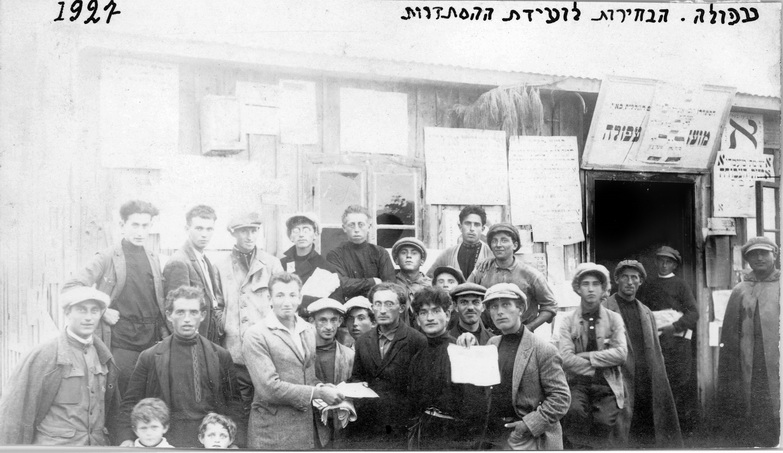
The essence of the speeches of the “Left Bloc” was that for the poverty-stricken and suffering Jewish masses, the course to be pursued was not that of linking up with imperialism and. Zionism, be it in the hope of obtaining a few crumbs from the table of the Zionist bourgeoisie or be it in the hope of “an elementary process” which would cause Jewish big capital to flow to the promised land. The way out is rather to be sought in the community of interests with the Arab masses who are being led by the Arab national movement into the emancipatory struggle against imperialism, which movement is being promoted more and more by the economic development and which is being forced upon the population precisely owing to the policy of the imperialists.
This argumentation, which was backed up by numerous facts and figures, was urged against the Zionist leaders. It was answered by a furious and shallow incitement, which endeavoured to discredit the protagonists of Communist ideology by such expressions as “traitors”, “enemies of the people” etc. The proposals, in accordance with which the “Histadruth” will continue to follow in the wake of Zionism, were then adopted by a large majority.
At the same time it must be remarked that the Congress of the “Histadruth” was this time in many respects an improvement on the two former Congresses of this organisation, held in 1920 and 1923. It was to be noted that the mood of many Jewish workers is no longer in harmony with the homilies of the Zionist leaders, and the latter were compelled under the pressure of the members of the “Histadruth”, to accept a number of resolutions which have very little in common either with Zionism or the reformist policy pursued hitherto.
Arab workers were admitted for the first time to the Congress, though of course not as members with equal rights but as guests. For the first time decisions were adopted recommending the organising of the Arab workers. A protest against the monstrous sentence of 3 to 11 months hard labour passed by a British judge on participators at a peaceful unemployed demonstration, as well as against the deportations, which are becoming more and more frequent, of politically suspected workers, was adopted unanimously. Although the question of war danger was deleted from the agenda (owing to lack of time), a resolution calling for maintenance of peace was adopted, as well as another demanding release of Sacco and Vanzetti and the abolition of the death penalty, which is enforced in a particularly brutal manner by the mandatory government in Palestine.
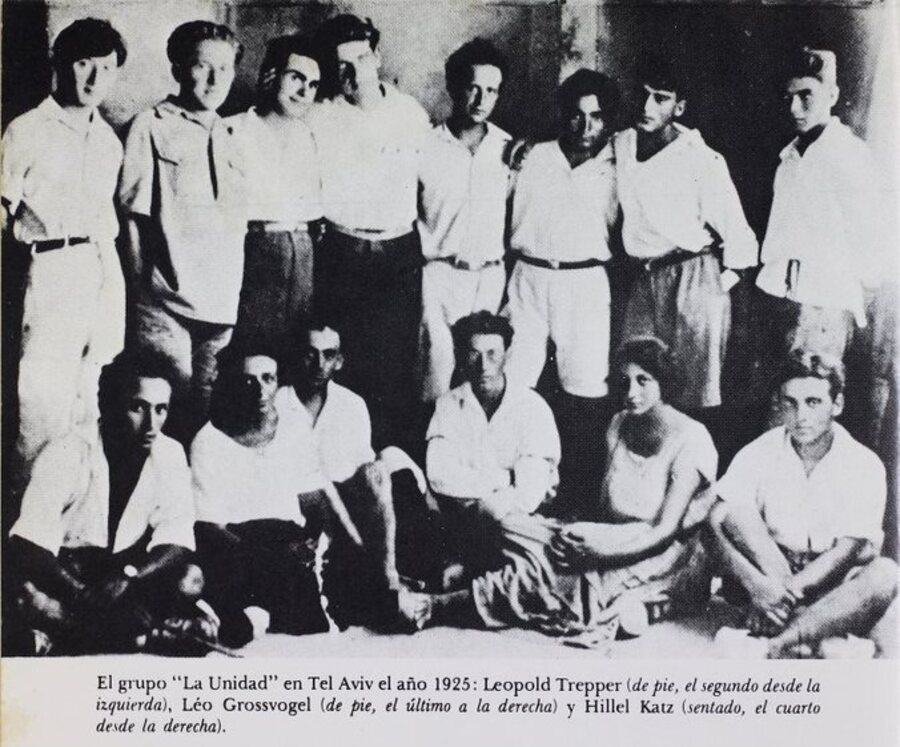
With regard to the Soviet Union, a resolution was adopted welcoming the Russian Revolution and the splendid colonization work of the Soviet government in settling working Jews on the land. (As an “antidote” there followed a sharp protest against the “persecution” of Zionists and Socialists in the Soviet Union, and the assertion that the colonisation work of the Soviet government cannot solve the Jewish question).
It would be a great mistake to overestimate the political resolutions of the Histadruth leaders. But the contrast between these resolutions and the nationalistic talk of the Congress, and its other decisions, the appearance of the “Left Bloc” and the Arab workers all this is an important symptom of the great change of feeling among the mass of the Histadruth membership, and in so far as this found expression the third Congress of the “Histadruth”, represents a positive chapter in the history of the labour movement in Palestine.
International Press Correspondence, widely known as”Inprecorr” was published by the Executive Committee of the Communist International (ECCI) regularly in German and English, occasionally in many other languages, beginning in 1921 and lasting in English until 1938. Inprecorr’s role was to supply translated articles to the English-speaking press of the International from the Comintern’s different sections, as well as news and statements from the ECCI. Many ‘Daily Worker’ and ‘Communist’ articles originated in Inprecorr, and it also published articles by American comrades for use in other countries. It was published at least weekly, and often thrice weekly
PDF of full issue: https://www.marxists.org/history/international/comintern/inprecor/1927/v07n46-aug-11-1927-inprecor-op.pdf
 Revolution's Newsstand