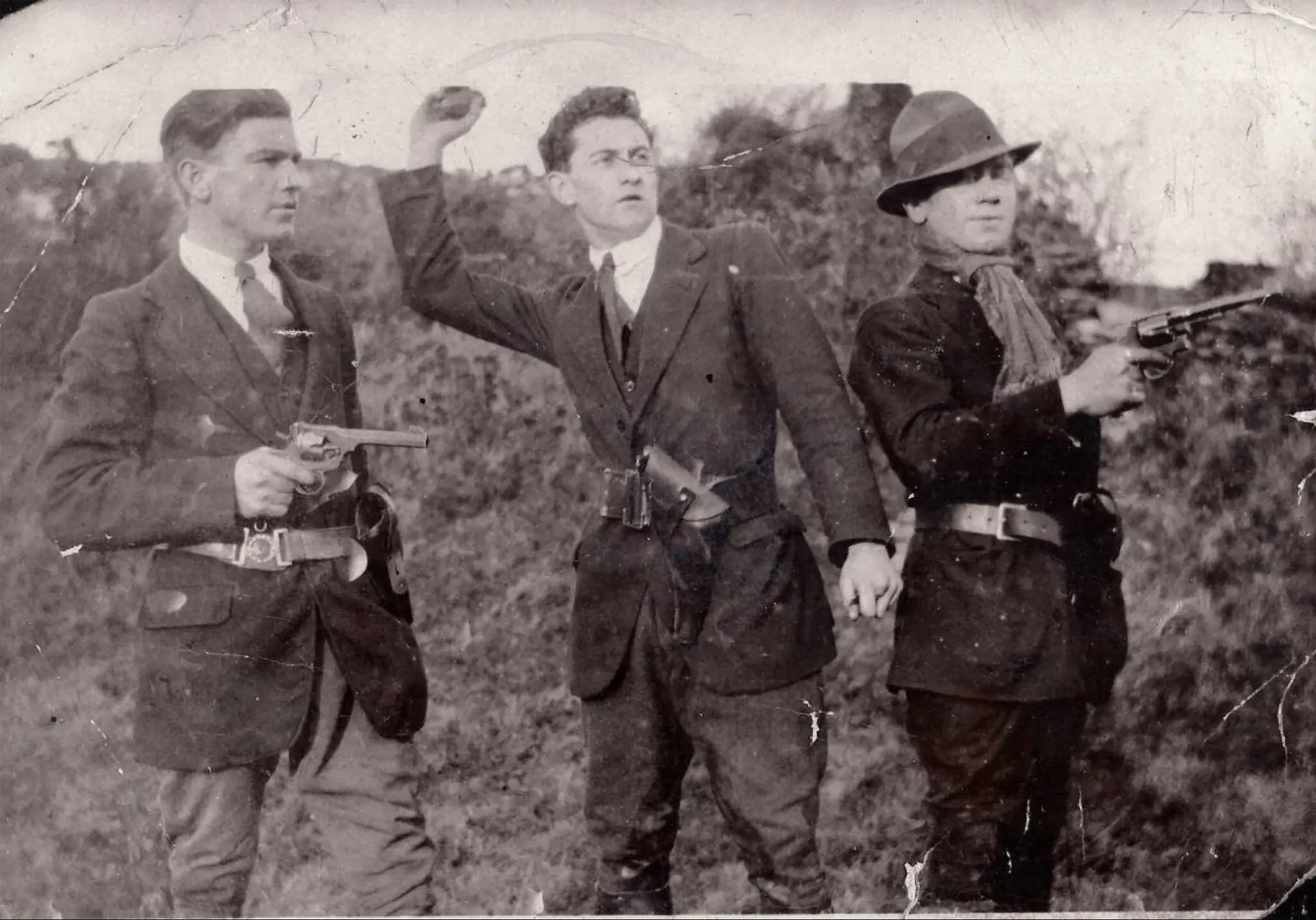
A veteran British Socialist and founder of that country’s Communist movement interrogates the Irish War of Independence at its height, offering some real insights.
‘The Irish Situation’ by William Paul from The Toiler. No. 193. October 22, 1921.
Many people are perplexed at the recent dramatic turn in the Irish situation. The problem is as tantalizing as it is complex and subtle. To thoroughly grasp it a whole series of factors must be carefully analyzed and coordinated.
The Capitalist North
In Ireland there are as many conflicting political currents at work as there are different economic interests. It is in the North where there is the greatest opposition against the policy of separation in any form from Britain. Economically, the North is dominated by an imperialistic group made up of great land-owners and industrial magnates, who have enlisted the political services of legal luminaries whose careers have been conspicuous only in their venal vassalage to the propertied interests. The linen and engineering products of the North are not sold in any quantity in the Irish market. These are in the main exported to those markets which are under the protection and domination of the Union Jack. Thus, the economic interests of the capitalists of Ulster are inseparably entwined with the imperialist interests of Great Britain. The economic needs of the predominating political groups of the North are identical with the needs of British finance-capital.
Finance-capital can only expand its control and extend its interests by means of the State power of the Empire. Finance-capital thus demands the support of a large Empire State to advance its influence, and, likewise, every Empire State demands the support of finance-capital to maintain its power. It is this indispensable and mutual relationship between finance-capital and modern Empire-States which explains why the wealthy political elements in the North of Ireland enthusiastically proclaim their loyal devotion and adhesion to the union with imperialistic Britain,
The purely economic basis of the political attitude of the North has been obscured by religious fanatacism. An examination into the temporal groundwork of religions clearly shows that they reflect definite economic forms and respond to particular class interests. Thus, capitalism, in a general way, presupposes Protestantism, whereas systems of land tenure tend to show a striking partiality for the Catholic Church. While, on the surface, the Irish question would seem to be a conflict between two religious forms, it is in reality a determined struggle between definite economic interests. Men tend to idealize their economic interests and aspirations. Many an Irishman today is fighting heroically and honestly on behalf of a certain religious creed, even carrying its fundamental tenets to the ballot box, without imagining that any other motive is prompting his actions. It is in the North, where Capitalism is most highly developed, and where, therefore, the potentialities of the class struggle are greatest. It is there that the propertied interests have used religion as a political factor in blinding the working class; and they have used it to create a psychology which finds expression in extreme reaction and blind bigotry.
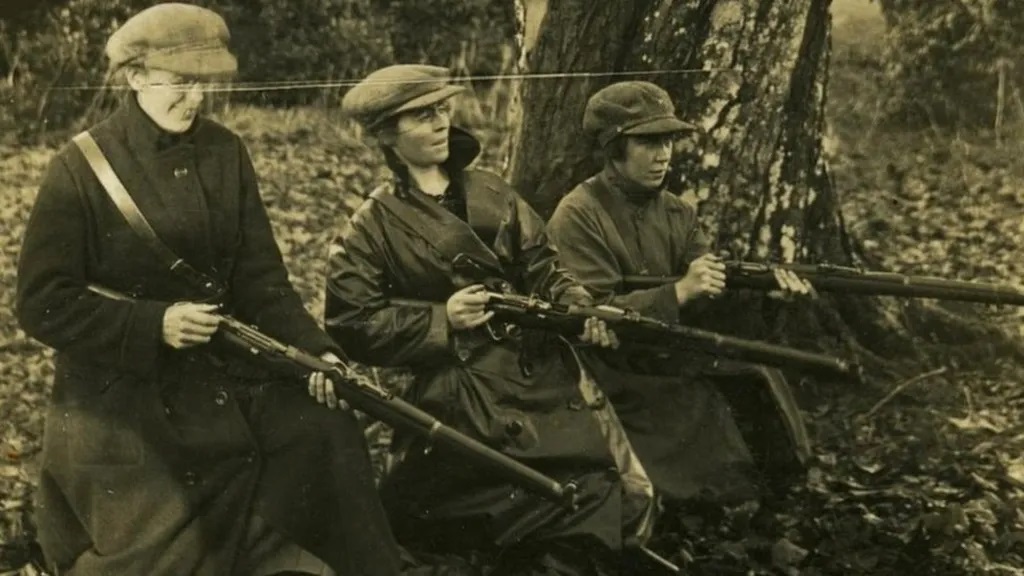
Whatever compromise takes place regarding the situation between Britain and Ireland, the imperialistic groups of the North will do their utmost to prevent any settlement which will cut them off from the interest of what they call “The Mother Country.” But in the North the class struggle cuts across the political and economic interests of the capitalists.
The South
In the South of Ireland Capitalism is relatively weak, while large financial magnates are scarce, small business men are prolific, particularly the small farmer. These middle-class elements have a traditional hatred for England. And small wonder! It is questionable if history can match the centuries of ruthless outrage which has been the normal conduct of England towards Ireland. The ruling class of Britain became proficient in the art of subduing and crushing native races through the practice which they got by their policy in Ireland. The historic manoeuvre of the English merchant class, ever since the days of Cromwell, of ruining other countries by relentlessly paralyzing their trade, has been consistently applied against Ireland for hundreds of years. The geographical situation of Ireland gave it many points of vantage for building up considerable commercial relations. It also contained a virile and industrial population living on a fertile land. But every endeavor of the Irish to launch into overseas commerce or to develop their interests of was promptly strangled by the jealous propertied England who moulded that country’s policy trade towards Ireland. Not only were Ireland’s commercial potentialities crushed, but the pitiless attitude of Britain reacted upon agriculture and practically ruined it, thus causing untold suffering to the peasant masses. It is, therefore, easy to comprehend why the people in the Southern districts of Ireland have been passionate in their hate against England. But this hatred created a psychology which manifested itself by producing an ultra-nationalist movement. Hatred of England reacted by creating a passionate devotion to Ireland.
Up until recent times, the political activities of the Southern Irish were in the hands of the Middle Class Nationalist Party, better known in England as the United Irish League. The members who were sent to the English Parliament were drawn from the middle class. They neither understood or sympathized with the labor problem in Ireland. They sat for years in the English House of Commons, and although generally opposed to the Government were extremely unsuccessful in their policy, placed before the Irish proletariat. This was mainly due based as it was upon political compromise.
The Middle Class in Politics
The middle-class political leaders of Irish nationalism displayed that universal weakness which may be seen in every political movement in the world dominated by the petty-bourgeoisie. The middle class, in the structure of Capitalism, occupy a peculiarly unfortunate economic position, inasmuch as they are continually vacillating between the capitalist class and the proletariat. Suspended between the upper and lower class, and yet being neither one nor the other, there is created for them a situation of appalling insecurity. This economic insecurity is of a different character from that which haunts the wage worker. Whatever disasters overtake the average laborers–in the shape of unemployment, strikes or lockouts–these neither alter their economic status nor their class relationship under Capitalism–they remain proletarians. But the economic insecurity of the middle-class man rests upon the fact that any minor industrial crisis may hurl him into another class-into the proletariat. Such an occurrence transforms both his economic status and his class relationship within Capitalism. The result of this vacillating economic position produces a peculiar mental outlook–the petty-bourgeois outlook. The most significant thing about this outlook is that it views every aspect of the social question, which deals fundamentally with class interests, in an irresolute and wavering manner. This explains why the middle class, and all those inspired by their ideas, are the greatest compromisers, par excellence.
As a class the petty-bourgeoisie stand in history the acknowledged and unchallenged masters of political compromise. And unless this is clearly understood it may be difficult to grasp the influence it is at present exerting upon the Irish situation.
The National War
Even the rise of Sinn Fein in Ireland did not mean, in the beginning, the inauguration of a bold or heroic policy. The leaders like Arthur Griffiths, undoubtedly very brilliant men, had to rely too much upon the middle class to get action of a daring character. Up until the beginning of the war, the Sinn Fein movement was not very powerful. During the transport workers’ strike in 1913, many of the Sinn Fein leaders were opposed to the demands of the strikers, but the strike introduced a new spirit into the Irish situation. It showed clearly for the first time in Ireland, that, in addition to the national struggle, there was above all the class struggle.
There were occasional outbursts of fierce class conflict in Ireland prior to the transport workers’ strike, but these never gave the masses a vision much greater than that of mere land redistribution. With the building up of the Transport Workers’ Union there was a new ideal to the magnificent communist agitation of James Connolly. He ruthlessly exposed the hollow pretensions of the Irish middle class leaders who were striving to get Home Rule. He showed the Irish workers that Home Rule, in itself, could only mean the exploitation of the Irish worker by the Irish capitalist. Connolly did not minimize the importance of the Irish workers agitating for national independence but he was always careful to show that their final aim would have to be for an Irish Workers’ Republic. He, therefore, encouraged a vigorous clever tactician and realized the value of always creating agitation for national independence because he was a some ferment of revolt amongst the masses; and he saw the need for continually harassing Great Britain which to him was the symbol of world imperialism and reaction. Connolly grouped round him a band of dauntless men, who did not quail during the bold bid for power which was made during the Easter rising. The execution of Connolly opened the flood gate of enthusiasm for Connolly’s ideals, and impelled the Irish workers along the path of Communism. The brutality of the English Government towards Ireland, immediately after the Dublin rising, made thousands of Irish workers realize the truism preached by Connolly, that the imperialist class of Britain would submit to nothing but force. Nor do these workers to this day forget that the English Cabinet which executed the men of Easter week, was led by the notorious Asquith, and that one of his Cabinet colleagues was Arthur Henderson, one of the leaders of the Second International.
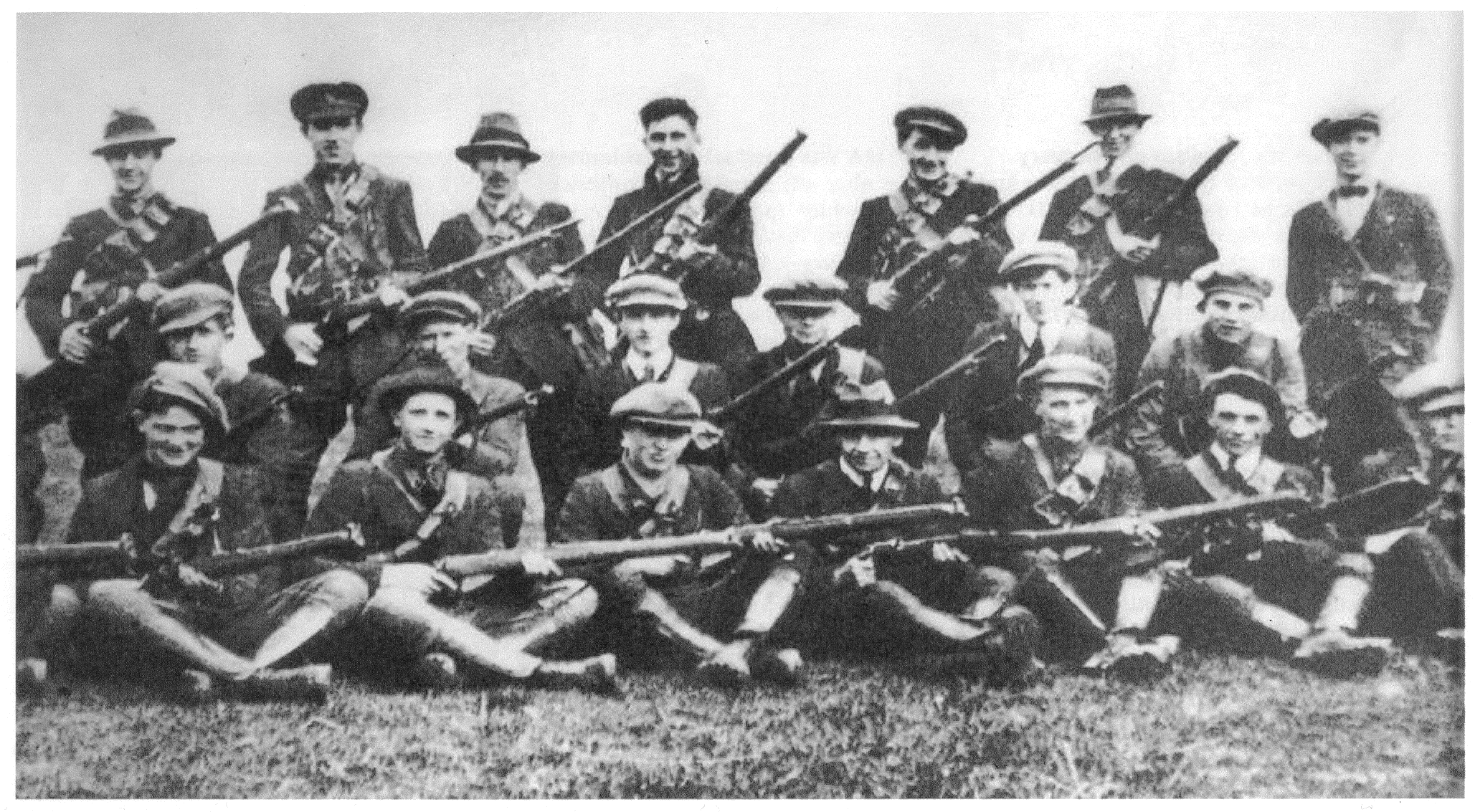
The heavy mailed fist of Britain, which has been so much in evidence in Ireland during the past few years, drove the workers, who had been influenced by Connolly, into a working agreement with the more militant elements in the Sinn Fein movement. This was an act of necessity imposed by the sheer need of self-preservation. It gave the Sinn Fein organization a backbone. It was the proletarian rebels who, in the main, supplied the fighting force, which became the driving power in the Irish Republican army. Here again the influence of Connolly may be seen. It was he who first recruited the workers into the Irish Volunteer army, which he organized as a counter-blast to the armed and bombastic threats of the capitalists of the North.
The fusion of the revolutionary workers with the Sinn Fein movement made it a more vigorous organization than it had hitherto been. The fusion also transformed the Irish movement for national independence from a respectable middle-class organization into one pregnant with revolutionary possibilities. Within the space of a few years the old reactionary Nationalist Party–which used to adorn the benches of the House of Commons under the leadership of the late John Redmond–has been swept aside and has been replaced by a new vigorous element which scorns the idea of begging for freedom in London, but which has resolutely set itself the task of working out its own emancipation on Irish soil.
When the Irish rebels set out to build up their own political and governmental administrative organs, which were to replace the institutions that the British State had enforced upon Ireland, they actually created a revolutionary crisis. No government dare allow any rebel group to destroy its administrative institutions, because this means that two powers are seeking to govern the country. The State can only maintain its prestige by being the sovereign and unchallenged authority in the land.

Bit by bit, the British administrative institutions were replaced by those created by, and administered through, the Dail Eirrean in Dublin. This struggle in reality led to open war. The British government viewed it as civil the Irish middle class viewed it as a national war, in which they were attempting to expel a foreign invader. Viewing it as a civil war the British Government drafted in troops, organized their “black and tan” murdering and plundering brigades, suppressed free speech and the press. They outlawed active rebels and brutally enforced martial law. The history of Ireland during the last few years is the final reply to those labor leaders of the Second International who still fatuously prattle about “democracy.” Because it must be remembered that in Ireland the democratic majority of the voters gave their support to the policy which the British State has dismally and ingloriously failed to suppress. Viewing the struggle as a national war, and looking upon England as an alien invader, the Irish rebels set up their army and set up their institutions, in order to drive the imperialist usurper from the land. And they adopted a system of tactics which ranged from the dislocation of all English institutions to the deliberate destruction of the Dublin Custom House building.
The Class Struggle in Ireland
In addition to those in Ireland who viewed the conflict as a national one, there are great numbers among the masses, influenced by Connolly, and inspired by the recent rapid spread of Communist ideas, who see in a national war against British Imperialism, a splendid means of also conducting a class war against the propertied interests at home and abroad. These elements are striving to free Ireland from all forms of class enslavement. Their ultimate object is not so much an Irish Republic, as it is an Irish Workers’ Republic. They are influential and have taken their stand beside the dauntless band of heroes who lead the fight in the Republican Army-the Republican Might-which has compelled the proud British Government–armed with its tanks, aeroplanes, bombs, and other democratic instruments of persuasion-to seek a truce with the leaders of the Irish Republic. The Connolly section in the Irish struggle has responded with magnificent courage to the defense of Ireland, and have placed their services at the disposal of the Republican leaders. But they are jealous lest their confidence be betrayed, or that the Republican figureheads compromise the situation. The Communists are growing more powerful every day, and it may happen that the petty-bourgeois groups in the Sinn Fein movement will yield to British Imperialism rather than yield to the revolutionary demands of the Irish workers. In the measure that the revolutionary proletariat grows strong in Ireland, so in the same measure the middle-class Republicans, fearing that the governmental power may pass from their hands, may be tempted to seek some sort of compromise alliance with the British Government. Many middle-class elements are losing courage, but the cry of the workers to De Valera is “No compromise.”
The history of Ireland during the past few years does not seem to suggest that there is a powerful and determined labor movement in the country. This is due to the revolutionaries carrying out their plan that the immediate needs of the class struggle can be best served by throwing all their strength into the national struggle against the British reactionaries. The moment, however, that they realize that the interests of the working class are much more urgent and more important than the national war, then we shall witness a new development in the Irish situation by the workers resolutely opposing those who are now their middle-class allies. At present, however, the biggest and most dangerous enemy is the British government.
When the class struggle actually begins in Ireland, it not only will surprise many moderate Sinn Feiners in the South, but it will certainly startle the large capitalists of the North, who fondly imagine that their workers are the most docile and superstitious creatures in the world.
Whatever may happen in the future, there can be nothing but praise for the clever and courageous policy that De Valera and his colleagues have carried out, up to the present time, in their wonderful stand against all the savage measures enforced against Ireland by the most brutal and callous government of recent times. Their present peace parley with the British Government is in reality a triumph for them in so far as it enables the Republicans to rest and re-invigorate their brave forces and to continue, if need be, the most heroic struggle ever waged by a small nation against a cruel and swaggering despotic imperialism.
Lloyd George does not intend to give Ireland peace. If he does, it will be because the slaughtering of the Irish will be too expensive to suit the anti-waste maniacs of the middle-class union, who see ruin for themselves. in the increasing burden of taxation. Never, in his long and tortuous career, has Lloyd George ever taken a strong stand upon any political principle. Being typically middle-class, he meets every problem, not with a view of solving it, but of trying to discover the best way to avoid it. And he meets every demand of labor, and of Ireland, by granting only enough to blunt the edge of their grievance.
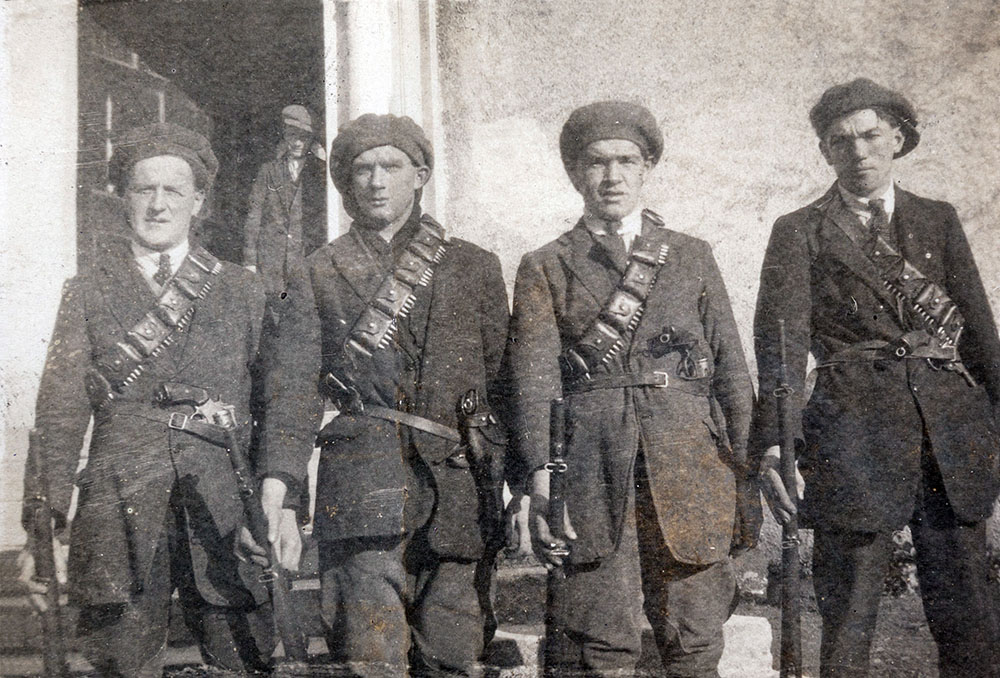
No! The British Government will not grant freedom or independence to Ireland; no one knows this more clearly than the rebel proletarians of Ireland who realize that whatever they get will only come as a result of seizing it from the blood-red fist of a rapacious imperialism. They do not forget the words of Connolly, who said: “Tis Labor’s faith that Labor’s arm, Alone can Labor free.”
The Toiler was a significant regional, later national, newspaper of the early Communist movement published weekly between 1919 and 1921. It grew out of the Socialist Party’s ‘The Ohio Socialist’, leading paper of the Party’s left wing and northern Ohio’s militant IWW base and became the national voice of the forces that would become The Communist Labor Party. The Toiler was first published in Cleveland, Ohio, its volume number continuing on from The Ohio Socialist, in the fall of 1919 as the paper of the Communist Labor Party of Ohio. The Toiler moved to New York City in early 1920 and with its union focus served as the labor paper of the CLP and the legal Workers Party of America. Editors included Elmer Allison and James P Cannon. The original English language and/or US publication of key texts of the international revolutionary movement are prominent features of the Toiler. In January 1922, The Toiler merged with The Workers Council to form The Worker, becoming the Communist Party’s main paper continuing as The Daily Worker in January, 1924.
PDF of full issue: https://www.marxists.org/history/usa/pubs/thetoiler/n193-oct-22-1921-Toil-nyplmf.pdf
 Revolution's Newsstand