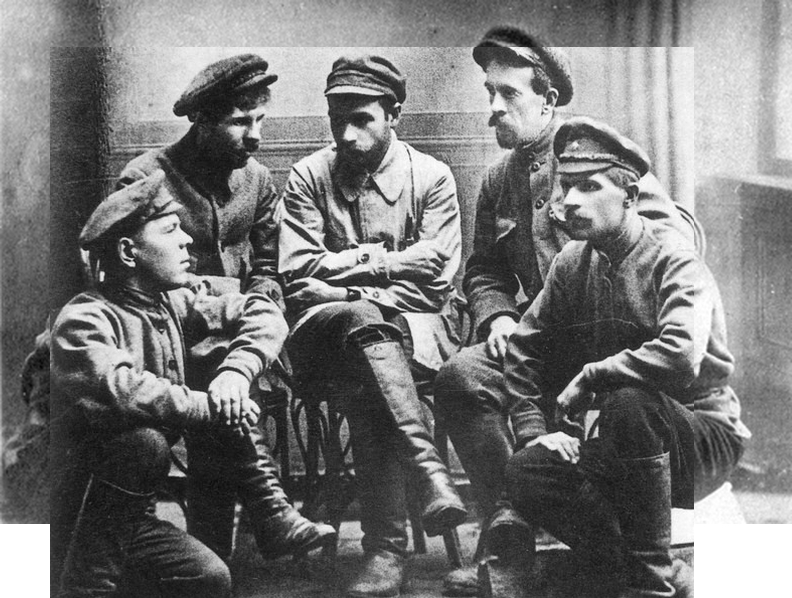
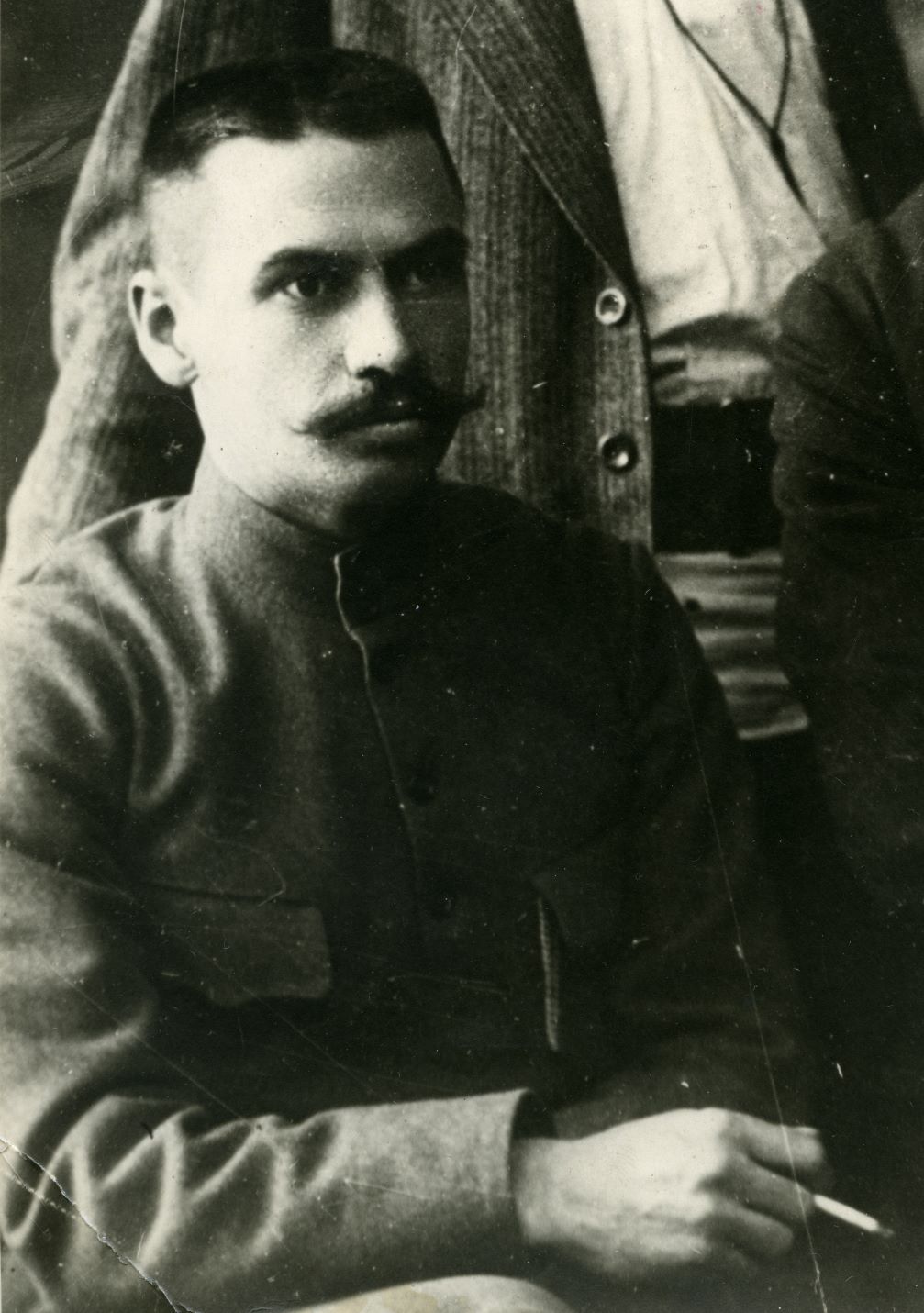
A valuable history of the role of cooperatives before, during, and after the Russian Revolution by metalworker and Left Communist Gavril Myasnikov. The only prominent Bolshevik to be expelled (1922) from the Party and arrested (1923) during Lenin’s lifetime, Myasnikov was the leading figure of the Workers Group of the Russian Communist Party. The Workers Group differed from the Workers Opposition, and was analogous to the German Communist Workers’ Party of Germany, with whom it had relations. Expelled from the Soviet Union in 1927, Myasnikov lived and worked in Paris, still active in Left Communist circles. Arrested by the Gestapo, he escaped and returned to the Soviet Union, under invitation, where he was arrested and executed on November 16, 1945.
‘Proletarian Dictatorship and the Cooperatives’ by Gavril Myasnikov from Soviet Russia (New York). Vol. 2 No. 20. May 15, 1920.
1. The Workers Cooperatives in Russia.
It may be said with truth that before 1905 there was no such thing as a workers’ cooperative in Russia. To be sure, consumers’ leagues did exist before then, but they belonged to other groups of society; there was, for instance, a consumers’ league for officers, for functionaries, for railroad employes, for rich peasants. Also, small provisions stores had been opened in factories, but they were completely dependent on the supervision of the factories and of the hierarchy. These co- operatives had been properly called “dependent” cooperatives. It follows that the character of the Russian cooperatives was purely bourgeois up till 1905.
In 1906 the first so-called “independent” workers cooperatives were founded in Petrograd. In 1908 the first All-Russian Cooperative Congress took place at Moscow, which was attended by 800 representatives of cooperatism. The Congress adopted the principle of neutrality which had been characteristic of the English cooperatives. The workers cooperative played only a secondary role at the Congress, the chief role was played by the bourgeois and peasant cooperatives. The same was true of the Second Congress at Kiev in 1918. The Third Congress, held in 1917, was of a somewhat different character. The Central Association of the Cooperative Societies was founded at this Congress; its tasks were formulated thus by the Congress: “Being an autonomous organization, keeping aloof from all parties, the central organization is to have as its task to coordinate its labor with the activities of the reunited cooperative organizations, together with the other workers’ organizations which are pointing out the way toward Socialism, that is, together with the Socialist party, the trade union federations, the municipal forms of economic life, the educational enterprises, and the mutual aid organizations of the working class.”
The bourgeois democratic government of Lvov-Kerensky issued on March 20, 1917, a detailed and characteristic decree on consumers’ cooperative and on their federation. This decree was the result of the Third Congress of Consumers’ Cooperatives. The petit bourgeois influence on the Russian Cooperative movement, in which the Workers’ Cooperatives played a large role, thus became a law. This petit bourgeois influence was exerted by the Mensheviks, the Social Revolutionists, the “unlabeled socialists” and the various kinds of “Reformists.” Until the November Revolution it was they who gave spiritual nourishment to the workers’ cooperative movement.
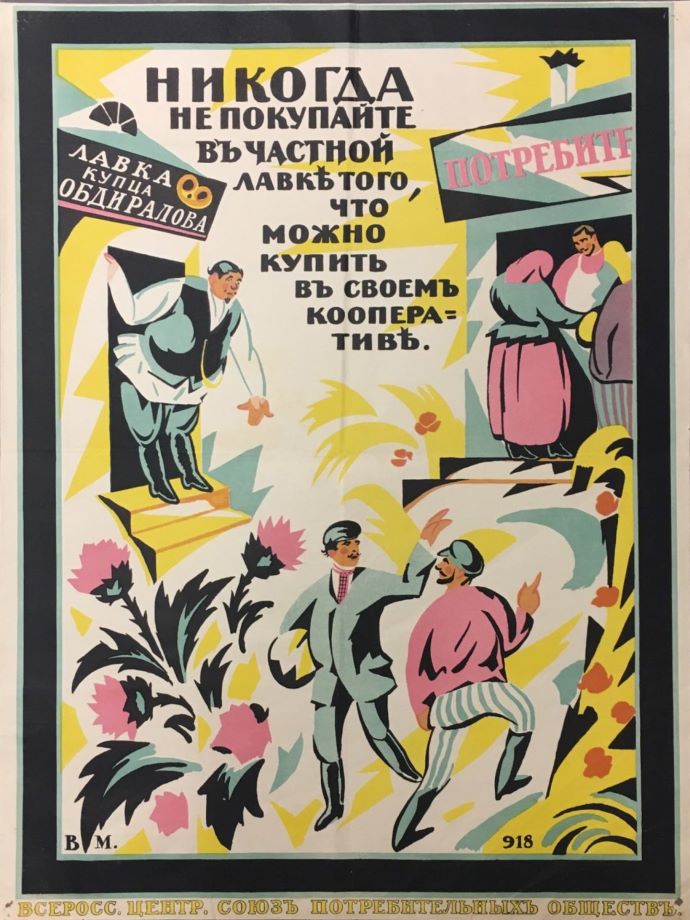
We still recall the struggle which took place beginning in 1907 and lasting up to our day, for the conquest of the Workers’ Cooperatives. In 1907, already, the Mensheviks, completely deserting the workers’ movement, had thrown all their attention on “legal” methods. The Bolshevik journals, our Echo for example, were then firmly opposed to these tendencies.
In 1907 the Bolsheviks of our party, at Moscow as well as Petrograd, carried on a desperate struggle against the intrigues of the Mensheviks, who styled themselves “Socialists,” in the cooperative field. The Mensheviks asked the famished workers of Petrograd to struggle against the high cost of living by forming cooperative stores. This was their only means; the Petrograd Committee of our party, on the contrary, declared: “The only means of struggling against the progressing high cost of living is the direct action of the proletariat, the organization of mass demonstrations, and the presenting of a resolution to the Duma by the Social-Democratic representatives in that body, demanding that the food shops and bakeries be organized by the official bodies of the cities, for the common good, and be placed under the control of workers’ representatives.” Simultaneously a resolution concerning the cooperative question was adopted in a number of factories by the Petrograd workers; this resolution began with the words:
“Although we recognize that the solidification of the political and the cooperative movement is the principal task of this moment, we nevertheless must be on our guard against involving ourselves too much in the consumers’ cooperatives. We are opposed to founding such cooperatives in places in which there is not a mass movement favoring them.”
The Mensheviks took advantage of this pretext to arouse a tempest of indignation, not only in their own papers, but also in the entire liberal press. The cooperators Totomianz, Terezheslavaky and others, simply insulted the Bolsheviki and the workers. Thus, the Russian workers’ cooperatives found themselves, up to very recent days, in the hands of the liberals and of the petit bourgeois socialists.
2. The November Revolution and Cooperation.
Such was the state of the cooperatives in Russia at the moment of the November Revolution. They preserved their bourgeois spirit even after November—in fact, for a whole year—up to the Third All-Russian Congress of Workers’ Cooperatives. Such a situation naturally cannot fail to appear abnormal. While the country was already under the dictatorship of the proletariat, one phase of the workers’ movement still remained in the hands of elements which were foreign to the working classes, namely, the petit bourgeois cooperators.
It is a striking fact that the consumers’ cooperatives constitute the last stronghold of political-social reaction. The enemies of the Soviet Government sought from that place as a point of vantage to deal the death-blow to the proletarian dictatorship. The slogan, “the independence of the workers’ cooperatives,” was still energetically proclaimed, but in reality this meant the complete dependence of these cooperatives on the bourgeoisie, and the real aim was to maintain the struggle against the Soviet Government, to return to the idealistic stage of private property and private trade. Could the proletariat reconcile itself with this condition? The revolution was faced with the question of destroying the last support of the enemies of the working class. It was necessary, before anything else, that so powerful and so experienced an organ of the distribution of economic necessities as the Consumers’ Cooperatives should be employed in the socialistic reconstruction of the country.
The Socialist Government then directed all its attention to the consumers’ cooperatives, deciding to utilize them as an organ for the distribution of foodstuffs, an organ which would adapt itself to the nationalized production, to a production no longer dependent on private property, but completely socialized.
With this object in view, there was published in January, 1918, a draft of a decree on consumers’ communes, which aimed to include the consumers’ cooperatives in the system of the economic organization of the Soviet Government. The petit bourgeois cooperators emitted dreadful cries. They organized a conference of the cooperators of the central federation; they drew up a number of reports having as their leitmotiv always the same old refrain: “The cooperatives will be ruined.”
The workers’ consumers’ cooperatives in Russia had been too profoundly penetrated with the bourgeois ideology. Very energetic methods had to be taken to bring them to a point where they would be equal to their task. The proletariat held the political power in their hands. Its trade union federations were laying the foundation for socialized production; but the consumers’ cooperatives, allegedly belonging to the workers, refused to place themselves solely in the employ of the victorious classes. While the consumers’ cooperatives in the bourgeois regime were an organ in the struggle of the proletariat having as their object the destruction of the capitalist system, they necessarily became, after the victory of the working classes, an inseparable part of the entire Soviet structure. As the trade union federations have ceased, under the Soviet Government, to be a means of struggle and have actually become organs of production aiding in constructing the immense mechanism of socialized industry, and laboring at the task of finding productive forces, of disciplining them and raising their productivity, the consumers’ leagues also had to place their experience and economic resources in the service of the same cause, to imbue their organizations with a new spirit, and to transform that great mass of consumers which modern society means, into a cooperative socialistic society.
To produce this condition, it was necessary for the cooperatives themselves to desire this new organization of society, but the Russian consumers’ cooperatives were opposed to this condition; that is why we were forced to formulate the demand “Conquer the Cooperatives.” The central committee of the party raised this demand in the summer of 1918.

Simultaneously, the Soviet Government undertook to subordinate the cooperative movement and its organs to the general problems of the proletariat and the political aims of the latter. On April 11, 1918, the first decree on consumers’ cooperatives, which was the result of long conferences of the government organs and of the cooperative institutions had been adopted by the Council of People’s Commissars and ratified by the All-Russian Central Committee. This decree was published on April 12. The bases of this decree were the following: In each district, cooperative organizations of consumers are to be founded; the entire country is to be partitioned into a certain number of districts. In each district there must not be more than two consumers’ societies in operation; one cooperative for all the citizens; and a special cooperative for the workers. The representatives of the consumers’ societies should be attached to the official organs of provisioning, both central and local. The principal and most important practical measure in this decree is the permission it gives to the cooperative associations, depending on the stage of development of their technical and economic machinery, to purchase, repair, and produce commodities on the demand of the official organs of provisioning, and of the Supreme Council of National Economy, with the aid and under the control of the latter. It is natural that this decree was not very rigorously applied; it would suddenly create a complete and universal prevalence of neighborly relations between the consumers’ cooperatives and the government, and it is self-evident that not all the population was immediately provisioned by these cooperatives. Much time and many efforts were necessary before they would function in this way. It was necessary, above all, to find a modus vivendi for the cooperative organizations. On April 22 of the same year, there was promulgated a decree concerning the organization of a department of cooperatives in place of the Supreme Council of National Economy, and, immediately after, there came instructions for the organization of local departmental cooperatives, whose task was to enroll the consumers’ cooperatives, supervise them, and draw up instructions and drafts of laws for the cooperative organizations. Such departments were founded not only in the capitals, but also in the provincial cities. In the provinces they accomplished a great work by rallying around them the scattered cooperatives, by assigning them to districts according to their sphere of activity, and by introducing order and system into a new cooperative life.
The most important legislative measures on the cooperative question are: The supplementary decree of August 8, 1918, concerning the exchange of commodities in provinces that are rich in grain, and the decree of November 21, 1918, on provisioning. The first of these decrees charges the cooperative organizations with the exchange of agricultural products for industrial products; the second establishes order in the nationalization of private commerce and in the distribution of commodities to the population through the intermediary of the Soviet stores and those of the cooperatives. The legislation of the Soviet Government on the cooperatives finds support in the great movement of the working class, which finally is embracing even the backward field of cooperative life, and which has made a breach in the wall of the last fortress of the reformists. The campaign undertaken by the party of the workers against the cooperatives has led to victory.
In the second half of 1918, the history of the Russian cooperatives is marked by a series of resolutions and decisions adopted as well as carried out in the great congresses and conferences which transformed the so-called workers’ cooperatives into real workers’ cooperatives, and subordinated them to the general problems of the working class.
The position of the workers’ cooperatives is particularly striking; their control has finally passed into the hands of the communists. The Third All-Russian Congress of Workers’ Cooperatives definitely took a position, as far as its majority was concerned, with the working class. The majority of the delegates of the Congress was communistic.
Thus the most difficult moment had been passed. The Russian cooperative movement was finally in the workers’ hands.
3. Unified Socialist Distribution.
The most important legislative measure concerning cooperation is the decree of the Council of People’s Commissars of March 20, 1919, concerning consumers’ communes or communities. Through this decree the great and difficult work of incorporating the cooperative movement with the official proletarian institutions of a general character is realized. Through this decree, a unified apparatus is to be created for the distribution ‘of foodstuffs, since the organs of distribution (which were generally divided into three groups; organs of provisioning, workers’ cooperatives, and cooperatives for the remainder of the population) draw most of their products from the same source. The unification of the organs of distribution must be realized in such manner that the great apparatus of distribution, that is to say, the cooperative movement, which is the only apparatus established and tried by experience during the period of capitalist domination, should not be destroyed or eliminated, but should remain the basis for distribution, and should therefore be developed and perfected. Consequently, all the consumers’ cooperatives of the Republic have been transformed into a single distributing apparatus, and therefore named “consumers’ communes.” (The division of the cooperatives into “workers’ cooperatives” and “cooperatives for other citizens” is eliminated. The stores and the supplies of the cooperatives and the Soviets are placed at the disposition of these consumers’ communes. Such communes exist everywhere, in the cities, in the industrial centers, and in the country. The entire distribution, which up to now was in the hands of the provisioning organizations and of the cooperatives, is henceforth under the supervision of the consumers’ communes.

These communes are composed of the entire population of the locality, which must be enrolled in the assigned offices of distribution. A number of offices constitute an association of districts, and a number of associations of districts make up the departmental organizations. At the head of all consumers’ communes is the central organization. All citizens having the right to vote in accordance with the constitution of the Socialist Federal Soviet Republic of Russia have also the right to elect or to be elected to all the organizations of the consumers’ commune.
Simultaneously, the work of the Council of National Economy and of the former consumers’ cooperatives has been eliminated, and the consumers’ communes now depend, being organs of distribution, on the People’s Commissariat for provisioning. On April 3, 1919, this decree was ratified by the Central Executive Committee.
The whole apparatus of the Republic is now called a “Consumers’ Society.” Shortly after this decree was passed, the workers at Moscow created a “Moscow Consumers’ Society,” which holds in its hands the entire matter of distributing foodstuffs to the population of the city, and which, in addition, organizes the enterprises for the production of foodstuffs, agricultural enterprises, etc.
Without doubt, the new plan of the Soviet Government for the distribution of foodstuffs is not yet working without a hitch. The reality and the huge proportions of the tasks which the consumers’ societies have undertaken permit only of a general outline of the matter of provisioning the population. We have still a great work before us. We understand the people who, being detached from the former work of the cooperatives, are at present dissatisfied with the policy of the Soviet Government. When people like Kolokolnikov and others write today concerning the destruction of the cooperatives and the more and more inefficient operation of our present system, we must recall that these are people who are incapable of adapting themselves, hopeless skeptics who have no desire to hear the voice of the proletariat, and who do not want to see that the victorious move of the Russian working class is spreading.
In this movement, the consumers’ cooperatives play a role which is just as great as that of the trade union federations and the party of the workers. These three forms of workers’ movement are ceasing to be a means of struggle for the proletariat; once the dictatorship of the proletariat is proclaimed, they become the organization for a realization of socialist society. While under the reign of capitalism they were still scattered, often having nothing in common with each other, on the other hand, under the dictatorship of the proletariat they have become an organization of iron pledges to serve the general aims of the working class of the Soviet system, and of the communist reconstruction of society. The reformists today say: “Cooperation is dead, long live cooperation!” They lament the ruin of bourgeois cooperation and are saluting the advent of a new cooperation. Let us rather say that petit bourgeois cooperation is dead, but the experience of the working class in the cooperative field will aid in the practical realization of communism.
Soviet Russia began in the summer of 1919, published by the Bureau of Information of Soviet Russia and replaced The Weekly Bulletin of the Bureau of Information of Soviet Russia. In lieu of an Embassy the Russian Soviet Government Bureau was the official voice of the Soviets in the US. Soviet Russia was published as the official organ of the RSGB until February 1922 when Soviet Russia became to the official organ of The Friends of Soviet Russia, becoming Soviet Russia Pictorial in 1923. There is no better US-published source for information on the Soviet state at this time, and includes official statements, articles by prominent Bolsheviks, data on the Soviet economy, weekly reports on the wars for survival the Soviets were engaged in, as well as efforts to in the US to lift the blockade and begin trade with the emerging Soviet Union.
PDF of full issue: https://www.marxists.org/history/usa/pubs/srp/v1v2-soviet-russia-Jan-June-1920.pdf
 Revolution's Newsstand