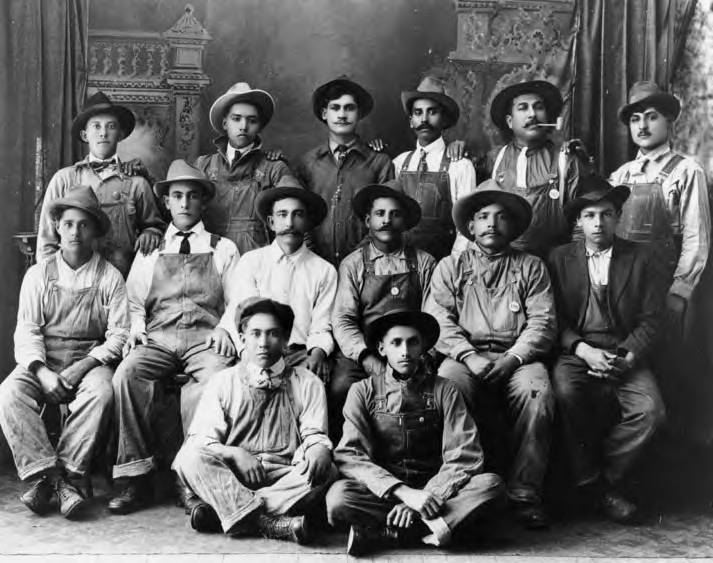
Albert Weisbord analyzes the role of Mexican workers in the U.S. and looks forward to a radical Black-Brown alliance.
‘Mexicans in the United States’ by Albert Weisbord from The Daily Worker. Vol. 5 No. 350. February 15, 1929.
(This is the first of a series of five articles on Mexico by Albert Weisbord, who has just returned from Mexico City, where he went as a delegate from the T.U.E.L. of the United States to the Unity Conference of Workers and Peasants. The second article, to be published tomorrow, will deal with political conditions in Mexico and its relations to U.S. imperialism.)
One travelling through the mid-south and Texas on the way to Mexico must be impressed with one outstanding fact–the tremendous misery of the masses. As the train whizzes by one can see the shacks, one room, one window, clap-trap boards, unpainted, open toilets, home of pig and chicken, where those who toil from morn to night must live. I was shocked oy the similarity of these conditions to those of the peasants of Poland. They looked like the same kind of shacks, only here was even more terribly severe exploitation.
I began to see more clearly than before that truly there was a sort of inner imperialism in the United States, where the agrarian masses of the mid-south had already been driven down practically to the level of the European peasant. I am sure that no one knowing this part of the mid-south can claim that conditions are better in this part of American than in Europe.
This tremendous fact has not been utilized at all by the Party. Have we not always taken for granted the fact that the agrarian toilers were better off in America than in Europe? Let us turn our spotlight on this part of the country, Texas, Mississippi, Alabama, etc., and there will be revealed conditions that will act as an electric shock to the whole labor movement and to the Party, showing to the Party more clearly than before the basic conditions of the masses and the tasks and opportunities before it. In this connection it should be said that a great deal of material was missed during the last Mississippi flood. Our Party did something to expose the conditions, but what a wealth of material could have been revealed!
Can anyone maintain that masses undergoing such terrible oppression are not objectively ready for revolution? To anyone who scoffs at this, I say to him, go down yourself and try to live under such conditions.
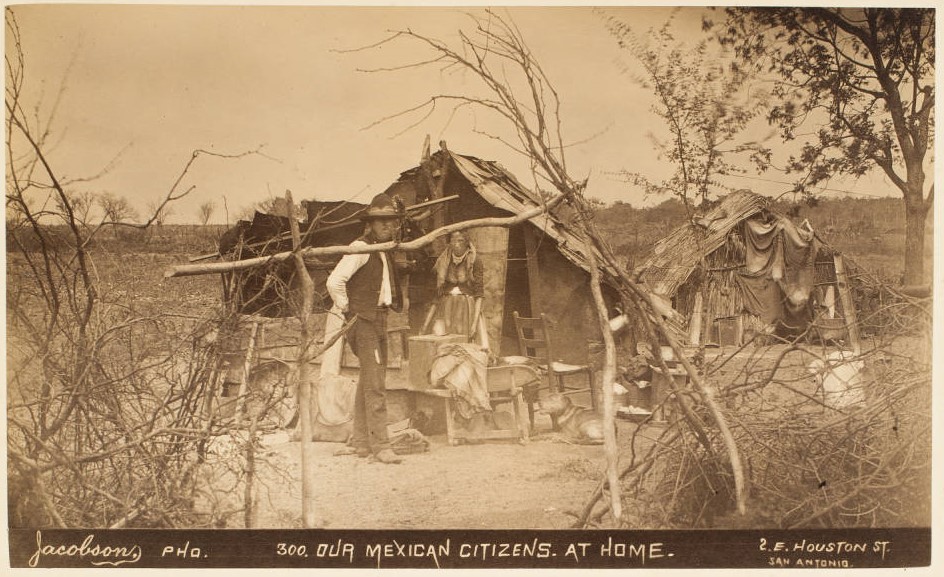
And I would ask him further, “What do you know about the south anyway?” The more one sees of the real situation the more one realizes that our Party has done so little in the South, so little among the agrarian toilers, so little among the Negroes, so little among the most exploited of all!
It is in the South that most of the 3,000,000 Mexicans in the United States live. These Mexicans live even worse than the whites. In all America, with the exception of the Negroes, one cannot find a section of the population more exploited. Three million Mexicans in the United States, but how many in our Party? Yet these Mexican toilers have a tremendous role to play.
In the first place, in the South and West they are concentrated in most important industries, such as oil, mines, railway, metal, and compose the bulk of the agricultural workers. The organization of the unorganized of these industries especially in this region must take in above all these Mexican masses. They are ready to organize, The A.F. of L. officialdom has ruled them out of its unions, and fights hard to prevent them from being organized.
Have Formed Own Unions.
In spite of that they have formed unions of their own and almost 1,000 of them subscribe to El Machete, the organ of the Communist Party in Mexico. Unseen and neglected by the revolutionary movement, betrayed by the reactionary labor bureaucrats, yet the Mexicans in the southern part of the U.S., rightfully trusting no one, have gone ahead undaunted, in spite of their tremendous handicaps. The revolutionary movement in the U.S. has a huge sin to wipe out. The mobilization of these masses must become one of our most important tasks.

Especially must this be so when we see that the Mexicans are potentially and directly the greatest, single anti-imperialist force in the U.S. Every blow given Latin America by U.S. imperialism reacts immediately and directly on these Mexicans. They bear with them the deepest hatred to the “gringoes.” They have a double hatred, doubly expressed as workers, and despised as “greasers” as they are. Their fierce rebellious spirit has broken out again. They are a potential force to be feared in the mid-south and southwest.
Highly Strategic.
One of the best ways of attacking Wall Street is through the mobilization of the colonial, semi-colonial and anti-imperialist masses. In America the most powerful anti-imperialist force is concentrated in just those industries most necessary for U.S. imperialism (oil, railway, metal, mines, agriculture, etc.) It is this fact that makes the winning of the Mexican masses in the U.S. of the highest strategic importance for our Party. We owe this to our- selves and to the movement in Latin America.
Further it is not beyond the! realms of possibility that U.S. troops will invade Mexico in a short time. Should the revolutionary movement in Mexico advance much further than it is advancing today, intervention is a surety. If in New York City we will pass resolutions against such intervention, the great mass of Mexicans concentrated along the border will be ready to carry out those resolutions. Border work, frontier work, must occupy the attention of our Party far more than before. And for this work the winning of the Mexican toilers is of paramount importance.
Finally I shall venture one further idea as to the great importance of the Mexican worker in the U.S. to us, and that is his relationship with the Negro. I would like to throw out the thought that the Mexican worker can help win the Negro masses far more easily than the white. The deep prejudices that exist between white and black, does not exist between the oppressed Mexican and Negro masses. They are bound together economically and even socially. There is no reason why the closest revolutionary alliance could not be made between Mexican and Negro. The Mexican therefore becomes a vital link in the chain of solidarity, binding the entire American proletarian and agrarian toilers together.

American imperialism is beginning to realize the menace 3,000,000 Mexicans means to its power. Upon the initiative of the A.F. of L. traitors, immigration to U.S. from Mexico has stopped. The “friendship” of the Mexicans to the U.S. means that the Mexican consuls have become the direct accomplices of U.S. imperialism in its new and further persecution of the Mexican within the U.S. Many Mexicans are being deported. The A.F. of L. is carrying on a bitter war against the Mexicans. In many cities a “Mexican Commission” of a fascist bourgeois character is being created to handle the “Mexican Problem.” All the reactionary Mexican politicians and priests, especially those expelled from Mexico for their reactionary policies, are concentrating their forces along the border. The American politicians and the American and Mexican papers aid them in every way in disintegrating the ranks of the Mexican workers and in organizing counter-revolutionary bodies.
Simultaneously with the increased oppression and terror against the Mexicans in the U.S., the Mexican government promises land to those who return to Mexico driven out of the U.S. But the land is never forthcoming and hundreds of families are now on the border in Mexico absolutely destitute, whom the, Mexican government has helped the U.S. government to despoil.
Against this new persecution the Mexican masses are beginning to strike back both against U.S. imperialism and its agent the Mexican government.
The Daily Worker began in 1924 and was published in New York City by the Communist Party US and its predecessor organizations. Among the most long-lasting and important left publications in US history, it had a circulation of 35,000 at its peak. The Daily Worker came from The Ohio Socialist, published by the Left Wing-dominated Socialist Party of Ohio in Cleveland from 1917 to November 1919, when it became became The Toiler, paper of the Communist Labor Party. In December 1921 the above-ground Workers Party of America merged the Toiler with the paper Workers Council to found The Worker, which became The Daily Worker beginning January 13, 1924.
PDF of full issue: https://www.marxists.org/history/usa/pubs/dailyworker/1929/1929-ny/v05-n350-NY-feb-15-1929-DW-LOC.pdf
 Revolution's Newsstand