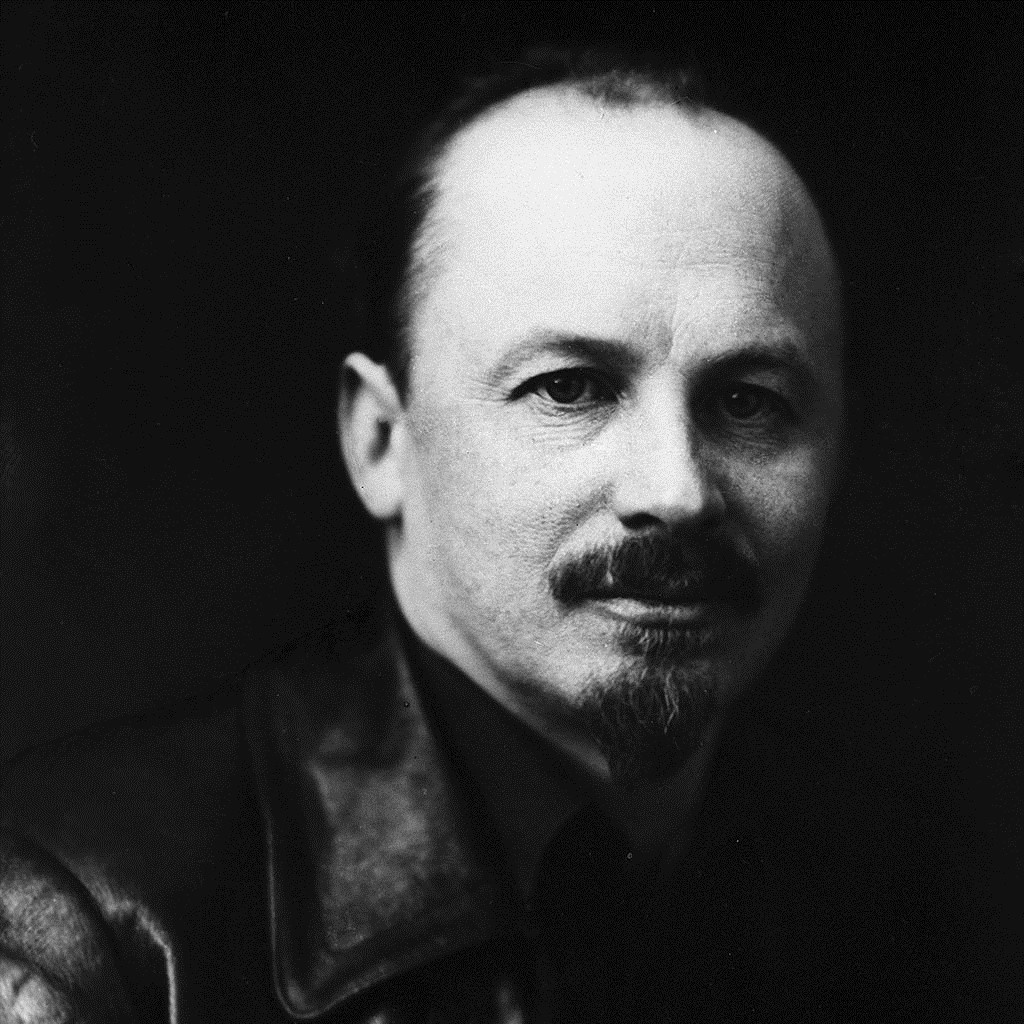
Late 1927 speech by Bukharin refuting Otto Bauer’s theory and Ramsay MacDonald’s practice delivered at the Congress of the Friends of the Soviet Union.
‘The Russian Revolution and Social Democracy’ by Nikolai Bukharin from International Press Correspondence. Vol. 7 No. 68. December 1, 1927.
History has Decided.
Comrades! I should like to take this opportunity of dealing with a particular question, namely, the question of our tactics in the revolution and the tactics of the Social-Democratic parties. I have chosen this special question, because in the Soviet Union we now have behind us ten years of successful proletarian revolution and because this jubilee is the suitable moment for overhauling our theory and the theories of the Social Democrats, our political and tactical methods and the methods of Social Democracy. I am also dealing with this question, because and to this I should like to give special emphasis recently a number of proposals of “co-operation” have been made to us in overt and covert form on the part of the Social-Democratic leaders. Such proposals were, for instance, made in the statements of the Social Democrat Loebe, in the letters and articles of the representative of the Independent Labour Party of Great Britain, Brockway, in a number of other utterances, and, finally, in the latest speeches of Otto Bauer and Ellenbogen, made in connection with the jubilee of our proletarian revolution. In my opinion Otto Bauer’s latest speech, in which he analysed our policy and made a number of tactical propositions, is worthy of special attention.
What had Otto Bauer to say in the jubilee days of our October Revolution? He spoke of our “mistakes”, which, in his opinion, consist of the transplanting of “Russian methods” to other countries and the use of Terror against the Menshevists and Social Revolutionaries. He also mentioned that we are now proceeding from Terror against the Menshevists and Social Revolutionaries to Terror against our Opposition. As the result of this “analysis” of our mistakes Bauer came to the conclusion that for the co-operation of the West-European Social-Democratic parties with the Soviet Government and the Communist Party of the Soviet Union the following pre-conditions are necessary: firstly, internal consolidation and democratisation of the country; secondly, cessation of the various tactical manoeuvres practised by the Communists in Western Europe. These form the “foundations” for co-operation and the conditions for a change in the attitude of the Social-Democratic Parties towards the Soviet Union. I will now go over these conclusions, or, rather, conditions, submitted to us by the Social-Democratic Parties in Otto Bauer’s speech.
Wherein lies the political sense of these conditions? What do Bauer’s proposals amount to?
What is the meaning of “internal consolidation” and “democratisation” of the country? I believe that their meaning is clear to everybody. The democratisation of the country means the substitution of the proletarian democracy, i.e. of the proletarian dictatorship by an ordinary bourgeois democracy. Such bourgeois democracy exists at the present time in various countries, beginning with America and ending up with Austria, where, at the time of the insurrection of the Vienna workers, the political content of bourgeois democracy was revealed very clearly. Therefore, the first condition for co-operation is the liquidation of the proletarian dictatorship.
What is the significance of the second “condition”, the cessation of the tactical manoeuvres of the Communist Parties? This means that the Communist Parties must cease completely to fight for the winning over of the masses and give up their existence as independent political organisations of the proletariat. In short, this demand of Otto Bauer means that we should case to be Communists and liquidate the Communist International. It will now be seen that the two conditions set by Otto Bauer are: firstly, liquidation of the proletarian dictatorship; secondly liquidation of the Communist International.
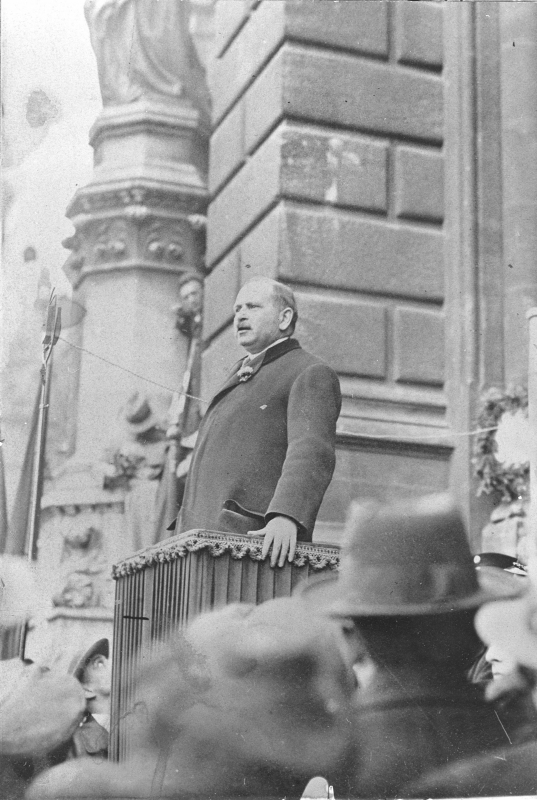
Comrades! We are of the opinion that these “proposals”, made in celebration of the victorious Russian Revolution go a “little” too far (laughter).
Bauer’s “Socialist” “demands” are all the more ridiculous because they represent a repetition of the chief demands of the whole of world imperialism. In negotiations of all kinds be they political negotiations concerning the de jure recognition of our proletarian State, be they economic negotiations regarding credit or the extension of our commercial relations it is just this kind of demand which the bourgeois world makes.
But that is not all. Just at the present moment the representatives of the bourgeoisie happen to be much more modest than the “left-wing” Social Democrat, Otto Bauer. The representatives of the bourgeoisie demand from us “merely” the liquidation of the Communist International; they have not the nerve to demand the liquidation of the Soviet State. The left-wing Social Democrat, Otto Bauer, is not so cowardly as the bourgeois world. In his courage he ventures still further (laughter). He demands that we should lay still greater sacrifices upon the altar of co-operation with the Social Democrats. I believe you will understand full well why such demands on the part of Otto Bauer appear to us both ridiculous and mean.
If we approach this question, not from the point of view of polemics with the leaders of Social Democracy, but from the standpoint of the destiny of the broad masses, we must form the following opinion of Otto Bauer’s speech: It appears that it is high time to understand that the actual course of history is the best test for the various tactical and political methods. Has there recently been, within the last ten years, such an important historical and, partially, even sanguinary test of the theories of the programme, of the strategy and of the tactics of Communism, on the one hand, and of Social-Democracy, on the other hand? There has been such a test. It is demanded of us that we should employ democratic methods, other methods of capturing power, alter our views concerning the character of the State, adopt a different form of State and a different party policy. Let us, however, try to compare the events of our decade with those in other countries, where different methods have been used. If we make the comparison, we undoubtedly arrive at conclusions, which for the estimation of strategy, of tactics and of policy are by no means favourable to the Social Democrats.
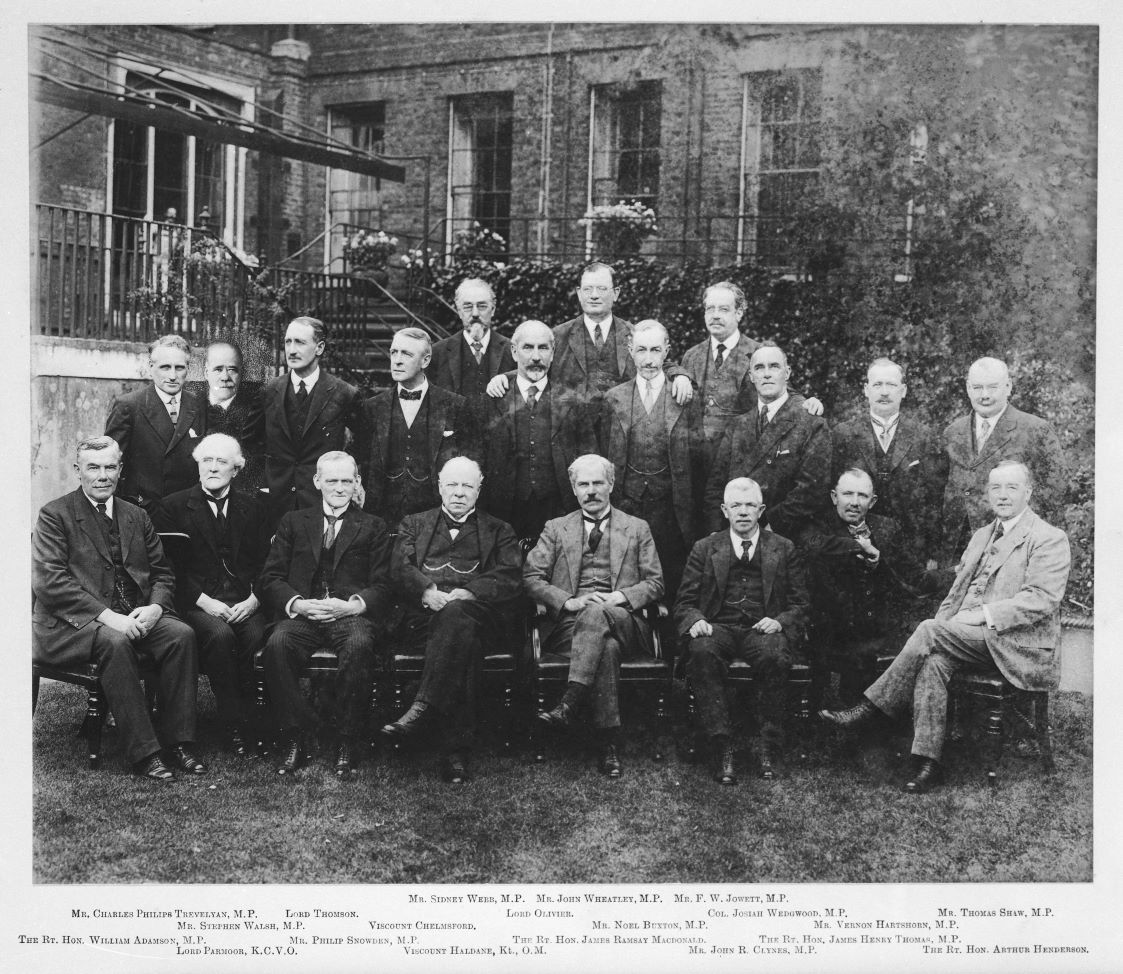
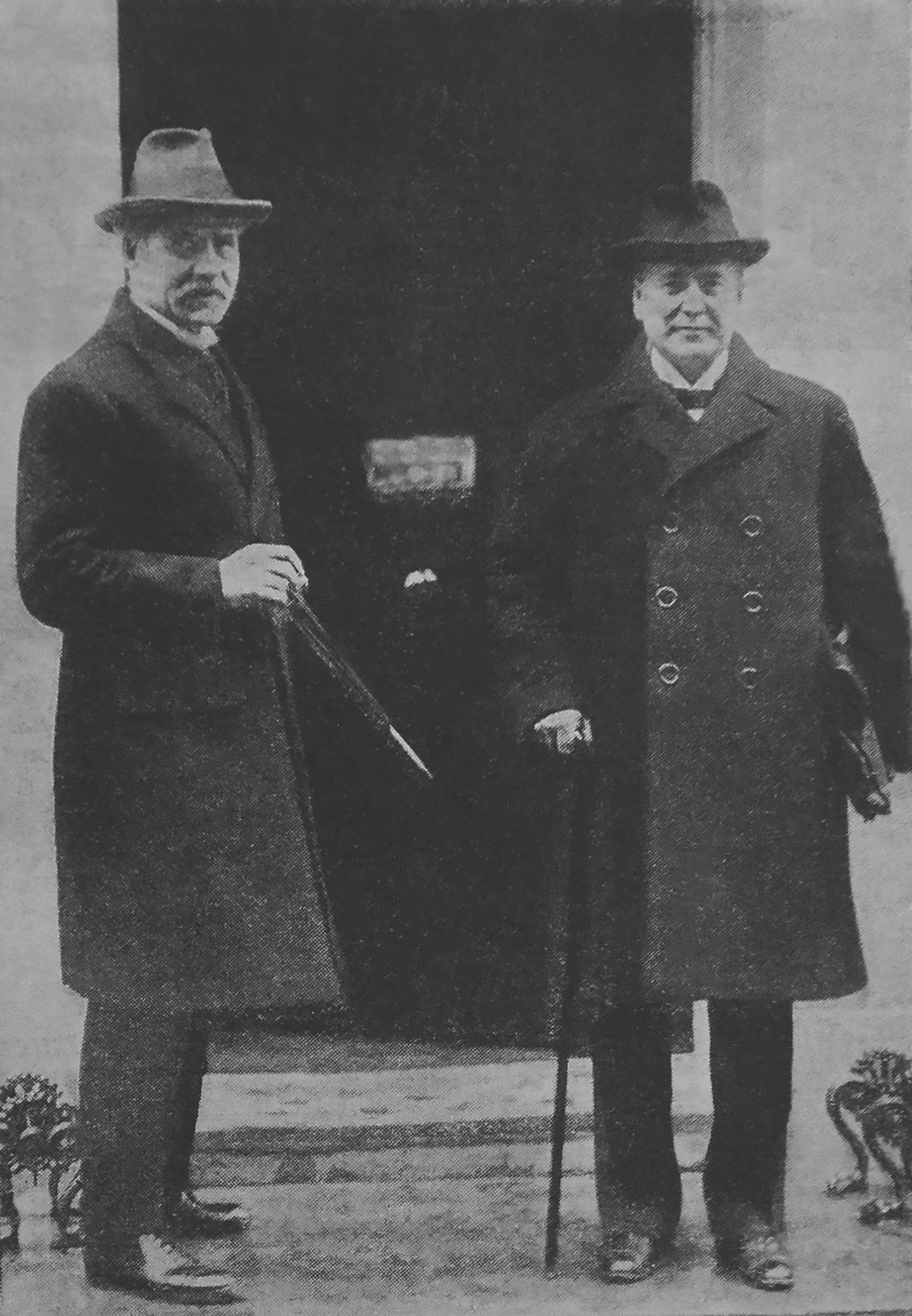
Let us consider the question of capturing power. This question, which forms the watershed between us and Social Democracy, is the question of the use of force. Naturally, we are barbarians, because we resort to violence, although Marx decided this question exactly in the sense in which we treat it. Let us for the moment assume that Marx is no longer an authority to the Social Democrats. But our Social-Democratic opponents have sought to capture power by other methods. In some countries they have already had part in the government in Germany, Austria, Great Britain, Sweden, partially in Belgium, Denmark, etc. In these countries the Social Democrats employed “civilised”, “Western-European”, “humane”, “pacifist”, “evolutionary”, “organic” (laughter), “peaceable” and “MacDonald” methods. But we must ask ourselves: Where is the Council of People’s Deputies of Germany? Where is now the Cabinet of Otto Bauer in Austria? Where is the Social-Democratic Cabinet of Sweden? etc. Where is now the ideological inspirer of the Second International, the perfectly loyal, most affable, absolutely non-recalcitrant MacDonald, the friend of the King of England? Why did he disappear, like all the others, from the arena of State leaders? The bourgeoisie pushed them aside, deposed them, kicked them out. But we, with our “barbarian”, with our “non-European”, with our “coarse” and “violent” methods, with our “rough” policy of the “use of force”, still exist (laughter).
And what is the result of the practical test? The practical test has gone in our favour and against our opponents. But in order to express myself very modestly, I have put the question incorrectly. Did the working class in England actually rule during the Government of MacDonald? We believe this was of the case. Those who thought so laboured under a delusion. The Cabinet of the Labour Party had nothing in common with genuine rule by the working class. What kind of policy did MacDonald pursue? The policy of betrayal of the workers. Was there let drop a single word about the genuine realisation of Socialism, about the expropriation of the ex- propriators, about a real Labour policy? No. There were various sweet sermons. Those we heard. But earnest words concerning the realisation of Socialism never reached our ears. The so-called “Labour” Government forgot about that, and, even if it had brought the matter up, it would have taken no practical steps towards fulfilment. The MacDonald Cabinet bore the label of a “Labour” government, but in really it was a creature of English imperialism, composed of “Labour” leaders. The imperialistic face of this “Labour” government was most clearly discernible in the foreign policy, in the policy observed towards the nations oppressed by England, and especially towards India. Every participator in the national-revolutionary movement can tell you of the provoking and dismaying procedure of the MacDonald Government. And in this way vanished from the historic scene a “Socialist” government, which did not take a single step towards the realisation of Socialism, but, on the contrary, executed the policy of its own bourgeoisie.
The most extreme “left-wing” Social-Democrats, namely, the Austrian Social-Democrats, say that “in principle” they would not be opposed to the use of violence. But all that is We know of individual positively ridiculous! cases of violence on the part of the leaders of Austrian Social Democracy. But those were cases of the use of violence against the working class. Violence was used during the Vienna events, but not against Seipel and the Austrian Government but against the working class, who acted against the will of the Social-Democratic leaders. That is a historic fact. When the Social Democrats speak of democracy and dictatorship in regard to our country, they intentionally pass over in silence the circumstance that the dictatorship in our country is a proletarian democracy, which creates for the development of the activity of the workers and peasants a sphere of action more extensive than can or could exist in any so-called democratic country. It is ridiculous to compare an abstract democracy, which never existed and never will exist, with an abstract dictatorship, which never existed and never will exist. There are various democracies and various dictatorships. The dictatorship of the proletariat is at the same time the broadest democracy, namely, the proletarian democracy. And when Otto Bauer now speaks of the “consolidation” and “democratisation” of our country, in reality that means nothing but submission to the enemies of the proletariat and of the peasantry and the destruction of the ruling position of the working class. The dictatorship of the proletariat is its monopolist position. Bourgeois democracy means the destruction of the leading role of the proletariat in the whole of public life.
The Social Democrats have on more than one occasion tried to be exclusively peace-loving towards the bourgeoisie and exclusively treacherous towards the proletariat. The results are particularly clear in the case of Germany. In Germany there were even Soviets, which actually fulfilled the demands now put forward by Otto Bauer for us: first of all there were Soviets, and then Social Democracy, by fulfilling the demands which are now being made by Otto Bauer, ceded the power to the National Assembly, introduced democracy, etc. And not a hair of a single counter-revolutionary was touched. No force at all was resorted to against the bourgeoisie. They were peace-loving, these humane, pacifist Social Democrats. It is true that some time afterwards violence was employed with the participation of the Social-Democratic leaders, but again that was violence employed against the working class, and this use of violence found expression in the murder of the most prominent leaders of the working class. These facts are known to everybody. But the outstanding historic fact is that the whole policy of the Social Democrats suffered complete bankruptcy. And when, after so many years of crushing experience, they come to us and say: Please repeat in Russia the experiences which we in Germany and in Western Europe have so brilliantly” gathered, we answer: We are not so stupid now, when we are celebrating the tenth anniversary of the victorious proletarian revolution in our country, to discuss this question which life itself has decided.. (Applause.)
They say to us: But you want to transfer Russian methods to Western Europe. What is the assumption in this accusation? The assumption is that, although such methods were necessary in Russia, in West-European countries methods different in principle are necessary. But excuse me, why do you then demand of us that we in our country should use the West-European “democracy” lauded by you? (laughter). That is the first remark on this question. As you will see, Bauer’s logic has gone astray (laughter). All his deliberations are full of inherent contradiction.
But is it true that we employ completely “specific”, “Asiatic-Russian” methods, not applicable in West-European countries? Is it true that we have a theory which is not practicable in the West? I dispute and deny this thesis in toto. Our Communist Party and its leaders since the very commencement of our Party were, on the contrary, followers of German Communism, disciples of Karl Marx. Is it not true that our theory of State is a Marxian theory, which was and will remain the theory of Marx, and that the Social-Democratic parties revised everything that Marx wrote on this question? Is it no true that the Social-Democratic leaders, including some of those who are now at the head of Social Democracy, formerly advocated dictatorship and the proletarian revolution. We not only accepted the doctrine of Marx in its entirety, we not only carried on propaganda for it in words we have converted it into reality. And what did the Social Democrats do? They revised this doctrine the doctrine of dictatorship and of proletarian revolution, the foundation of Marxism. MacDonald the loyal servant of his king is now the leader of international Social Democracy. Our leader, however, is Marx, our leader is Lenin, who was a prominent Marxist and enriched Marxism with the experience of the epoch in which we are living.
In the most urgent question of our time the question of war we take the view, which we previously defended, that capitalism is inevitably accompanied by wars, that these are intimately connected with the existence of capitalism and belong to its laws of development. That is the Marxist point of view. And what has Social Democracy to say now? It preaches that all this is antiquated, and that everything has been changed by the creation of the League of Nations. For them Marx is obsolete, and Hilfending writes in his paper that the capitalists, the leaders of trusts and combines unconsciously act in accordance with Marx. A splendid Marxism, is it not? In the Social-Democratic parties, revisionism is celebrating a victory along the whole line. We, on the other hand, were and remain true adherents of the Marxist doctrine. How can one say that everything we do in our country is thought out by us and that we want to “export” our “barbarian”, “Russian” methods to Western Europe? In the past we imported Marxism into Russia. And this ideologic “commodity” was and remains the most important weapon, which we put to practical use when the former Marxists betrayed Marxism. How can they now accuse us of having recourse to “specific” methods, which are completely foreign to Western Europe? It is an absurd and stupid idea that for Western Europe, Australia, America and, finally, for each country special methods are necessary for the capture of power by the proletariat. There are no methods peculiar to Western Europe, for the fighting methods are dictated by the relative strength of the classes and of the various strata of the individual classes, as also by the different ideologies in each country. It is quite unmarxian to speak of Western Europe as a single entity: To measure Hilferding and Thaelmann with the same yard-stick is perhaps original but by no means clever. In Western Europe, just as in the Soviet Union, there are no Social-Democratic and Communist methods. Experience in our country shows that the Russian Mensheviki Social Democrats have tried to put their methods into practice: They, too, were opposed to the use of force against the bourgeoisie; they consistently supported the bourgeoisie, but they fought, weapon in hand, against the proletarian dictatorship. And it is comprehensible that with us the position is such that there are indeed various parties, but only one party is at the helm, while the others are in prison. This will continue to be the case.
It is absurd to assume that the forms of our State and of our party policy would be as they are at present if we were not surrounded by world imperialism. You must never forget that every force within our country which tries to disorganise our ranks and our affairs immediately receives the support of the whole bourgeois world. And just because up to the present we have stood alone our position is specially difficult. The strong iron fist of the proletarian dictatorship is necessary in the fight against our various difficulties. And when the Social-Democratic leaders with their miserable experience in the use of Social-Democratic methods propose to us as a condition that we liquidate the Communist International and the proletarian dictatorship, we can only answer them with laughter. And you will no doubt excuse us for that. (Laughter, Applause.)
For many years we carried on bloody warfare against our bourgeoisie and their supporters. We have stood extraordinarily severe trials. Our position was more terrible than that of any other country within recent years.
Our energy is now directed towards the building up of Socialism. If you compare our methods with the methods of various parties in other countries, you will see that we ourselves criticise our mistakes most sharply. We do this in every issue of our newspapers, and we correct our mistakes. However, in the matter of the fundamental fighting methods and of the differences of opinion on this question between us and the Social Democrats, among us there exists not the slightest doubt but that we are right. That is the position from the standpoint of internal experience in our country and in other countries.
Compare the role of our country with the role of the Social Democrats, compare the international role of the Social-Democratic parties and the role of the Soviet Union and of the Communist Party. With a certain amount of pride we can maintain that in the whole world there is not an emancipation movement which does not cherish sympathy with us. Can one say anything similar in regard to Social Democracy? This fact, too, shows that our policy is correct. Our enemies may say what they believe to be right. The historic fact remains that our dictatorship has existed for ten years and that we are not occupied in writing books about socialisation and setting up commissions to deal with this question, as did Karl Kautsky & Co., but that we are realising Socialism in our country in deed. (Tremendous applause.) Our role is not to spout about the right of nations to self-determination and to crawl into such organisations as the League of Nations. No. We declare that the League of Nations is a weapon of imperialistic robbery. (Applause.) And at the same time we are putting into practice in our country the great slogan of the liberation of nations. For this reason in particular we are a factor of the greatest significance in the fight for emancipation of all oppressed nations. (Applause.)
The question of the dictatorship in our country has still another aspect which I should like to deal with in conclusion. That is the question which I call, not with complete accuracy, however, the question of ideological dictatorship. Not only in political life but also in the sphere of economics we follow our ideal unwaveringly and realise our aims. In the ideological realm, too, we have in our country a militant dictatorship of the proletariat. But in what sense, in what direction? In our country it is the dictatorship of Marxism. We are not at all prepared to publish any and every pastoral letter and to feed the working masses ideologically on such things.
We do not go into ecstasies when all kinds of idealistic brochures, idealistic philosophy, books of religious character etc., are distributed. In this respect we are intolerant. But from all the ideologic treasures which mankind has created up to the present, we take the best as our scientific theories: materialism, Marxism. Armed with these instruments and with these noble weapons we fight against foreign influences and ideologies. In our country it is absolutely impossible to start a case against Darwinism, as was done in the country of bourgeois Democracy, the United States. Any judge in our country who came forward against Darwinism would be put into a cage.
We believe that so long as a united leadership is necessary to the proletariat we must nip in the bud everything that disrupts and poisons the working class. We rely upon Marxism, the ideology of the proletariat. We make of Marxism our theory of State, which we teach in all our schools and universities. We are not inclined to feel ashamed when people tell us that we are “one-sided”. Our one-sidedness consists in our loyalty to the proletarian fight and in hostility towards bourgeois influence. (Applause.)
Now that we have ten years of development behind us, we can say with pride that we have done much but that we shall do still more. On the day of the tenth anniversary of the victorious proletarian revolution we trust that the next ten years will bring us still greater successes than the past decade. We believe that we shall join forces with the international proletariat and the oppressed nations of the whole earth in our difficult fights, in our fight against the whole of the bourgeois world, in the fight with weapons, when the imperialists attack us, in economic competition with the capitalists, in our theoretic fight against vacillations, against mistakes and against every kind of deceit on the part of our enemies.
In the history of mankind there have never before been such tremendous events as are happening in our epoch. It is an indication of stupidity to assume, as do the Social-Democratic theorists, that a pacifist era was opened with the foundation of the League of Nations. Quite the contrary! The League of Nations is a syndicate of the most powerful robber States of world imperialism, America alone being lacking.
In the year 1914 there broke out a war between two coalitions. The next war will be either the collision of the whole bourgeois world with the Soviet Union and the world proletariat, or a collision between bourgeois coalitions. What will this mean? This will mean a fight without parallel in history. And we can now say that there is in the world only one force which is in a position to save humanity that is the proletariat and the oppressed nations.
In West-European countries, and especially in Germany, where the effects of the war were most keenly felt, in the first few years following the war there was widely spread among the bourgeoisie an ideology of the following kind: It is possible that civilisation will collapse. It will, therefore, be necessary to seek new paths. But now, in the stage of temporary stabilisation, people are beginning to forget what war means. We in Soviet Russia are naturally greater “barbarians”. But we never forget the lessons of the imperialist war.
We do not forget any of the consequences of the world war. We know full well that the next wars will be still more terrible. For this reason we are mobilising in advance all our forces and declare that there is no worthier task than the fight against imperialist war, than the fight for the victory of the working class; for the victory of the working class means the salvation of the whole of humanity from the real barbarity of capitalism. That is certainly not a pretty phrase, not a “noble thought” for in the victory of the working class lies the only possibility of breaking the backbone of imperialism. We were and remain the standard-bearers of the old slogan: “Long live the international revolution!” (Clamorous and continued applause. The delegates rise from their seats and sing the International.)
International Press Correspondence, widely known as”Inprecorr” was published by the Executive Committee of the Communist International (ECCI) regularly in German and English, occasionally in many other languages, beginning in 1921 and lasting in English until 1938. Inprecorr’s role was to supply translated articles to the English-speaking press of the International from the Comintern’s different sections, as well as news and statements from the ECCI. Many ‘Daily Worker’ and ‘Communist’ articles originated in Inprecorr, and it also published articles by American comrades for use in other countries. It was published at least weekly, and often thrice weekly. Inprecorr is an invaluable English-language source on the history of the Communist International and its sections.
PDF of issue: https://www.marxists.org/history/international/comintern/inprecor/1927/v07n68-dec-01-1927-inprecor-op.pdf
 Revolution's Newsstand