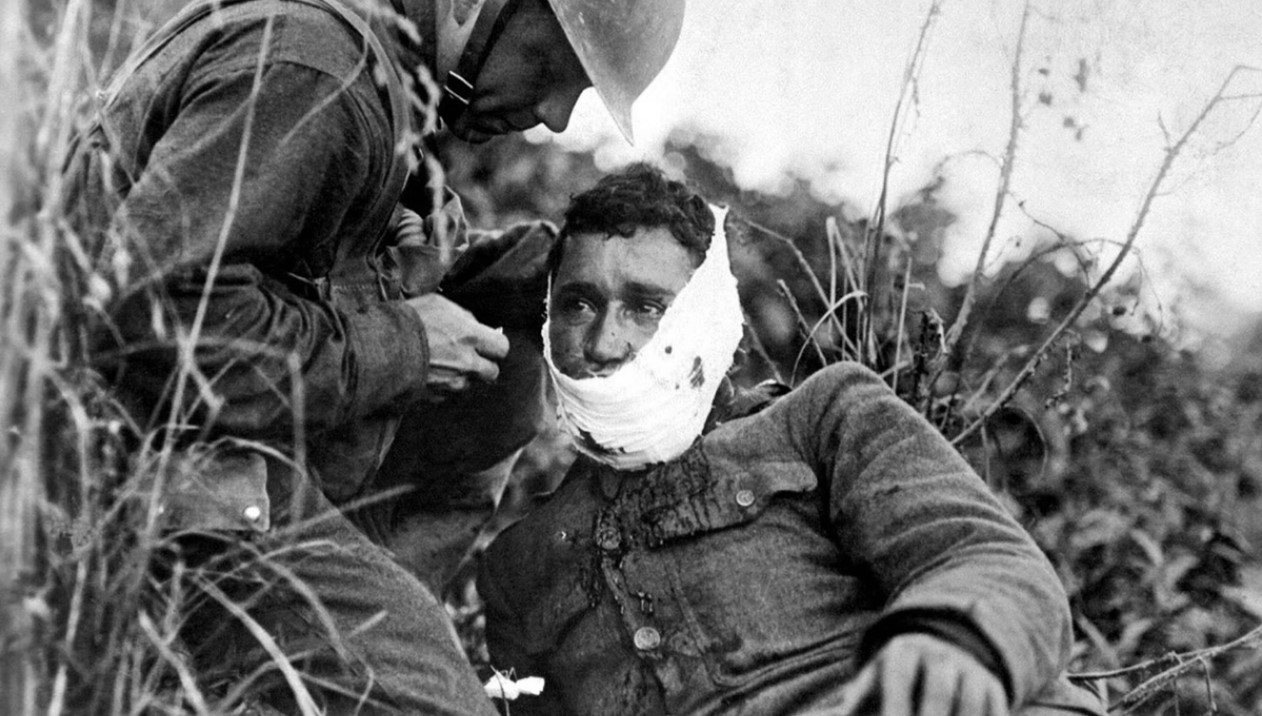
Karl Radek reviews four key international transformations wrought by the First World War a decade after its commencement in this fantastic essay.
‘The Face of the Earth After the War’ by Karl Radek from The Liberator. Vol. 7 No. 9. September, 1924.
THE imperialist war of 1914-1918 was merely a continuation of the imperialist policy of the preceding twenty years. But it brought with it an enormous acceleration of the tendencies of development which were already previously noticeable, it enormously sharpened the antagonisms prevailing in capitalism and in this way created a new relationship of forces. Six years of imperialist peace have but served to deepen still further the furrows which the war had traced upon the face of the Earth. The four changes which the war brought about require to be exactly estimated by every revolutionary, for they form the foundation of the further development of the world revolution which was begun by the world war.
I. Regroupings Among the Capitalist States.
The discovery of America transferred the centre of human development from the Mediterranean Sea to the Atlantic Ocean. Already in 1851 Marx wrote in the “Neue Rheinischen Zeitung” that the discovery of gold mines in California transfers the centre of world-development to the shores of the Pacific Ocean. But notwithstanding the complete revolution which came about when Japan entered the ranks of the capitalist powers, when the English guns shattered the Chinese wall of isolation and when agrarian America became a country of belching factory chimneys and sky-scrapers, Europe remained the centre of economic development from whence issued the great driving forces of the whole world. English and German capitalism constituted the heart which drove the blood through the blood-vessels of the capitalist world. The war put an end to this. The economic weakness of Europe, the enormous acceleration in the industrial development of the United States, and their fabulous enrichment at the expense of the whole world, have now brought an end to the predominance of Europe. And only the socialist revolution, by uniting Europe, by welding together its huge productive forces and its experience, crystallized in the technical skill of the working masses, into one organism, can preserve it from decomposition or from being degraded to the role of an American colony.
In view of this fact all other regroupings in the capitalist world sink into insignificance. Whether capitalist Europe will be led by France, supporting herself on the iron and coal of the Briey and Ruhr basins, or whether England will succeed in establishing in Europe a new period of the so-called Balance of Power, that is, a period in which one capitalist is waiting for the opportunity to spring upon another–all this will only determine the forms of the decay of capitalist Europe, the forms of the struggle between the capitalist powers of the Old World. In either case the United States will carry out its American world policy, the policy of playing off one European capitalist state against the other. This is being perceived by the more far seeing representatives of the ruling classes in Europe. And hence they are endeavoring to unite capitalist Europe in this or the other form. But to realize this union is impossible upon the basis of capitalism, for capitalism implies competition, and even if it came to a league of nations comprising all the capitalist states, including even America, it would only form a battlefield for the national capitalist groups fighting among themselves. Every one of them would endeavor to obtain for itself the support of the United States in its fight against the others.
But the United States of America constitutes a power which is not only geographically bounded by two oceans–the Atlantic and the Pacific–but for economic reasons is compelled to obtain a firm foothold on the Asiatic and European continents. It is driven to this by the industrial development of western America, as well as by the awakening of China. When General Gordon entered Peking in 1859, when in 1900 an expedition of the representatives of the entire capitalist world suppressed the Boxer rising, capitalism seized only the coast districts of China. In the last twenty years capitalist development has penetrated into the depths of China; 400 millions of people are in the process of awakening. The next thirty years will decide the question of whether they themselves will govern their land, which possesses the greatest riches in coal, iron and mineral oil, and produces such a quantity of rice as would feed the whole of Asia, or whether this process, which is taking place at a dizzy speed, shall proceed under the leadership of American capital. The United States of America is preparing to play the role, not only of dictator of Europe but also of dictator of Eastern Asia. The prediction made by Marx in 1851 regarding transference of the center of development from the Atlantic Ocean to the Pacific Ocean is only now being realized.
II. The Rise of the Capitalist Order in the East.
The development of capitalism in the East is not limited to the Yang-tsi-Kiang valley. That which the epoch of imperialism initiated, war has accelerated: the awakening to new life of the whole of the East. This process has continued since the end of the war. It does not suffice to measure it by the number of spindles and mechanical weaving looms imported from England, America and Japan into China and India. The number of new textile factories opened in India since the war is not so very great.
What is more important is that the peoples of the East, awakened by the imperialist development and by the war, have obtained a glimpse of the capitalist world as it really is. At one time the Chinese considered China to be the centre of the world, and thought that if all European nations were not vassals of the Chinese Emperor, it was only because the Chinese Emperor did not trouble about them. When the English General Gordon, after having bombarded Peking, compelled the Chinese Emperor to grant him an audience, and he was the first European Ambassador who was permitted to gaze upon the countenance of the sole ruler of the Celestial Empire he and his suite, when setting out for the summer residence of the emperor, were preceded by Chinese heralds carrying flags on which was inscribed, in the Chinese language: The representative of the English Queen is bringing tribute and a petition to the Emperor of China.
But a century of imperialism taught humility to the peoples of the East and imparted to them a superstitious dread of European capitalism. The ocean monsters with their dazzling guns have demonstrated in Shanghai, Canton, Constantinople, Calcutta and Alexandria the strength of the capitalist world to the nations of the East. Hundreds of thousands of sons of the East, driven out of their villages by capitalism and seeking jobs on the tea plantations of Ceylon, the rubber plantations of the Dutch Indies, in the factories of the United States and in all European ports, came to know the power of modern capitalism. And the peoples of the East accepted their fate.
But there came the war, and the war revealed to them all the capitalist antagonisms and the mutual annihilation of the whole world. There came the peace of Versailles. It levelled two mighty empires to the dust, it expelled from the ranks of the powers enjoying special privileges in the backward countries, proud Germany, whose Emperor had sent his General Waldersee to participate in the expedition against the Boxers and commanded him so to deal with the Chinese that right up to the fifth generation no Chinaman would dare to cast an impudent glance upon a German. The people of the East saw the overthrow of the terrible White Tsar, before whom the whole East had trembled. They witnessed from afar the fiery pillar of the Russian revolution which went before the peoples, they saw how all the capitalist powers were endeavoring to stifle it and how the Russian working people arose and drove them back. They saw the barricades in the heart of Europe. And humility and submissiveness vanished, and among the broadest masses of the peoples of the East there arose and commenced to grow the thought that they also could defend themselves and be the equal of others. This thought is spreading over rivers and mountains and is penetrating into villages which have never seen a motor car or a locomotive, or even a plough. The Mohammedan and Buddhist East is awakening. The religious ideas are giving place to the modern national idea. A profound struggle has commenced within the womb of the old East. The woman of the Orient is arising. Such an event as the participation of women in the economic congress at Smyrna is an historical fact not less great than the overthrow of the Caliphate.
The old capitalist world, torn by internal contradictions, rent by the revolution, is coming face to face with the young capitalist world of the East, which, it is true, is still weak and only just beginning to feel its feet, but which has behind it the reserves of hundreds of millions of peasants escaping from the narrow outlook of the villages and entering upon the broad road of national and international life. This is the second great transformation called forth by the world war.
III. The Breach in the International System of the Capitalist States.
The third and most important result of the world war is the end of the monopoly of the international system of the capitalist states. The fact that the leadership of the capitalist development has passed from one capitalist world to the other, that the center of capitalism has been transferred, is not an entirely new phenomenon in the history of capitalism. At one time little Holland was such a centre, and when in the sixteenth century the Russian Tsars were concluding treaties with other countries, one of their constant cares was how to secure unhindered communication with Amsterdam. Holland was supplanted alternately by France and England, between which two countries there was being carried on for centuries the struggle for world supremacy. The overthrow of capitalist Germany, which is regarded by the Germans as the most important and deplorable result of the war, is of course a great historical event. But Germany had actually existed as a united capitalist power for only forty years. The most profound result of the war is the fact that–while before the war there existed only capitalist powers and feudal countries, the feudal countries being the objects of the policy of the capitalist powers–volcanic social upheavals have created the granite island of Soviet Russia out of the bloody sea of the imperialist war.
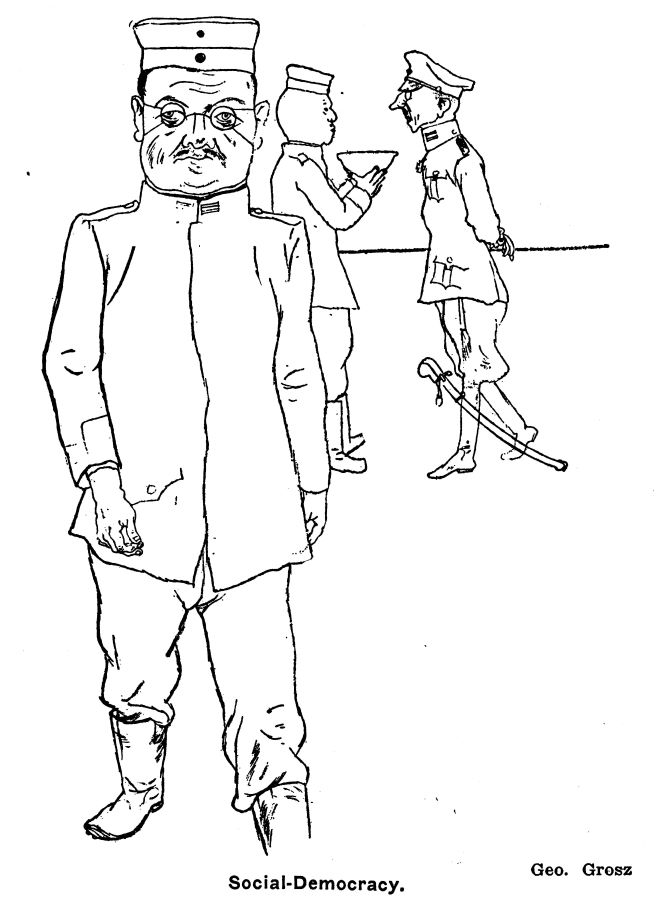
What does Soviet Russia signify? The English ambassador, Lindley, after having arrived in Russia in 1918 in order to study red Muscovy, telegraphed to his government: Alas! These are not simply robbers, they are robbers with ideas! What “idea” was implied by the October Revolution? The Union of Soviet Republics is the first state to be ruled by the working class. What is the meaning of this? This means the beginning of a new historical epoch. In his “Workers’ Programme,” Lasalle distinguishes three epochs. The first epoch is that in which all power, the whole structure of the state is based upon ownership of the land; this is the epoch of feudalism. In the second epoch it is capital which forms the basis of power; this is the epoch of the rule of the bourgeoisie. The third epoch will be the epoch of the rule of the working class basing itself on democracy, said Lasalle. In this scheme there awakened in Lasalle the Hegelian idealist. The period of the rule of the working class has no new form of property and has no material basis under its feet. This idealism of Lasalle, which shattered his line of historical conception, subsequently became the basis for the opportunist policy of the Social Democracy, which even before the war went so far as to say that the working class will conquer power within the frame of democracy by gradually changing the order of society with the means afforded to it by democracy. This reformist formulation, although combat-ed by the representatives of the left wing of the Second International, did, in fact, correspond to its views. This formulation could be tolerated by the bourgeoisie also, for the prospects of a socialism to be realized in a hundred or two hundred years of time, of a socialism without revolution, did not contain anything very terrible.
The rise of Soviet Russia, the nationalization of industry, all this demonstrated to the world bourgeoisie in the most striking manner, that here it was not a question of changes to be accomplished in the course of centuries, but that the hour had struck which ushered in a new epoch. However much the bourgeoisie comforted itself with the thought that Soviet Russia would in time become just as reasonable as, in the past, all revolutionary governments had become when confronted with the whole burden of responsibility and when facts began to weigh upon them; however much they consoled themselves with the thought that after Robespierre there came the Thermidor, the Consulate and the Napoleonic Empire–all this nonsense could not reassure the most far-seeing bourgeois politicians. For neither the Directory of Barres nor Bonaparte turned back the wheels of history, nor destroyed the cause of revolution nor breathed new life into the feudal social order which had been liquidated by the revolution. The Union of Soviet Republics is and will be. It has not been destroyed by intervention, it will not be destroyed by the Nep. All questions of Soviet Russia are directed towards finding the means and forces in order to take advantage of the economic revival experienced by the first Workers’ State, not only for the maintenance of power, for the maintenance of the key positions of the Russian economy right up to the moment of the victory of the proletariat in one of the leading industrial countries, but also already, at the present time, to proceed slowly but surely along the road of socialist construction.
Soviet Russia is and will be, not only because the skill of the working class in economic construction is growing, but also because international capitalism is unable to get rid of the contradictions which are rending it. Even if it should succeed in raising European economy to the pre-war level, this would imply only the simultaneous increase of the imperialist antagonisms; it would imply only their conflict upon a higher stage of development. The capitalist antagonisms which procured the breathing space of Brest Litovsk for the young and still feeble Soviet Russia, which helped it to overcome the interventions, which procured its recognition by a number of leading capitalist powers-these antagonisms guarantee the further strengthening of Soviet Russia.
The recognition of Soviet Russia by Great Britain, the leading power of European counter-revolution, in itself constitutes a tremendously important historical event. By ha ing recognized Soviet Russia, the capitalist world has itself by its own signature confirmed the fact that the period of the monopoly of the system of capitalist states has ended. On the one hand there stands the capitalist world, on the other hand a state which denies all the fundamental principles of the former. The importance of this fact will become clear to its fullest extent only at the moment of a new acute revolutionary or imperialist crisis in Europe. Already the international bourgeoisie is no longer safe from an attack from the rear. Behind it there stand the awakening peoples of the East, there stands a large state which embraces a sixth part of the globe and which is ruled by a proletariat nurtured amidst storms and tempests and filled with a revolutionary enthusiasm unexampled in history. The word, the grain and the sword of Soviet Russia will under these circumstances be of decisive importance, even if we should not succeed in the next few years in making great strides towards the socialist organization of production.
IV. The Revolutionary Movement of the Proletariat of the Capitalist World.
The fourth feature of the post-war epoch is the fact that capitalism has killed reformism. The reformist parties still exist; they are still very strong. They constitute the chief reserve of the capitalist social order, they saved it during the war period and they saved it in the revolutionary crisis following the war. But reformism has succumbed because the possibility of improving the situation of the broad working masses in capitalist Europe has been annihilated. The enormous burdens which the war has left behind it have con- fronted the capitalist class with the problem of either abandoning the attempts to restore capitalist economy or of carrying out these, attempts at the expense of the working masses. Whether we have to deal with a fascist regime, or with a regime of petty bourgeois democracy, all the burdens of the restoration of capitalism are being placed upon the shoulders of the working class. The enormous concentration of industry during the war has afforded the bourgeoisie the means for the struggle against the working class along the whole front. The working class which had been driven back, is in all countries being drawn into the revolutionary struggle. It is overcoming its reformist illusions and in view of the impossibility of improving the position of the working class by parliamentary methods, by means of reforms, every victory of the reformists appears as a further step towards the annihilation of reformist illusions.
If in 1918 and 1919 the working class in a whole series of countries, where it was already within an ace of victory, was unable to attain victory, this was due only to the fact that the reformist epoch had not bequeathed to it revolutionary parties capable of leading it. This lack had to be paid for by the working class by an unexampled number of victims. But for the enslaved class there is no way of acquiring a knowledge of the conditions requisite for victory except the way of sacrifice. It learns from its defeats, it learns to know its opponents’ strong and weak points, it overcomes its own cowardice, it sharpens its wits, it learns how to manoeuver upon the battlefield and how to beat the enemy. Before the war the really revolutionary elements of the international working class comprised quite insignificant groups. Today I would say the Comintern already constitutes a world force, although it is still an organization of the minority of the working class, although it must for a long time fight for the confidence of the majority of the workers, although it must still learn for a long time how to lead the struggles of the working class. The workers’ movement is becoming radicalized and is no longer a movement of the working class alone, striving merely for its immediate aims. The change in the social relationships which is radicalizing the working class, is not only awakening the peasants and petty bourgeoisie of the East; but by proletarizing the middle strata in Europe it is eliminated–the isolation of the working class, is creating the pre-conditions for the rise of oppositional and even revolutionary movements of the petty bourgeoisie and confronts the working class with the task of becoming the leader and the guide of the whole of suffering humanity.
The bones of millions of workers are mouldering on the battlefields of the imperialist war. Millions of workers, in the post-war period, are slowly perishing from need. Thousands of workers have fallen in civil war. None of them will return to life again. But from their bones there arise the avengers, there is arising the new generation which will make an end of capitalism. There is no longer any going back to the old. The world war has brought the beginning of the epoch of socialist revolution. This epoch will perhaps witness new imperialist wars, but at the same time it will witness revolutionary fights, revolutionary struggles which will put an end to the epoch of imperialism and lay the foundation of a new epoch, the epoch of the proletariat which will construct the socialist order.
The Liberator was published monthly from 1918, first established by Max Eastman and his sister Crystal Eastman continuing The Masses, was shut down by the US Government during World War One. Like The Masses, The Liberator contained some of the best radical journalism of its, or any, day. It combined political coverage with the arts, culture, and a commitment to revolutionary politics. Increasingly, The Liberator oriented to the Communist movement and by late 1922 was a de facto publication of the Party. In 1924, The Liberator merged with Labor Herald and Soviet Russia Pictorial into Workers Monthly. An essential magazine of the US left.
PDF of full issue: https://www.marxists.org/history/usa/culture/pubs/liberator/1924/09/v7n09-w77-sep-1924-liberator-hr.pdf
 Revolution's Newsstand