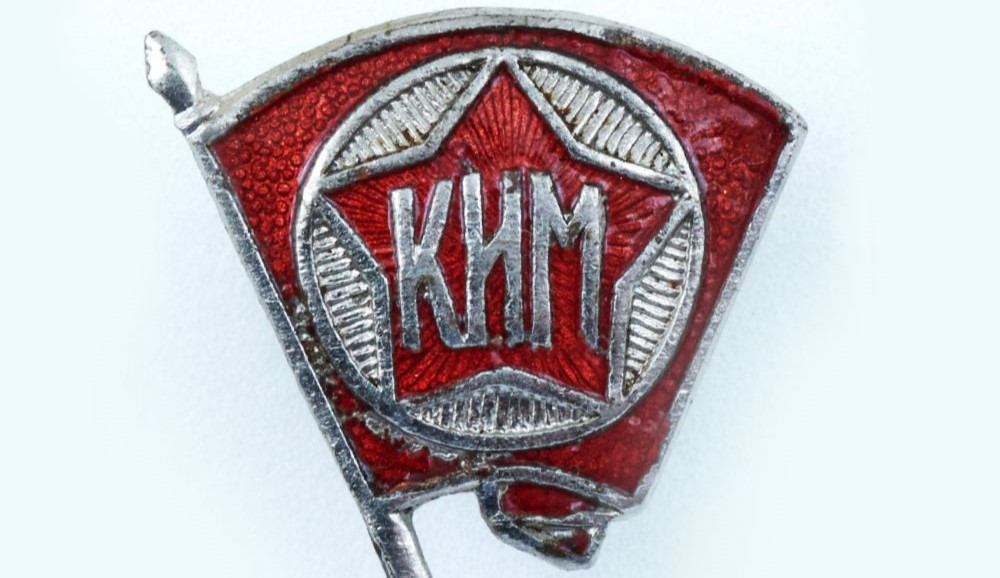
Himself involved in the young Communist movement during the Revolution, Nikolai Fokin became a leading operative of the Comintern’s Eastern Commission, for which he delivered this survey of the movement in China, Japan, Korea, Mongolia, Indonesia, Palestine, Persia, and Turkey.
‘The Young Communist International in the East’ by N. Fokin from International Press Correspondence. Vol. 7 No. 47. August 17, 1927.
“It is absolutely clear that in the coming decisive conflicts of the World Revolution the movement of the majority of the population of the world, which will first be directed along the lines of national liberation, will be turned against capitalism and imperialism and will perhaps play a much greater revolutionary role than we may expect.” (Lenin, Collected Works, Vol. XIX., p. 24, Russian Edition.)
The II. International and its imitator, the Young Socialist International, both of which are thoroughly imbued with bourgeois ideology, never appreciated and do not appreciate now the full importance of the colonial problem and the significance of the national revolutionary movement of the Eastern countries in the course of the world proletarian struggles.
The treacherous role of the II. International and the Young Socialist International are, becoming clear now, when the expansion of the full-blooded United States of America and the restoration of the productive forces of the West European Imperialist countries have again raised in full scope the problem of markets and raw materials, i.e. the colonial problem. The leaders of the Socialist International (Vandervelde, MacDonald, Bauer, Renaudel) are the trumpets and defenders of the imperialist aspirations of the bourgeoisie. Now, when attempts are being made to solve the colonial problem by the “usual” imperialist methods accompanied by intensive armaments, clashing of sabres, open intervention (China, U.S.S.R., Latin America, etc.), which constitutes an inevitable menace of new world wars, to refrain from an energetic revolutionary struggle against the imperialist policies of one’s own government means to be an open advocate of the bourgeoisie. Not to act openly by mobilising the proletarian masses in support of the revolutionary movement in the East, which paralyses the temporary stabilisation and menaces the very foundations of the capitalist order, means to abandon the struggle for Socialism. Such is actually the policy of the Socialist Youth International.
Whereas the Young Communist International organises the revolutionary movement of the youth of Europe, America, the colonial and semi-colonial countries, giving them organisational and moral support, the Socialist Youth International, under the cover of pacifist phrases, maintains silence in its daily agitation propaganda regarding the questions of anti-imperialist struggle and support to the nations of Asia and Africa in their struggle against imperialism. By doing so it demonstrates the national limitation of its sections and thus becomes objectively the troubadour of imperialism. It is not surprising therefore that the Socialist Youth International has not a single section in the East. In contradistinction to the Socialist Youth International, the Y.C.I. is not merely a “European International”, but a real international organisation representing the young proletariat of the West as well as the revolutionary proletarians and semi-proletarians of the colonial and semi-colonial countries of Asia, Africa and America.
On the occasion of the twentieth anniversary of the Young Socialist International, and the eighth anniversary of the foundation of the Y.C.I., there is not a single Eastern country without the Y.C.I. fighting detachments and where thousands of young revolutionaries do not rally to its banner.
If no one knows of the existence of the Y.S.I. or knows only from the experience of the imperialist activities of its leaders of the type of Vandervelde, MacDonald, Renaudel, etc., whom the Chinese coolies, the slaves of the Congo the fellaheens of Egypt, the bedouins of Morocco, recall with curses and with gnashing of teeth, the Y.C.I. is hailed and greeted in the struggle for life and death of the young revolutionaries of the East.
The Indian terrorist student groups who shed their blood in the struggles of the country, send their representatives to the Y.C.I. with a request “to teach them how to fight successfully against their oppressors”.
The revolutionary students of China advanced at their congress, the question of the ideological leadership of the Y.C.I. in the student movement, condemning the policy of the II. International in respect of China. In the remote villages, situated thousands of miles away from the industrial and cultural centres of China, the student propagandists write on the walls, the survivals of medieval feudalism, whole chapters of Lenin’s works on Imperialism and conclude with the slogans of the Comintern and the Y.C.I.
The Young Revolutionaries of Egypt make inquiries of the Y.C.I. as to the forms of the revolutionary movement in the East.

The slaves of the rubber plantations of Nigeria sent a letter to the Y.C.I., literally written in blood, about the inhuman conditions of labour and ask the question “What should we do; how can we become free?”
The Japanese student Nanba, a descendant of an aristocratic family, the son of a member of the House of Peers, not a Communist, not a Y.C. Leaguer, standing apart from the labour movement, “thinks of assassination” of the Prince Regent, the reactionary figure of Japanese society, and on being sentenced to death he cries out “Long live Communism, long live the III. International”.
What are the results for the Y.C.I. on the occasion of the 20th anniversary of the Young Socialist International?
In striking the balance, the absence of any kind of Socialist or Communist Youth organisations in the eastern Countries up to 1919-20, the weakness of the labour movement, the absence of traditions of revolutionary struggle, the repressions of the native and imperialist governments, must be borne in mind. Nevertheless, in spite of all obstacles, the Y.C.I. has 60,000 members in its Eastern sections and its organisational and political influence spreads over hundreds of thousands of young organised workers, peasants and students.
China. The Y.C.L. of China was founded in 1920 in the form of a Young Socialist League, and consisted of all Left Socialists and Anarcho-Syndicalist elements and the Left wing of the students’ movement. The different tendencies in the organisation hindered its work, and in 1921 it was reorganised into a Communist League expelling the phrase-mongers and anarcho-syndicalists with their petty-bourgeois revolutionary ideas. By January 1, 1926, there were 4,000 members in the ranks of the Chinese Y.C.L. and on May 1st, 1927 there were already 42,000 members. Owing to the severe persecutions inflicted upon the revolutionary workers’ and peasants’ organisations by the Chinese Cavaignacs, Chiang Kai-shek, Lee Ti-sin, Sei Du-in, Tang Shen-chi and others, the membership of the Y.C.L. has now been reduced to 31,000. The League has lately lost hundreds of comrades in the struggle against the counter-revolutionary militarists. Thus, in the Yuchow district alone, over 200 Y.C. Leaguers and Pioneers were shot; in Changsha, about 1,000 Y.C. Leaguers have been arrested. The same is the case in Shanghai and Kwantung. In dealing with the growth of the Communist movement in China, it must be pointed out that side by side with the Y.C.L. there is also a Young Comrade organisation with 120,000 members, 80% of whom are young workers and peasants, 40-50% of whom are old enough to be members of the Y.C.L. (15-18 years of age). Insofar as the Y. C. L. of China has grown out of the Left student movement, which was one of the most vital elements in the social life of China at the initial stages of the national liberation movement, the Y.C.L. reflected this fact in its social composition. Thus prior to May 30, 1925, 80% of the Y.C.L. membership consisted of students and 20% of young workers. The strike wave and the Shanghai events of 1925, which brought the working class into the arena of the general Chinese struggle, also affected the social composition of the League in the sense that it increased the proletarian membership to 30%. The new surge of the revolutionary movement of China in 1926-27, which was accompanied by the expansion of the labour and peasant movement and the struggle of the proletariat for a leading role in the revolution, resulted in the increase of the proletarian elements in the Y.C.L. to 42% and a decline of the students to 41%. The ideological influence of the Y.C.L. is 10 times greater than its organisational strength. Almost half of the revolutionary wing of the students’ movement, having 450-500 local organisations and embracing several hundreds of thousands of students, is under the ideological and organisational leadership of the Y.C.L., which enables it to extend its influence over the broad masses of the petty-bourgeois urban democracy. The active struggle of the Chinese Y.C.L. for a revolutionary democratic dictatorship of the working class and the urban poor, for the agrarian revolution, for the social and democratic transformation of China, the relentless criticism of the opportunist leaders converts the Y.C.L. into one of the most capable fighting political organisations of China, in spite of the severe suppression of the bourgeoisie and the militarist reactionaries.
Japan. The Y.C.L. of Japan was founded at the beginning of 1923 by a group of Communists and Left wing trade union leaders. The Y.C.L. did not have much experience or preparation in technical underground work. It likewise did not sufficiently realise the aims and tasks of the youth movement and bore a narrow sectarian character, most of its work consisting of propaganda. The reaction which followed the earthquake resulted in the break-up of the Communist Party and the Y.C.L. It snatched the most talented comrades out of their ranks such as Kavai, Katashima, Emanici and others. The Party was dissolved and the Y.C.L. followed suit. In January 1925, the Y.C.L. again organised and became very active among the masses of young workers. It advanced the slogan of creating an independent class proletarian youth league and worked out a concrete programme of action and demands of young workers. In September 1925, the Japanese Y.C.L. for the first time celebrated International Youth Day, which produced a vigorous response from among the workers. The intensive activities of the Y.C. Leagues attracted the attention of the police, who endeavoured to seize the most active organisers. All activities of the Y.C.L. proceed under the severest police supervision and absolutely illegally. Based on the young and disintegrated labour movement, the Y.C.L. of Japan, together with the proletarian youth League, organised in November 1925 by active trade union Left elements, have in their ranks over 4,000 members. They constitute the largest organisation of young proletarians. If we take into consideration that only 175,000 workers out of a total of 5 million are organised and that the organisations are split into 440 bodies, this figure is quite considerable. The struggle of the Japanese Y.C.L. at the present time against feudal survivals, militarism and the putrid Japanese bourgeoisie whilst there is an upward surge in workers and peasants movement, is no longer menaced by complete annihilation and has chances of further successful development.
Korea. The first youth organisation, the Students’ League, was organised in 1896. Afterwards, similar organisations were formed throughout the country. In 1903 all youth organisations formed one Young Men’s Christian Association, which was supported by America and converted into a typical cultural organisation. The most active youth organisations which aimed at political activity could not be reconciled to this work. As a result, the Y.M.C.A. expelled some of the organisations which organised in the Korean Youth League and made it their aim to effect domestic reforms, helping the economic and political development of Korea. This in itself, gave the organisation a political character. In 1907 Japan, after defeating China and Tsarist Russia, captured Korea and proceeded to break-up all Korean organisations which the invaders regarded as a menace to their rule. Among these were also the youth organisations. The revolutionary youth of Korea, after losing their organisations, partly went underground and became terrorists. Some of them joined the Christian camp. The new growth and development of the youth movement, which excels the previous phases, is closely connected with the March rising of 1919. The concessions which the Japanese had to make were mostly utilised by the youth, who began to organise their mass organisations first in the capital and in the cities and then also in the villages. Together there are now about 900 organisations with 110,000 members, ten thousand of these belong to the Korean Youth Federation, whose platform advocates national-revolutionary struggle for Korean independence.

The Y.C.L. of Korea was founded in 1921 when the National Liberation movement was falling to pieces and the partisan struggles against the Japanese invaders had become intensified.
The birth and development of the Y.C.L. proceeded under extremely difficult conditions, under conditions of unheard-of brutality and terror which delivered severe blows to its organisations and snatched tens and hundreds of comrades from its ranks. The general political conditions of the country and the persecutions reacted upon the weaker elements in the organisation. The weaker elements advanced liquidation slogans; they wanted the abandonment of underground work and that the organisation should adapt itself to legal conditions, even at the expense of sacrificing its revolutionary slogans. Some of them who could not get used to the everyday tiresome work of a revolutionary underground worker left the Y.C.L. in despair and took to individualist terrorist activity. The Y.C.L. had to fight most energetically against these elements in the process of which some dropped out and others became hardened. This work was being done while it was rallying the Communist elements and unifying the split up Communist groups. At the same time the Y.C.L. had also to do a considerable amount of work in consolidating the Communist Party on the basis of mass revolutionary action, and not on the basis of fractional struggle.
The Y.C.L. of Korea has now several hundred members, 28% of whom are workers, 30% peasants, and 42% intellectuals. The Y.C.L. carries on various kinds of work in propagating Socialist ideas, issuing and circulating thousands of illegal leaflets and pamphlets, organising itinerant lecture groups, setting up everywhere Socialist study circles and organising mass campaigns. The main task of the Korean Y.C.L. is to win influence over the broad masses of the young workers and peasants. In this respect the Y.C.L., although it has accomplished great work in creating new organisations of young workers, gained influence over the existing organisations and united them on the platform of struggle for the national, social and democratic liberation of Korea, has not as yet exhausted the task confronting it.
Indonesia. The Indonesian youth played an enormous role in the revolutionary liberation struggle of the Indonesian peasant masses against Dutch domination. It participated in all general revolutionary actions of the toiling masses of the country and created in the process of struggle a series of organisations called upon to unite the broad masses of workers, peasants and young students for the revolutionary struggle. The organized youth are about 10,000. There are in Indonesia 3 different youth organisations.
One, the “Barizan Muda”, stands on the Left wing of the revolutionary movement and has over 1,000 members. Apart from the general revolutionary work, that organisation performs an enormous amount of educational work. The schools organised by this organisation give the students not only general knowledge, they teach them in a revolutionary spirit, in the spirit of the class struggle. In 1926, in spite of the fact that the colonial administration closed many schools, their number was 50 and they had 4,500 students. What is the essence of the “Barizan Muda”? The capitalists persecute it. Thus, for instance, its most prominent leaders work in the factories. This organisation does extensive work during workers’ strikes, sup- porting the strikers, organising collections of money, etc. Another form of organsation in Indonesia is that of the students in high schools. The biggest of these organisations is the “Young Java” with a membership of over 3,000, it publishes a monthly journal. At the beginning this organisation had a political character, but owing to the intensive repressive measures of the colonists some of its members have abandoned the political struggle and give up their time exclusively to sport. There is now a process of political revival in progress in that organisation and it is coming over to the revolutionary movement. There is a series of various other organisations existing legally or semi-legally, which have been partly affected by the recent break-up after the defeat of the uprising. They are the constituent elements of the foundation of the Y.C.L. in Indonesia.

Mongolia. In this enormous pastoral country with a territory greater than any European State, the Y.C.I. has the only non-Communist but nationalist revolutionary youth organisation in its ranks. The League was organised in 1920 to fight against the Chinese militarist occupation forces, the Russian White Guards, for free existence and against feudal dependency. The League has over 4,000 members. It works legally under growing nationalist government; is bringing over the broad toiling masses to the banner of the nationalist revolutionary movement and takes the most active part in the government and in the social and democratic transformation of the country. 90% of its members are Nomads. The struggle of the League against the feudal theocratic elements and survivals, the propaganda for the spreading of knowledge and mastery of European culture and technique makes it one of the progressive factors in social and economic development of Mongolia.
Persia. The Young Communist League of Persia which existed at the time of the Gilan Revolution was dissolved after the defeat. At the present time there are several Y.C.L. organisations scattered throughout the various districts of Persia. The intensification and consolidation of the nationalist revolutionary forces provide a strong incentive for the young Communist organisations to unite into one organisation and to strengthen the national revolutionary movement of the broad masses of the artisan and peasant youth.
Turkey. The Young Communist League of Turkey was organised in 1921 during the period of the nationalist revolutionary struggle. It had in its ranks the most progressive and radical students. The transformation of the Y.C.L. into an organisation of young workers and peasants, connected with the rallying of young workers, the industrial campaign and the struggle against the Kemalists for influence in the trade unions and for labour legislation resulted in the use of repressive measures by the government, which was a severe blow to the Y.C.L., but did not destroy it. At the present time the organisation has over 200 members.
Egypt; Palestine-Syria. The growing opposition and nationalist movement in those countries is accompanied by the spontaneous formation of Y.C.L. organisations and national revolutionary groups sympathetic to the Y.C.I.
The Y.C.I. recently received information about the organisation of the Y. C. L. organisation in Africa, where hundreds of Negroes are drawn into the movement.
These sketches are enough to convince one that the Y.C.I. is a real organisation of international solidarity arousing and organising for the struggle millions of exploited and oppressed youth for the victory of Communism.
International Press Correspondence, widely known as”Inprecorr” was published by the Executive Committee of the Communist International (ECCI) regularly in German and English, occasionally in many other languages, beginning in 1921 and lasting in English until 1938. Inprecorr’s role was to supply translated articles to the English-speaking press of the International from the Comintern’s different sections, as well as news and statements from the ECCI. Many ‘Daily Worker’ and ‘Communist’ articles originated in Inprecorr, and it also published articles by American comrades for use in other countries. It was published at least weekly, and often thrice weekly. Inprecorr is an invaluable English-language source on the history of the Communist International and its sections.
PDF of issue: https://www.marxists.org/history/international/comintern/inprecor/1927/v07n47-aug-17-1927-inprecor-op.pdf
 Revolution's Newsstand