
Women meet at the Brookwood Labor College over the summer of 1928 to map strategy in the auxiliaries.
‘Women’s Auxiliaries Take On New Tasks’ by Cara Cook from Labor Age. Vol. 17 No. 9. September, 1928.
Women to Prove Their Mettle
Believing that the staff and equipment of the School should not lie idle during the summer months, Brookwood Labor College has conducted summer institutes of one week or more for the past four years. Groups of between 25 and 50 trade unionists have gathered for these sessions to discuss the problems of their particular industries and of the Labor movement in general, while working in a regular vacation on the side. Last year the women captured the idea with a week’s institute for auxiliary members, the first of its kind. They repeated it this year on a larger scale, as described in the accompanying article.
“AUXILIARY” groups of “wives, mothers, sweethearts and daughters” of trade unionists have for some time been gaining increased recognition by the labor movement as necessary organizations for backing up the purposes and achievements of labor. Arising often out of an immediate need, such as strike relief work or a union campaign, the women’s organizations in the past have functioned briefly and then, acutely conscious of their “auxiliary” nature, settled back on their laurels or lapsed into semi-social, dues-paying, convention-marching, ritual-bound organizations.
Around some of the older auxiliaries there still clings an aura of formalism. Their Women’s Pages in the official journals exist rather through the tolerant courtesy of the editor than because of the dynamic messages they carry. Considerable formality still exists in the conventions of auxiliaries which meet simultaneously with the men’s conventions, and which suffer endless speeches on the Function of Union Auxiliaries and the Duties of Trade Union Wives, without any very strenuous post-convention attempts being made to put these admirable ideals into practice.
Of late, however, a new note has been creeping into auxiliary activities. For one thing, the women with spunk and a little imagination have come to the conclusion that they don’t care to be “auxiliary” to anything, that there is plenty of work for them to tackle in the labor movement on their own account, and that no amount of condemnation or pleading by them is going to ingratiate them with the men’s organizations until they get out and “do their stuff”.
An Educational Approach
The most significant aspect of this “new freedom” is the adoption of the educational method of approach. “The Women’s Auxiliary and Workers’ Education”, “Women’s Auxiliaries as a Field for Mass Education”, and “Workers’ Wives and Education” are some of the significant titles of recent articles on this subject. Labor’s better half is going in strong for education!
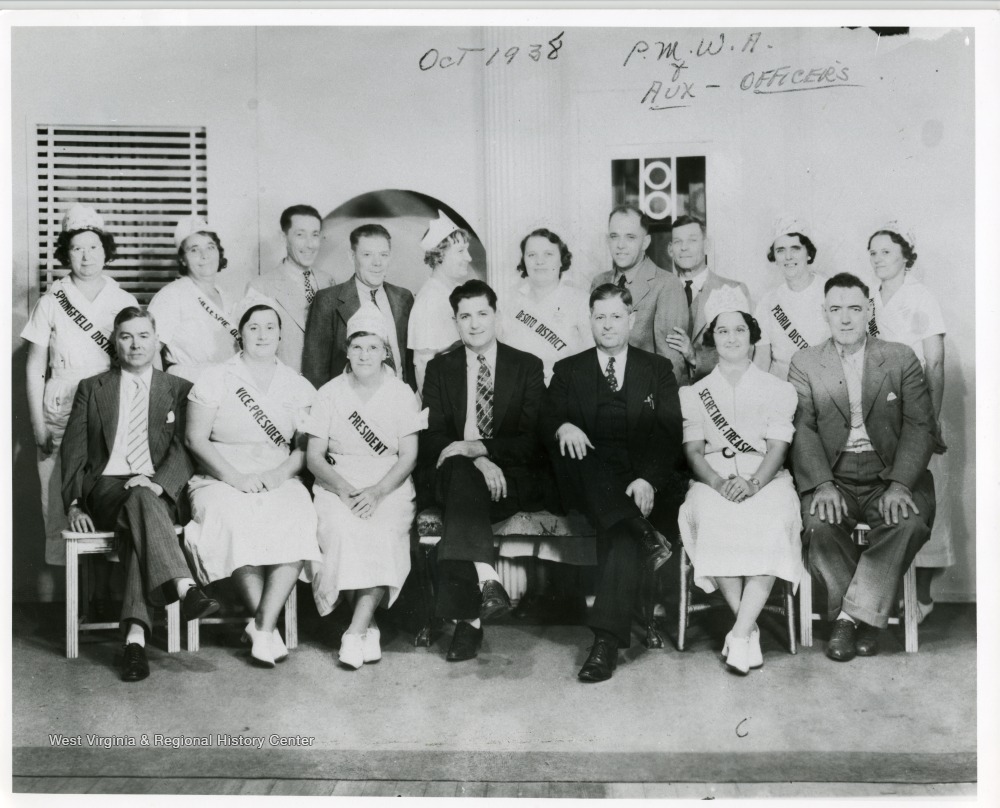
This is, of course, a natural sequence of the general workers’ education movement, itself still young and growing. Labor has turned to self-education as one of the most hopeful means for a better social deal, and now Labor’s women-folk are organizing their educational activities to the same end.
The outstanding experiment of this educational tendency of this awakening auxiliary movement (apologies to the House that Jack Built!) seems to me to be the recent institutes held under the auspices of the Machinists’ Auxiliary educational department, of which Mrs. Grace B. Klueg is chairman. In the same class should be mentioned such conferences as the one held at Unity House in July, under the auspices of the Philadelphia Women’s Trade Union League and the auxiliaries of Wyoming Valley, Pa.
The first of these institutes was held at Brookwood Labor College last summer and was described in LABOR AGE for September, 1927. The second one was also held at Brookwood, from July 22-29, and marked considerable progress over the first. The 30 women represented three times as many organizations this year, including the coal miners, machinists, lithographers, typographers, plumbers, painters, engineers, post office clerks, and teachers. Moreover, all but four of the delegates came on their own hook this year, whereas most of the members of the first institute came on scholarships. Evidently they wanted to come enough to pay the $20 that a week of study and play at a Brookwood summer institute costs.
Discussions in the Wee Small Hours
The system which has seemed to work out best for these institutes is to hold a lecture and discussion in the morning, one in the evening, and to leave the afternoons free for recreation, auto trips, swimming, and rest–although the last somehow gets scant attention. This does not allow either for the midnight and early morning sessions carried on in the dormitory bathrooms, corridors, rooms and elsewhere!
Such discussions are usually initiated in some such fashion as the following:
Voice From Tub: “Have you seen that new movie, “The Street Angel?’ I thought it was fine.”

Voice Through Tooth Paste: “Yes, I saw it; that was the week the Pathe News showed the Carranza funeral pictures. Wasn’t that sad! You know I never thought about the Pathe News showing so many militaristic pictures until that speaker on peace mentioned it this morning, but come to think of it, there are a lot. I think I’ll stop and tell the manager next time that I don’t like that kind of news pictures, as she suggested.”
V.F.T.: “Yes, that helps some, I suppose, but don’t you think it is more important to strengthen our unions first, so that our opinions about war will have some in- fluence?”
V.T.T.P.: “Well, that sounds fine, but how fast are you going to get anywhere that way? It’s better to concentrate on little things, and…
Figure in Kimono, entering: “What’s this, are you talking about women’s auxiliaries and peace, well my idea is…” and they’re off for another hour.
The scheduled sessions of the institute included talks on Women in Industry by Fannia Cohn of the Ladies Garment Workers’ Union; Workers’ Education by Spencer Miller, Jr., of the Workers’ Education Bureau; History and Present Issues of the American Labor Movement, by A.J. Muste, chairman of the Brookwood faculty and leader of the institute; Vocational Education, by Rebecca Shapiro of the Teachers’ Union; Women and World Peace by Josephine Schain of the League of Women Voters, and Manumit School for Workers’ Children, by Nellie Seeds, Director, with a trip to Manumit for illustration.
Trade Union Children
The subject of child training came up several times. These women are mothers as well as trade unionists’ wives in fact three of them brought their children along, and one family had three generations represented. The formation of mothers’ study groups was advocated by Dr. Benjamin Gruenberg of the Child Study Association. Mothers can pool their experiences in this way, and “find out that their child is not an unusual animal, but quite normal in his reactions. In the process of complaining in order to get help, moreover, mothers often find out that half the trouble is with themselves,’ he said.

Women’s auxiliaries as agents for correcting the evils of the present school system were emphasized by Abraham Lefkowitz, Vice-President of the American Federation of Teachers. No democratic process of learning can occur, he said, when schools are regimented and over-crowded as our large schools are today. Neither can a vital contact between teacher and pupil be set up when teachers live in constant fear of losing their jobs if they allow freedom of discussion in their classes. School boards must be remade by the election of members sympathetic to Labor; job in which auxiliary groups can take an important part. The chance for women to be active politically was also emphasized by Mabel Leslie of the Women’s Trade Union League, in a talk on Labor Legislation. Social legislation benefitting workers is the result of slow, hard work, gaining a guard here on the painter’s scaffolding, a ventilating fan there to sweep out poisonous gas fumes, and compensation provisions to cover unemployment, accidents and occupational diseases, “of which there are 200 known kinds and an indefinite number of unknown.”
In lobbying women are better than men, Miss Leslie said, and in arousing public interest in their own communities and getting letters written to legislative representatives, women, who can get around more and talk more than men, are a big factor.
The educational work of women’s auxiliaries was set forth in a paper by Theresa Wolfson of Hunter College, who explained the increasing interest in educational activity of which we have spoken by the fact that “it tells the WHY to workers’ wives of the very things they have experienced, and places upon them the responsibility for intelligent action and some control over their own problems.
“The kinds of information in which they are interested and which may form the basis of group study include, 1. Facts about the industry in which their husbands work, its control, its labor policy, its working conditions. 2. Trade unionism, what it is, its functions, its history and the contributions of women’s auxiliaries to it. 3. Home management and the problems of consumption spending the family income; cooperative buying and union label products. 4. The child, his home training, his school education, and his up-bringing as a good trade unionist’s youngster. 5. Women in industry, their wages, working conditions, and relation to the labor movement and society. 6. The legal status of women in their own states and in the United States.”
Control of Power Resources
The menace to the consumer of increasing monopoly of power control was pointed out by Harry Laidler of the League for Industrial Democracy. In the coming electrical age, with machinery steadily augmenting the army of unemployed, who is to own the sources of electrical power and reap the benefits therefrom? What have experiments proved as to the feasibility of public ownership? Why are the private power associations spending millions of dollars to smuggle anti-public ownership propaganda into school text books, and to buy over professors and lecturers? And, in answer to the question, what can the women’s auxiliaries do about it? Know your own electricity rates, and why you pay what you pay; become informed on local utilities and power companies, their stock ownership, their labor policy, their political relations; check up on the text books in local schools; dig up facts about public owner- ship in Canada and elsewhere.

A “testimonial” meeting at which the delegates passed around advice and experiences was held on one evening, and again the idea cropped out that what is done, we must do ourselves. The results of intensive union label campaigns were reported. Strike relief work among the coal miners, helped on with a concert and a little publicity, was described. The advantages of being independent politically were advanced by a delegate, formerly living in Wales, England. And Mrs. Klueg spoke of the formation of the Machinists’ Auxiliary educational department, and the slow progress and hard work it involved.
“But out of such work in the auxiliary movement,” she declared, “comes a new vision of the labor movement as a whole, not confined to a single craft or city, but uniting all workers throughout the world. And there comes also a great enrichment and broadening of one’s own personal life, through new knowledge and increased contacts, and a happiness in being able to do a little something towards making the world better for those who are coming after us.”
Labor Age was a left-labor monthly magazine with origins in Socialist Review, journal of the Intercollegiate Socialist Society. Published by the Labor Publication Society from 1921-1933 aligned with the League for Industrial Democracy of left-wing trade unionists across industries. During 1929-33 the magazine was affiliated with the Conference for Progressive Labor Action (CPLA) led by A. J. Muste. James Maurer, Harry W. Laidler, and Louis Budenz were also writers. The orientation of the magazine was industrial unionism, planning, nationalization, and was illustrated with photos and cartoons. With its stress on worker education, social unionism and rank and file activism, it is one of the essential journals of the radical US labor socialist movement of its time.
PDF of full issue: https://www.marxists.org/history/usa/pubs/laborage/v17n09-sep-1928-LA.pdf
 Revolution's Newsstand