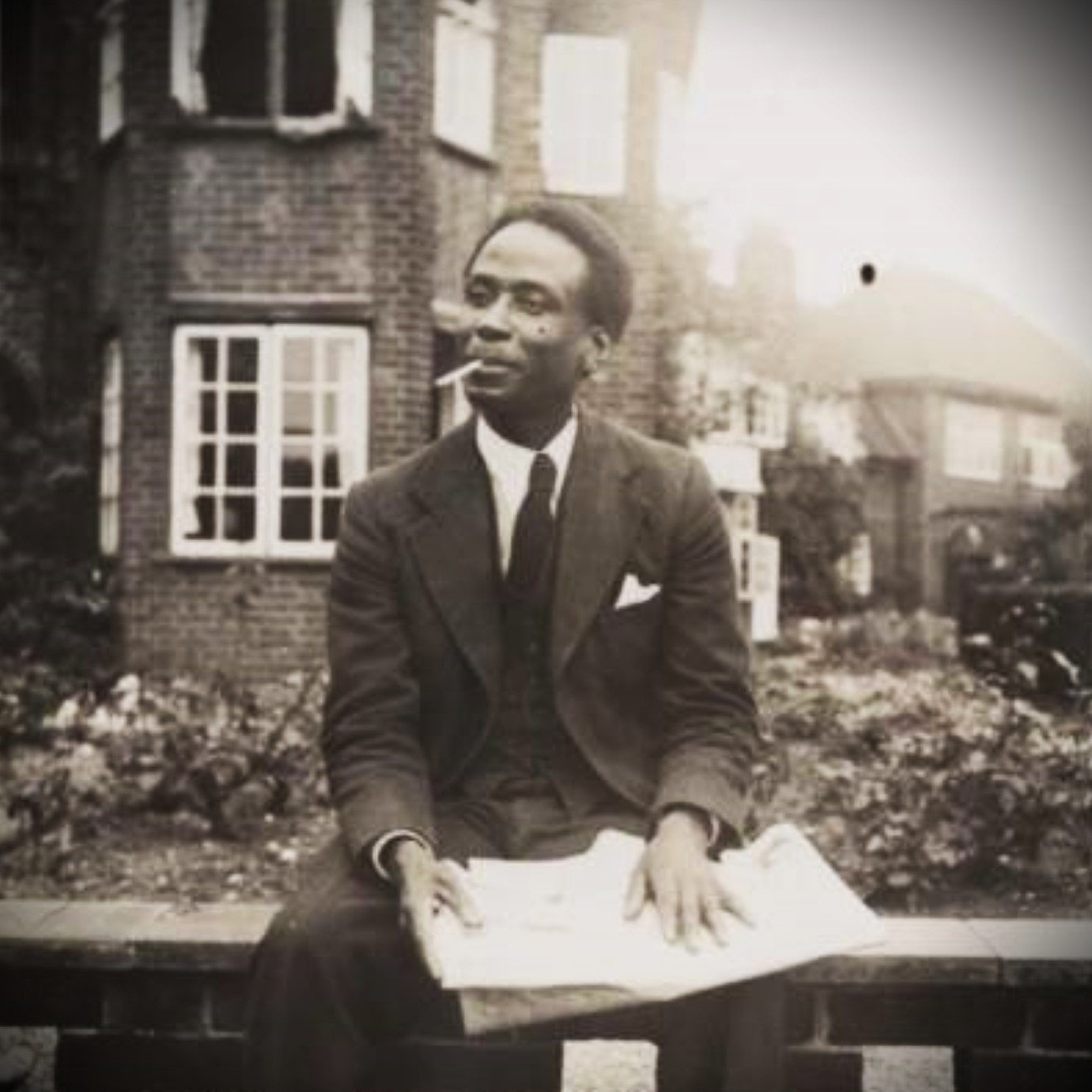
‘Report to the Fifth Congress of the R.I.L.U. on the Negro Movement in Africa’ by George Padmore from The Negro Worker Vol. 3 No. 11. November 1, 1930.
Comrades, the importance of the organisation of the Negro workers as an integral part of the international revolutionary movement has been significantly pointed out by the frequency to which this question has already been alluded to at this Congress. We have heard reports from Negro delegates from various sections of the world. We have had a report from Comrade Ford, the chairman of the Negro Trade Union Committee of the RILU, dealing with the Negro trade union movement from an international aspect. We have also had reports from Negro delegates from the USA, Brazil, and, just this evening, from Negre workers who have come direct from Africa.
Comrades, the characterisation of the present crisis of world capitalism and its effects upon the working class as given to us here by Comrade Losovsky is quite correct. This analysis of world capitalism if of particular importance to the Negro toilers all over the world. As the crisis deepens, comrades, the capitalists and imperialists will not only try to find a way of escape by imposing rationalisation, wage-cuts and unemployment on the workers, in the metropolitan countries, but they will try to shift the crisis from the workers of the home countries of imperialism to the colonial and semi-colonial workers, and especially the Negro workers. They will seek them out as special objects of exploitation, not on account of the color of their skins, but because the Negro workers, despite recent manifestations of revolutionary struggles are still organisationally and politically the most backward section of the international working-class. We must recognise this as a fundamental fact in order that we will be able to work out tactical methods of approach for the various sections of the RILU.
Let us turn to the USA and check up on the activities of the Trade Union Unity League between the 4th and 5th Congress of the Profintern. What are the weaknesses? What are the strong points and achievements of the TUUL in America? We can safely say that we have to some extent combatted the right wing tendencies within the trade union work in America. The TUUL is today marching forward as the leader of big class battles in the USA under the leadership of the Communist Party. The 6th of March amply demonstrates the militant role of the TUUL. The TUUL has turned its face towards the South, which was always the center where the right wing elements have opposed any forms of activity in organising the Negro masses. In this respect we can say that the American section of the RILU has undertaken. some forms of activity among the Negro workers in. America.
But can we say as much in this respect of the Minority Movement in England? Let us face this problem sharply with our British comrades. What has the Minority Movement done with respect to its colonial tasks? You listened to Com. Allison this morning. It is very significant that Com. Allison, speaking upon the tasks and achievements of the Minority Movement, conveniently forgot to mention India which is a burning issue before us today; and comrades, when a reporter from the British Minority Movement forgets to mention India, one can realise what part British Africa plays in the Minority Movement.
Recently we have had manifestations of the revolutionary awakening among the black workers in the British colonies of Africa and the West Indies. What concretely have been these manifestations of struggle among these black workers? As a result of the intensified rationalisation in these colonies the misery of the black workers and peasants have increased themselves. Despite the fact that they are unorganised, despite the fact that they are politically and ideologically backward, they staged demonstrations against British imperialism in Nigeria. A mass uprising took place in that country and McDonald, the social-fascist lackey of British imperialism, ordered troops to fire upon these masses which resulted in the death of 95 women. But did our British comrades of the Minority Movement know about this; did they understand its significance? If so, we are still waiting for action from them.
Even more recently in Gambia, W. Africa, the young trade union movement had to struggle for the right to live. In a mass strike when the armed forces of imperialism were also brought into the streets against these workers, we heard a response among the workers in Britain, but not due to the Minority Movement. It was the Labour Research Dept. of Gr. Britain that protested. Since when does the Labor Research Dept. became the trade union leader of the working class? But it was they who issued a manifesto and not the Minority Movement. These are facts which the Minority Movement must face.
We must combat these tendencies of coming here and accepting resolutions adopted at Congress and not doing any work in the colonies.
Comrades, time is too limited for me to deal with all manifestations of this inertia, in the various sections of the RILU. However, I want to say a few words about the CGTU, the French section of the Profintern. Our French comrade who made a report this morning also forgot to mention anything of what the French comrades are doing with respect to their colonial tasks. We must remember that the whole of Africa is largely divided between Great Brits in and France.
The French comrades also have a great responsibility in conducting activities in the African colonies of French imperialism, but our French comrades, like the British comrades, have failed up to now to understand this.
I want to draw the attention of the French comrades to stimulate work in the French countries, especially anti-militarist work. French imperialists will use black troops against the workers, as they used them in the last war, and our comrades must realise the importance of anti-militarist work among these colonial masses. They must also make contacts in the colonies and strengthen the trade union organisations.
It is regrettable that at this Fifth Congress we have not got a single Negro worker from the French colonies.
All this shows, comrades, the backwardness of our activities in these parts of the world.
In conclusion, comrades, I do not want to leave with you a pessimistic picture of our activities among the Negro workers. Thanks to the Negro Bureau in the Profintern, thanks to Comrade Losovsky’s optimism and great enthusiasm in this work, we have made a forward step in recently holding a Conference of Negro workers in Hamburg. We made many mistakes. in the preparations, but these mistakes can largely be attributed to the lack of contacts of the British Minority Movement, and French section of the Profintern with the colonies. We had to face this conference with very limited forces because our comrades in the English and French movements were unable to give us even the most elementary assistance. But this conference was of tremendous significance. It was the first time in the history of the Negro labour movement that such a conference had been convened. The representation was not as broad as we would have liked it and had anticipated, nevertheless, the political program and resolutions endorsed were 100% on our line, and it shows these Negro workers are no longer afraid of Bolshevism and are prepared to follow the leadership, not of Amsterdam, but of Moscow in fighting against imperialism.
In conclusion, let me say, comrades, to draw your attention to another significant fact to-day at our Conference in Moscow. At this 5th Congress of the Profintern, we are able to present from this rostrum Negro workers direct from the African colonies. These Negro workers are representatives of millions and millions of the most oppressed and exploited human-beings in the world, and the very fact that these delegates are here show that these masses instinctively realise there is one friend, one champion, one organisation on the trade union field that fights for their freedom and emancipation, and that is the Profintern. They, despite the many difficulties put in their way by the different imperialist governments, have come to Moscow to appeal to the British and French comrades and the Profintern to support their struggles and send organisers into their countries and help them ideologically and organisationally so they may be able to prepare for the battles in front of them, for the overthrow of world imperialism, for the emancipation of the workers and the colonial toilers.
First called The International Negro Workers’ Review and published in 1928, it was renamed The Negro Worker in 1931. Sponsored by the International Trade Union Committee of Negro Workers (ITUCNW), a part of the Red International of Labor Unions and of the Communist International, its first editor was American Communist James W. Ford and included writers from Africa, the Caribbean, North America, Europe, and South America. Later, Trinidadian George Padmore was editor until his expulsion from the Party in 1934. The Negro Worker ceased publication in 1938. The journal is an important record of Black and Pan-African thought and debate from the 1930s. American writers Claude McKay, Harry Haywood, Langston Hughes, and others contributed.
PDF of full issue: https://www.marxists.org/history/international/comintern/negro-worker/files/1930-v3-special-number-nov-1st.pdf
 Revolution's Newsstand