
Two western organizers, E.F. Doree and George Speed take a trip to the Texas-Louisiana area to visit the Brotherhood of Timber Workers, soon to join the I.W.W., during their great struggle to unionize Black and white workers deep in the Jim Crow South.
‘Conditions in the Southern Lumber Belt’ by George Speed from Industrial Worker. Vol. 4 No. 22. August 22, 1912.
De Ridder, La., Aug. 6, 1912. “Industrial Worker”:
Fellow Worker Doree and the writer are now enjoying a vacation in the Southland, among the timber wolves, and possibly it will be of some interest to the lumber jacks of the Northwest to get a line on conditions prevailing in this section.
We arrived at Alexandria headquarters of the B.T.W. on July 30 and have since lost all fear of that place called “hell.” We judge this place to be about 137 degrees hotter than hell. While passing through on the train, I noticed a sign on a dump–“Restaurant, Meals Short.” We wondered if this was true. We were not long in finding out the absolute correctness of the statement. A 15c to 20c Frisco meal will cost 35c to 40c here. There is little or no sale of doughnuts and the doughnutarian has no place. We remained in Alexandria three, days before departing for Lake Charles, where 64 members of the B.T.W. are confined in jail, all but two of whom are charged with murder, several with three counts to their credit. This is the result of the mad endeavor of the Lumber Barons to stifle and prevent, by any and all means, the organization of the workers. So raw and unprovoked was the assault upon the part of the lumber interests, in shooting up a peaceable meeting, that the great mass of people realize the danger organized greed has placed them in, denounce it as an unheard of outrage, and what adds to their resentment is the fact that Galloway and his henchmen, held largely responsible for the killing, were turned loose to continue the browbeating of the workers in their attempt to force them into submission. But fail they will and must. The old adage, “Whom the gods would destroy, they first make mad,” is demonstrated. The workers now set keenly, that their only hope lies in solid organization, based upon correct class lines.
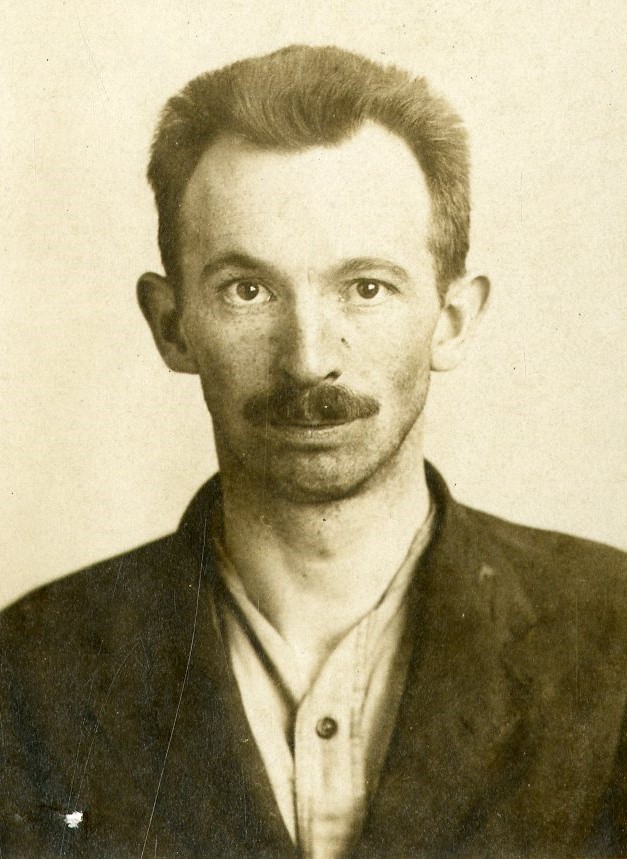
The things that struck both Doree and myself most forcibly were the conditions as compared with those in the West. Here the small farmer is largely dependent upon the workers of the mills and woods. He has virtually no outside market for his produce, and he and his ofttimes work in mill or woods. The truck store system of payment discounts all tend to unite the small farmer and laborer. Another factor is the kinship, by marriage, between the farmer and laborer, and more settled conditions.
There are the so-called “free” towns and mill towns. Mill towns are those where all property is owned or controlled by the milling company. Another form where they virtually control the slave is the turpentine camp. Instances have been recorded where one company has paid employees’ debts in order to get his services. It is in the mill-owned camps where they are so ready with gun play and resort to any means to prevent organization. For instance: They use the high priced man, and company sucker, who are formed into a protective association, for the purpose of preaching “social equality” to the negro, and “white supremacy” to the whites. They also act as gun men. But with all this they must and will fail. Economic necessity demands organization regardless of race or color.
At Lake Charles I visited the boys in jail. Was admitted without question. Found them all together and spent some two and one-half hours with them. They were all in fine spirits and confident. The conditions are the most favorable I ever met with. I presume this is due to the strong sentiment in their favor. They have two electric fans, cots with mattresses, and everything made as comfortable as jail rules will permit. On departing the boys were one in saying: “Organize, organize! In this consists both our and your freedom from greed and oppression.” This is the spirit that is going to win and it is arising all over the land.
Next morning at depot of K.C.S. I offered five dollar gold piece to ticket agent for ticket to De Ridder. He looked at it and, not knowing what it was, refused to take it. He wanted paper. The gold I could not pass, so still have it. While changing cars we met a party of some twenty with well filled baskets, wearing white badges with the letters “B.T.W.”, on their way to Lake Charles, to spend the day with their comrades in jail.

We hold a meeting here on the 6th, then on to Merryville to visit local of eight hundred, then to six or eight other towns in the state. Then over to Texas, where we will endeavor to strengthen and build up new locals. I am given to understand that the sentiment is strong for organization and we ought to get some results. Doree and myself will work in team throughout this section.
The uniting of the B.T.W. and the I.W.W. will require almost a complete change of structure. The B.T.W. being simply a mass organization, all work, practically speaking, is done through general office.
The uniting of the North and South into a National Union of Timber Workers should awaken renewed effort all along the line, and it will now be up to the lumber jacks, North and South, to get busy and show the labor world that they are alive and doing things. The right kind of stuff is in them. Their opportunity is here to do away with long hours, pig pens-called bunk-houses, and a lot of other abuses that ought and must be relegated to the rear.
You are men and must and will have conditions fit for men. It is up to you. No one can do it for you. Why work long hours under beastly conditions, when your fellow workers in other industries are pushing ahead?
GET ACTIVE! ORGANIZE TO WIN!
Yours for Victory,
GEORGE SPEED.
The Industrial Union Bulletin, and the Industrial Worker were newspapers published by the Industrial Workers of the World (IWW) from 1907 until 1913. First printed in Joliet, Illinois, IUB incorporated The Voice of Labor, the newspaper of the American Labor Union which had joined the IWW, and another IWW affiliate, International Metal Worker.The Trautmann-DeLeon faction issued its weekly from March 1907. Soon after, De Leon would be expelled and Trautmann would continue IUB until March 1909. It was edited by A. S. Edwards. 1909, production moved to Spokane, Washington and became The Industrial Worker, “the voice of revolutionary industrial unionism.”
PDF of full issue: https://www.marxists.org/history/usa/pubs/industrialworker/iw/v4n22-w178-aug-22-1912-IW.pdf
 Revolution's Newsstand