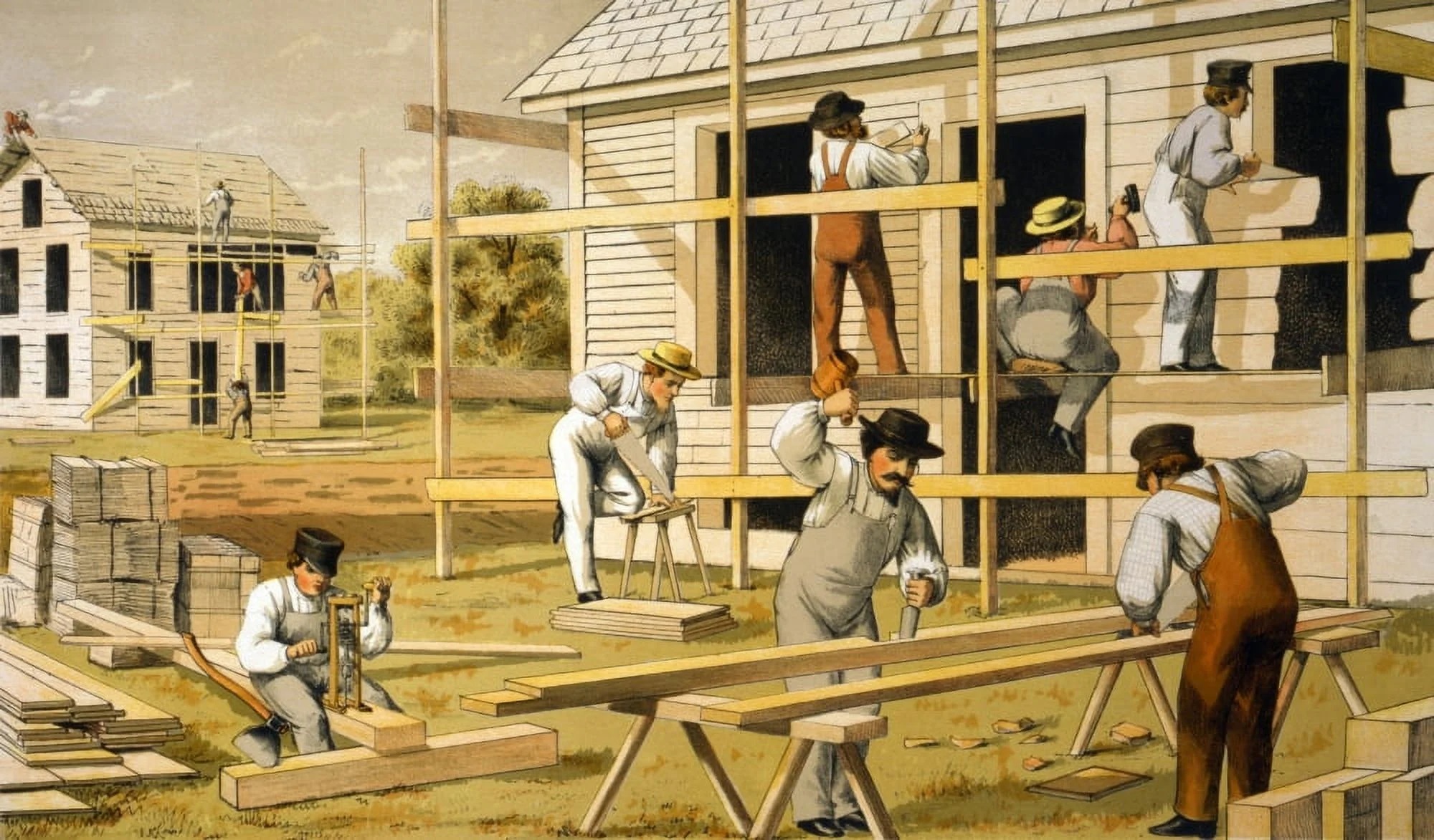
The building trades have historically been dominated by craft unions with issues specific to the industry making militant organization difficult. Here, a T.U.E.L. carpenter looks at the change in construction materials and growth of standardized housing that challenged the trade and its union in the late 1920s and offers a program for the upcoming convention.
‘Situation and Problems Confronting the Carpenter’ by A. Peterson from the Daily Worker. Vol. 6 No. 148. August 28, 1929.
The rosy period during which the carpenters as all the other building trades workers were considered the aristocrats of the labor, is a matter of the past. The carpenters as well as the other building trades workers are now subject to the same process of capitalist rationalization as all the other wage earners in the U.S. and throughout the capitalist world, and are involved in the same general process, facing the same evils and have the same perspective before them as other sections of the working class, though there are also specific problems and evils that confront the carpenters.
The Building Boom.
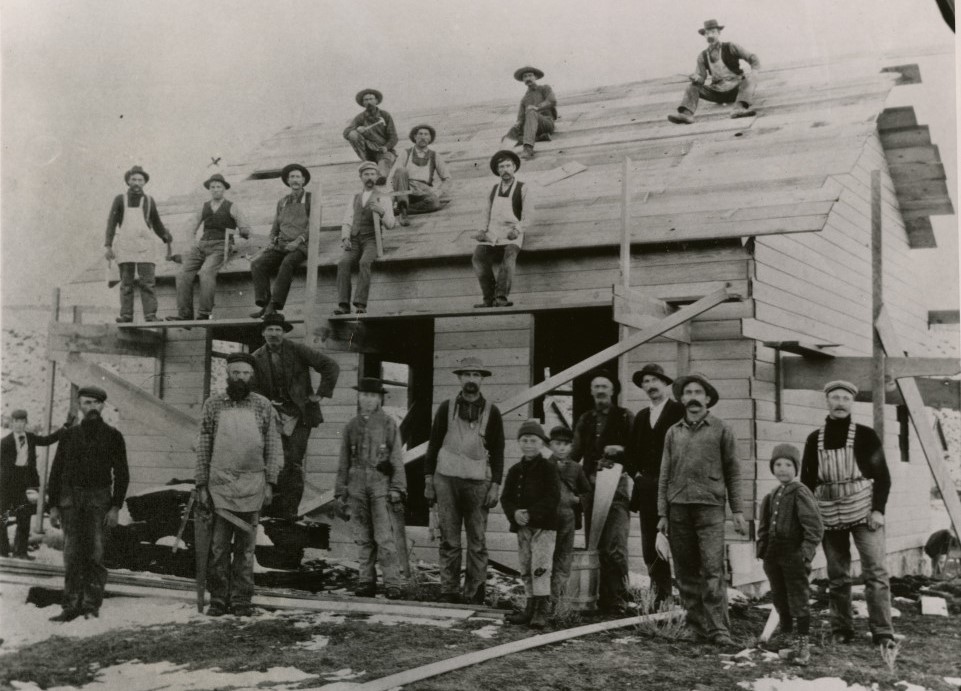
Soon after the world war, due to the shortage in dwellings, we had a great building boom. In this great speculation gamble, when builders made big profits, bosses were forced to pay more than the union scale to good mechanics. Work on the buildings was plentiful, the weekly wage income was satisfactory to the carpenter and when he proved to be a good boy, putting in a great amount of work during the day, thereby setting an example to the other carpenters and spurring them on, the boss was not opposed to adding a dollar his daily wages. In this way an extensive speed-up system developed.
During this building boom, the bosses were also in need of additional mechanics in the building trades and they therefore boomed the “great opportunities.” The press and the union officials came to their aid and trade schools produced quickly made building trades mechanics. At the same time, divisions and sub-divisions in carpenter work was introduced, also piece work and lumping system (something which is against our union rules). Skilled labor began to be eliminated.
In this building speculation boom, finance capital played a great role.
Standardization.
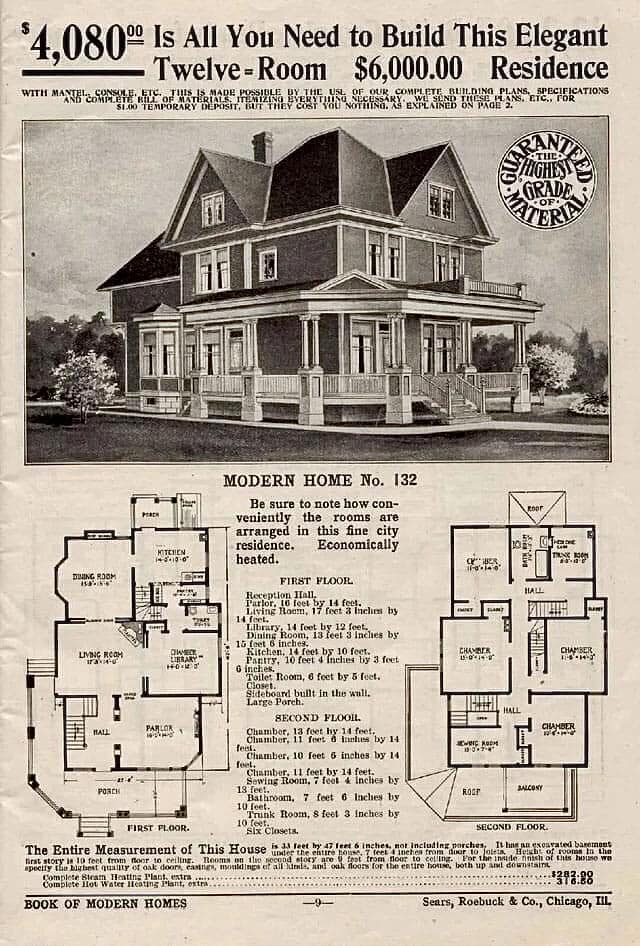
Row dwelling houses were introduced with standard styles, standard sizes, mostly cut in the mills or ready made for the assembly party, with the best modern machinery. Mail order houses such as Sears-Roebuck and others expanded their business. The big mills in Washington and other western states began to pour into the building market enormous quantities of stock sized doors, windows and other kinds of trim. This trim was made under open shop conditions where the most miserable rate of wages prevailed.
This stock, open shop trim, by the way, was permitted in the big unionized cities to be stamped with the union label and used as union made material. In the eastern trim factories easings began to be ready for the carpenter on the building just to drive in a few ls and be done with it. Labor saving, and the speeding up of the completion of the building became the issues for the builder contractor and sub-contractor. The speed with which a building was completed in the U.S. became the marvel of the entire world. “The Carpenter,” the union monthly, was full of advertisements and articles about petty matters but nothing on trade problems. Our union officials were satisfied with their good salaries and graft incomes. Most of the carpenters, as were all the other building trades workers, were content with having good wages. They were not much concerned about their corrupt officials and about Brindelism in the building trades. The bosses in the building trades were surely content with the situation. They not only harvested the profit from the building boom, but in addition to that they prepared a well-organized centralized machinery. The Employers Association in the building trades acquired an inter-building trades character and was well prepared for an attack on the workers at the proper time.
Fight the Progressives.
However, there were progressive elements among the carpenters as well as in the other building trades, who were not content with the situation. With great far-sightedness they saw the new problems and evils. Time and time again they pointed out to the carpenters, that their union officials were neglecting to utilize the building boom in order to build up a real militant union with a clear program of class struggle and to be ready to meet the coming onslaught of the bosses when the building boom would be over.
The progressive carpenters in their program which they prepared for the carpenters’ convention of 1924, did not only expose the unfitness of the corrupt offices of the brotherhood of carpenters, but they also brought concrete proposals as to how to safeguard and improve conditions on the jobs and in the shops and to make the organization strong.
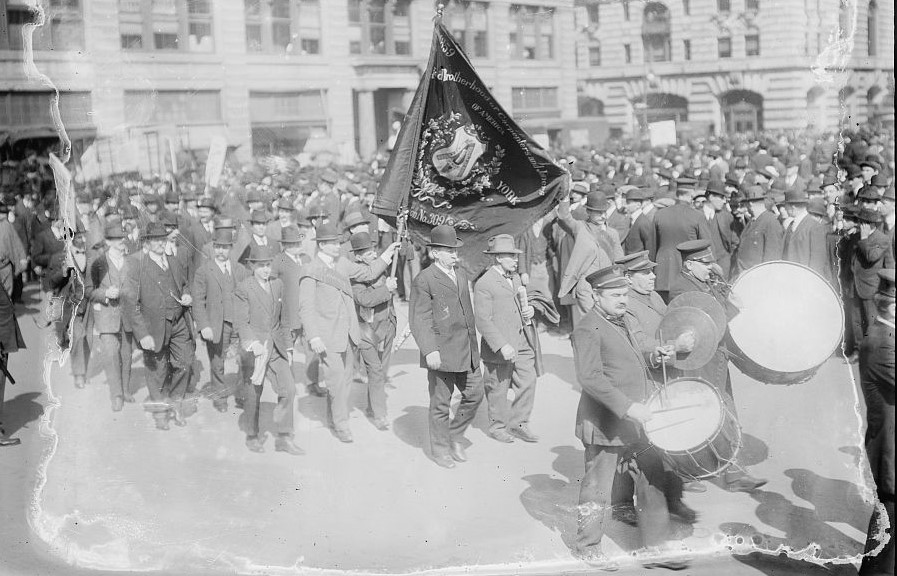
Morris Rosen from the progressive local No. 376, who ran on the progressive program in opposition to the reactionary General President Hutcheson, carried about 10,000 votes. Corrupt union misleaders nationally and locally began to fear the growing progressive sentiment. They began to fear that it would endanger their reactionary machine rule, and an extensive campaign against anything progressive was begun. The most unscrupulous methods were used. A hunt against progressive local unions, especially the Local No. 376, expulsions of progressive members in the local unions, a campaign against the Trade Union Educational League, began. General President Hutcheson went even so far as to create openly in the monthly carpenters’ magazine a sentiment against foreigners. A method was also initiated to scare the membership about the Communist Party which was said to “take its orders from Moscow in order to destroy the American Labor Movement.”
These labor fakers ought surely to know the facts in the history of the American Labor movement, that it was the foreigners from the revolutionary upheavals in Europe that contributed the greatest share in building up and consolidating the carpenters’ organization, and that it was under the influence of the First International that our national and international unions in America were strengthened. The third, the Communist International, which is continuing the work of the First International, is making its great contribution not to destroy American labor as our fakers are scaring us, but to build, educate and prepare American labor for a real class struggle.
To the general carpenters’ convention of 1928, the progressive carpenters’ national committee did something that our union misleaders failed to do. This progressive national carpenters’ committee made an analysis of the revolution that took place in the building industry, and how we carpenters are affected by it. The national carpenters’ Trade Union Education League programe stressed the importance of amalgamation of all building trades unions. This program was also the vanguard of the 5 days, 40 hours week, but when our progressive delegates came to the convention of 1928, they were attacked and expelled. A reign of terror was introduced in the local unions.
However, these autocratic methods did not work in the interest of the union and did not help to solve our problems. It only helped to bring more demoralization among the membership, more apathy, and the method of depriving the progressive members from taking the floor at the local union meetings, which in the conservative and reactionary local unions usually take place from 8 p.m. to 9:30 p.m., merely turned these meetings into cemeteries.
The Present Situation.
In the building industry, as in all other branches of industries, banking capital is directly or indirectly the dominating factor in the situation. The individual craft contractor or the general contractor is operating his business with loan capital from the banks and credit from the building material supply houses. Not only that, but the very structures that are being erected, be they office buildings, or dwellings, are directly or indirectly owned or controlled by finance capital. This means that the “Labor Policy” in the building industry is dictated and decided upon by the ruling finance capitalist of this country. Even when cash is offered for building material it is not obtainable if a said contractor “violates” the mandates of the big employers, as in the case of the open shop drive against the building trades in San Francisco in 1921.
Unfitness of So-called Leaders.
When we go into the problem and evils with which we carpenters are confronted now, and take them up one by one we can clearly see that in reality we had no union leaders at all. We have the evil of the sped-up system that makes us unfit and undesirable for the boss on the job at an early age–40 is the “dead line.” What steps did our union officials take for the aged, except maybe our old age home in Florida. I will repeat what a conservative union member said about this old age home: “I would rather jump off Brooklyn bridge than go there.”
The fear of being laid off at any hour that the boss thinks fit, creates demoralization. The prevailing rates of union wages are a matter of “try and get it” and if you do not get it, you are forced to work below the union scale, which is true for the absolute majority of union members.
Metal Trim.
The revolution in the building industry confront the carpenter with the problems not only of speed-up, hire and fire, general rationalization, etc., but also with the problem of metal trim instead of wood. Due to the shifting from small dwellings to big apartments and heavy construction work, we are more affected by this change of material. This adds an additional cause to the ever-growing army of unemployed carpenters. Unemployment in the building trades is becoming chronic. Where formerly unemployment among the carpenters was seasonal, now we have a standing army of all year ’round unemployed. Did our union officials bring before the union membership concrete proposals, as a solution to the question of unemployment? Not at all. During the building boom, very few of us realized what such a proportion of unorganized would mean for us. Now it is not hard to realize the evil of it. Due to elimination of skill, to the division and simplification of the carpenters’ work, it is not hard to take any wood worker, even a furniture worker, and put him on a building job in order to undermine our union conditions. The failure to organize the great mass of unorganized, gives the bosses the opportunity of using these unorganized workers against us in times of strikes or lockouts. What steps have our union officials taken to organize the many thousands of unorganized building carpenters, alteration carpenters, store and office fixture workers, furniture workers and all the big Western mills? Nothing at all. In fact, our union officials are the greatest obstacle in the way of organizing the unorganized. They hold fast to the high initiation fee, the great masses of unorganized have no confidence in the Brotherhood of Carpenters union which is autocratically ruled by a bunch of corrupt bureaucrats.
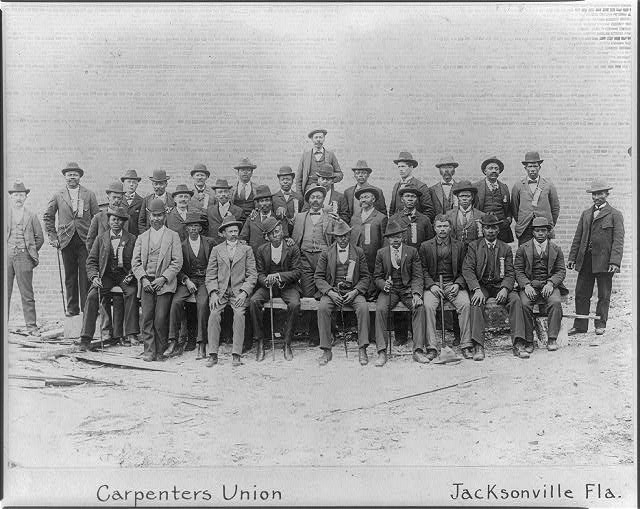
The negotiation of new agreements is made behind closed doors, without discussing them at the local union. In the collaboration of our union officials with the bosses, we have already lost the point of enforcing union made material on the job. Due to the threatening lockout by the Employers’ Association in New York our officials are going to lose the right of sympathetic strikes, our traditional right to report non-union men on the job immediately. Due to the rushing system, and by neglecting to take the proper care for safety devices, accidents occur frequently on the building and in the shops. Out state compensation laws are inadequate, to say the least. Our labor officials are lobbying with the politicians of the capitalist parties. In whose interest?
The progressive carpenters, as the progressives in the whole building trades as well as the progressive workers in all the other industries in the U.S., had already by their experience learned the fact that it was the “Trade Union Educational League” which was their real guide on trade union problems.
Our hope, faith and attention is now directed toward the Trade Union Unity Convention which will be held in Cleveland, Ohio, on August 31, September 1 and 2.
The delegates at the Cleveland convention who will represent the building trades, will have to take into consideration that our present union bureaucrats will, like all brutal beasts in their agony before dying, become more brutal in their fight against all militants in the unions. It is therefore of great importance that the Cleveland convention shall put for us in the building trades an energetic leadership, which proved by their past to be capable to lead and sacrifice for a just cause.
We carpenters, as all the other building trades workers, are at present in need of a militant leadership around whom all the militant forces in the union and the unorganized outside the union shall rally.
We are in need of a real education in class struggle. We are in need of a clear program of action for the carpenters.
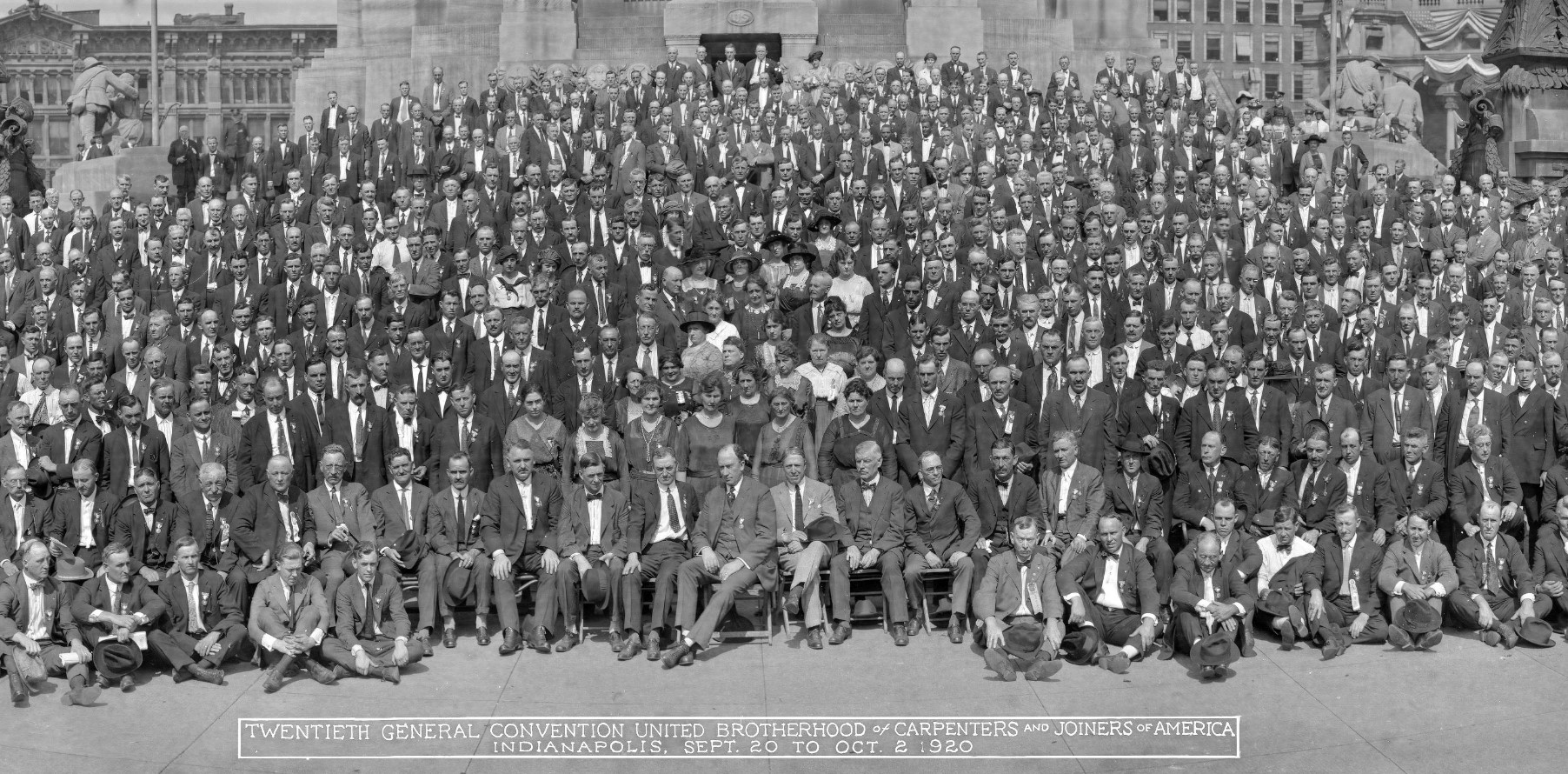
The following points should be taken into consideration by those who will discuss a national program for the carpenters:
1.The 7-hour day and five-day week in order to decrease the demoralizing effect of rationalization the workers.
2. Uniform building trades agreements to expire at the same time in May, to be ratified by a referendum of the membership.
3. Amalgamation of all building trades. This would abolish the ruinous jurisdictional disputes as well as centralize the activities and unify the forces of all building trade workers.
4. A joint drive by all unions to organize the unorganized.
5. Social insurance against disability and old age, and unemployment fund to be administered by the unions.
6. Mass violations of all injunctions in labor disputes, struggle against the enacting of anti-strike laws.
7. Development of job and shop control through job or shop committees and stewards so as to stop the hire and fire system and put an end to the speed-up methods.
8. Restoration of all union members expelled or suspended for their opinions and restoration of revoked charters.
9. No discrimination against Negroes, or other races.
10. Support of a political party composed of and in the interest of labor, recognizing the economical struggle as a political struggle.
The Daily Worker began in 1924 and was published in New York City by the Communist Party US and its predecessor organizations. Among the most long-lasting and important left publications in US history, it had a circulation of 35,000 at its peak. The Daily Worker came from The Ohio Socialist, published by the Left Wing-dominated Socialist Party of Ohio in Cleveland from 1917 to November 1919, when it became became The Toiler, paper of the Communist Labor Party. In December 1921 the above-ground Workers Party of America merged the Toiler with the paper Workers Council to found The Worker, which became The Daily Worker beginning January 13, 1924.
PDF of full issue: https://www.marxists.org/history/usa/pubs/dailyworker/1929/1929-ny/v06-n149-NY-aug-29-1929-DW-LOC.pdf
 Revolution's Newsstand