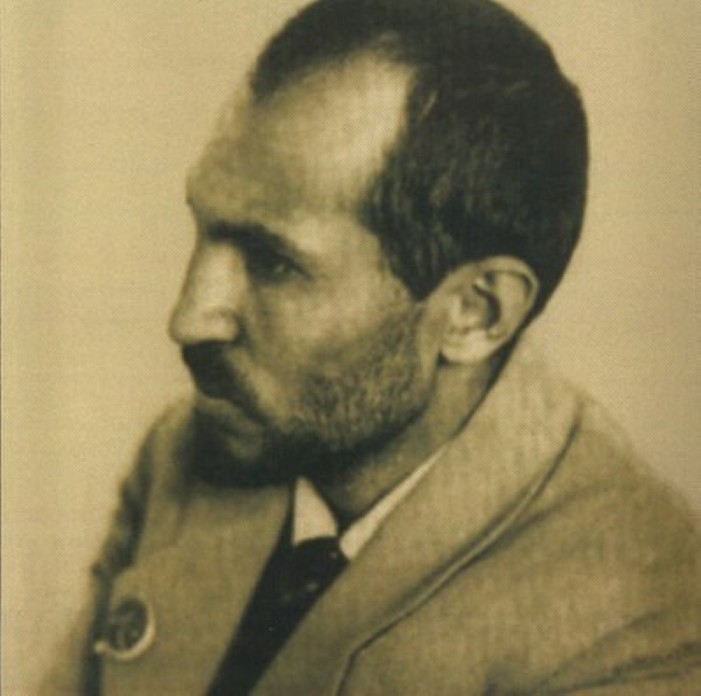
Iranian Left Communist Avetis Sultan-Zade was founder of the Communist Party of Persia and on the Executive of the Comintern. Side-lined through much of the mid-20s for favoring land collectivization and hostility to the Comintern’s orientation to progressive nationalists, he returned to leadership as the Comintern moved to the ‘Third Period.’ Here are his speeches at the 6th World Congress of the Comintern where he speaks on British imperialism in the region and the war danger, challenges Bukharin and Hilferding on finance-capital in the discussion on program, and disputes the theses of Kuusinen on the status of Persia and the possibility of a workers’ revolution there. He was expelled from the Party in 1932 and later a victim of the purges, executed on June 18, 1938.
‘Avetis Sultan-Zade at the Sixth Comintern Congress’ by from International Press Correspondence. Vol. 8 Nos. 61, 66 & 74. September 11 & 25, October 25, 1928.
On the Danger of Imperialist War
Comrade SULTAN SADE (Persia): Comrades, there is no doubt whatever that the chief instigator in the war will be England: whichever the shock. troop, it will always be London pulling the strings behind the scenes. All the preparations carried on by England whether openly or secretly in the whole of the Near East are indication of the undeniable fact that England has been busily preparing during the last few years for the coming clash of arms. I am firmly convinced that in the next war the Middle and Near East will serve as the chief starting ground for the attack on the Soviet Union. Starting with Egypt and passing on through Palestine, Trans-Jordania, Mesopotamia, Arabia, Persia, and India, there is a whole variety of countries either entirely or partly subjugated by England. Lately it was declared by the British Colonial Secretary Emery:
“In order to secure our influence in the Near East and to consolidate the Suez Canal, we must increase our forces. in all these countries, particularly in Egypt, and win the friendship of all the peoples that are adjacent to the Canal.”
This military programme of the British War Office is being pursued just now by the British High Commissioner in Egypt where the supreme command of the army has been seized by England, where parliament has been dissolved and the full freedom has been given to the British supreme military command to carry out calmly all the necessary preparations. Furthermore, an important role in the future war will also be played. by Palestine. Palestine, that little and insignificant country, is being now extended by the will of the supreme commissioner. even more than any ardent Zionist would ever have dreamed of. Just now the military harbour is being constructed at Haifa, and one and a half million pounds sterling has already been assigned for this purpose. Military barracks are being built, and other premises, for the accommodation of tens of thousands. of soldiers.
Furthermore, preparations are in progress for the establishment of the future air line from Cairo to Karatchi, which is to run over Palestine, Mesopotamia, Persia, on to India. A number of up-to-date aviation bases has already been established in Palestine. Furthermore, a net of strategical highways is being built. The highway across the desert from Jerusalem to Bagdad has already been completed. Finally, the line from Kantara to Haifa has already been completed, forming a section of the future trunk line of Cairo-Bagdad Calcutta.
Close to Palestine is the region of Trans-Jordania, constituting an “independent” kingdom. This “independent” kingdom has signed a treaty with England three months ago, in virtue of which the king of England has the right to mobilise any number of troops in that country for purposes of defence and the “maintenance of law and order”, whilst the funds for the maintenance of the troops have to be furnished by Trans-Jordania out of its budget. In short, that “independent” country. which was already given in 1925 the port of Akaba on the Red Sea, is being prepared more and more for the role which it is to play for the British War Office in the future war.
Next place in the war preparations is taken by Iraq and Mesopotamia. You know what difficulties England had to overcome to wrest that country from the German imperialists. The Bagdad railway was always a thorn in the eyes of British imperialism. This railway, constructed by Germany, constituted a constant menace to the British possessions. Today the territory is an “independent” country over which England has at mandate from the League of Nations. Here again there are extraordinary military measures carried out by the British authorities. First of all, gigantic aerodromes are being erected. upon the territory of that country. The railway line from Basra to Bagdad, running along the Persian border, constitutes an exceedingly convenient strategic railway, offering the shortest cut for an offensive against the Soviet Union via Turkestan.
The course of the river Shat-el-Arab has been widened and deepened so that ocean steamers can sail directly into Basra.
Lately the military fort of Fao was built up and equipped so that it now dominates the whole region. British agitation is working with particular intensity in this region. An agitation is now carried on for the formation of a Kurdistan state from Persian and Turkish Kurdistan, under the protectorate of Eng- land. If this plan will be carried out it will mean that the military line will be extended directly to the border of the Soviet Union by way of Kurdistan.
The Gulf of Persia has long since become a British lake, whilst England is deliberately striving to capture possession of the Bahrein Islands.
The policy of the British supreme command in Persia consisted lately in stubbornly insisting before the Persian government on obtaining the right of aviation over Persian territory into India. Under pressure from the masses of the people the Persian government hesitated until quite recently to accept these conditions. Lately, however, owing to a number of revolts which occurred throughout the country, the Persian government thought it necessary to comply with Britain’s request and allow the erection of several aviation points on Persian territory. Comrades, in all these countries not only technical preparations are made for war, but England is also politically active. Wherever necessary, she installs her own monarchs and little Tzars. Wherever parliament can be dissolved and representative governments be abolished, this is done by England, and a government is installed which serves as a tool of British imperialism. This has happened in Egypt, and the same we find in Palestine and Mesopotamia, and finally also in Persia, where the new dynasty has been placed upon the throne directly by England. This new dynasty, which has taken the place of the old Katchara dynasty, slowly but systematically yields to the British supreme command on nearly all points. A railway line is being now constructed by the Persian government which will lead from Bagdad to the Caspian Sea. A port is being built at the terminal point of this line, at Bendergas. This port will serve as a submarine base which will enable operations against Baku, so as to cut off the sources of raw materials from the industrial centres of the Soviet Union.
On the Progamme of the Communist Interntional
Comrade SULTAN-ZADE (Persia): Comrades, on the Programme Commission I spoke against that point in the Draft Programme which defines the present epoch as the epoch of finance-capital. I think it is a great mistake that this epoch is identified with the epoch of imperialism. I want to say that Hilferding’s theory of finance-capital is an absolutely false and artificial theory. At all events, it does not express the facts. I am absolutely convinced that there never has been such an epoch as the epoch of finance-capital, and still less does such an epoch exist now, at a time when industry is centralised and concentrated to the highest point. I opposed Hilferding’s definition of finance-capital because what Bukharin says and what is stated in the Draft Programme about finance-capital is altogether different from what Hilferding says about it. But of this more anon.
How does Hilferding define his theory? He says:
“An increasing part of industrial capital ceases to belong to the industrialists who employ it. The industrialists are able to use this capital through the medium of the banks. Bank capital sunk in industry in this way I call finance-capital!”
This is the definition that Hilferding himself gives of the nature of finance-capital, i.e. bank capital sunk in industry, which he calls finance capital. Throughout the whole course of his book “Finance Capital” Hilferding repeatedly declares that the present stage of development of capitalism is a stage in which the domination of finance-capital and the dependence of industry upon the modern banks has grown to an enormous extent. At the end of his book Hilferding goes so far as to say without qualification that the modern banks have imposed their control upon the principal branches of modern large- scale industry, and that if the German proletariat could manage to seize the six big Berlin Banks, it would by that be able to take control of the principal branches of industry. Hilfer- ding has been. Minister for Finance, but he did not think fit to put his theory into practice.
I am of the opinion that neither in theory nor in practice is it possible for the Banks to dominate or control industry. It is impossible from the standpoint of correct banking policy. As you know, the individual elements of reproduction are brilliantly analysed in Marx’s “Capital”. Marx quite clearly showed what capitalist reproduction is as a whole, where it breaks up into its component parts, where in the process of circulation they assume independent forms, how these elements are entirely subordinated to the laws of development of production, and that while in certain periods of capitalist development one or the other may obtain a certain amount of independence (as money capital, merchant capital, etc.), that these rise and fall in accordance with the rise and fall of industry and are entirely dependent upon its development.
This theory of finance-capital is not only wrong because it contradicts the Marxian theory, but also because it contradicts the practice of elementary banking policy; for no big bank would sink the greater part of its capital in industry. We have had cases in the history of banking where a bank has sunk a large amount of its capital in industry, in company promotion, speculation, etc. But these usually result in serious bankruptcy, as was the case the case of the “Credit-Mobilier” in France and the “Credito Mobiliere” in Italy. We know also from the history of German banking the collapse of the Leipsiger Bank in the beginning of the 20th century, resulting from the fact that this bank engaged too much in the business of buying the stock of other industrial enterprises. These bitter experiences do not encourage the modern banks to enter into such adventures, and they would never lock up their own capital, let alone their deposits for long periods or even for a number of years in industry. If a bank were to do that, it would meet with bankruptcy at the very first industrial crisis.
I strongly oppose the assertion that the development of modern capitalism tends towards the transformation of bank capital into finance capital, that the present epoch is the epoch of finance-capital and that the tendency of the development of industry is to become more dependent upon the banks, as Hilferding declares. This is neither technically nor practically possible, particularly so after the war, when enormous industrial enterprises have arisen which themselves can establish big banks like the Deutsche Bank, for example.
The steel Trust recently set up in Germany has a capital of 1500 million marks and consists of 407 of the biggest industrial groups in the steel industry. All these capitalist groups are directly or indirectly dependent upon the Trust, which can exercise a perfectly real control not a quasi-control like the banks over a combined capital amounting to 4500 million marks. I ask what modern bank is able to control a giant like this?
Take another example, the American Steel Corporation with a capital of $ 1,400,000,000. What New York Bank could impose even partial control over this giant, let alone dominate it, since the biggest bank in New York has not a capital exceeding $200,000,000. It is simply ridiculous to talk of controlling a giant like this.
Hilferding is quite right, however, when he says that the bank cannot sink its capital in a single enterprise, and that in order to lessen its risks it must invest its capital in a number of enterprises. That being the case, the bank must exercise control not only over one Trust, but over a number. In the present period of monopoly capitalism the absurdity of this is apparent. It is noteworthy that the comrades who have studied the structure of the modern monopolist organisations, even when they are supporters of the Hilferding theory, have to admit that the banks exercise a diminishing influence upon these organisations.
With the growth of the monopolist organisations the influence of the banks must inevitably diminish and tend to restrict themselves to their own peculiar function of accounting apparatus, as the cashiers of the industrial capitalists, Comrades, in the pre-war period of development of capitalism, we had not a single case when an industrial capitalist or big concern openly took up the fight against the big banks.
At the present time, however, we see numerous cases of this kind. We all know the fight that was conducted by the Stinnes concern against the Berlin banks, and we know also the unceasing struggle that Ford carries on against the New York and other banks. And I must say that this is a very successful struggle indeed that the industrial capitalists are waging against the banks, because they have at their command colossal material resources obtained from the sphere of production itself. The material resources of the banks are inadequate to impose anything more than a superficial control over these industries.
Comrade Bukharin opposed my point of view in the Plenum and also on the Programme Commission. In reply to my statement that Hilferding was a renegade of Marxism and that his theory must be thrown on the scrapheap as the workers have thrown him on the scrap heap already, Comrade Bukharin says that there are quite a number of renegades of Marxism, for example, Kautsky who wrote “The Road to Power” from which we have still a great deal to learn, although Kautsky himself has become a traitor to Socialism. In reply to this I must say, however, that Kautsky now repudiates what he wrote formerly, whereas Hilferding does not dream of doing so, although it must be said that Hilferding has undergone a certain process of evolution with his theory.
Comrade Bukharin quoted the example of State capitalism, which he described as the social super-structure of the capitalist system. I quite agree with this. It is true that State capitalism subordinates capitalist society to itself and is capable of doing so. But there is a great distinction between what I said and what Comrade Bukharin said. State capitalism is indeed the social super-structure, but money capital or credit is only one of the elements of the reproduction process. Credit is a small part of the reproducing capital, whereas State capitalism is truly the super-structure. In the same way as the State-organised bourgeoisie represents a super-structure of capitalist relationships and governs the class organisation of the whole of society, so can State capitalism govern the production of capitalist society as a whole. But this is not the point under discussion. I think that credit relations, being part of the reproduction process, cannot govern the whole of the process of production, particularly the basis of this production process, viz., industry.
The next point that Comrade Bukharin made against me was the following: Comrade Bukharin asks how is it possible to belittle the role of finance capital when Germany, for example, was placed on its feet again with the aid of American credit. It seems to me that we simply fail to understand the whole point if we speak of credit in this simple manner. I of course do not deny that the banks invest their capital in foreign loans. I do not deny that the banks play an auxiliary role in modern capitalist economy and that they are an important factor in mobilising the gold reserves of capitalist economy. I do not deny that at a given moment the banks can afford to invest a part of the available capital in those countries where they can obtain higher profits as was the case in Germany. This is simply a matter of discount policy. If to-day the discount rate in a certain country is higher than that in America, it is to the advantage of the American capitalists to invest their available capital in industry, and they will naturally strive to invest their capital where they can get the highest profits. But the money which was given to German industries was not bank money, but the money of the industrial capitalists who had available capital at their disposal and they permitted the banks to invest this as industrial loans to Germany. The banks cannot without the permission of their depositors sink their capital for long periods in any country in the form of industrial capital.
In the epoch of monopolist capitalism, when the concentration and centralisation of capital has reached a very high stage, the industries would not permit the banks to act so recklessly. The modern trusts, which concentrate enormous amounts of capital in their concerns, are far stronger than they were when industry was broken up into small enterprises. At that time of course the banks could do what they liked with the small enterprises. But the situation changes altogether when big capital, consolidated in trusts, comes into the arena. It is quite natural, therefore, that in the epoch of monopolist economy, the share of surplus value falling to the banks should diminish.
Although Comrade Bukharin described my arguments as childish, I must say, however, that I came to this childish conclusion after four years study of this process. Where did Hilferding get his theory from? I have studied the balance sheets of the big Berlin banks for the period ten years before and ten years after the war, and in none of these balance sheets have I found anything that could justify Hilferding’s point of view.
Take the balance sheets of the three biggest Berlin banks. The Dresdener Bank, the Darmstadt Bank and the Deutsche Bank. In vain do we seek for a reply to the question as to what part of these balances were invested by the banks in industry. Some naive people believe that the banks conceal this fact from the public, but that is absurd. In all the balance sheets of the big Berlin banks, there is a special item dealing with “investments of capital” which are called “permanent investments”. In addition we have another item called shares in consortiums. This item includes all the sums invested by the bank as a participator in consortiums in industrial stock which was guaranteed by the consortium or invested in various municipal or State loans. Both these items represent a relatively insignificant part of the banks’ assets. The following table illustrates this:
Combined balances in millions of marks—1913–1927
1. Dresdener Bank 1,538–1,885
a) Permanent investments 39—28
b) Consortium shares 55–14
2. Darmstadter Bank 978–1,772
a) Permanent investments 8—22
b) Consortium shares 45–24
3. Deutsche Bank 2,246–2,320
a) Permanent investments 82—26
b) Consortium shares 53–35
It must be pointed out, however, that in the case of all the banks the permanent investments represent investments in other banks and not in industry. On what does Hilferding base his assertion that a growing share of bank capital is being invested in industry and is being converted into finance capital? I declare that this is a fiction.
The other assertion of Hilferding is also a fiction, namely, that every bank represents a stock-exchange. Hilferding rightly points out that with the development of the latest tendencies of capitalism, the role of the stock-exchange diminishes; but this is not because the banks are transformed into stock-exchanges, but because under monopolist capitalism only a few capitalists come on the stock-exchange, whereas formerly thousands came. Hence, formerly the stock-exchange was the regulator of capitalist economy. Now, however, it has ceased to play this role, not because the banks are playing this role now, but because monopolist capitalism has reduced the stock-exchange to a lower grade in the capitalist machine.
Now a word or two about “finance-capital” as Comrade Bukharin has explained it. I must say that the Draft Programme gives a different definition of finance-capital to that given by Hilferding. In the Draft Programme it says:
“The merging of industrial capital with bank capital and the monopolistic character of this form of capitalism. transforms the epoch of industrial capital into the epoch of finance-capital.”
Comrade Bukharin said the same thing when he gave his definition of finance-capital. He says that the merging of industrial capital is a fact that cannot be ignored, but from this correct statement an altogether wrong conclusion is drawn concerning the domination of so-called finance-capital. I do not say that there is no domination of finance-capital at all, or that the banks are becoming transformed into an appendage of industry, but I do say that industrial capital can establish its own banks and that it is in this way that industrial capital and bank capital are becoming merged. This is exactly what is happening. I must say, however, that by his definition, Comrade Bukharin places Hilferding’s theory upside down. I can agree with Comrade Bukharin’s definition of finance-capital, but with certain reservations. The first is that industrial capital establishes its own banks and thereby finances itself. Secondly, the merging or industrial capital with bank capital takes place under the control of industry and for the purpose of supporting industry, and finally, that the tendency of the development of capitalism is towards the emancipation of industry from the banks and towards. the banks being reduced to the accounting apparatus and cashier of the industrial capitalists. Hilferding himself has undergone a process of evolution in this respect.
At the Congress of the German Social Democratic Party in 1927, a programme commission was set up, of which Hilfer- ding and Kautsky were members, at which this question was very heatedly discussed. Finally, a point was introduced into the programme to the effect that the capitalist striving towards monopoly leads to the amalgamation of branches of industry, to the merging of the production stages and to the organisation of industry into cartels and Trusts. This process amalgamates industrial merchant and bank capital into finance capital. Thus, in the opinion of this former Marxist, industrial capital, merchant capital and bank capital together make finance-capital. What then becomes of Hilferding’s definition of finance-capital as bank capital invested in industry. What has become of this theory. I think what Hilferding says now is a parody of what he said before, but even this parody is wrong. Such an amalgamation does not take place as a rule. When it does take place, it is exclusively under the control of industrial capital.
Comrades, we know from the history of the development of capitalism how industrial capital step by step overcame merchant capital and how in many branches of industry it compelled the merchant capitalists to become the selling agents of their goods. The gigantic power of the modern syndicates and warehouses proves this conclusively. This evolution springs from the evolution of capitalism itself. In a similar way, the independent banks are becoming transformed into the agents and cashiers of industrial capital, which is the inevitable result of the further development of capitalism.
Very often our editors employ the term finance-capital in a most irresponsible manner, because often they do not know what they are talking about.
I think that we must make this term more precise and that it should be employed in the manner that we understand it. I repeat that Hilferding himself now adopts a different definition of the term finance-capital. The very fact that we have adopted a point in our programme about the merging of industrial capital with merchant capital, shows that we have departed a long way away from Hilferding’s theory. Hilferding’s theory must be thrown on the scrap-heap of history in the same way as the revolutionary proletariat has flung Hilferding himself on the scrap heap.
Revolutionary Movements in the Colonies
Comrade SULTAN-ZADE (Persia) Comrades, when I received the Theses and began to read them, I imagined for a moment that I was not in Moscow, but in one of the colonies with which Comrade Kuusinen’s Theses are dealing. And as much as I endeavoured to get Persia into this scheme which divides all colonial and semi-colonial countries into four groups, I did not succeed in this. How does it stand with Persia in reality? Can Persia skip over the capita- list development? Is it possible to establish immediately the Soviet regime in Persia, or must one proclaim there on the day after the Revolution the democratic dictatorship of the proletariat and peasantry? Can we develop in Persia the agrarian revolution, or should we abstain from this there also? Unfortunately, I have received no answer to these questions which are of such great interest to us.
I think that Comrade Kuusinen’s scheme is on too general lines, there is no concretisation whatever; the countries are grouped in a manner which makes it very difficult to give every country its proper place. I do not think that I stand alone in regard to this. I am convinced that the Turkish comrades are in the same boat. I am sure that the comrades from the Arabian countries are as badly off in this respect as I. Syria is dealt with in several places together with India and China and gets thereby directly into the first group. I think that there is no justification for this. All this has happened because the scheme has not been sufficiently thought out.
Comrades, we know that to draw up a scheme especially for such enormous masses of people living in most diverse parts of the globe is a very difficult matter. It is difficult because these countries live under conditions where we see the highest social forms side by side with the most backward. Under these conditions it is extremely difficult to give a schematic picture of all these various countries.
Now a few words about tactic and strategy. Comrades, in order to elaborate a correct tactic in this or that country one must first of all study conscientiously the driving forces of the revolution in the said country. It must be ascertained what ails this country, what direct consequences the predatory imperialist policy has there, what classes are the greatest sufferers under the imperialist yoke. In this respect the theory of the pauperisation of enormous masses of people in the gigantic Eastern countries is one of the most serious theories to which we must turn our attention and in regard to which very little is said in the theses. Only on page 16 it is casually mentioned that the pauperisation of the peasant masses is a general phenomenon in the colonial countries. Comrades, it goes without saying that imperialism does not only pauperise the peasantry. Conditions in the colonies, the transformation of backward countries into purveyors of raw material for the industrial centres of Europe have brought about a state of affairs where these enormous continents have really become the rural districts of the capitalist town. At the same time thousands of workers employed in handicraft are unable to compete with the cheap articles of the European countries. Owing to this these sections of the population have become destitute, and this pauperisation process is steadily developing in all Eastern countries. In Persia even the simple fact of the import of a few thousand motor cars resulted in throwing tens of thousands of people employed as carriage drivers onto the streets. They are carrying on now a miserable existence. It frequently happens that these ruined starving masses come under the influence of reactionaries. Especially in Persia the reaction is doing its utmost to utilise this discontent for its own purposes. The clergy is particularly busy in this direction. In this respect the work of our Communist Parties consists in getting cleverly in touch with the masses in order to get them away from the influence of the reactionaries and to mobilise them for revolutionary purposes.
Much has been said here about the role of the export of capital and the industrialisation of the colonies. Already Marx has pointed out that in countries which have not yet gone through the epoch of original accumulation, foreign loans and import of capital can play this role of original accumulation. Marx used the United States as an example to show that transition to a higher stage of capitalist development is possible by means of import of capital. In that period the export of European capital to America has played a truly progressive role. But it would be a mistake to imagine that this export of capital has a progressive character also in the epoch of imperialism. In this connection it must be emphatically pointed out that at present not a single penny is exported from the mother countries to the colonies without a very definite aim. The imperialis countries base the export of their capital on entire strategical systems. The export of capital to backward countries is a peculiar form of strategy for the conquest of the commanding positions of the economic and political life of the respective country. The import of capital into this or that country has been for decades the source of terrible suffering because the imperialist countries interested in that country compel it to grant concessions of all kind, organise continually insurrections and assassinations and use threats and extortions till the aim which they pursue has been achieved. In many backward countries the foreign settlements have long ago transformed themselves into military strongholds which are the base for the further expansion of the imperialists.
The example of Mexico, Persia and a whole series of other countries is sufficient to explain the role of export of capital under present circumstances. We must set our revolutionary strategy against the strategy of the imperialists. We must pay special attention to the centres from where we can extend our revolutionary base. But the Theses do not make it clear which of the colonial and semi-colonial countries are to be considered the most important from the strategical viewpoint. It has already been mentioned here that the enormous masses of the Arabian people who have been torn apart by some of the imperialist big powers are even now an object of unprecedented oppression by these powers. There is hardly any indication in the Theses what tactics we must apply in the Arabian countries: in Syria, Mesopotamia, Tunis, Algiers and Morocco. These colonial countries are so dismembered geographically that hardly any hope exists to create a united Arabian State. What tactic must we adopt in Persia, which is situated between the country of proletarian dictatorship and the great colony, India? The Theses point out correctly that the forces of the social world revolution are the only reliable support and guarantee for the ultimate liberation of the colonies and semi-colonies from the imperialist yoke. These Theses must become an instrument in the hands of the oppressed colonial slaves with the help of which they will be able to enter upon the path of their liberation. But we find nothing of the kind in the Theses. It has been, for instance, pointed out that an important question such as that of the transformation of the bourgeois-democratic revolution into a socialist revolution, that this enormously important theoretical question. especially in the initial period of the struggle in China, India and other countries, is not dealt with in the Theses. We welcome that part of the Theses which proposes to the Executive Committee of the Comintern to take up energetically the organisation of Communist Parties in the colonial countries, to take measures for the consolidation of such Parties so as to strengthen the objective revolutionary conditions by something subjective, namely, by the subjective organisational will of the revolutionary masses of these countries. This is really of the utmost importance for the preparation of the coming struggles when the revolutionary masses will have to put up a decisive struggle against the imperialists.
As to the role of the bourgeoisie in the agrarian revolution, the Theses admit that agrarian revolution is possible also in the framework of the bourgeois-democratic revolution. I think that the bourgeoisie will steer clear of this. Where the proletariat is acting together with the peasantry, where it brings forward its special class demands, the bourgeoisie will not be in favour of an agrarian revolution, because it has learned something from the Russian Revolution. It knows that the agrarian revolution is a powerful base for the further development of the revolution. But even if the bourgeoisie were for the agrarian revolution, the imperialist countries would not tolerate it.
Several comrades have already pointed out here that in some countries enormous areas are owned by foreign capitalists, especially where the country possesses mineral wealth and natural resources. It goes without saying that the imperialist countries interested in this or that colonial or semi-colonial country, will endeavour to prevent the development of an agrarian revolution with all the means at their disposal. I am convinced that as soon as the proletariat comes forward energetically in the revolution with its own class demands, the bourgeoisie will look for allies among the landlords and foreign imperialists. It is therefore not so easy for the bourgeoisie to show an interest in the agrarian revolution.
As to the role of the petty bourgeoisie in the agrarian revolution, I am convinced that at the decisive moment it will betray the agrarian revolution just as the big bourgeoisie. Therefore we must not set our hopes on the petty bourgeoisie supporting us during the revolutionary struggles. The only force capable of making the agrarian revolution a reality is firstly, the proletariat and secondly, those sections of the peasantry which organise themselves under the leadership of the proletariat and the Communist Parties. It is only by organising the workers and peasants, by the energetic revolutionary struggle of the millions that we will achieve the liberation of the oppressed colonial peoples and will bring about the overthrow of the entire capitalist order.
International Press Correspondence, widely known as”Inprecor” was published by the Executive Committee of the Communist International (ECCI) regularly in German and English, occasionally in many other languages, beginning in 1921 and lasting in English until 1938. Inprecor’s role was to supply translated articles to the English-speaking press of the International from the Comintern’s different sections, as well as news and statements from the ECCI. Many ‘Daily Worker’ and ‘Communist’ articles originated in Inprecor, and it also published articles by American comrades for use in other countries. It was published at least weekly, and often thrice weekly.
PDF of full issue: https://www.marxists.org/history/international/comintern/inprecor/1928/v08n74-oct-25-1928-inprecor-op.pdf
 Revolution's Newsstand