
U.S. imperialism intervened in Chile long before September 11, 1973. Albert Moreau looks at the relationship between the Guggenheim’s mining interests and the Ibanez dictatorship.
‘Blood Stained Nitrates of Chile’ by Albert Moreau from The Communist. Vol. 10 No. 5. May, 1931.
THE natural resources of Chile are great. Ever since imperialist experts submitted their reports on the potential raw materials found in that comparatively small country, it has been the policy of British financial interests to get hold of the mines. The following figures give more or less of an exact picture of the importance and motives of imperialist penetration:
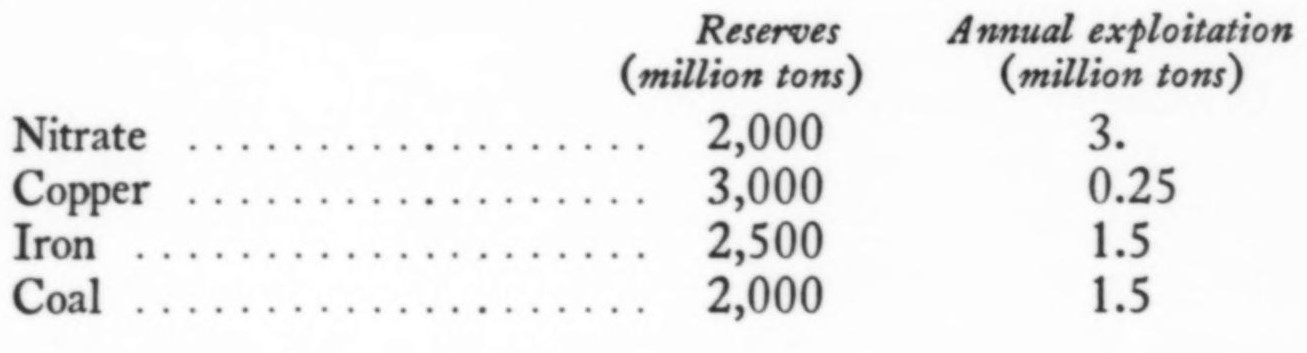
All these metals are found in great deposits in the northern part of Chile. The extraction of nitrates has been of special interest to the British magnates since 1889. Until 1914 England was the undisputed owner of the nitrate deposits. But the United States was in fact a great consumer. No less than 50 per cent was bought annually by American companies. Control of the mines through the Association of Nitrate Producers, dominated by British bankers, fixed the nitrate and copper prices for United States buyers. This highly prejudiced American capitalist interests. Guggenheim, head of the copper trust in this country, determined not to submit to the dictates of British bankers. A fight to the finish began, and the State Department was urged, of course, “to head the struggle in behalf of American bankers and magnates.”
“EXPERT” RECOMMENDATIONS
In 1923 the American Congress gave the signal for the loading of American rifles against Britain by instructing its Department of Commerce to “investigate” the discrepancies in Chile greatly detrimental to United States interests. In 1924 a report was submitted in behalf of the Department of Commerce by two “experts,” H. Foster Brain, and H.S. Mulliken, in which the basis was laid for the monopoly of the nitrate mines by Guggenheim through the use of all available means and for the destruction of the then powerful barrier, the English-controlled association. The war against the fixing of nitrate prices in which American capital had no participation, was to start through “scientific means.” What were those “scientific means”? Simply the establishment of technical processes that would allow an increase of 55 to 65 per cent in production without any proportional increase in the cost. Furthermore, the report stated that “the Chilean worker is exceptionally able but in relation to his salary he does not produce what he should.” We must remember that Hoover was then at the head of the Department of Commerce, in sharp conflict against the Chilean government’s favoring of British nitrate interests. Once the policy of war against British control of nitrates was entered upon by the White House, political intrigues were stirred up within the government of Chile.
GROWTH OF YANKEE CAPITAL
In order to understand well the gigantic strides made by Guggenheim and the American bankers towards the execution of this policy, a glance is necessary at the following table of control by Yankee capital over metal production in Chile in 1925:

The inflow of American capital since the declaration of war against the British-controlled nitrate trust was fabulous. In 1912 American investments were $15,000,000, and in 1925—$360,000,000. By the end of 1927 the figure almost doubled. Thus American capital was carrying out its plans for the introduction of a system of high technique coupled with increased productivity, the intensification of exploitation and speed-up, in a word rationalization, that far overcame the lower cost of production in the British mines. Expenses were reduced by one-third.
American bankers headed by Guggenheim came to the rescue of the crushed and succumbing English-owned mines by buying them over. Guggenheim emerged victorious if not yet fully triumphant. Now Guggenheim the “benevolent,” the great “philanthropist,” extends a loan of $500,000,000 for “national commercial aviation.”
WORKERS RESIST RATIONALIZATION
However, a great obstacle was encountered. The workers of Chile have a long history of militant class struggle against their exploiters. The industrial and agricultural workers, through a long series of bitter class battles, succeeded up to 1927 in building strong class organizations. On all fronts they unceasingly carried on the struggle against their bosses and their government. Discounting the salaried employees in commercial firms, banks, and the like, the wage workers of Chile reach the highly significant number of more than 400,000, the main groups being:

Under the banner of the Chilean Federation of Labor and an able leadership, the workers were, in 1922-1927, fighting militantly all attempts of the government and its imperialist masters to put into effect the increase of productivity of labor at their own expense. The American companies were actively engaged in making a sharp turn in accordance with the policy formulated by the committee of experts of the Department of Commerce, namely the increase in production at the expense of the workers. The Chile Copper Company, the Anaconda Company, and the American Refining Company, together with other subsidiaries, led the attack in the copper mines. From 30,000 workers in the copper mines, the result of the drive upon the working class reduced their numbers to 19,000 by 1927. But the ever-growing resistance of the nitrate miners to wage cuts and general attack upon their living conditions, drove the national bourgeoisie with the help of the White House to install a fascist regime. Carlos Ibanez became the mouthpiece and executioner of the policy enunciated by Hoover’s experts.
FASCIST TERROR ESTABLISHED
The 1924-1927 crisis, which culminated in the establishment of rude fascist terror, turned the cards in favor of Uncle Sam’s dollars, and hastened the fall of British control over the minerals of Chile.
United States imperialists initiated their drive in Chile on three fronts: (1) monopoly of minerals; (2) steady increase in investments, with the National City Bank serving as the clearing house— from 1913 to 1929, United States investments in Chile increased 4,000 per cent; (3) increase in trade, which for the same period went up 104 per cent.
Application of the Monroe Doctrine by the American government in the disputed territory of Tacna-Arica between Peru and Chile was a shameless maneuver. As long as there was no guarantee offered by both governments of Peru and Chile for the safe penetration of the dollar, these two republics repeatedly leaped at each other’s throats. The White House reserved the right to manipulate both governments in order to prevent the settlement of the Tacna-Arica dispute. The policy of the United States government was to leave the door open for underhand support to one government against the other which dared to resist the dictates of the American bankers. When, however, in 1929 Presidents Leguia of Peru and Ibanez of Chile followed the policy of the White House, and gave up their resistance to the inflow of American capital, the same Monroe Doctrine was invoked by Kellogg who called upon both governments to settle the Tacna-Arica affair. The Peruvian bourgeoisie received Tacna and Ibanez was contented with receiving Arica.
IBANEZ POCKETS BARGAINS
But it would be incorrect to maintain that Ibanez is simply a tool of American imperialism. The Chilean bourgeoisie demanded concessions. Ibanez received the lion’s share. His dealing with London and American bankers enabled him to bargain with both. He installed a ruthless fascist regime, tightened his control over the state apparatus, has a mercenary army always at his command. A great part of the annual budget, 61 per cent of which is derived from the export tax on nitrates, goes for maintenance of the army. In this small republic of no more than 4,500,000 population, Ibanez keeps an army of 56,000 well equipped men.
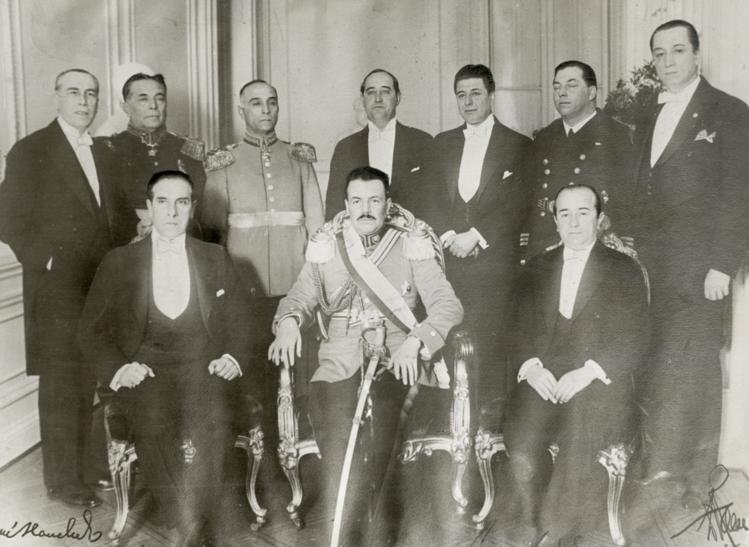
His military coup of February, 1927, was principally directed against the working class and the militant Communist Party. Hundreds of working-class leaders were mercilessly murdered in the streets, hundreds more were incarcerated and deported to the dreadful island of Mas Afuera on the Pacific coast. The trade unions, left without leaders, were unable to continue their active struggle against the dictatorship.
Ibanez then proceeded, by the middle of 1928, with the organization of fascist trade unions. A labor code was enacted by which workers are liable to arrest for vagrancy and compelled to work in the mines through “working books” issued by the state labor offices especially established for the purpose. The anarcho-syndicalist and the reformist leaders of the Railway Federation lent their active support to fascism.
Fascism has since then ruled Chile. The Communist Party and the left trade unions are forced underground. ‘The continuous spasmodic social eruptions which occur since the beginning of the present crisis, which started as early as 1928, are always charged by the bloody government with being “Communist plots.” This gives Ibanez the opportunity to rally all the enemies of the proletariat and the oppressed, and temporarily divert the discontented factions of the bourgeoisie from their struggle against his regime.
THE “COSACH”
The world crisis now hits the very heart of Chile’s economic life. Ruin threatens. Nitrates bleed, and “doctor” Guggenheim rushes with his “medicine,” the “cosach.” What is this cosach, that the capitalist press of the United States speaks so much about? It is the name given to the nitrate reorganization plan promoted by Guggenheim. It stands for “Compania Salitrera Chilena” (Chilean Nitrate Co.). Dictator Ibanez says that this plan means the “nationalization” of the nitrate mines, and Guggenheim does not blush to admit that he goes into partnership with the Chilean government. In spite of the enormous increase in the extraction of nitrates, the export taxes could hardly pay the interest on national debt of approximately $375,000,000. The tremendous expenses for the upkeep of the corrupt state apparatus and the army of mercenaries have for years undermined the national treasury. The government is now on the verge of bankruptcy.
According to this plan, the nitrates will go into a merger involving a capital of $375,000,000, in which the government is a 50 per cent partner. Export taxes are abolished. But this contract, already submitted to and approved by the Chilean government, cedes all mines to the company at the head of which are found the Guggenheims. The government which previously received $30,000,000 as export tax will now as “partner” receive a minimum return of $22,500,000, $20,000,000, and $17,500,000 for the years of 1931, 1932, and 1933 respectively. This is a deep slash in the annual budget. This is how Ibanez and his camarilla are desperately trying to solve the crisis and the national debt problems.
CLASS CONTRADICTIONS ACCENTUATED
As a result of the crisis the class contradictions have of late been considerably accentuated. With the steady sinking of trade and commerce, the petty bourgeoisie is given a staggering blow. Ibanez is compelled to reduce expenses by wholesale discharge of government employees. The state and commercial employees, students and intellectuals who in the colonies and semi-colonies cling to the imperialist enterprises and the corrupt state apparatus as their sole means of subsistence, number in Chile about 400,000. They are the forces that are moving in divided blocs against the regime that menaces their very existence. The petty bourgeoisie is incapable of leading the revolutionary movement for national emancipation. This is a characteristic common to the petty bourgeoisie in all colonies. The division among its ranks is a logical consequence of the very nature of its vacillating attitude. At a decisive moment, it constitutes a great menace for the workers and peasants. The petty-bourgeois leaders of the movement have unmistakably a strong inclination towards fascism, for a compromise with imperialism. The revolutionary role of the petty bourgeoisie, however, must not be underestimated. In the colonies and semi-colonies it feels the burden of imperialist domination. The small traders, the artisans, and commercial employees constantly face annihilation before the advance of the colossus. The only means of livelihood for the student graduates is the government job to which they desperately cling. Others find themselves locked out by the imperialist enterprises, especially in Latin America where American corporations, trusts, and banks import their own technicians and experts from the United States. Thus the petty bourgeoisie is driven into the struggle against the much hated imperialism. The success of this struggle depends, of course, upon the leadership of the proletariat, upon its assuming the hegemony in the anti-imperialist revolution.
EXPLOITATION OF PEASANTS AND INDIANS
The best allies of the proletariat are the poor peasants, tenant farmers, and agricultural workers who are living in Chile under semi-feudal slavery. Of the total cultivable land of 23,129,772 hectares, 2,515,427 are under cultivation, and only 255,358 belong to poor peasants. From these figures we derive two primary conclusions: (1) That because of the shifting of the economic basis of the country from agriculture to extraction of raw material, it has been the policy of the ruling class completely to disregard the development of irrigation and transport systems; hordes of peasants were compelled to abandon their land for pasture; (2) That only a small percentage of the arable land “belongs” to the peasants. The poor peasants and the tenant farmers are subject to severe oppression by the big landowners. In the vineyards, the peasants live on leased land, bound by no contract. During the harvest season the family head works for his landlord for a salary of one Chilean peso a day. His young sons and often his children accompany him on the field, giving their gratuitous labor to their father and “not” to the landlord. The tenant farmer, on the other hand, is simply a share-cropper whose economic intercourse is performed with his latifundista or hacendado. The tenant farmer pays in kind. In many provinces the tenant farmer rarely sees money. This picture of constant degradation of the peasantry is particularly evident in the southern part of Chile, a predominantly agricultural center.
The special bank credits extended intermittently by the government always went to consolidate further the groups of big landowners. That part of the credits intended for irrigation was lavishly spent in part for the country church, the real civil force in the countryside, and to improve the lands belonging exclusively to the latifundistas.
Due to these conditions, the poor Chilean peasantry and the tenant farmers are constantly sinking lower and lower. The agrarian crisis now deeply affecting South America is particularly severe in the south of Chile. The sharpening of the struggle has been of late expressed in: (1) the struggle of the landlords against the policy of dictator Ibanez in favoring imperialism and the small industrial class; and (2) the struggle of the poor peasantry against the semi-feudal landlords. Even the capitalist experts were compelled to admit that “while the crisis finds hardly any solution in the mines, it is particularly alarming in the agrarian centers.”
Another powerful revolutionary reservoir is the Indians, who suffer from almost unheard of exploitation and national oppression. Chile’s proletariat, despite the losses inflicted by fascism, will quickly regain its strength and will lead the oppressed against imperialism and the national bourgeoisie for complete national emancipation.
COMMUNIST PARTY TAKING LEADERSHIP
The Communist Party of Chile has tremendous tasks to perform. As the vanguard of the working class, and for that matter of the oppressed masses, the Party is to apply the general strategy and tactics of the anti-imperialist agrarian revolution to the specific conditions existing in Chile. The revival of militant class struggle is now being manifested by the counter-attack of the workers against their reformist leaders in the trade unions and a general offensive against the bourgeoisie. That the Communist Party is awake to the situation can be seen by the fact that its members are taking leadership in the trade unions. The Party at its plenum in August, 1930, adopted a program of action which, if correctly applied, will definitely put it on the road to the undisputed leadership to which it is historically assigned.
The Communist Party of the United States must closely follow events in Chile and lend unconditional assistance, material and otherwise, to its brother Party and the oppressed masses striving for complete national liberation.
There are a number of journals with this name in the history of the movement. This ‘The Communist’ was the main theoretical journal of the Communist Party from 1927 until 1944. Its origins lie with the folding of The Liberator, Soviet Russia Pictorial, and Labor Herald together into Workers Monthly as the new unified Communist Party’s official cultural and discussion magazine in November, 1924. Workers Monthly became The Communist in March, 1927 and was also published monthly. The Communist contains the most thorough archive of the Communist Party’s positions and thinking during its run. The New Masses became the main cultural vehicle for the CP and the Communist, though it began with with more vibrancy and discussion, became increasingly an organ of Comintern and CP program. Over its run the tagline went from “A Theoretical Magazine for the Discussion of Revolutionary Problems” to “A Magazine of the Theory and Practice of Marxism-Leninism” to “A Marxist Magazine Devoted to Advancement of Democratic Thought and Action.” The aesthetic of the journal also changed dramatically over its years. Editors included Earl Browder, Alex Bittelman, Max Bedacht, and Bertram D. Wolfe.
PDF of full issue: https://www.marxists.org/history/usa/pubs/communist/v10n05-may-1931-communist.pdf
 Revolution's Newsstand