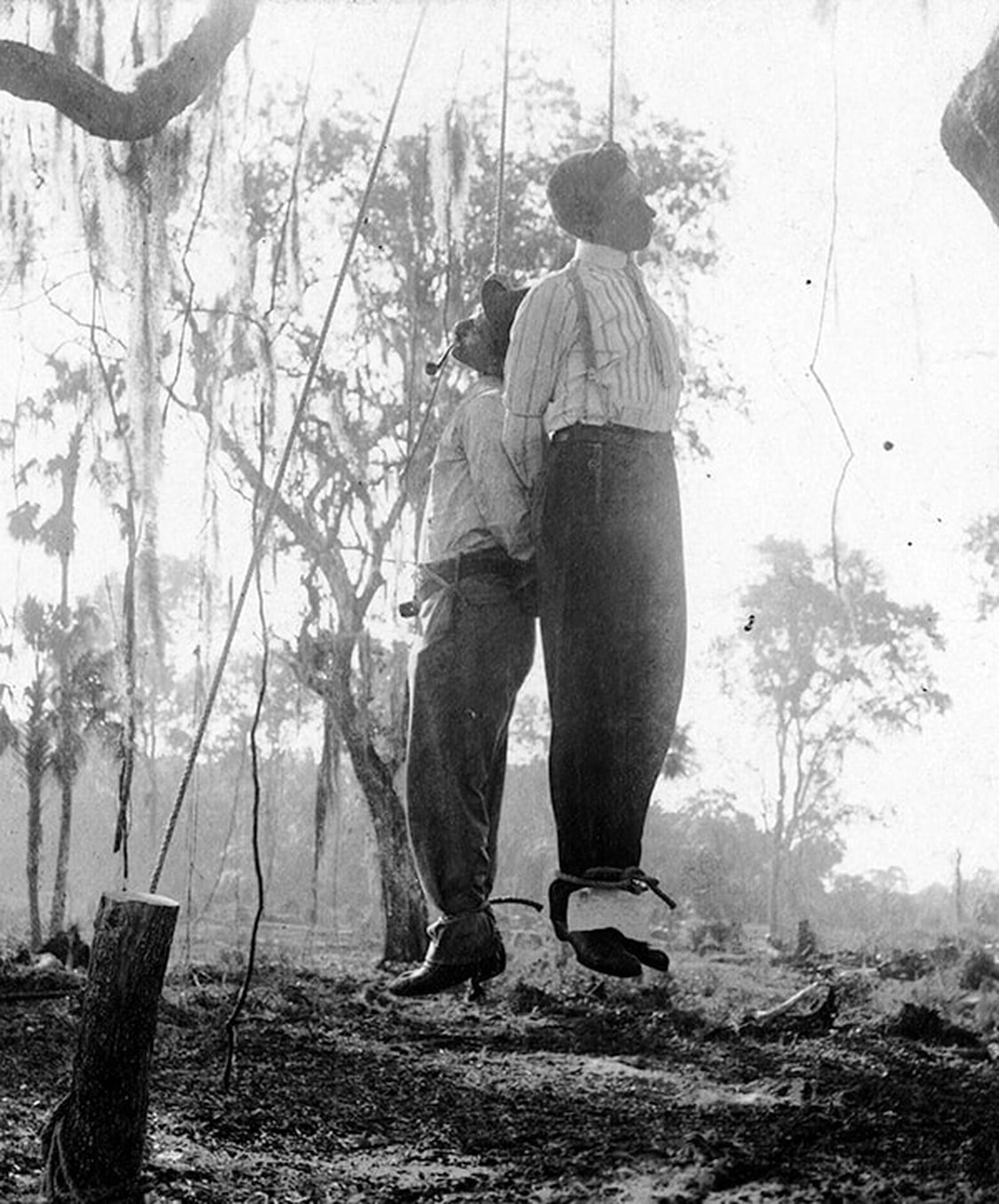
After an Anglo accountant for Bustille Bros. & Diaz cigar company was shot in Tampa, center of the cigarmaking industry and host of much working class history, two Sicilian workers, Angelo Albano and Castronse Figarretta, were arrested as suspects. As they were driven to to jail, three carloads of this city’s finest sopped them, and hung them from a tree at the corner of Howard St. and today’s Kennedy Blvd. The bodies hung over the street until the next morning with a paper pinned to one saying: “take note or go the same way.” Here is the background.
‘Tampa Lynchings Climax to Long War on Unionism’ from The Chicago Daily Socialist. Vol. 4 No. 307. October 22, 1910.
Floggings and Deportations to Jungles Are Features of Battle Against Cigarmakers; Story Told.
The murder of two striking cigarmakers, Castange Ficarroli and Angello Ableno, on one of the principal streets of the city of Tampa, the metropolis. of western Florida, by businessmen and other members of the so-called respectable, law-abiding class, has thrown. the searchlight on the workers’ side in the great war of the classes on the most important havana cigar making center in the United States.
Struggle Is Long
For thirteen weeks the war was waged. Not content with killing the workers in foul, germ-breeding buildings–the most unsanitary cigar factories in the world–the capitalists have during this strike attempted to smother the spark of rebellion by means hitherto unheard of in this country.
Colorado and Idaho have their bull pens; Pennsylvania has its cossacks; Columbus has its Maxim guns, but Tampa has people openly lynch men who dare to belong to a union. In former Tampa strikes, men–including a citizen of the United States–were banished from this country to the wilds of Honduras, but today men are hanged in the public streets of that lawless city.
Began in 1868
Prior to 1868 some domestic cigars were made in a number of cities of the United States, but the havana cigar industry began in that year. The Cuban revolution brought many political refugees to Key West, Florida–situated ninety-one miles from Havana–and, as a result, the manufacture of the havana cigar was started in Key West. In 1886, however, a disastrous fire destroyed over half of that city, including many of the cigar factories. As a result, a majority of the 2,500 cigar makers were thrown out of employment. When a Key West landowner became overly greedy, Ybor, an employer of 300 cigar makers, refused to rebuild on the island. On Tampa Bay he established the first cigar factory in the Tampa district, employing in the beginning nearly 500 cigar makers. The city of Tampa today comprises three sections–Tampa, West Tampa and Ybor City. Ybor City, the most important cigar manufacturing center, bears the name of its founder.
In 1886 the average wage was between $25 and $45 per week; today it is $12, with a few very rare exceptions of $18 and $20 per week.
It is true that there was a raise of $1.00 per thousand on the price of every cigar in 1900. Until 1900, however, the manufacturer allowed the men the best material. Whenever the leaf was slightly over dry, or coarse in texture, the worker threw it aside, for an inferior leaf lessened his output and, therefore, his wage–because he was paid according to his output. But since the 1900 wage increase the manufacturer has given an inferior stock, and also the scraps–gatherings from the floor naturally broken in stemming the leaf, and he has demanded a finer cigar.
In this way the $1.00 increase per thousand has really meant a decrease in the cigar maker’s output, with a resultant loss to the worker.
During this period of fourteen years (called by the cigar man the period of good wages”) there was no organization whatever among the cigar makers. But there were strikes. Cubans predominated. One man would stand up and call on the others in the hall to go out. And they went out. The workers would contribute liberally toward their fellow workers on strike-ten per cent of a week’s wages or one or two days labor, depending on the strikers’ demands.
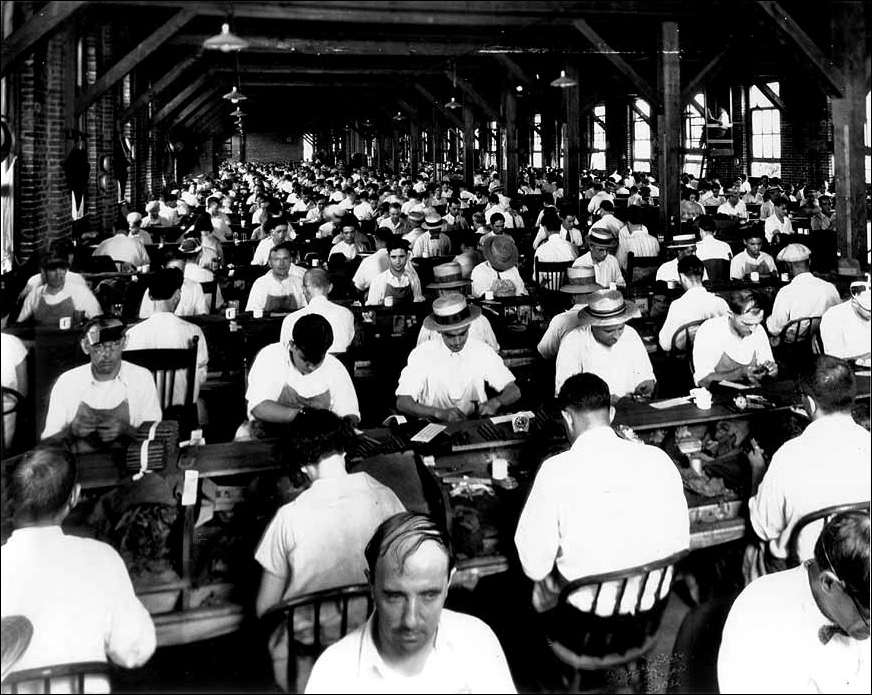
Then the cigar manufacturers organized and this compelled the workers to organize for self-protection. In the beginning the manufacturers were loosely organized, but their system of organization has become finer and finer. The demands on the cigar makers have increased and increased, until today the care-free worker of former days is worse off than a slave. The present state of organization among the men, imperfect as it may be, has only been reached after years of strife within the organization, combined with a continuous attack from the enemy. But the enemy’s solid phalanx has compelled the workers to tighten their line of defense.
The first organized strike occurred in the latter part of 1898. For some time the Resistencias union, confined mostly to Florida and Cuba, had been active, and there was considerable friction between it and the international. The manufacturers used the Resistencia to keep the international from gaining a foothold, and they used the international to keep the Resistencia from effective organization.
Funds Attached
In 1901, during a lengthy strike, the union funds were held up by an attachment placed on the deposit in the bank. Although aid was received from outside places, relief did not come in as abundantly as was expected.
Therefore economic kitchens’ were established in the various wards, where the strikers and their families could get nourishment.
However, the “Citizens’ committee” was organized at this time. With the all of deputy sheriffs, these law-abiding merchants and other defenders of property, law and order, visited the various soup-kitchens and threw the steaming soup on the floors.
Furthermore, the “Citizens’ committee, under cover of night, visited the hovels of prominent members of the union. These men were flogged. Thirteen, including a negro citizen of the United States, were placed on a schooner, carried to the wilds of British Honduras, and there left to shift for themselves. Other men, active in the union, were flogged, placed on trains, and sent to various outside towns.
It is said that when Tampa’s roll of fame is prepared, the honor roll of her Citizens committee will contain these names: Gordon Keller, who was a prominent Tampa clothier; Chief Sam Cotter, captain of the Tampa police for four years and who was afterwards shot by one Knapp for assaulting his daughter; Frank L. Wing, at that time mayor of Tamps, who recently retired from the mayoralty, and Donald B. McKay, editor and proprietor of the “Tampa Daily Times, and at present mayor of Tampa.
After this deportation the struggle continued, other leaders taking the place of those spirited away, but finally the men broke ranks and went back to work, deciding to organize more thoroughly. Since then there have been several strikes, usually against the unsanitary conditions, but sometimes because the employers forced them.
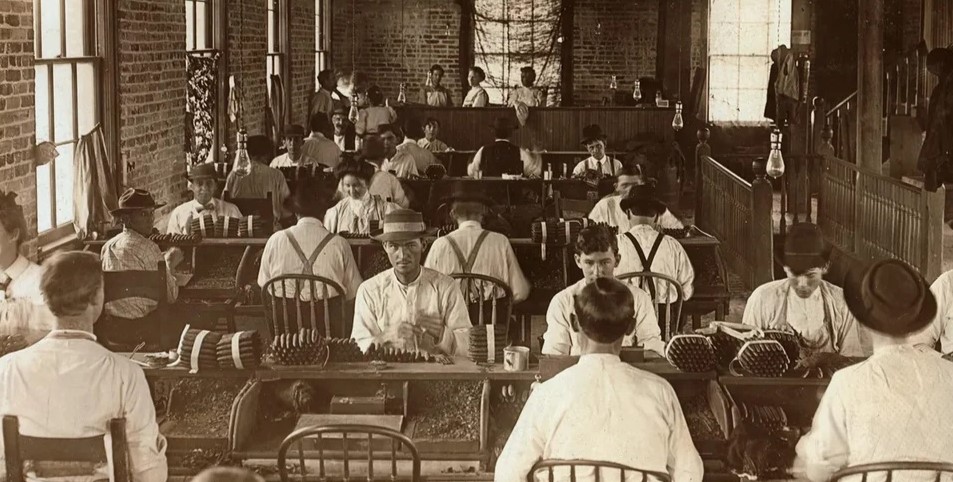
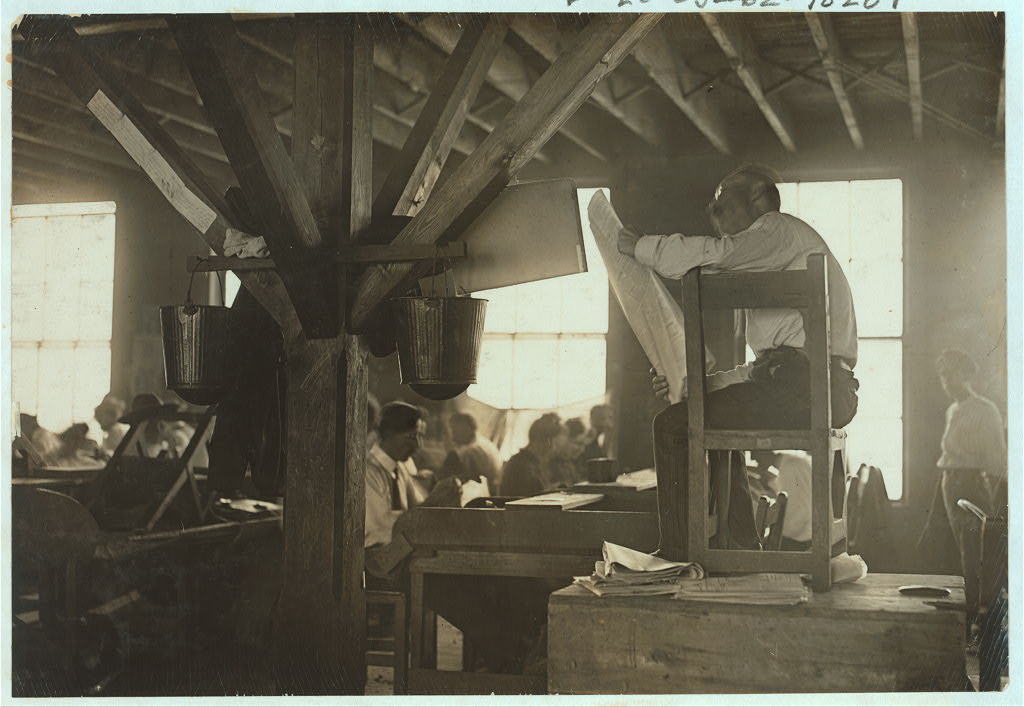
The cigar industry is one of the few where hand labor has not been displaced by machinery and in many a factory the cigar makers employ a man to read from various sources while they are engaged at their work. This custom of readers was first established in Havana, Cuba, about forty years ago. In the United States it was first introduced at Key West. It was then adopted in certain New York shops and a short while after In Tampa. The best economic and historical works are read to the workers, as well as works of fiction. Newspapers are regularly read. Articles from the “Chicago Daily Socialist,” “New York Call” and other Socialist publications are frequently read. In 1903 Frank Milian, at that time mayor of West Tampa, was reader in the Bustillo and Diaz cigar factory in West Tampa. The factory manager refused to allow Milian to enter the shop because certain articles which the manager claimed were opposed to the interests of the employers were read. The men went on strike. During the strike Mayor Milian was kidnapped, flogged and sent to Key West. It is said that his “worship” Donald B. McKay, the present mayor of Tampa, did the flogging. The international union interested itself in the Milian case and had Millan return to Tampa. The men resumed work, for Milian was allowed to read whatever he wished to read without interference from the factory manager.
The manufacturers, real estate men and merchants of Tampa are well organized and an injury to one is an injury to all. The cigar factories are almost equally divided between Ybor City and West Tampa, one on either side and adjacent to Tampa where the principal banks, newspapers and places of business are situated.
The cigar industry is the GREAT industry of this district, and this cigar center has all the essential elements of “boom” town. The “boomers are always on the lookout for new factories. Real estate men and merchants offer inducements to prospective factory builders. Real estate men and merchants have put two-thirds of the investment into other factories. Real estate men and merchants are interested in the boarding houses and hovels.
The Preferred Houses
Many of the factories have preferred boarding houses, in which foremen or managers are interested. A man seeking work must frequently go to a boarding house of this type for a job, and he may even be compelled to have his family board there. There is one particular boarding house in Ybor City with over three hundred boarders and the proprietor or manager will get a man a job in any one of a lengthy list of factories. Several West Tampa foremen prefer Ybor City men, and certain Ybor City foremen prefer West Tampa men. Why, it is easy to understand, A foreman of this type is interested in a boarding house and a cigar maker from distance must take at least one meal day in this restaurant. For a cigar maker to drink is a virtue, for the bartender will get men jobs because foremen and managers are interested in the saloon. The cigar makers live in shacks situated in undrained, mosquito-breeding areas where the rents increase as the weeds grow thicker, until today rents are more than double the rents of ten years ago. As one cigar maker said: In summer we are as loaves of bread in an oven, and in winter as fish on ice.
Yet the giant tobacco trust, the American Tobacco company, and the cigar manufacturers do not complain because their employes are swindled and brow beaten. THERE’S A REASON. The condition of the Tampa cigar factories is worse than that in any other city in America. Because the factory owners do not expose the real estate men, the merchants and the saloon keepers, the business interests see that the manufacturers are not nested in the factories.
Most of the strikes in Tamps have been for better sanitary conditions. The cigar maker smokes while he works and, according to law, the factory owner must have cuspidors and must keep them disinfected. But this law is never enforced, for the inspectors let the employers know when an inspection is to be made. As a result, the cuspidors are safely put away in cellars and there is no sanitary disinfection.
The space in which the cigar maker works has been shortened so that in the average factory today six men work in a space nine by six feet. Open windows would dry the stock. For this reason the windows are kept closed, although the average summer temperature is from 90 to 95 F. The cigar makers work at piece work and have no regular hours. But during the summer they average from 6 a.m. to 5:30 p.m. and in winter from 6:30 a.m. to 4:30 p.m. Because of the awful conditions in the cigar factories, consumption is on the increase, 90 per cent of the workers dying of It.
Tiny children of ten and twelve years work for as little as 50 cents for a twelve-hour day, although the Florida child-labor law distinctly forbids the employment of children at this tender age and for this number of hours.
Both the manufacturers and the city businessmen are vitally interested in the Immigration law and its lack of enforcement. A surplus of labor means a lessening of wages. Because the cigar maker is paid by piece work, the employers can compel the wage slaves to do the work well or receive less pay. The surplus of labor means more mouths to fill and more backs to clothe. The merchants understand this clearly.
The cigar manufacturers contract in Cuba for hands and their agents go to the boats to meet the new arrivals. Formerly the steerage rate from Cuba to Tampa was $13, but the cigar manufacturers compelled the steamship companies to reduce the rate from Cubs to Tampa to $5, although the return passage remains at $12. This $5 passage is known as the “cigar maker’s rate,” and when the Tampa labor organizations notified Daniel Keefe of the immigration department at Washington of this breach of the immigration act, no attention was paid to the communication. The war of the classes is on in earnest in Tampa. It is a fight to a finish. The giant Tobacco Trust is using every means to crush the cigar makers, the same as the steel and tin plate men were crushed in Pennsylvania. The international knows this war is on. The employers would, for the time being, grant every demand except one–recognition et the union. Union or no union, that is the question. Both sides have been preparing for this struggle for several years. Last year there was great energy on the part of the union and inside of two months several thousand men joined the organization, expecting that the strike would occur early this year. The employers also made every preparation for the battle, strengthening their forces in every spot. Daniel B. McKay, Donald with the record, was elected mayor in order that “property, law and order might be carefully protected.”
In years gone by an American citizen and twelve other men were kidnapped, flogged and carried away to a foreign shore by Tampa’s lawless band!
In years gone by a West Tampa mayor was kidnapped, flogged and deported by Tampa’s lawless band!
Within the past few weeks two union men have been murdered in Tampa’s streets by Tampa’s lawless band!
Ere their blood grows thick and cold, let Socialists and unionists agitate! Let them call attention to these Tampa murders!
Let the workers meet, let their slogan be:
“REMEMBER TAMPA, REMEMBER FICARROLI AND ABLENO!”
PDF of full issue: https://www.marxists.org/history/usa/pubs/chicago-daily-socialist/1910/101022-chicagodailysocialist-v04n307.pdf
 Revolution's Newsstand