A brief look at the working class of Taiwan when a Japanese colony.
‘The Labour Movement in Formosa’ by Asagiri from International press Correspondence. Vol. 8 No. 62. September 14, 1928.
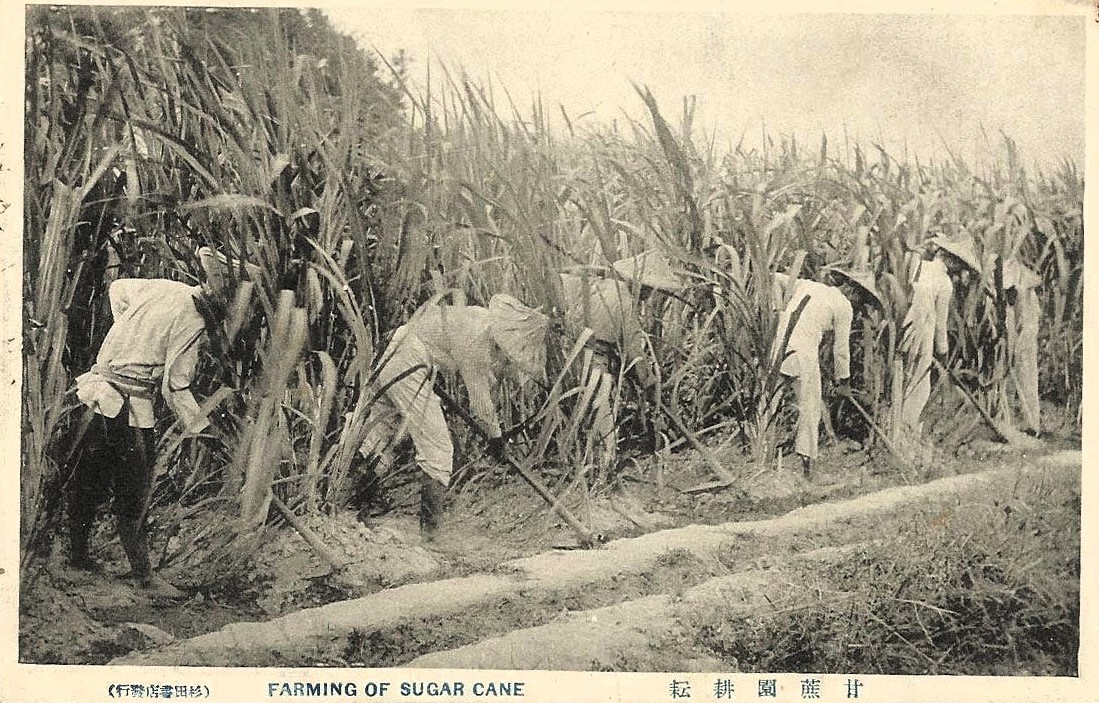
The great island of Formosa is one of Japan’s most valuable colonies. Its present population is about 4 millions. It supplies Japan with various raw materials (sugar cane, camphor, wood, ores). The economic policy of Japan, aiming at squeezing maximum profits out of its colonies, has effectuated an intense capitalist development of Formosa. The peasants’ land has been appropriated for capitalist plantations. This has caused a rush of landless peasants to the cities, greatly increasing the supply of cheap labour.
Since about 1914, industry has developed rapidly in Formosa, and a considerable proletariat has already been formed. In 1921 this proletariat already numbered about 100,000, of whom 45,000 were employed in the industries. 55% of the persons employed are women. Besides these workers, there are more than 200,000 handicraft workers. The number of works and factories working with power driven machinery is 1266; further 1575 undertakings work without power machines. The total of undertakings is thus 2841.
Most of these workers are engaged in the foodstuffs industry, which employs 26,042 men and women workers, and possesses but little power driven machinery. The chemical industry. considerably mechanised, follows with 11,118 workers. The third place is taken by the machine building trade with 1478 workers, the fourth by the textile industry with 1091.
The workers are nearly all natives, only few Japanese (8.1%) being employed, and very few of these being rank and file workers, but generally occupying privileged positions as managers, foremen, etc.
The Japanese capitalists exploit their dominant position to the utmost, compelling the natives to work for much smaller wages than the Japanese workers. The native worker receives on an average only one half of the wages of a Japanese worker. Data received from the various districts show the average daily wage of the Japanese worker to be 1.73 yen as compared with 0.98 for the native. The native agricultural labourers receive only one third of the average wage of the Japanese worker.

Up to very recently, the prevailing political persecution. has entirely prevented any organisation. Since 1926, however, a certain tendency towards organisation has been observable, and the first trade unions formed. At the present time the wood-workers have four unions, the builders two, the textile workers two, the metal workers two, the dye workers one, and the sugar workers one. Besides this there is a miners’ union and a “Workers’ Mutual Aid Society” recruited from various categories of workers. The process of organising the workers proceeds very slowly. The authorities do the utmost in their power to throw obstacles in the way of the movement, and are forcing the active elements among the workers to conspirative methods (they carry on their activities under the guise of photographers, peddlers, and the like).
During the last few years the revolutionary elements of Japanese youth, establishing contact with the masses in spite of all hindrances, have been attempting to arouse the native workers from their passivity, and to induce them to take part in active struggles. One of the movements resulting was the strike of the typographical workers of Formosa, which lasted one month (from 21st July till 21st August 1927). The strikers demanded higher wages and shorter working hours, which were refused by the employers. The workers held out heroically in the face of great privations, but the employers succeeded in obtaining Japanese scab labour, thus forcing the strike to be abandoned.
International Press Correspondence, widely known as”Inprecor” was published by the Executive Committee of the Communist International (ECCI) regularly in German and English, occasionally in many other languages, beginning in 1921 and lasting in English until 1938. Inprecor’s role was to supply translated articles to the English-speaking press of the International from the Comintern’s different sections, as well as news and statements from the ECCI. Many ‘Daily Worker’ and ‘Communist’ articles originated in Inprecor, and it also published articles by American comrades for use in other countries. It was published at least weekly, and often thrice weekly
PDF of full issue: https://www.marxists.org/history/international/comintern/inprecor/1928/v08n62-sep-14-1928-Inprecor-op.pdf
 Revolution's Newsstand