A concise history of U.S. involvement in Haiti and the truth about F.D.R.’s ‘Good Neighbor’ policy.
‘Roosevelt’s ‘Gifts’ to the Haitians’ by Samuel Weinman from The Daily Worker. Vol. 11 No. 178. July 26, 1934.
PRESIDENT ROOSEVELT on his round of inspection of Wall Street’s war bases (palmed off as a vacation trip), stopping in Haiti, splashed the front page of the capitalist press with a hypocritical promise that the U.S. Marines, stationed in Haiti since 1915, will be withdrawn “soon.” The announcement was distorted by the capitalist press, which hailed the speech as evidence of Roosevelt’s “good neighbor policy,” an expression of “good will,” a new interpretation of the Monroe Doctrine and whatnot; but especially did they strive to create the impression that the evacuation of the marines was something new in the imperialist scheme, that Wall Street stood to lose by the change, and that the 2,500,000 Haitian Negro masses will benefit by the “New Deal.” The truth of the matter is that the capitalist press was spewing a set of lies in support of Roosevelt’s imperialist program. Beware of Roosevelt, especially when he comes bearing “gifts.”
To understand Wall Street’s latest maneuver in Haiti it is necessary to review some historical and economic facts. As far back as 1847, the United States government tried to obtain control of Mole St. Nicholas, Haiti, as a naval base. In 1891, a Yankee fleet sailed to Haiti in an effort to intimidate the Haitians to lease Mole St. Nicholas, but with- out success. In 1914-15, Wall Street imperialism made six futile at- tempts to secure control of Haiti. William Jennings Bryan, then Secretary of State, strongly urged intervention.
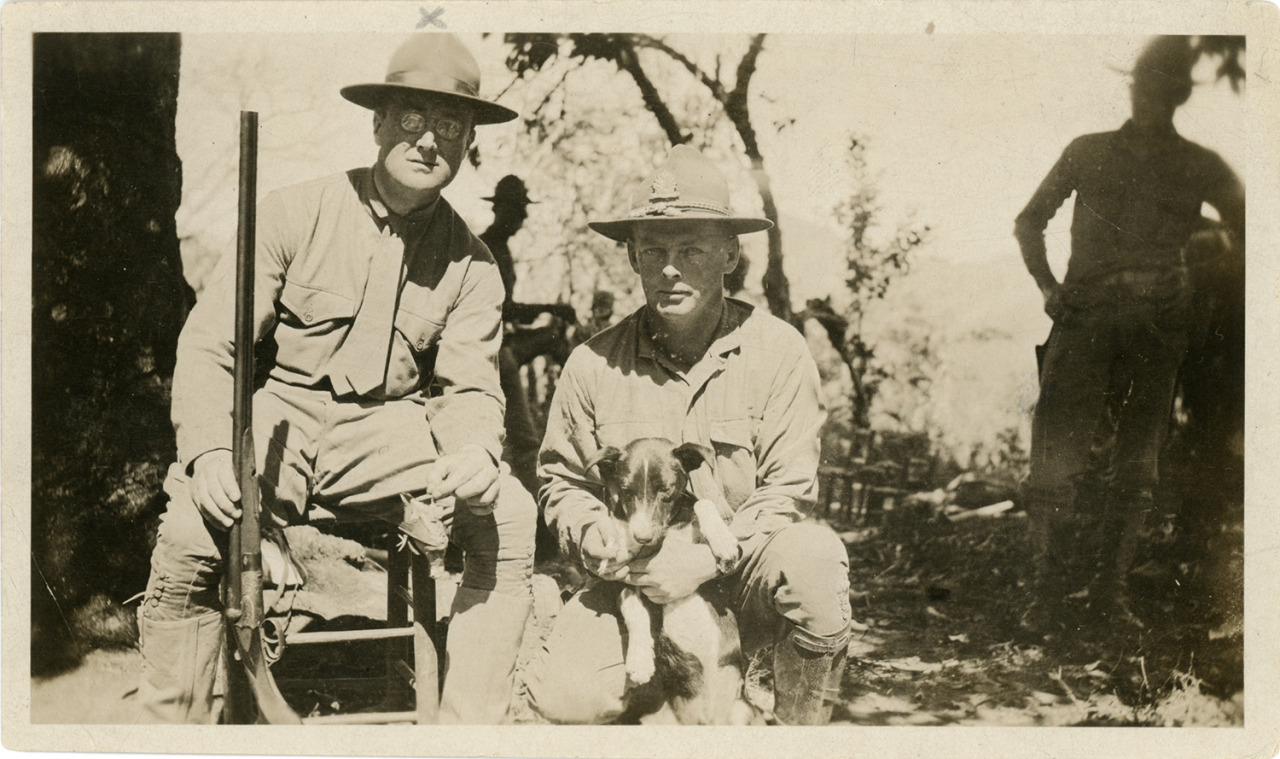
In December 1914, American marines suddenly landed at Port au Prince and seized $500,000 belonging to the Haitian government from the vaults of the National Bank of Haiti. Early the next year several imperialist missions journeyed to Haiti to “negotiate” National City Bank domination; this also failed. Consequently, on July 27, 1915, under the pretext of a local revolution in Haiti, American marines once again landed and took possession of Haiti.
IT is significant that the rape of Haiti occurred during the World War, at a time when the Wall Street bankers, anticipating American participation in the conflict, desperately hurried to make the Caribbean a strongly fortified chain of outposts for Yankee imperialism. The landing of the marines and the intrenchment of American imperialism aroused the indignation of the Haitian masses to the point of rebellion and in 1919 the marines drenched the country in a bloodbath, slaughtering over 2,300 natives. Josephus Daniels, then Secretary of the Navy and now U.S. Ambassador to Mexico, admitted before a Congressional Committee that he himself ordered Admiral Caperton to land the marines for the conquest of Haiti.
The imperialists forced Haiti to accept a treaty which made that “republic” a special preserve of Wall Street led by the National City Bank. The treaty provided that an American customs collector be appointed; that an American Financial Adviser be appointed; that Haiti was forbidden to increase her national debt without Wall Street’s consent; that Haiti was not allowed to raise the customs duties without the approval of the American Financial Adviser; that Haiti was obligated to create a constabulary composed of natives but officered by Americans; that Haiti agreed not to sell or lease any of its territory to any foreign power. In a word, Haiti was thoroughly shackled to facilitate the unrestrained imperialist exploitation of the Haitian masses.
Who owns Haiti’s money, resources and land? Who enslaves Haiti’s workers and peasants? The National City Bank of New York owns the National Bank of Haiti, whose dozen branches, scattered over the country, have a virtual monopoly of the banking business, besides having the exclusive right to service the treasury and issue bank notes. The National City Bank also owns the National Railroad. The Haitian Corporation of America owns the electric works, the Haitian American Sugar Co., trolley lines, a wharf company with warehouses and freight handling equipment.
Other Wall Street interests include the Haitian Pineapple Co., North Haitian Sugar Co., Haiti Commercial Co., United West Indies Co., Haitian Co., Logwood Manufacturing Co., Haiti Telegraph and Cable Co., and many sugar, fruit and coffee plantations covering tens of thousands of acres of land.
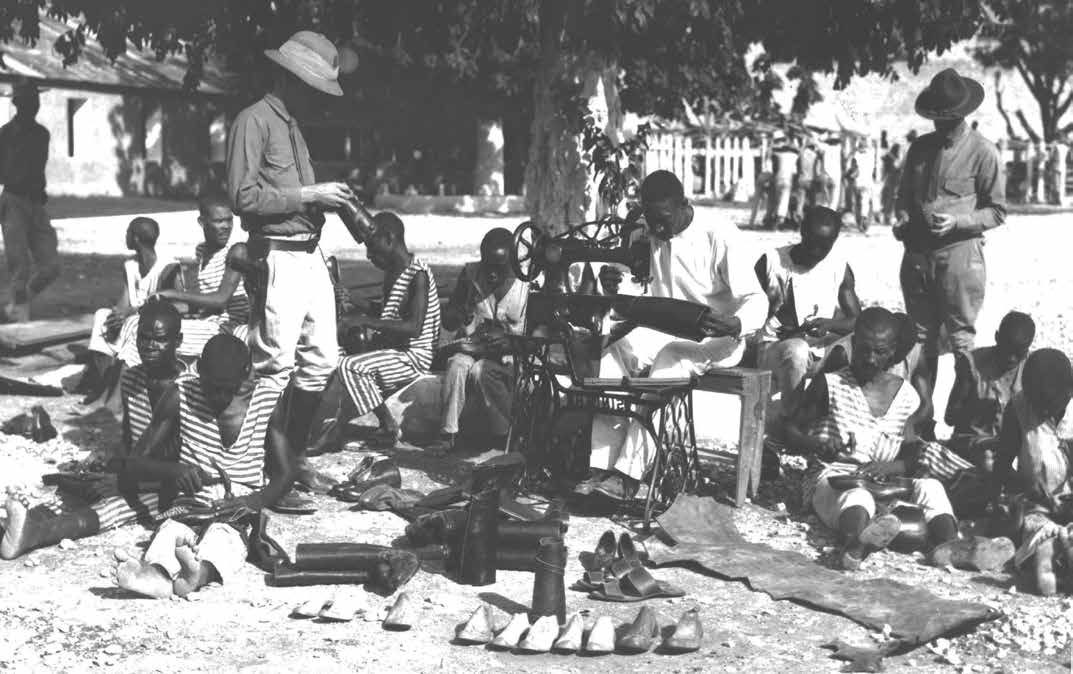
UNEMPLOYMENT is widespread in Haiti. These who are working receive starvation wages. The Haitian-American Sugar Co. recently cut wages from 30c to 15c for a twelve hour day. “Atlattan” cotton plantation pays 15c a day for 12 hours. The Haitian-American Development Corporation has slashed the pay to 10c for 12 hours less than one cent an hour. Unemployed workers who do not possess a dollar (and there are thousands) are arrested on the charge of vagrancy and sentenced to 30 days of forced labor; at the end of 30 days the “released” worker is rearrested and resentenced.
Haitian workers have begun to organize and struggle against the starvation and misery meted out by Yankee imperialism. Beginnings have been made at forming trade. unions and developing strikes. Communists are in the forefront of the struggle against Wall Street’s domination,
President Stenio Vincent, supported by the National City Bank and the U.S. Marines, has met the workers’ resistance with a reign of terror that rivals Hitler’s fascism. Freedom of speech, press and assemblage are denied. Mail is censored. The right to organize and strike is banned. The jails are filled with revolutionary workers. Even collections and meetings in behalf of the Scottsboro boys are prohibited.
WITH this background in mind, what is the meaning of Roosevelt’s promise to withdraw the marines from Haiti? It means simply that President Vincent, the native bourgeoisie and the native constabulary officered by Americans are now in a position to perform the tasks formerly performed by the marines. Why then should the imperialists bear the expense of maintaining an armed force in Haiti? It is unnecessary. Let the Haitian masses pay taxes to support the native police, say the imperialists. Why should the imperialists bear the stigma of armed intervention? It, too, is unnecessary. Vincent and Co. will do the job. This situation is no different from the marine evacuation from Nicaragua where the native politicians, bourgeoisie and police have replaced the marines. If and when the Philippines are granted “independence” the same trick will be used there.
In any event, even if the marines are withdrawn, the $11,000,000 of bonds owned by Wall Street bankers will be the first consideration of the Haitian government; as President Vincent has already guaranteed they will have “adequate protection.” The National City Bank will retain its monopoly of the country’s capital and credit. The imperialists will still own the tens of thousands of sugar, fruit and coffee lands. The customs collector and the financial adviser will remain. American imperialist agents. The officers of the Haitian police will be Americans. The American Navy will have its naval base at Mole St. Nicholas. The workers’ wages will stay at 10c a day. Unions and strikes will still be outlawed.
In a word, even after the marines embark for the “land of the free,” there will be no change in Haiti until Wall Street parasites are driven out and a workers and peasants government is established.
The Daily Worker began in 1924 and was published in New York City by the Communist Party US and its predecessor organizations. Among the most long-lasting and important left publications in US history, it had a circulation of 35,000 at its peak. The Daily Worker came from The Ohio Socialist, published by the Left Wing-dominated Socialist Party of Ohio in Cleveland from 1917 to November 1919, when it became became The Toiler, paper of the Communist Labor Party. In December 1921 the above-ground Workers Party of America merged the Toiler with the paper Workers Council to found The Worker, which became The Daily Worker beginning January 13, 1924.
PDF of full issue: https://www.marxists.org/history/usa/pubs/dailyworker/1934/v11-n178-jul-26-1934-DW-LOC.pdf
 Revolution's Newsstand