Local capital running Raymond, Washington like a medieval fiefdom.
‘Raymond, Washington’ by George S. Holmes from Solidarity. Vol. 3 No. 16. April 13, 1912.
(Special to Solidarity.) Hoquiam, Wash., April 2. Last Thursday, March 28, we received news that several mills bad gone out on strike in Raymond and, according to instructions from F. H. Allison, secretary National Industrial Union of Lumber Workers, and George Speed, G.E.B. member I.W.W., i started out for the scene of industrial battle. In Centralia, where we changed trains, I met Fellow Workers Levine and Hudson, who were also going to Raymond.
We arrived at that glorious burg on the evening train and started out to find a bed. We had walked about a block, when four men stopped us and said, “Where are you going?” We answered, “To look for a bed.” They said, “Come with us and we will give you a bed.” We objected and asked why we were arrested, and were told we were under suspicion. We were marched down to the police station and kept for an hour and a half, when the sheriff and a couple of deputies came and put handcuffs on us and told us to get into an automobile that was in from of the station. We asked to see his warrant. He replied that we would see it afterwards, and by the way, this warrant was not made out until some time after we were arrested.
We were taken to the county jail in South Bend. The charge was “inciting to riot.” We asked how we could be inciting to riot when we had not opened our mouth; had just left the train; but all to no avail. We inquired as to our bail and were told $1,000. Upon asking when our trial would come off the sheriff stated, “After a reasonable time,” whatever that might mean.
On Saturday we were marched to the train by the sheriff, who rode to Raymond with us. While there 75 more were marched on board escorted by five men armed to the teeth, resembling nothing so much as a wild west show. We found out afterwards they were mill owners. The depot was crowded with armed men and the boys who were being deported told us there were a lot more strikers imprisoned in box cars waiting their turn for deportation.
These law and order thugs had one formula: If they met a striker the question would be, “Will you go to work?” When the answer came, “No, we are on strike,” the men would be arrested for deportation. Two strikers, Americans, told me that they asked a man called Little, mill owner, crook and all around thug:
“Is this a free country?” Little answered, “You bet your boots it’s not free country.” “Then how a about the constitution?” said the striker. “To hell with the constitution,” said Little.
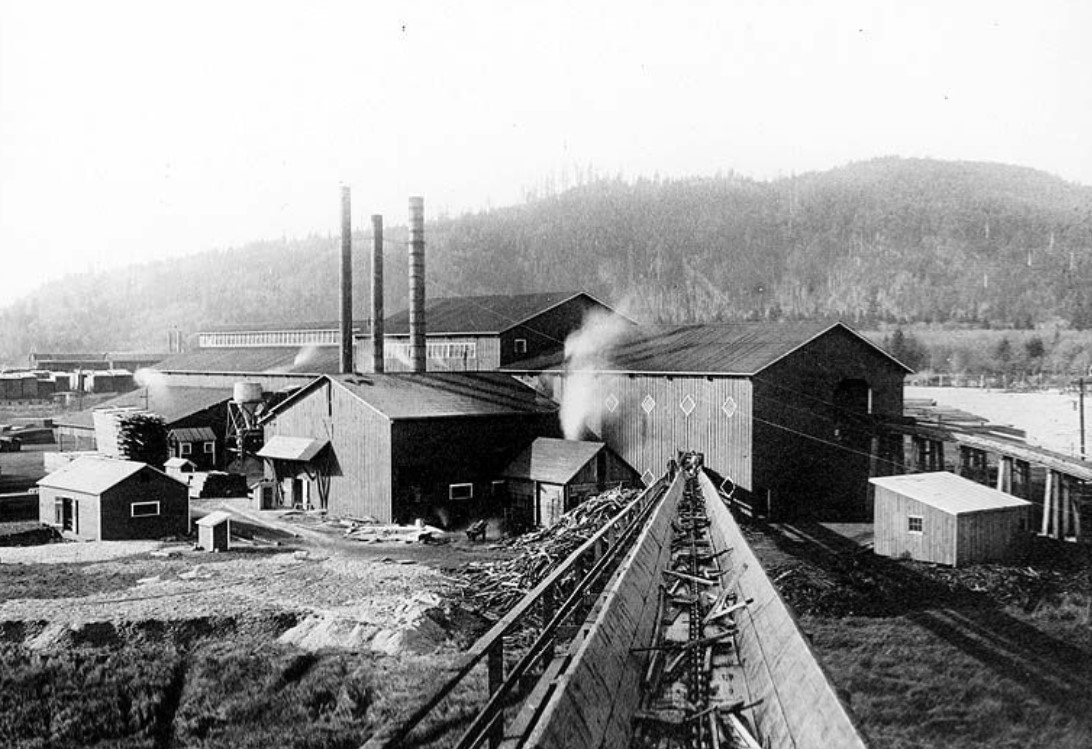
The authorities also closed and nailed up the Finn hall, where we met, arrested our secretary and took money and papers. A business man who expressed sympathy with us had his store closed. Such is the law and order of the mill owners and their minions. Some of the men deported had been torn from their wives and families. One man had $1,000 in the bank and others, had smaller sums, which they could not get nor their pay from the mills, still they were deported because they refused to work longer for the starvation wage of $1.75 per day that the parsimonious mill owners of Raymond were doling out to them.
The deported Greeks and Finns got in touch with their consuls, and I heard the consuls took them back. The Austrians have notified theirs, and the Poles and Finns have appealed to the Russian consuls. Curious, isn’t it, that people should be compelled to appeal to despotic Russia for protection from the capitalists of this land of liberty.
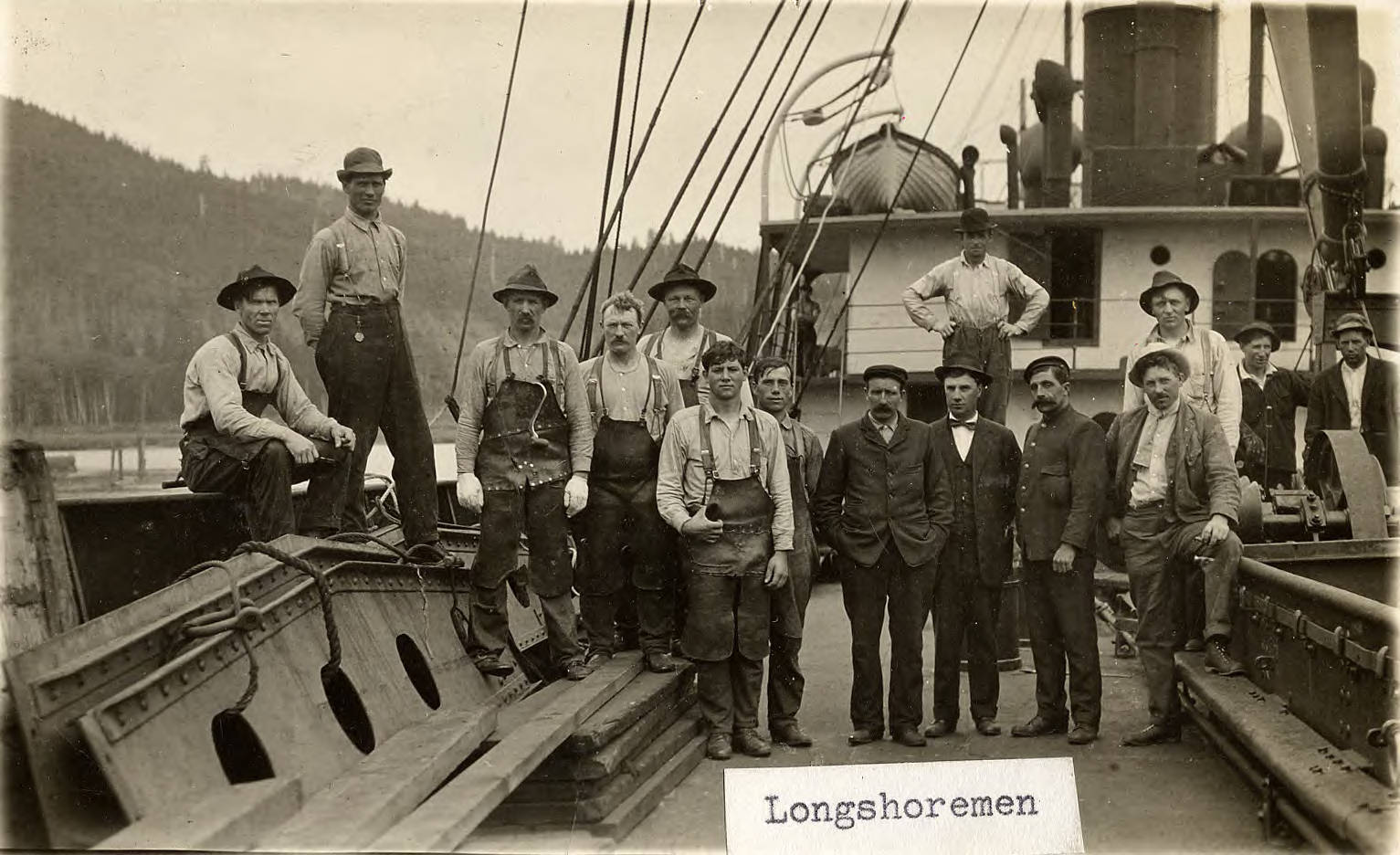
Aberdeen and Hoquiam are filled with armed men. Anderson, Yeager and Newell are in durance vile from Hoquiam, and George Speed, Joe Biscay, Millar and others in limbo, in Aberdeen. Our headquarters there was closed, likewise the Longshoremen’s, and the Finnish and Austrian halls. We had a house where single men, strikers, could sleep and eat. They raided it, and threw our stove and groceries into the street. Some fellow workers have been driven from their homes. I have traveled the United States, and the world for that matter, and never did I see such high-handed outrages. Even in Lawrence they never tried to deport people, and organizers could speak.
We had a magnificent meeting last night in the big Finnish hall. Philbrich of the Longshoremen was chairman, and Brown of the Shingle Weavers, Isler and myself spoke. The enthusiasm was tremendous and the large crowd pledged themselves to stand to the last ditch.
Isler and myself are here, and expecting arrest every minute. But never fear, the fight will be carried on, the battle won and the flag of industrial unionism planted firmly in the Gray’s Harbor country.
GEORGE S. HOLMES.
The most widely read of I.W.W. newspapers, Solidarity was published by the Industrial Workers of the World from 1909 until 1917. First produced in New Castle, Pennsylvania, and born during the McKees Rocks strike, Solidarity later moved to Cleveland, Ohio until 1917 then spent its last months in Chicago. With a circulation of around 12,000 and a readership many times that, Solidarity was instrumental in defining the Wobbly world-view at the height of their influence in the working class. It was edited over its life by A.M. Stirton, H.A. Goff, Ben H. Williams, Ralph Chaplin who also provided much of the paper’s color, and others. Like nearly all the left press it fell victim to federal repression in 1917.
PDF of full issue: https://www.marxists.org/history/usa/pubs/solidarity-iww/1912/v03n16-w120-apr-13-1912-Solidarity-SD.pdf
 Revolution's Newsstand