
Responding the his own expulsion in December, 1929 and the repression against Bukharin and his comrades, M.N. Roy decries the use of terror within the Communist International, of which he was a founder, against dissension, pointing out that the Bolsheviks under Lenin always had dissenters. Transcribed for the first time.
‘The Problem of Regime’ by M.N. Roy from Revolutionary Age. Vol. 1 No. 5 January 1, 1930.
BOURGEOIS writers on the French Revolution set up the theory: “Revolution eats its own children.” The substance of this vulgar theory is that the Jacobin dictatorship was easily overthrown because sanscullottism seriously weakened itself by dissension. Pinning their faith on this theory, the bourgeoisie today gleefully watches the operation of the regime of terror inside the Communist Party of the Soviet Union. They hope that the formidable enemy that could not be destroyed by their efforts will finally fall victim to its own internal dissensions–the revolution may once again eat its own children.
The march of events gives the bourgeoisie apparent ground for this hope. The regime of terror inside the Communist Party of the Soviet Union is becoming alarmingly destructive. It is now almost certain that the so-called “right-wing” opposition headed by Bukharin will soon be expelled from the Party. The crime for which Bukharin and his friends will be sentenced is that they “openly criticised the Party policy and leadership.”
The Class Role of Terror
One need not agree with the views ascribed to Bukharin and his associates to protest against their persecution. The protest can be raised on the ground that the proletarian revolution must not imitate the methods of the bourgeois revolution. Terrorist measures, applied either externally or internally, do not always indicate revolutionary determination. Sometimes they are taken by panic-stricken people with little faith in the dynamic potentialities of the revolutionary class. The present dissensions inside the Communist Party of the Soviet Union are the reflection of the great difficulties besetting the process of economic reconstruction under the very complicated conditions of post-revolutionary class struggle. They represent divergence of views regarding strategy and tactics in the struggle which the proletariat in power must conduct against forces, old and new, opposed actively or passively, to the process of Socialist construction. To attempt to “liquidate” these dissensions by internal terror is very dangerous. For these disagreements are essentially within the working class and can be settled on the basis of the fundamental principles of the revolution. Terror is a weapon of the revolution for exterminating the class enemy. Its application within the revolutionary class is highly dangerous and the danger becomes almost fatal when the regime of terror reigns within the Party of the revolutionary class.
Whatever they may be, the views represented by Bukharin and his associates are not perverse personal inclinations. They reflect the attitude of a section of the proletariat as to the strategy and tactics of the struggle for the construction of Socialism. The expulsion of Bukharin and a few others, there- fore, will not clear up the situation. An entire section of the class cannot be suppressed. This would be carrying the civil war into our own camp-which is a very dangerous pastime. If the views expressed by Bukharin and his associates indeed represent as is alleged tiredness, pessimism and deviation from the revolutionary resoluteness of the proletariat, this should be explained to the workers sympathising with those views. Those who today follow Bukharin and his associates may submit themselves passively to the official policy after their leaders are placed hors de combat; but they will certainly not have their heart in the work. Thus internal terror will defeat its own end. It will not lead to the inner consolidation of the Party so indispensable in the present situation of enormous difficulty.
Differences Within a Communist Party
The proletariat by its very nature is the most homogeneous of social classes. The differences of views developing inside its Party during the struggle for power and after are, therefore, not irreconcilable as in the case of other classes. Other classes merge and overlap, one into another, thus creating the possibility of the representatives of the interests of one class remaining permanently inside the Party of another. But the proletariat is so definitely separated from all the other classes (the line of demarcation is so much sharper) that there is no room in its Party for the representatives of other classes, except as individual adventurers or agent provocateurs. Therefore the dissensions inside the Communist Party do not represent the direct clash of opposing class interests. In the USSR, for example they indirectly reflect the post-revolutionary class-struggle in the conditions of which the dictatorship of the proletariat is maintained. But even in this case the Communist Party itself by no means becomes the ground on which the representatives of conflicting class interests come to a clash. The possible and often inevitable divergences of views concern not the basic aims of the revolution but rather the methods for the realization of these aims. Consequently, terrorist measures are not necessary for dealing with these divergences, they can be settled on the basis of internal democracy.
The application of terror internally was inevitable in the case of the dictatorship set up by the French Revolution. This was not the dictatorship of a homogeneous class. The Jacobin Club which wielded the dictatorship, was the meeting ground of conflicting classes. In spite of its overwhelmingly proletarian composition, sanscullottism was not Bolshevism. Its social composition violently clashed with its historic mission which was to push the timid bourgeoisie in the struggle for the destruction of the old order. Being the scene of a fierce clash between historically antagonistic social forces, the Jacobin Club could not but be itself shaken, decimated and destroyed by the reign of terror introduced for exterminating the enemies of the revolution. It is insane to adopt similar methods of suicidal internal terror in the case of a Party which does not in the least present a scene of similarly fierce class conflict. The Party of the proletarian revolution is distinguished by the homogeneous nature of its class composition. Any doubt or deviation inside its ranks is not the menacing voice of a hostile class. It rather represents a wavering on the part of a certain section of the revolutionary army. The weak and wavering can be shifted to a less difficult point of the battle front, and again infused with revolutionary courage and enthusiasm in course of the triumphant development of the struggle. Why submit them to the sledge-hammer of terror, thus making them irrevocably lost to the revolution?
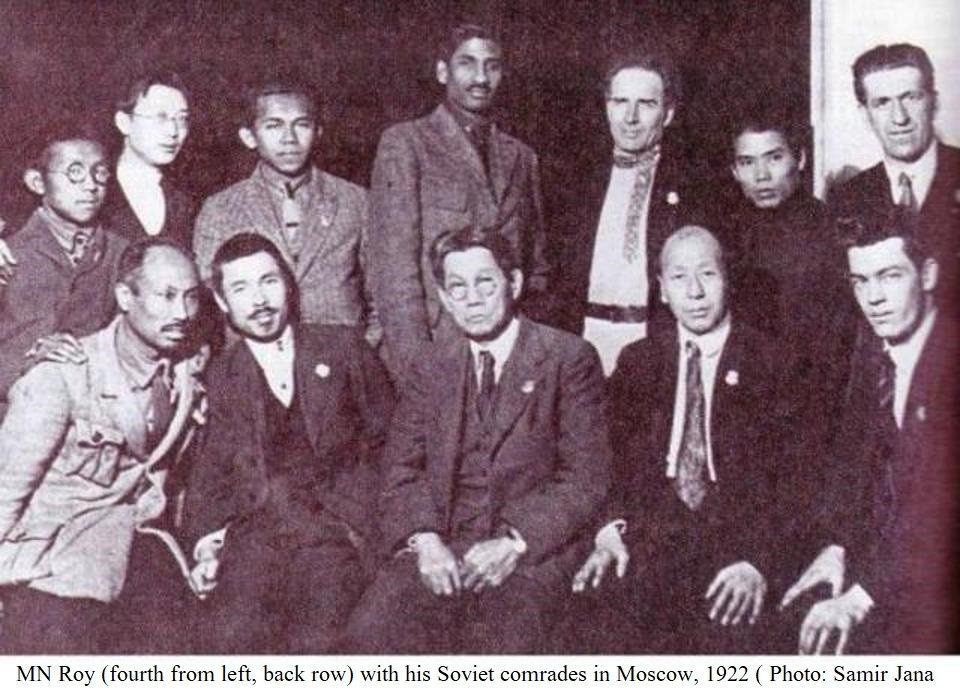
If internal terror is harmful to the Party in power in a country where dictatorship of the proletariat has to be maintained in a long period of post-revolutionary class-struggle, it is even more so the case of Parties engaged in the task of mobilizing the masses for the coming struggle for power. And yet all sections of the Communist International have been thrown into a veritable reign of terror.
How a Communist Party Develops
A Communist Party does not drop ready-made from heaven. It develops out of the age-long struggle of the working class and incorporates all of the experiences and lessons of this struggle. If one hundred per cent knowledge of the theory of Communism and absolutely correct views as to its realization were the condition for entrance into the Communist Party, then the Party would indeed have few recruits. The most advanced elements of the working class willing to conduct a revolutionary struggle against existing social conditions gather under the banner of the Party, there to be fully trained in the practice of the class struggle. Consequently within the Communist Parties there will naturally be differences of opinions and views. A free discussion on all questions of principle and strategy and tactics is the only way to evolve unity out of these differences. It is the only way for the Communist Parties to attain maturity–to bolshevise themselves as the essential condition for their eventual success in capturing power. Discussion, of course, should take place side by side with action; the experiences of the latter will decisively solve the disputed questions one way or the other. The regime of internal terror introduced into the Comintern has not only prevented the sections of the International from strengthening themselves by drawing new vigor from the contemporary class-struggle. It has even deprived the Parties of their original forces Instead of completing the consolidation of the two main forces that contributed to the foundation of the Communist International–the revolutionary old guard in the labor movement that had for years fought against opportunism in the Social-democracy and had finally risen in open revolt in 1914 on the one hand, and the new young cadres that arose out of the turmoil of war and the mass upheavals following it–instead of completing the process of consolidation so brilliantly begun under Lenin, the whole process of forging a united revolutionary proletarian vanguard, consolidated ideologically, politically and organizationally was profoundly disturbed by the introduction of violent measures in regulating inner-Party differences. These came with the development of the factional struggle in the Russian Party after the death of Lenin. All along there have been differences inside the Russian Party. Lenin had combated deviations to the right as well as to the left ideologically, on the basis of proletarian democracy, but he never advocated violent suppression of opposing views. With his disappearance from effective leadership terror was gradually introduced in the inner-Party regime. It was not long before the pernicious method spread to the entire International. Leaders and considerable strata of the membership began to be deposed and expelled for this or that “deviation.” As a result both forces that had originally contributed to the foundation of the Communist International have not only been eliminated from leadership but have even been expelled from the Party itself. And yet no new forces have arisen to replace the old who have thus been “removed.” The people who stand at the head of the Communist Parties today arrived there not by virtue of greater ability but in consequence of the regime of terror which is ruining the Parties. The fear of expulsion restrains the membership from expressing itself freely. Even worse the regime of terror encourages unscrupulousness and lack of principle. Old proletarian elements passively subscribe to policies with which they do not agree because they do not want to be out of the Communist Party to which they have belonged from the very beginning. Under these circumstances it is not surprising that the majority of the leading members of the Parties today have been–as a rule–only a few years in the Party.
The Party of the proletariat does not need internal terror to maintain the solidity of its ranks. It is bad enough in the case of Parties that have won power; in the case of Parties that have still to capture power it is simply disastrous for it directly helps the enemy by seriously hindering the development of the revolutionary Party of the proletariat.
Workers Age was the continuation of Revolutionary Age, begun in 1929 and published in New York City by the Communist Party U.S.A. Majority Group, lead by Jay Lovestone and Ben Gitlow and aligned with Bukharin in the Soviet Union and the International Communist (Right) Opposition in the Communist International. Workers Age was a weekly published between 1932 and 1941. Writers and or editors for Workers Age included Lovestone, Gitlow, Will Herberg, Lyman Fraser, Geogre F. Miles, Bertram D. Wolfe, Charles S. Zimmerman, Lewis Corey (Louis Fraina), Albert Bell, William Kruse, Jack Rubenstein, Harry Winitsky, Jack MacDonald, Bert Miller, and Ben Davidson. During the run of Workers Age, the ‘Lovestonites’ name changed from Communist Party (Majority Group) (November 1929-September 1932) to the Communist Party of the USA (Opposition) (September 1932-May 1937) to the Independent Communist Labor League (May 1937-July 1938) to the Independent Labor League of America (July 1938-January 1941), and often referred to simply as ‘CPO’ (Communist Party Opposition). While those interested in the history of Lovestone and the ‘Right Opposition’ will find the paper essential, students of the labor movement of the 1930s will find a wealth of information in its pages as well. Though small in size, the CPO plaid a leading role in a number of important unions, particularly in industry dominated by Jewish and Yiddish-speaking labor, particularly with the International Ladies’ Garment Workers’ Union Local 22, the International Fur & Leather Workers Union, the Doll and Toy Workers Union, and the United Shoe and Leather Workers Union, as well as having influence in the New York Teachers, United Autoworkers, and others.
For a PDF of the full issue: https://www.marxists.org/history/usa/pubs/revolutionary-age/v1n05-jan-01-1930.pdf
 Revolution's Newsstand