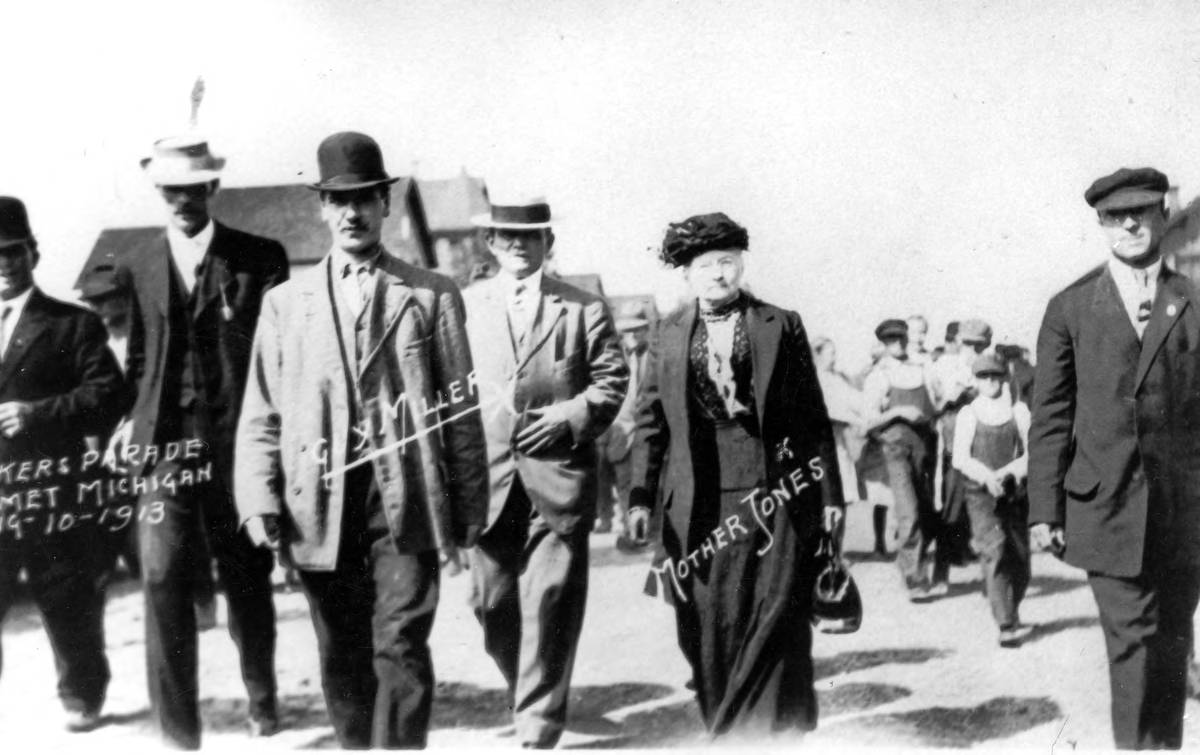
The Socialist Party in the Debs era regularly sent out official investigative teams to gather evidence on industrial disputes, working conditions, etc. Here is the Michigan Socialist Party’s fact-finding report on that state’s epic copper strike led by the Western Federation of Miners in 1913-14.
‘Report from the Michigan Strike Committee’ by James Hoogerhyde from The Party Builder (National Bulletin of the Socialist Party). No. 51. October 25, 1913.
Office Michigan State Secretary Socialist Party. James Hoogerhyde. 79 Monroe Ave., Grand Rapids, Mich. October 5, 1913.
Walter Lanfersiek.
Dear Comrade: Enclosed find my report on the copper miners ‘strike. I have not given details of outrages, etc., as these have all been printed in the Miners’ Bulletin, which I presume has been sent you, or to Information Department. If you have not received them, I can send you a file of marked copies as a part of my report. Please let me know. Fraternally yours,
JAMES HOOGERHYDE.
Report of Conditions in the Michigan Strike Region.
The demands of the strikers are: Recognition of the union; eight-hour workday; minimum wage of $3.00 per day underground; thirty-five cents flat increase for surface workers; two men to all machines.
The conditions prevalent in the mines of the copper country are those of abject slavery, and greater disregard for human lives is not conceivable. Illy-ventilated, the mines are a menace to the health of the workers. It is conceded that the span of a trammer’s usefulness is about five years. Improperly timbered, accidents are numerous. Statistics are not available, as the companies conduct hospitals of their own, presided over by the company doctor.
The miners spend from 10 to 11 hours underground in the mines, which are as much as 7,000 feet deep. That far below the surface the air is hot and foul. The air pumped into the shafts is wholly insufficient and cannot reach into the drifts and up the stopes, the only air reaching from the outside being the exhaust from the drills.
The compensation for work in these mines varies, but approximates $2.25 per day. It is, of course, contended that it is more nearly $2.75, and some- times $3.00, but it must be remembered that deductions are made for supplies, rent, fuel, doctor and hospital fees.
The most abominable condition of all is the “contract system,” which reduces the miners to industrial serfs and gives the companies the most absolute power to “discipline” the men. By this system a certain piece of work is allotted the miners, which may, or may not, contain ore in paying quantities. The miner receives no pay for rock mined which does not contain paying ore, and according to the terms of the contract the miner has no claim against the company until the contract is completed. By reason of this it often happens that at the end of the month the miner has no pay coming, but is indebted for supplies, etc., instead, which debt is taken from his next month’s pay. Because of these conditions the miner never knows what he has coming; it might be, anywhere from $1.50 to $2.50, or nothing at all.
The mines being unsafe, and accidents from falling “loose” and “caves” frequent, the miners, when working in pairs, very often were able to assist each other at such times. But as human lives are of no consequence in these underground infernos, and every pore of the masters of the mines cries greedily for profits, the two-man plan had to be abandoned as too extravagant when a one-man machine was invented. This machine, which is called the “widow-maker,” has done more to awaken the miners than all the agitation of union organizers and Socialist agitators.
From the foregoing, the inhumanity and abject slavery to which the miners had to submit is apparent. But in order that we may have a thorough understanding of the situation, comparison with the copper districts in the West may be useful: Wages in Michigan are about $2.25.
In the West, $3.50 to $4.00.
Workday in Michigan is 10 to 11 hours. In the West, 8 hours.
The cost of production outside of wages is 8 cents per pound in Michigan.
In the West it is 10 to 11 cents per pound. While the Michigan mines are among the richest in the country, the Michigan miners are the poorest paid. It will be observed that the Michigan mine operators are in a position to pay at least the same, if not better, wages than are the operators in the West.
The Present Status of the Strike.
All the men are out and remaining steadfast in their refusal to go back without some concessions being made. The capitalist press has, since the inception of the strike, daily informed the public that the strike has been settled and ore is being mined and shipped. Cars of ore are shipped from some of the mines daily, as has been reported in the capitalist press, but what they failed to report is that these same cars, with the identical ore, were sneaked back in the night, to be shipped out again day after day.
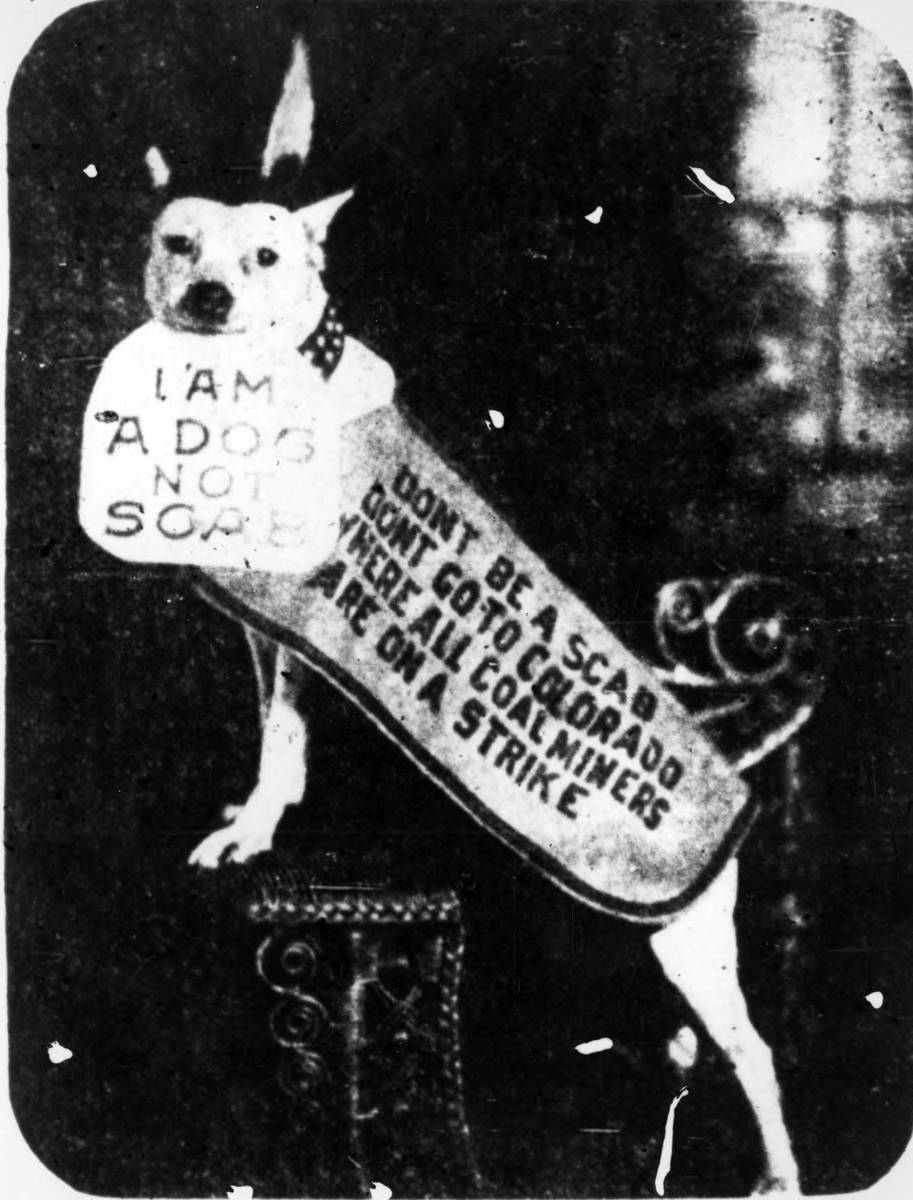
The facts are that only the shift bosses and a few others are removing the debris from the mines and making repairs. The Calumet and Hecla and the Quincy mines are the only ones that are really making a pretense of operating. The first named,
which employs a full crew of 5,000 men, has only 300 at work at best, and but a very few of these are miners. The Quincy mines are importing men under false pretenses, herding and guarding them on the grounds in a state of peonage. Some of these men have escaped during the course of the strike, twelve of them escaping in an open launch to Duluth. The mines at Mohawk, Wolverine, Kearsarge and Allouez are completely shut down. Some of them are filling with water.
This report would not be complete without calling attention to the courageous conduct of the women, who have been out in the cold of early morning on picket duty, headed the parades, and whenever and wherever duty called they were there, regardless of age or nationality. They even went to jail unabashed and undaunted.
The spirit of the miners is unsubdued; there is scarcely a break in the ranks, and so every indication, while not pointing to an immediate settlement, assures a successful issue of the strike, if want and privation is warded off by strike relief.
Outline of Strike’s History to Date.
Upon arrival in the strike zone, I found little on the surface to indicate that a great industrial conflict was being waged, a comparative quiet reigning. To one traveling through the strike-bound district it would not appear that 15,000 miners and a large number of women were pitting their powers of resistance against the combined forces serving the interests of the industrial czars of the copper country. The strike is now in its tenth week. It has run the usual course of all great industrial conflicts. All the powers of the state and private strike-breaking agencies have been employed to intimidate and coerce the strikers. Anathemas have been hurled from pulpits by deputized priests, subtle suggestions and tricky lies, appeals to national, religious and political prejudices have been resorted to by a prostitute press, without avail. The strikers are as firmly resolved at this stage of the struggle to win, as when they first refused to enter the mines.
Outrages.
The reign of terror, which, following the importation of gunmen and militia, marked the month of August, had spent its violence, owing to the splendid discipline and admirable self-control of the strikers, who, in spite of outrageous treatment, refused to be driven to the commission of overt acts. This is all the more remarkable when it is borne in mind that many of the miners are of the hot-tempered national types, which are quick to resent ill treatment and whose simple sense of justice is ordinarily not slow to mete out a primitive form of punishment to offenders. The clubbing of unoffending citizens by cavalry who patrolled the streets and rode down civilians in true Cossack style, the interference with peaceful parades, the bayonetting of American flags carried by strikers, could not be expected to create good will, but it failed utterly to incite the strikers.
The outrages committed during August were numerous and varied in character. Two strikers were wantonly murdered and two seriously wounded at an Austrian boarding house, near Painesdale by Waddell gunmen. A striker was shot from behind while peaceably walking along the road. A girl of fifteen years was shot in the head at North Kearsarge. She is still languishing in the hospital with little hope of recovery. Unoffending citizens, as well as strikers, who were pursuing their way along the streets were held up and clubbed by deputies, gunmen and cavalry; treated with vile and abusive language and threatened by militia. Two militia-men attempted to rape a miner’s wife in the presence of her husband by the side of a country road; drunken orgies and licentious debauchery by soldiers and young girls were not wanting. In one such instance when the night police of the town interfered, the soldiers ran and hid one of the girls, still in her teens, in the camp. It is common comment that the presence of the soldiery did not add to the moral tone of the communities where they camped, and did not augment the promise of peace.
Outrages committed by hirelings and militia, whose behavior was brutal and conduct bestial, were not considered “good news” by the kept press, while simple requests to quit work were magnified to assaults. Hundreds of strikers and women were jailed without warrant and later hauled to court on all sorts of trumped-up charges: but to date only one conviction has been secured, and that was for a minor offense.
Upon investigation, I have found the statements concerning outrages, issued from strike headquarters, to be absolutely true.
Attempted Evictions.
About sixty per cent of the miners live in company houses. These are rented by contract, the contract expiring as soon as the miner ceases to be an employee. These contracts are signed by the miner under the impression that it is merely an order, a mere matter of formality. When the mining companies attempted to evict the strikers it developed that but few knew the actual terms of these so-called ‘contracts’. Some of the miners have built houses or shacks on company ground by permission. When the military and police powers failed to impress the strikers as had been wished when atrocious outrages failed to intimidate the miners, other means of coercion to dispirit the strikers had to be resorted to; hence the order to vacate their homes. The object sought through these contemplated evictions is made clear by the orders, which read as follows:
“This company asks that you either go to work in its mines or vacate its house. You will be given until Sept. 6 to comply with this request. Champion Copper Co.”
The companies prepared for evictions, and it was only through the prompt action of the officials of the Western Federation of Miners, who secured an injunction against the mining companies, that this hardship was averted.
Refusal of Credit.
Balked at every turn, the resourceful corporation now hit upon another expedient to discourage and coerce the strikers. To break the spirit of revolt against their industrial absolutism, the mining companies enlisted the business element, which had not been favorable to the strike, as the cessation of operations had stopped the flow into their pockets of the pittance which the miners earned. Further credit was refused at the stores in the hope of starving the men and women more quickly into submission. The union officials now issued orders only on stores which were in sympathy with the strikers. This effective move administered a well-merited chastisement, and caused the petty traders to change their views somewhat. This move, which saved the situation, was made possible by the relief supplied by the Western Federation of Miners, augmented by donations from other bodies of organized labor. It has been demonstrated that the power of resistance and the promise of ultimate success is proportionate to the financial support which the strikers will receive from now on.
The Injunction.
As was to be expected a sweeping injunction was asked for and issued, but has since been dissolved. It is this fact which may be responsible for the rumor that the troops, which had for the greater part been withdrawn, are to return.
The Remaining Allies.
The purpose of the mine managers is very evident. They hope to hold the strikers in check until their families shiver in the cold blizzards of the Upper Peninsula winter. Cold and hunger are the last remaining allies of the mine managers who have ruled this section of America with the iron hand of industrial absolutism. No word in type can convey the hardships and horrors already suffered; language is wholly inadequate to picture the spectacle of 15,000 men, and a like number of women and children, with the frost biting their bodies and hunger gnawing at their vitals. Whether these cruel allies shall be permitted to daunt the spirit of revolt against the industrial overlords and finally defeat the strikers, after a struggle which commands the admiration and approbation of the workers of America, or not, rests wholly with the workers in less ill-favored sections of the country.
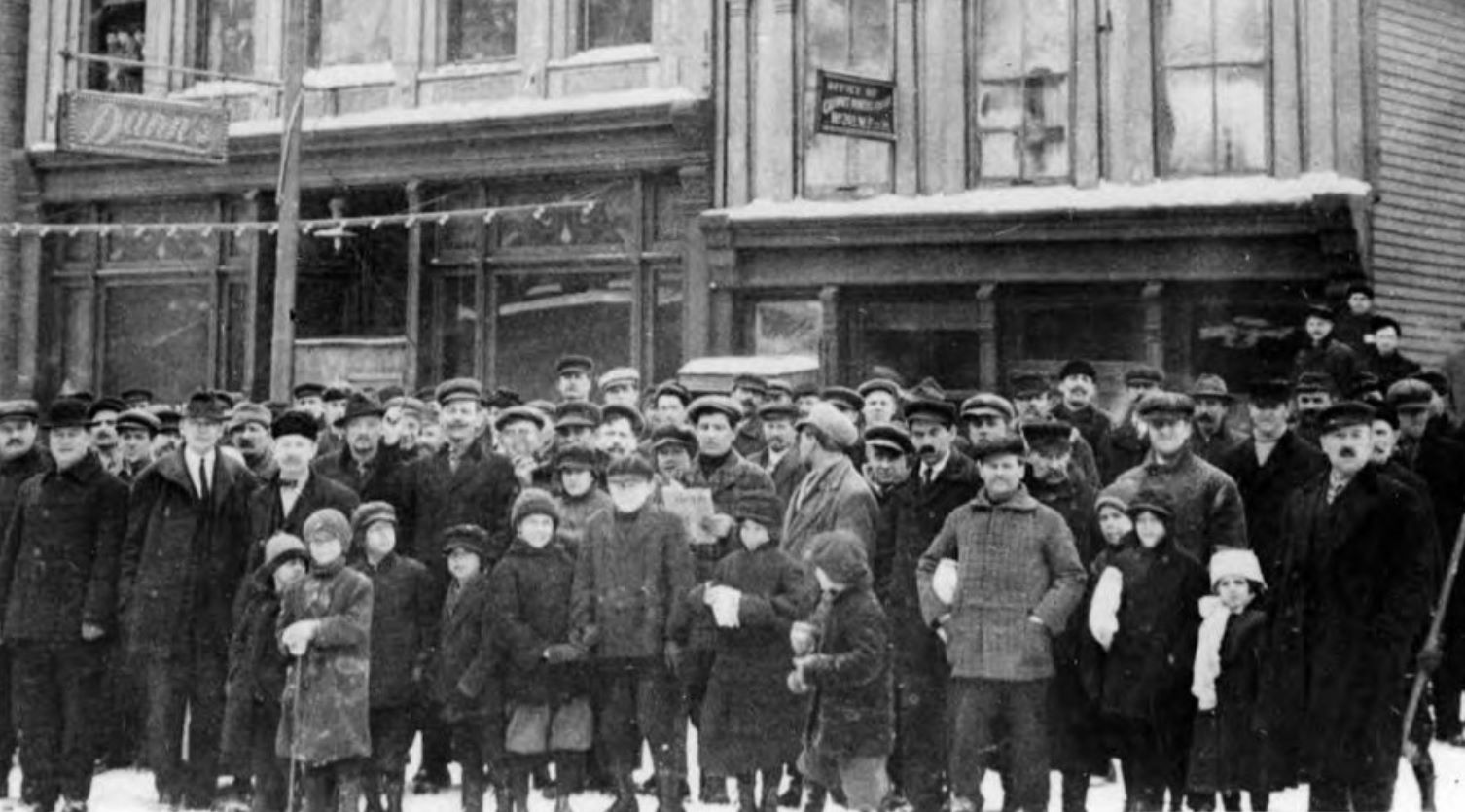
At the present time approximately $50,000 is being expended weekly for strike relief. The determination and courage of the strikers, and the justice of the demands of the men and women who are experiencing the class-struggle in its most bitter form, merit not only the moral but also the financial support of the Socialists of the country.
I would, therefore, submit to the National Executive Committee the recommendation that the National Secretary be authorized to issue a call to all the party locals for donations to the copper miners’ strike relief.
Respectfully submitted,
(Signed) JAMES HOOGERHYDE,
Committee.
For a variety of reasons, the national Socialist Party of America did not have an official publication until May 1904 when the national convention mandated the monthly Socialist Party Official Bulletin as a way for the Party to communicate to its members. The name was changed to Socialist Party Monthly Bulletin in October 1911. The Party Builder became the name in 1913 and also became a subscription paper and a weekly. In 1914 the Socialist Party replaced The Party Builder with a regular propaganda newspaper, The American Socialist. These Party paper contain National Committee and National Executive Committee minutes, National Secretary reports, membership figures, financial statements, letters from party members, articles by prominent party leaders, and the figures for election of party officers and internal questions.
PDF of issue: https://www.marxists.org/history/usa/pubs/spa-bulletins/131025-partybuilder-w51-jewishfedconv.pdf
 Revolution's Newsstand