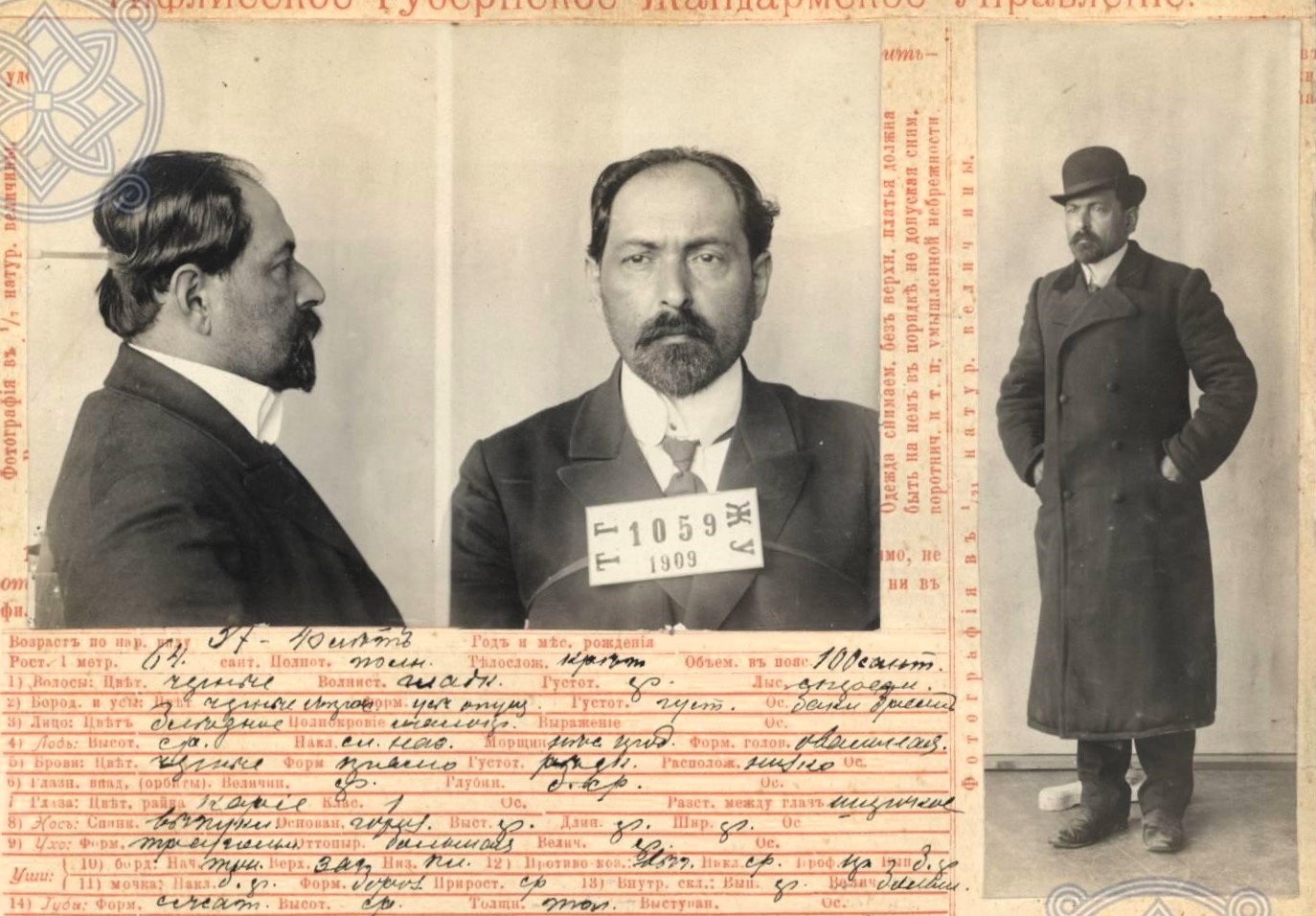
A brief biography of a central figure of the Revolution in the Caucasus and among Muslim peoples, the writer, doctor, educator, and activist Nariman Narimanov, who is here appointed Chair of the Near East Division of the People’s Commissariat of Foreign Affairs. He was later head of the Azerbaijan and Transcaucasian Socialist Federative Soviet Republics before his 1925 death.
‘Nariman Narimanov’ from Soviet Russia (New York). Vol. 1 No. 25. November 22, 1919.
Soviet Power and the Musulman World
The new director of the Soviet policy in the Musulman Orient, Narimanov, is a native of the Tiflis Tartar population. He was born at Tiflis, of a poor family of the petty bourgeois, carried on his primary studies in a practice school attached to a normal school. After graduating from the normal school, he became a country school teacher. A year later, on the recommendation of his former teachers, he was appointed a professor of the Pro-gymnasium of Baku, in which position he remained for twelve years. He then entered the faculty of medicine at Novo-Rossyisk, which he left in 1908, returning then to Baku.
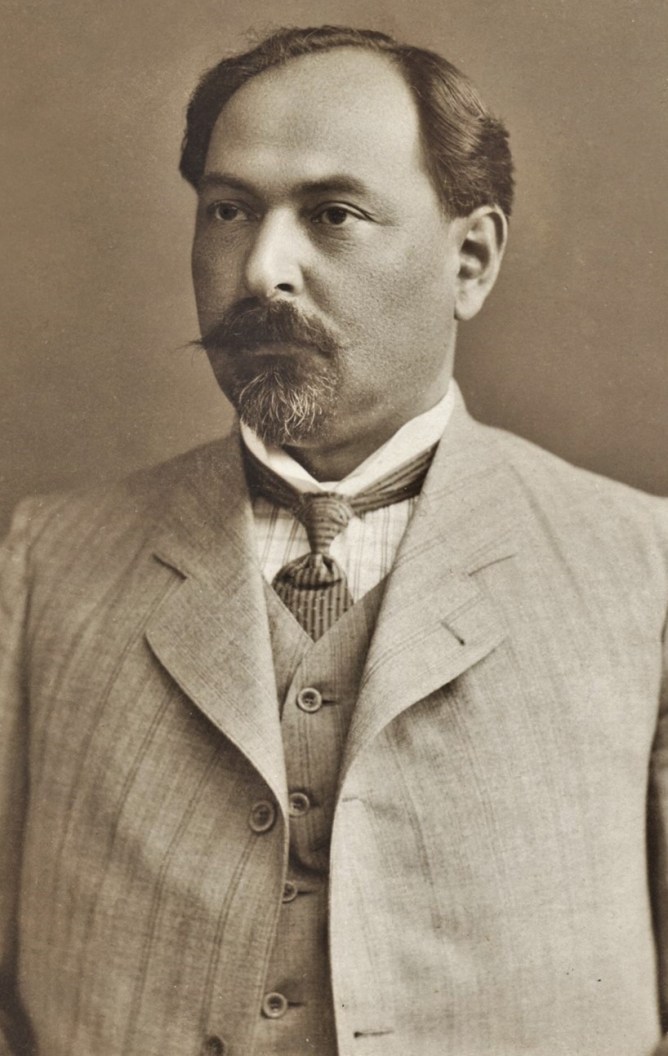
Narimanov is simultaneously a literary man, a journalist, and a man of public affairs. His reputation as a writer is wide-spread in the Caucasus, Persia, Turkey, and India. His literary career began even in his school years. It was then that he wrote the first act of his drama entitled “Ignorance.” His historical drama, “Nadir Shah,” had a great influence on the political life of Persia. This work, written twenty years ago, remained unpublished until 1909. In his novel “Begadir and Soni,” he defends the idea of the separation of church and state. In his short story “The Sanctuary,” he arrives logically at the idea that humanity must change its social system. In these three works he expresses, as far as the censorship permitted such an expression at that time, a systematic thesis embodying a complete reform of human life, and social revolution. Under the pseudonym of “Ner,” he has for twenty years been writing in the Tartar newspapers and reviews as well as in those of Azerbaidjan. He was for a time the principal correspondent in the Caucasus of the Calcutta Journal Abdul Matin, which is the most widely circulated of all.
As a political man he is known not only in the Caucasus, but also in Astrakhan, where he spent five years of exile. Narimanov is a revolutionist. His theoretical work in this field may be traced through all of his literary productions. His work begins with the creation of the social-democratic organization which was called Goummet. He was the first to train and dispatch agitators to Persia. The first Persian revolution may properly be called the product of the work of this organization. In 1906, at the first Congress of Teachers at Baku, he violently attacked the then all-powerful millionaire Tagiev, and for that was put in quarantine by the bourgeoisie and a part of the intellectuals. After his arrival at Tiflis, a month later, he was locked up as the result of a search, in the Metekh. At his house documents concerning the revolution had been found. After seven months of captivity he was deported to Astrakhan, where for five years he devoted himself to an intensive labor of political agitation. At the end of this period his return to the Caucasus was permitted.
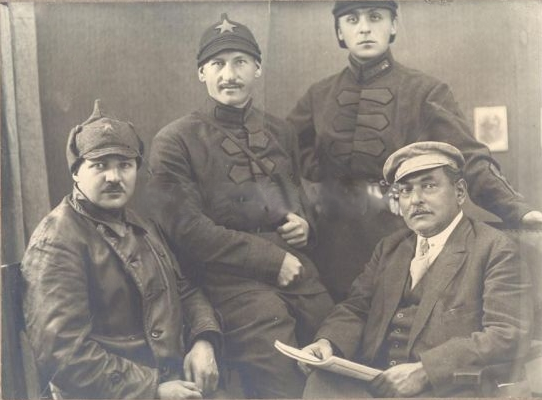
He went to Baku and in spite of his former affair with Tagiev he became popular as a physician and devoted himself with zeal to literature. A few months before the revolution he began to deliver scientific lectures on labor questions. The police prohibited his lectures, At the beginning of the revolution he was elected president of the organizing committee of the Goummet. From the very first day of the November revolution he completely gave up his practice of medicine and devoted himself exclusively to political work and to the publication of the Party newspaper. Being People’s Commissaire for Municipal Economy he was invited to go to other cities of Trans-Caucasia to deliver political lectures. These unusual exertions injured his health and he was obliged to go to Astrakhan, where, after being treated for a month in the mud-baths, he resumed his political activity and was soon moving about again. At Astrakhan he was director of public instruction. Before being summoned to Moscow he was delegated by the Communist Party to the regional Kirghiz Congress. His lecture of two hours, delivered in the Kirghiz Tartar language, had a great influence. All the resolutions proposed by the Communists were passed.
Soviet Russia began in the summer of 1919, published by the Bureau of Information of Soviet Russia and replaced The Weekly Bulletin of the Bureau of Information of Soviet Russia. In lieu of an Embassy the Russian Soviet Government Bureau was the official voice of the Soviets in the US. Soviet Russia was published as the official organ of the RSGB until February 1922 when Soviet Russia became to the official organ of The Friends of Soviet Russia, becoming Soviet Russia Pictorial in 1923. There is no better US-published source for information on the Soviet state at this time, and includes official statements, articles by prominent Bolsheviks, data on the Soviet economy, weekly reports on the wars for survival the Soviets were engaged in, as well as efforts to in the US to lift the blockade and begin trade with the emerging Soviet Union.
PDF of full issue: https://www.marxists.org/history/usa/pubs/srp/v1-soviet-russia-June-Dec-1919.pdf
 Revolution's Newsstand