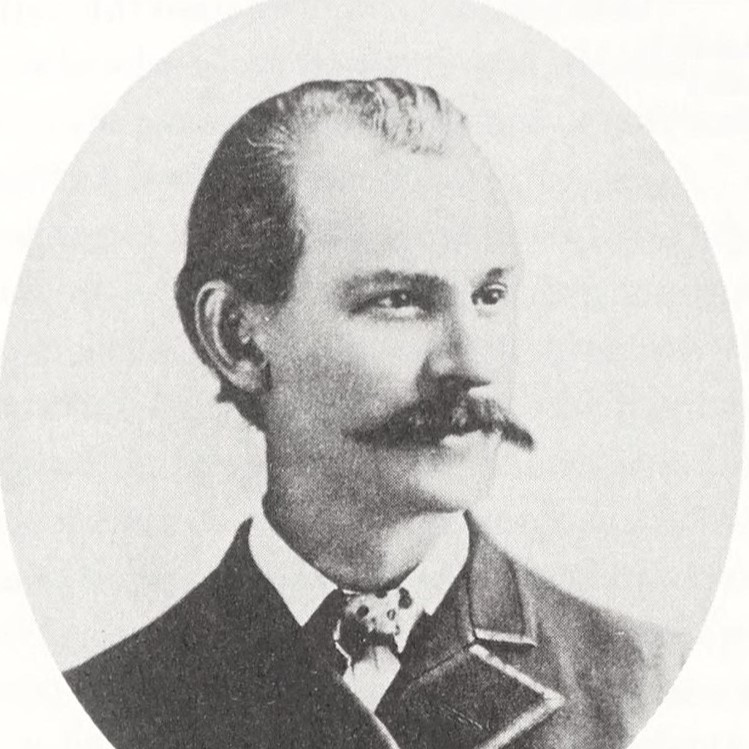
‘Equal Rights’ by Albert R. Parsons from The Alarm. (Chicago). Vol. 1 No. 7. November 15, 1884.
We continually have it harped in our ears that we are free and equal. That every avenue is open alike to all and all can climb to the top. The road to wealth is open alike to all. This is the sophistry the rich are continually giving to the poor to arouse their hopes and make them contented with their downtrodden condition. The doctrine is both false and stupid. There is no fool stupid enough to think everyone can get on top, though he has a perfect right if he can. Everyone knows that by the very nature of things not one in ten can possibly get there, and not one-tenth of that number can stay there after they get there.
What, then, does all this twaddle amount to about everyone having a perfect right to climb to the top of the pile, if it is not intended solely to quiet those underneath, so those on top will enjoy more safety and quiet while standing on them? Suppose some of those underneath concluded to use a little dynamite to blow off their burdens, might it not be possible that some of these ambitious ones on top would then conceive of some safer way to gratify their ambitions without taking a fellow creature for a footstool to climb up with? When every man finds his fellow man an explosive footstool he will stop trying to use him for a footstool to boost himself up with. Gunpowder brought the world some liberty and dynamite will bring the world as much more as it is stronger than gunpowder. No man has a right to boost himself by even treading on another’s toes. Dynamite will produce equality.
Every man has a natural ambition and a natural right to climb, but he has no right to climb at another man’s expense. Those who haven’t sense enough to see any other method of climbing, let them stay on the dead level, there is room enough. The idea that no man can get all the luxuries of this world without standing on the necks of other men is too ill-founded to be longer sustained. One man has no right to live on the profits of another man’s labor, under any excuse whatever. He who stands on what another man produces, stands on that man. No matter what the pretext, he is standing on him wrongfully. The under man should knock off the burden and not be longer bamboozled with the idea that he should be patient, for perhaps by and by he may be on top. Down with such nonsense! No man has a right to live on another for one single minute, for any reason whatever. Don’t be gulled with this stupid perhaps, pretty soon, by and by business any longer.
The Alarm was an extremely important paper at a momentous moment in the history of the US and international workers’ movement. The Alarm was the paper of the International Working People’s Association produced weekly in Chicago and edited by Albert Parsons. The IWPA was formed by anarchists and social revolutionists who left the Socialist Labor Party in 1883 led by Johann Most who had recently arrived in the States. The SLP was then dominated by German-speaking Lassalleans focused on electoral work, and a smaller group of Marxists largely focused on craft unions. In the immigrant slums of proletarian Chicago, neither were as appealing as the city’s Lehr-und-Wehr Vereine (Education and Defense Societies) which armed and trained themselves for the class war. With 5000 members by the mid-1880s, the IWPA quickly far outgrew the SLP, and signified the larger dominance of anarchism on radical thought in that decade. The Alarm first appeared on October 4, 1884, one of eight IWPA papers that formed, but the only one in English. Parsons was formerly the assistant-editor of the SLP’s ‘People’ newspaper and a pioneer member of the American Typographical Union. By early 1886 Alarm claimed a run of 3000, while the other Chicago IWPA papers, the daily German Arbeiter-Zeitung (Workers’ Newspaper) edited by August Spies and weeklies Der Vorbote (The Harbinger) had between 7-8000 each, while the weekly Der Fackel (The Torch) ran 12000 copies an issue. A Czech-language weekly Budoucnost (The Future) was also produced. Parsons, assisted by Lizzie Holmes and his wife Lucy Parsons, issued a militant working-class paper. The Alarm was incendiary in its language, literally. Along with openly advocating the use of force, The Alarm published bomb-making instructions. Suppressed immediately after May 4, 1886, the last issue edited by Parson was April 24. On November 5, 1887, one week before Parson’s execution, The Alarm was relaunched by Dyer Lum but only lasted half a year. Restarted again in 1888, The Alarm finally ended in February 1889. The Alarm is a crucial resource to understanding the rise of anarchism in the US and the world of Haymarket and one of the most radical eras in US working class history.
PDF of full issue: https://dds.crl.edu/item/54010
 Revolution's Newsstand