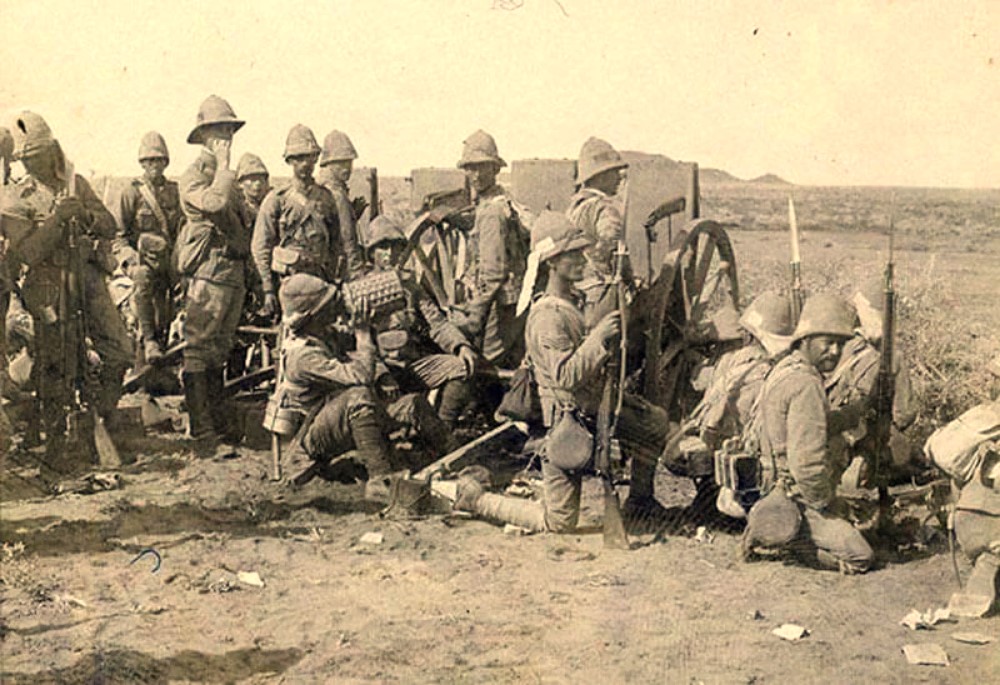
Joseph Berger analyzes British imperialism’s move to dominate southern Sudan in the 1920s.
‘Great Britain’s ‘Little War’ in the Sudan’ by Joseph Berger from International Press Correspondence. Vol. 8 No. 7. February 9, 1928.
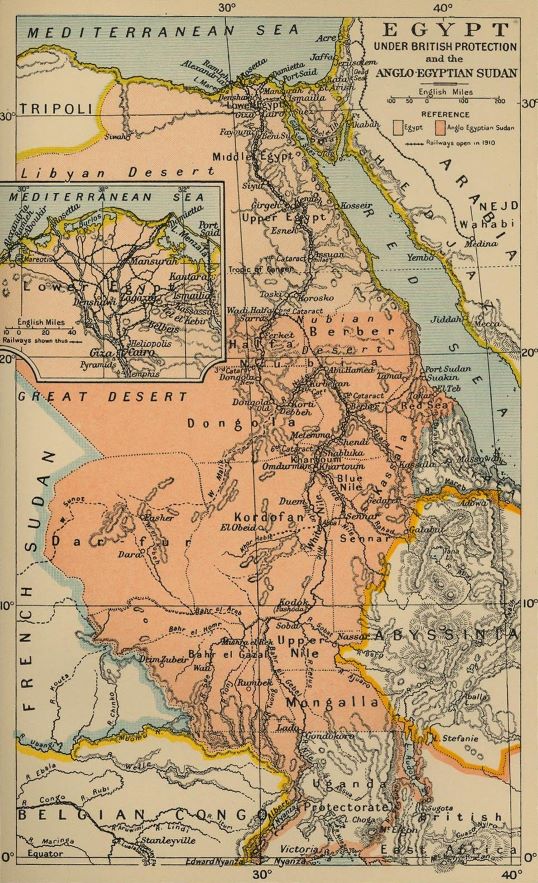
“We have swallowed a juicy morsel; now we must see. about digesting it”, said Sir John Maffey-Loader, the newly appointed Governor-General of the Sudan, at a farewell banquet in London before entering upon his position. Ever since the final liquidation of the “co-dominion” between Egypt and Great Britain in the Sudan, the latter has indeed been actively engaged in turning the country Into a British colony. Here British capital has carte blanche for investments; there is plenty of good soil, natural resources, natives who, driven by hunger and misery, furnish cheap “working-cattle” for capitalist employers (throughout the Near East the Sudan negro is looked upon as a worker that can be exploited to the utmost and is therefore often transported by contract to Egypt or even to Syria and Mesopotamia); it is therefore only a question of establishing British rule securely enough for the economic exploitation of the country to be carried on without difficulty.
The dominion of the Sudan has proved particularly profitable for British capitalists since Great Britain has been ruling there alone. This year cotton was already exported from the Sudan to Great Britain to a total value of three million pounds, thus enabling Great Britain to bring considerable pressure to bear on the Egyptian cotton prices; in the coming year the area under cotton cultivation is to be enlarged by a further 30 per cent. to a total of 135,000 feddans (one feddan approximately equalling one acre). Rubber exports from the Sudan already exceed half a million pounds in value. The value of the British goods imported into the Sudan is almost two million pounds.
And all this is only the beginning. New roads are being made with a view to opening up further regions of the Sudan to traffic and capitalist exploitation; dams are being built, electric plants set up, bridges constructed (e. g. the new bridge from Khartoum to Omdurman, which was recently inaugurated with much ceremony) and the Sudan is being developed into a favourable strategic basis for British troops, lest any complications should arise in Egypt.
And the requisite means? These are also being provided in part by the native population. The system of the British Governor is based on the taxation of certain regions and districts and the coercion of certain tribes and villages to labour, the result being that in the last two years the British administration has attained a tremendous budget surplus.
There merely remains the question as to how the native population likes colonial domination. Schuster, Financial Adviser to the Sudan Government, has attempted to answer this query. Though misery and starvation reigns in the towns and entire tribes roam the countryside in the hope of finding food, he is of opinion that the Sudan population has a better life than the people in Egypt and even a better life than the British working class.
If this is not intended as a facetious hint to the effect that the Baldwin Government has brought the British worker to a level below that of a Sudan coolie, it cannot well be in keeping with facts. For the population of the Sudan (whether in the towns or in the mountains) is in a state of continual fermentation. The imperialist ideal of a “pacification” of the Sudan has not been attained by any means.
Just recently, this silent fermentation has given rise to an open anti-British eruption. In the “happy Sudan”, Great Britain has a “little war”, which is, naturally carried on with all the cruelty of colonial wars.
It started with the assassination of Captain Ferguson, who was commissioned to collect the cattle tax of one of the mountain tribes, that of the Nuer. This was the signal for a rising which embraced all the kindred tribes of “spearmen”, starting in a distant part of the Sudan. Military expeditions were immediately equipped for the “punishment” of the rebellious tribes. Aeroplanes of the Royal Air Force prepared the way for this punitive expedition by a bombardment of the villages, which in many cases were so completely destroyed that nothing was left for the troops to do.
In a wild panic at the approach of “civilisation”, the Nuer tribes with their families fled into the interior of the country, into a region of swamps which could defy the attacks of the airmen. From this position they were able to inflict considerable had to be losses on the British troops, so that reinforcement considerable sent from Khartoum. The unknown territory delayed the military operations, just as it had done in the eighties, when the British suffered one defeat after another and were finally obliged to call in the aid of Egyptian troops. Now again, auxiliary forces had to be raised, and that even among the Sudanese population itself.
These troops, however, are unreliable. The Cairo paper “Ahram” reports of friction between the British and auxiliary forces of a nature highly characteristic of colonial warfare. The British commanders are said to have ordered the Sudanese mercenaries into the foremost ranks. The natives, however, refused, agreeing only to fight under equal circumstances with the British. In the ensuing fray a British officer and several soldiers were killed: nor was peace restored until the Sudanese demands had been fulfilled.
Since such “incidents” are by no means rare, the war in the Sudan will presumably be of long duration. One British paper has satisfaction in stating that such colonial wars afford a welcome opportunity to test the qualities of Great Britain’s arms and war munitions for greater wars in the future.
International Press Correspondence, widely known as”Inprecorr” was published by the Executive Committee of the Communist International (ECCI) regularly in German and English, occasionally in many other languages, beginning in 1921 and lasting in English until 1938. Inprecorr’s role was to supply translated articles to the English-speaking press of the International from the Comintern’s different sections, as well as news and statements from the ECCI. Many ‘Daily Worker’ and ‘Communist’ articles originated in Inprecorr, and it also published articles by American comrades for use in other countries. It was published at least weekly, and often thrice weekly. The ECCI also published the magazine ‘Communist International’ edited by Zinoviev and Karl Radek from 1919 until 1926 monthly in German, French, Russian, and English. Unlike, Inprecorr, CI contained long-form articles by the leading figures of the International as well as proceedings, statements, and notices of the Comintern. No complete run of Communist International is available in English. Both were largely published outside of Soviet territory, with Communist International printed in London, to facilitate distribution and both were major contributors to the Communist press in the U.S. Communist International and Inprecorr are an invaluable English-language source on the history of the Communist International and its sections.
PDF of full issue: https://www.marxists.org/history/international/comintern/inprecor/1928/v08n07-feb-09-1928-Inprecor-op.pdf
 Revolution's Newsstand