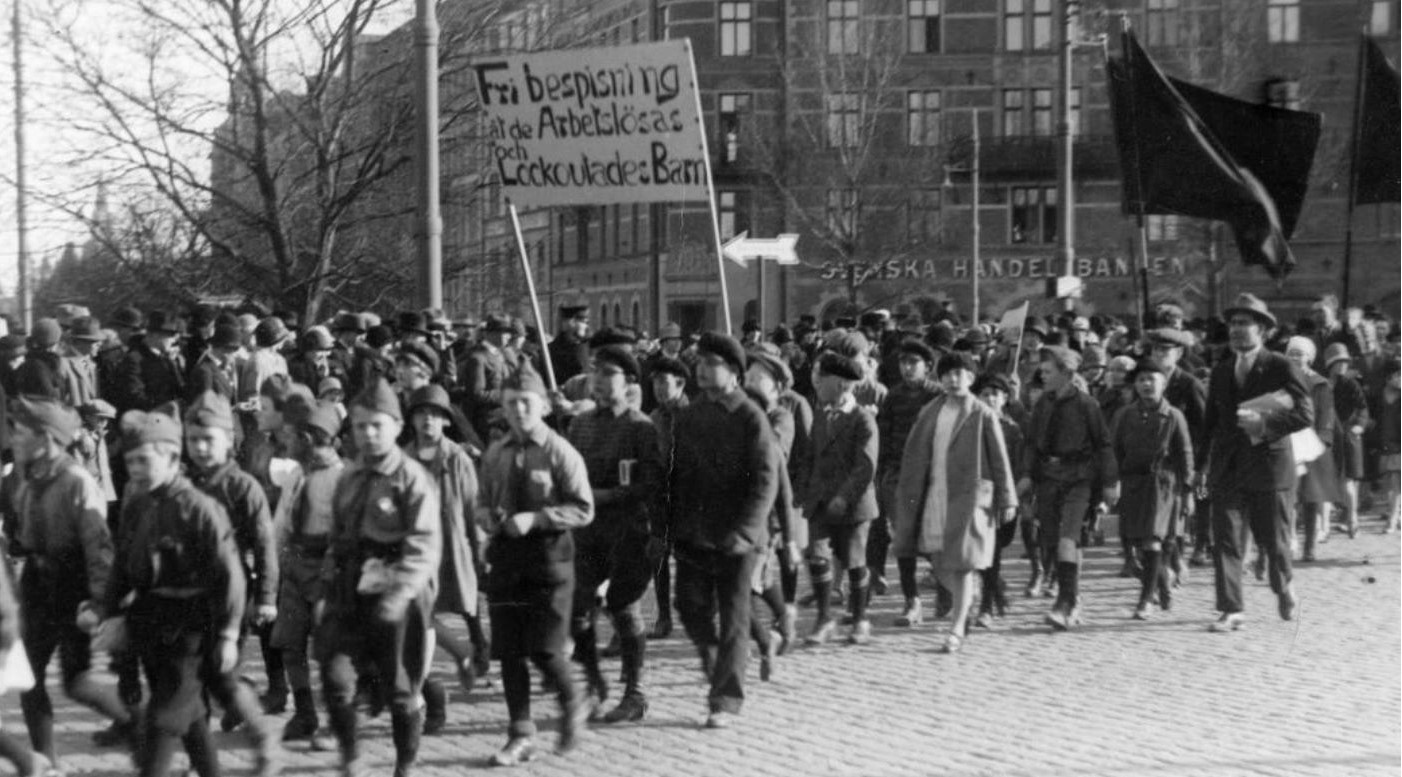
Four years of activity of the 17,000 members of the Communist Party of Sweden in various sectors, as well as the state of bourgeois parties, the Social Democrats, trade unions, and labor disputes are reported on. The following year, 1929, a majority of the Swedish party would be expelled as part of the purge of ‘Rightists.’ In the four years that had elapsed since the 5th Congress in 1924 and its 6th in 1928, the Comintern had changed enormously, both in terms of the ‘Bolshevization’ of the older parties, and with many new parties, particularly from the colonial and neo-colonial world joining. In anticipation of the 6th Congress, the Comintern published a volume with reports from its constituent members on their work the previous years.
‘Report of Sweden’ from The Communist International Between the Fifth and the Sixth Congresses, 1924-28. Published by the Communist International, 1928.
THE ECONOMIC AND POLITICAL SITUATION.
IN Sweden steps towards capitalist rationalisation are still in progress. Sweden was the first country to reorganise its currency in the post-war period, bringing it back to the prewar standard by deflation in hundreds of millions, by considerable reductions in wages, and an increased burden of taxation. At the same time big capital has managed to emerge unscathed by means of concentration and rationalisation. Concentration and trustification of capital went on at a rapid pace. Four big banks control over three-fourths of the industry. Rationalisation was particularly carried out in export industry. Industries such as those of paper, food pulp, engineering, etc., are far more productive to-day than they were before the war. On the other hand, the iron industry has been lagging behind, even the section which caters for the home markets showing no technical progress, and having to rely on the protection of tariffs. Nevertheless the year 1927 should be considered as an economically prosperous year. At the same time there was a distinct improvement in the textile industry, whilst ship-building has even passed through a flourishing period.
Co-operation with foreign capital is developing rapidly. Through the Kreuger concern, Swedish economy has become connected with world finance, and in particular with British and American finance (the big international Match Trust, the Swedish-American Investment Corporation, etc.). The paper pulp industry has formed a selling syndicate and reached an agreement with the Finns and the Norwegians for a curtailment of production to the extent of 500,000 tons. Concentration has been carried out also in the woolen industry. The amount of money invested is also high, but since there is not sufficient scope for capital investments within the country, the surplus capital has been flowing abroad (the export of capital has, in 1927, reached the amount of over 200 million kroner).
1927 was a record year for foreign trade. The balance of trade has become favourable since 1922, amounting in 1927 to 63.5 million kroner. The value of exports has increased by 13.5 per cent., though imports showed a smaller increase. The volume of foreign trade has extended by 4o per cent. since 1923.
Agriculture continues depressed. Mortgages have increased since 1921 from 41.7 per cent. to 48.8 per cent. of the assessed value of the land. Prices are low, and there has been a corresponding drop in profits (in many places 2 per cent. and less).
The rate of unemployment is still high, involving 19.1 per cent. of the total membership of the trade unions.
Sweden’s foreign policy is following more and more in the wake of England. The efforts. towards rapprochement with Finland and the Baltic countries are being energetically pursued.
THE SITUATION IN THE BOURGEOIS PARTIES.
The Conservative Party (the “Rights”) is still the leading bourgeois party (44 deputies in the 1st Chamber and 65 in the 2nd Chamber). This Party has managed to adapt itself to the new “democratic” order ever since the upheaval of 1918; it is still supported by the votes of the petty bourgeois, and partly also of the proletarian electors. In Parliament it acts with remarkable unanimity. Lately, however, there was to be observed a certain estrangement between the representatives of high finance and those of other bourgeois groups. The emergence of an anti-democratic policy, which aims at “desocialization” and the right of unbridled spoliation is becoming more and more in evidence. In recent years this Party did not succeed in securing power. The Liberal Party now forms a minority party in the government. It represents the petty bourgeoisie of the lowlands, the middle peasants, the petty officials, and kindred elements. It used to be identified with a certain radicalism, forming the majority party of the bourgeoisie, but it has since developed into a reactionary party. It took over “governmental responsibility” from the Social Democratic Government in June, 1926 This marked the first attempt at the consolidation of the bourgeoisie, an arrangement which was found satisfactory by the other bourgeois parties. Preparations for further co-operation by the bourgeois elements were made by the Government, to take place in the course of the parliamentary elections this year. An increasingly reactionary attitude is being taken by this party towards the working class, which finds its present expression in the projected anti-strike legislation and other attempted repressive legislation.
The Liberal Concentration (Radical) Party, having only four deputies in the 2nd Chamber, is a partner in the coalition government formed by the Liberals. Together they have thirty-three deputies in the 1st and thirty-five in the 2nd Chamber. This Party, which represents the urban petty bourgeoisie and intellectuals, after the split in the Left Wing of the bourgeoisie, may be considered as a dwindling party.
The Peasants’ Union (“Bondefoerbundet”) has eighteen deputies in the 1st and twenty-three in the 2nd Chamber. This Party is led by professors and big landowners who, as a rule, content themselves with serving as the mouthpiece of the reactionary Right Wing. Naturally, the socially heterogeneous elements—the big landowners and the small peasants whom the Party represent—cannot form any basis for an independent peasant policy. Lately there have been signs of a certain “flirting” with the Social Democratic Party.
THE SOCIAL DEMOCRATIC PARTY.
Social democracy has played, without interruption, a dominant role in the labour movement, and in Swedish politics generally. The Social Democratic Party has about 170,000 members, of whom about 85 per cent. are affiliated through the trade unions. In the course of the last ten years it has on five occasions taken part in forming a government, on three of these occasions the government having been headed by the Social Democrats. In June, 1926, when the last Social Democratic government was ousted by the Liberal Ekman government, it did not make the least attempt to put up a fight; nevertheless it endeavoured to create the impression among the large masses that it had been defeated because it had fought for the cause of the working class. The apparent reason was that of a difference of opinion with the bourgeois elements on the question of unemployment relief measures. The S.D.P. managed to make good use of its being in the “opposition,” and made considerable gains in the municipal the parliamentary elections in the autumn of the same year.
This party is now trying to advertise its “oppositional stand” by means of noisy criticisms levelled at the anti-trade union legislation sponsored by the government. Without in any way giving up its allegiance to the principle of “industrial peace,” it tries by means of carrying on a “fight” against the Bill to create the impression among the workers that it was really opposed to this anti-strike measures. In actual fact, however, legislation of this kind was already prepared by the social-democratic minister Moeller in 1925. The leaders of the party gave their support in 1927 to the leaders of the Right on the naval building programme which caused particularly animated discussions among the workers and resulted in emancipating a good many workers from social democratic illusions.
The Party has 105 deputies in the 2nd Chamber of the Riksdag and 52 in the 1st Chamber, and is now endeavouring to gain in the autumn elections (at least, together with the Communists) the majority in the 2nd Chamber. Yet even now it is announced by prominent leaders of the party that in the event of a “labour majority,” the party would not in any way depart from its present policies. The proclamation of “class conciliation” by the Social Democratic leaders, coupled with the vigorous offensive started by the capitalists, has resulted in the appearance of a Left tendency among a section of the party, which found its most striking expression in the course of the 1927 municipal elections at Stockholm and elsewhere, as well as in the labour disputes of 1928, This Left tendency is also reflected in a so-called “radical opposition” to the leading elements of the party by some parliamentary deputies and newspaper editors from the industrial districts. This “opposition” has nevertheless no programme of its own, and amounts merely to a struggle for power among the different groups of leaders (Hansson, Engberg-Héglund, etc.).
THE SITUATION IN THE TRADE UNIONS.
The industrial workers of Sweden are exceptionally well organised. The workers in the various branches of industry (paper mills, mines) are all members of the unions. The national trade union federation has about 400,000 members. It is affiliated to the Amsterdam International and has most reactionary leaders. The transformation of craft unions into industrial unions, decided upon twenty years ago, has not yet been carried out. The leadership of the trade unions is thoroughly reformist and openly advocates the need of “collaboration between the two essential factors of production.” The trade union leaders take an active part in the activity of the Labour Office, of the League of Nations, and subscribes more and more openly to the industrial policies pursued by the big financial interests. All strike movements meet with energetic resistance on the part of the central leadership.
No repressive measures have hitherto been taken against the Communists. Nevertheless, the backward elements among the workers have been mobilised in order to prevent the Communists from developing and consolidating their rapidly growing influence. A campaign of innuendo and falsehoods has been commenced, and the reformist leaders are taking the preliminary steps to a vigorous fight against the Communists in the trade unions. Since 1925, after the split in the Party, was of the greatest importance for the movement extending over the whole country. Nevertheless, there were numerous local strikes of considerable proportions, e.g., at Kalmar and Sundsvall (municipal workers). A feature of these strikes was the appearance of organised and armed gangs of blacklegs who were protected by the police companies sent by the Social Democratic Minister. These events afforded an opportunity to the Communist Party to mobilise the workers for the struggle against strike-breaking and Fascism. The Party succeeded in getting about 80,000 oppositional trade unionists to send their representative to the Goteborg Conference in January, 1926.
In 1927 there were no big industrial conflicts, though in December a big lock-out was announced in the mining and paper pulp industries, which started on January 2nd, 1928, and involved 30,000 workers.
DEVELOPMENT AND ACTIVITY OF THE COMMUNIST PARTY.
After the set-back experienced by the Party in connection with the Höglund crisis and the split of 1924, the situation within the Party has steadily improved. Although there are still defects in the Party with regard to firmness and clearness of policy, increased unity on the general policy and activity of the Party has been achieved. The attempts at creating sympathy for the Trotskyist opposition have met with no response among the membership, and may be now considered as completely disposed of.
The General Activity and Campaigns of the Party.
Numerous successful campaigns were carried out for the purpose of broadening the basis of the Party among the masses. The general Party mobilisation in the autumn of 1924, shortly after the split in the Party, was of the greatest importance for the development of the Party and was carried out with marked effect. At the same time, chiefly on the initiative of the Y.C.L., an antimilitarist campaign was organised in connection with the autumn maneuvers, when leaflets were distributed among the soldiers, urging them to take no part in any war against Soviet Russia. In connection with the visit of the Finnish President Relander to Stockholm in 1925 a demonstration was organised against the Finnish White Guards.
In the summer of 1925, on the Party’s initiative, a workers’ delegation to the Soviet Union was organised, consisting of 300 delegates, of whom two-thirds were either Social Democrats or non-Party workers. The delegation was of tremendous importance, and a considerable number of its members were utilised for giving reports throughout the country on their experiences in Soviet Russia. In this manner closer ties were established between the Party and the masses of the workers, as well as between the Swedish working class and the Russian Revolution. In the autumn of the same year a campaign was organised under the slogan of “Establish the Party among the masses,” the purpose of which was to strengthen the activity of the members and to carry out the reorganisation of the Party.
After the change of government in 1926 the Party organised a campaign under the slogan of “Labour Front against Bourgeois Front,” with the object of forming a united front with the Social Democratic workers from below, in the fight against the “Blackleg Government.” At Stockholm the Party won nine seats, increasing its number of representatives by four, and doubling the number of votes received (16,000). Progress was also made by the Party in other towns and industrial centres. In the Riksdag the Party has four deputies in the Second Chamber and one in the First Chamber. The Party is confidently anticipating further progress in the coming autumn elections.
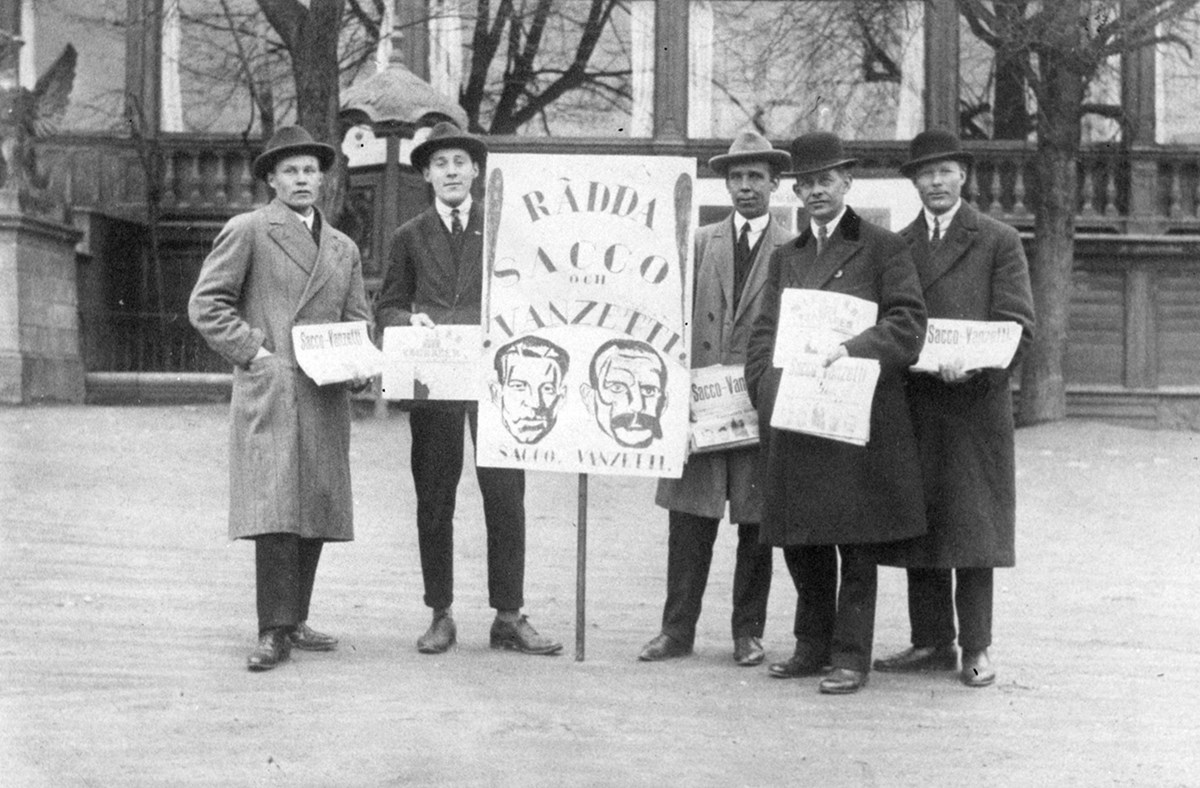
A vigorous part was taken by the Party in the Sacco and Vanzetti campaign. The Party was represented on the Committee, together with the central organisations of the syndicalists and the anarchists. In some places trade union locals and Social Democratic organisations also participated, and demonstrations were organised of the most imposing kind that had ever been held. There were also organised 24-hour protest strikes, and a lawyer for the defence of Sacco and Vanzetti, George Branting (a Social Democrat), was sent to America.
In 1927 the Party celebrated the tenth anniversary of its existence by a campaign under the slogans: Against Imperialism and the War Danger, Against the Employers’ Offensive, and for the Interests of the Unemployed. The campaign brought the Party 3,600 new subscribers to the Party Press, and 2,500 new members. In the anti-war campaign the Party attempted to form a united front, but it was joined only by the syndicalists, the anarchists, and some trade unions. In this connection the Party committed the mistake of issuing a manifesto, the contents of which were strongly pacifist. Subsequently, after the intervention of the E.C.C.I., this mistake was put right by the Party.
The Activity of the Party in the most Important Industrial Struggles.
In the autumn of 1924 an attempt was made by the Party to mobilise the working class for a fight around a programme of action (the Oerebro-Programm), The programme, however, was not happily formulated; for instance, it contained the slogan of a 30 per cent. increase in wages at a time when the workers were fighting against most: drastic wage reductions. At the close of 1925 the employers started a vast offensive for bringing down wages, and on February 15th the Employers’ Association announced a lock-out of 130,000 workers. The Party urged the Central Executive of the trade unions to proclaim a general strike; but the slogan met with the response of only the most radical workers. The Social Democratic government was able, with the help of the trade union bureaucracy, to settle the conflict in favour of the employers.
In the beginning of 1928 conflicts broke out in the mining and paper pulp industries, in which the Unions were under Communist influence. The conflicts involved about 100 industrial enterprises. In about one-half of these enterprises there were Communist Party organisations. In the paper pulp industry the situation was as follows: the employers had given notice of the expiration of the agreement in order to reduce the wages, which were higher on the average than in the other essential industries. About 4,000 out of the 175,000 workers were to be affected by the wage reductions. The leadership of the union was entirely in the hands of the reformists, who were completely opposed to a fight. The Party laid down the following tactical line: rejection of any arbitration proposal involving any worsening of the working conditions. In the course of the second week of the strike the Central Executive of the union voted in favour of an arbitration proposal involving a reduction in wages. Nevertheless the Party succeeded in stirring up the masses to activity, and on a vote being taken, the proposal was rejected by 7,000 against 3,000. On February 11, representatives of the workers and of the employers were asked by the government commission to obtain the power necessary to sign an agreement. The reformists did their utmost to secure these powers, but the workers rejected this proposal by 8,000 votes against 2,500. This was described by the bourgeois press as a “Bolshevik triumph.”
The Swedish Employers’ Association retaliated by declaring a lock-out in the saw-mills on January 30, and after the voting on the question of power to sign an agreement a further lock-out was announced in the paper mills on March 15, 60,000 workers becoming involved in the conflict. The dispute in the paper industry was finally settled on April 8 in favour of the workers.
In the mining industry the situation was as follows: the Miners’ Federation had given notice of the expiration of the wages agreement concerning the poorly paid workers in the mines of Central Sweden, and demanded a rise in the wages. In the export mines of Norbotten, where the workers were better paid, a sympathetic strike was declared, under the leadership of the Party. On January 23, all the workers at the mines of the Grangesberg Trust came out on strike. The miners were in a fighting mood, which was encouraged in no small degree by the treaty which had been signed between the Russian and the Swedish miners concerning mutual support. The Russian Miners’ Union supported the Swedish fight with considerable sums. The influence of the Communist Party in the Swedish miners’ unions is very great.
Activity of the Agitprop Department.
The activity of the Agitprop Department of the Party was weak. After the Höglund split the Party conference in 1924 declared that it was necessary to establish a theoretical review in order to raise the ideological level of the membership, but the financial condition of the Party prevented the realisation of this plan. The last Party conference (1927) again urged the need for the publication of a theoretical review. Similarly the question of a central Party school was repeatedly discussed, but so far only local Party courses have been organised.
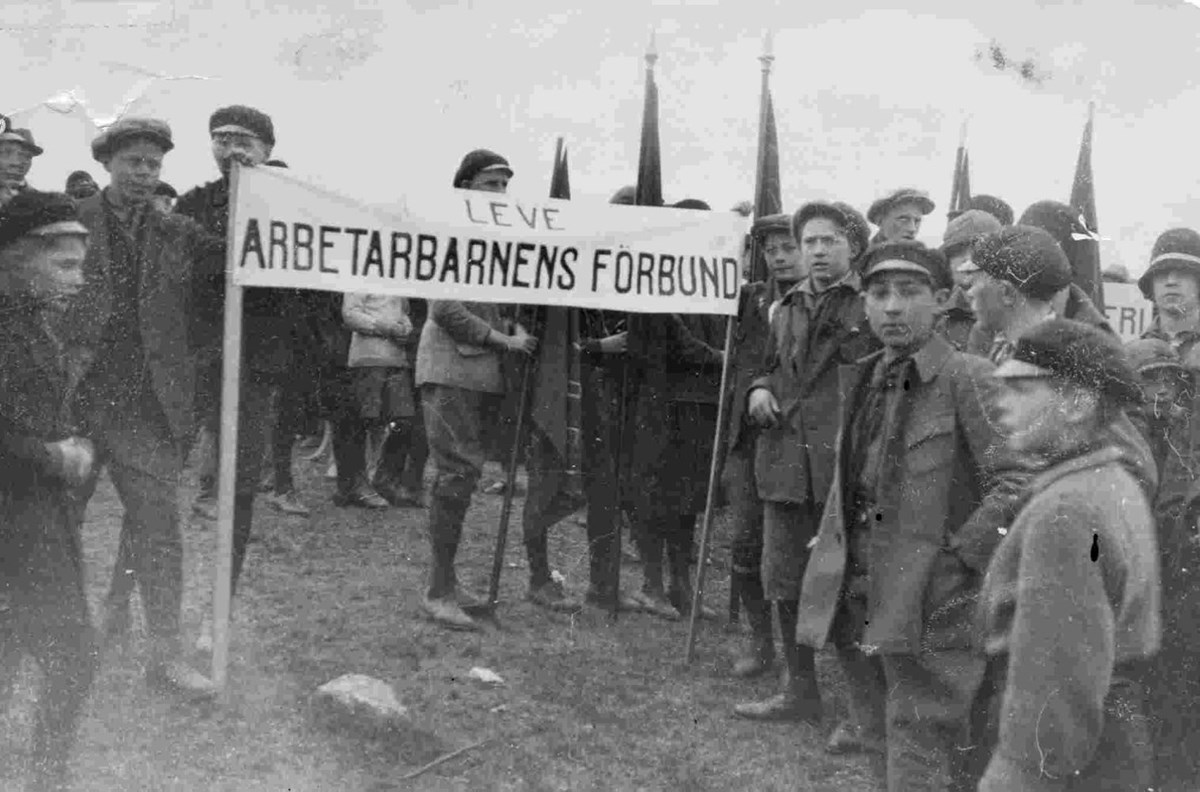
The publishing activity of the Party, which was carried on by means of a special publishing department, jointly with the Y.C.L., has been very brisk. A number of minor works by Lenin, as well as by Mark and Engels, and current Communist literature, was published. A special “Socialist Library” in 11 volumes was compiled and widely circulated. A “Popular Calendar ” is published yearly, but it bears too much the stamp of a general book of reference, neglected in a certain sense the propaganda for Marxism and Leninism. May Day and Christmas newspapers are also published.
The Party publishes five newspapers, including two dailies. The central organ, “Folkets Dagblad,” has been steadily increasing its circulation in the past two years, having now reached 20,000 copies (27,000 on Saturdays), whilst “Norrskensflamman” has an issue of 7,000 copies. The circulation of all the newspapers is constantly growing.
The number of worker-correspondents has increased, but is still insufficient. In some places there are no factory newspapers. The women’s paper “Röda Röster” has a circulation of about 5,000 copies. The Party has an influence over the “Faklig Enhet” (organ of the trade union committee) and “Jordfolket” (organ of the peasants’ union). The “Partarbetaran” (an organ of information for Party officials) is published monthly. In connection with important events and activities (the military question, workers’ delegations to the U.S.S.R., etc.) special brochures and leaflets were published.
The Trade Union Activity.
After the split in 1924 the Party was looked upon with mistrust by the workers organised in the trade unions. Nevertheless the Party has succeeded in playing a big role in the development of an opposition in the trade unions upon a united platform against strike-breaking and Fascism (the Goteberg programme) as well as for the “Kiruna line”, trade union unity on a national and international scale, and the fusion of the trade union federation and the syndicalist organisation. At the Gotzberg conference (January 23-24, 1926) there were represented about 80,000 trade union members. With a view to the further development of the movement, a Unity Committee of nineteen members was formed, which has been publishing its organ, “Faklig Enhet” (Trade Union Unity) since May, 1925. Although the opposition movement is rather weakly organised as yet, nevertheless the Unity Committee succeeded in carrying through several good campaigns (the collection for the locked-out coal miners in England, relief for the striking raftsmen at Gimo, etc.). The Party took an active part in this work, but apart from these successes the organisational activity of the Party in the trade unions has been weak, and did not correspond to the ideological influence of the Party. It was only in December, 1927, that the trade union department of the C.C. of the Party, with a permanent secretary, was organised. In January, 1928, it was ascertained that among the 1,100 trade unions registered, out of a total of about 5,000, there were 222 fractions with 740 Communist executive members and 11 salaried officials.
Activity in the Co-operatives.
In the co-operative movement the Party does not possess any influence worth mentioning. In some places there are organised Party fractions active in the consumers’ societies, but no appreciable results have been achieved.
Work Among the Peasants.
Work among the peasants has been much neglected owing to the lack of the necessary members. Nevertheless, the “Jordfolkets Foérbund,” which is under Communist influence, has developed a certain amount of activity, and its organ is published monthly (5,000 copies). The peasants’ delegation to the Soviet Union on the occasion of the Tenth Anniversary Celebration has done some good educational work among the peasants.
Activity in the Mass Organisations.
Activities have been carried out by the Party during the past year in the non-Party mass organisations (International Working Relief, International Red Aid, workers’ sports, workers’ culture). The workers’ sports movement, which is under Communist influence, is growing at a rapid pace. The I.W.R. has carried out some successful actions, e.g., the collection for China in 1927 and the collection for the lock-out victims in 1928.
Work Among the Women.
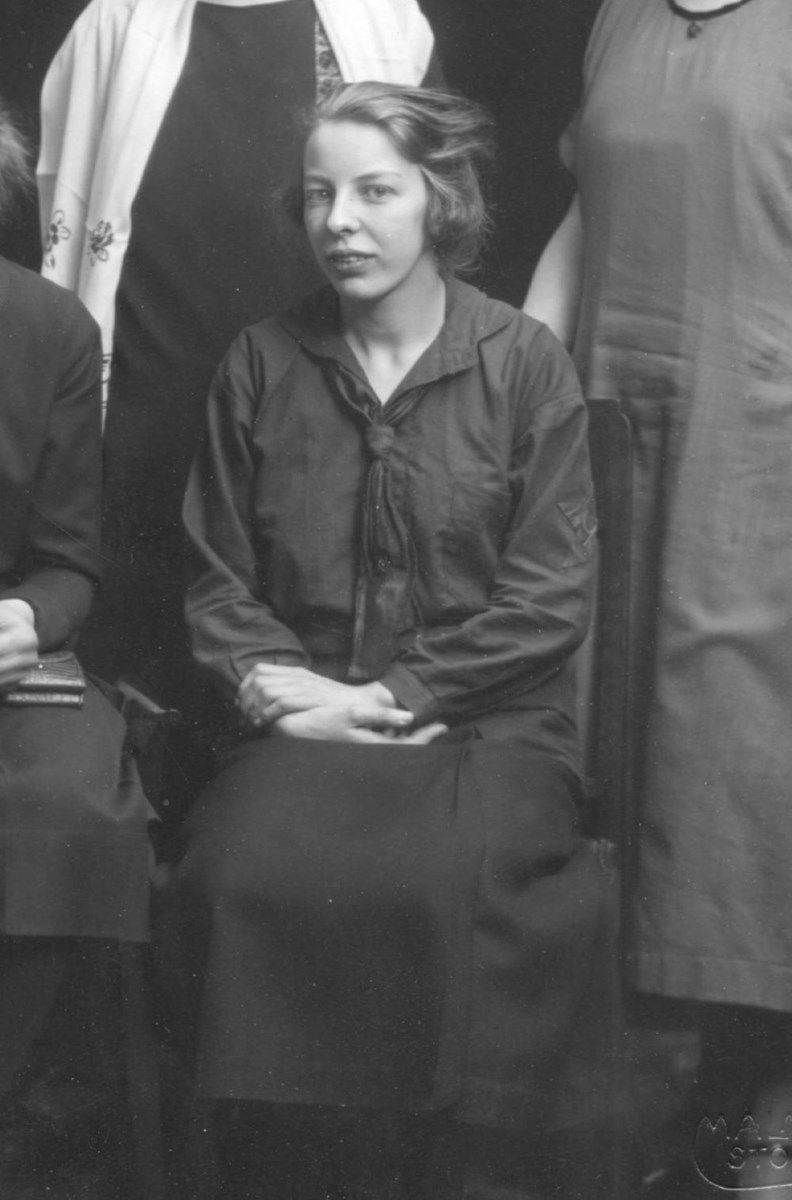
The Party has not yet succeeded in attracting to its ranks the women who are working in the factories. It was decided by the last Party conference to instruct the C.C. to take the necessary measures for this, and to organise women’s delegate meetings. This instruction has not yet been carried out. The Party membership includes 1,800 women (13 per cent.), but the greater majority of these are housewives. The women’s paper of the Party is published monthly (5,000 copies).
The Activity Among the Youth.
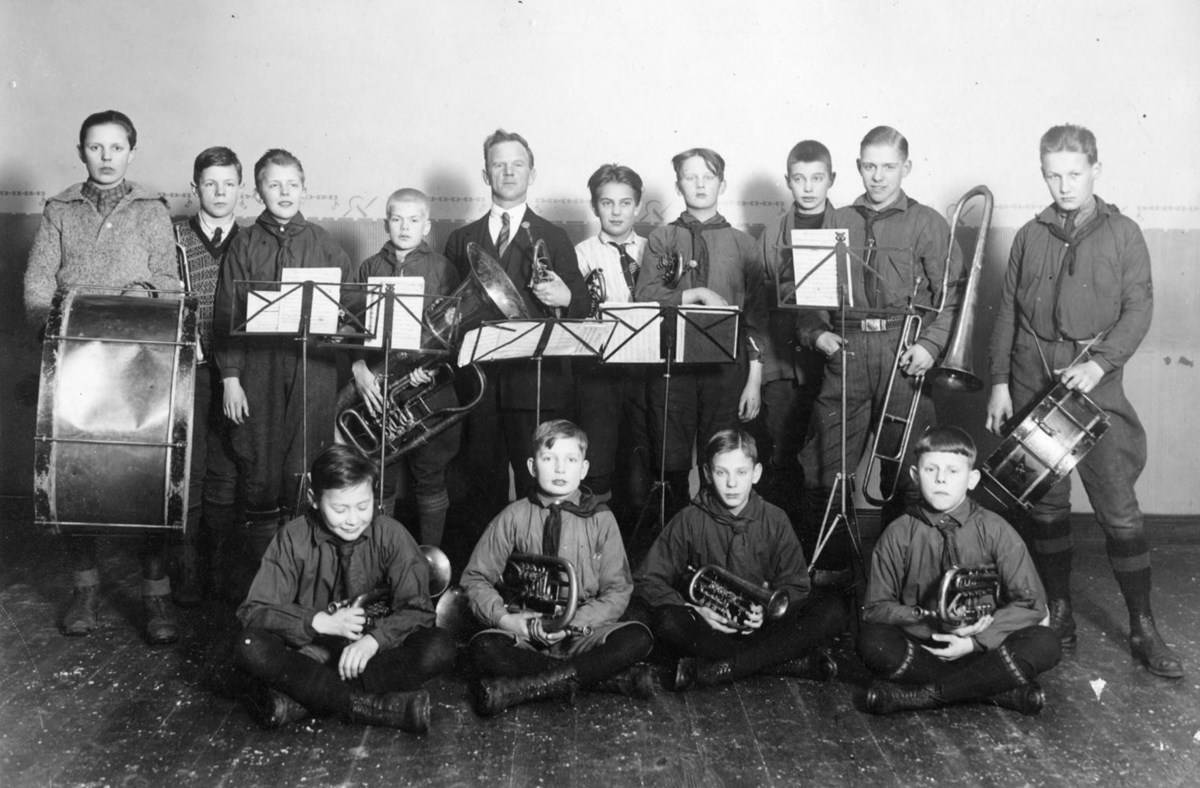
The activity of the Youth movement has increased during the past year. The Y.L. is progressing, and now numbers about 13,000 members. Its organ, “Stormklockan,” appears weekly (50,000 copies).
Organisational Situation in the Party.
Reorganisation on the basis of factory nuclei has not yet been carried out. In the last quarter of 1923 there were 9,763 members in 270 local organisations, and in 1926 there were 11,578 members. In 1926 the Party had 638 factory and residential nuclei. In the third quarter of 1927 there were 13,950 Party members paying dues. They were organised in 815 nuclei.
Since that time the membership has grown without interruption. At the present time the Party numbers about 17,000 members. The largest group is the metal workers (25 per cent.), followed by the saw-mill workers and the transport workers. There are not more than 100 intellectuals.
The Party is doing its utmost to make the entire Party organisation function better. The most important questions are those of enlivening the “politicalising” the factory nuclei. The district and local committees also cannot as yet be considered as organisations which would be able to lead the organisation properly. This is one of the main reasons why the factory nuclei do not function as they should. Lately the work of the central apparatus has considerably improved.
The Communist International Between the Fifth and the Sixth Congresses, 1924-28. Published by the Communist International, 1928.
PDF of full book: https://archive.org/download/comintern_between_fifth_and_sixth_congress_ao2/comintern_between_fifth_and_sixth_congress_ao2.pdf
 Revolution's Newsstand