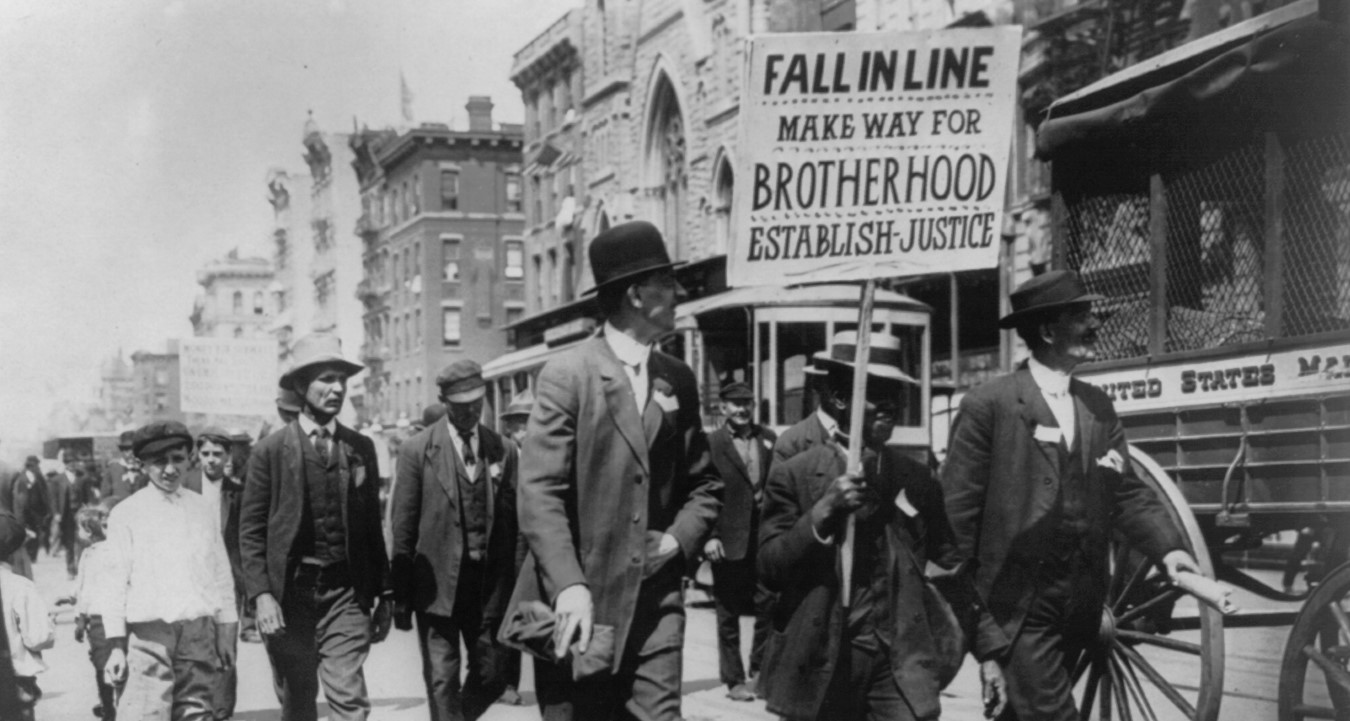
A fascinating entry from Austin Lewis in his book-length serial theorizing working class solidarity. In this essay Lewis judges the nature of both the skilled trade worker and their craft unions as being incapable of providing leadership to the whole class. With modern capitalism, it was only the unskilled proletariat with their industrial union that could provide the material basis of solidarity necessary to lead the entire class, including all skilled workers. Therefore, the Socialist movement to make a dramatic reorientation to the unskilled and their organizations as humanity’s vanguard. The whole series is now up on the Newsstand.
‘Potential Solidarity’ by Austin Lewis from New Review. Vol. 3 No. 15. October 1, 1915.
How far is it possible at present to achieve that solidarity among the workers without which no really important advance can be made to the solution of the present difficulties and the attainment of that monopoly of the labor supply, which is the essential preliminary to any real attack on the employers’ position?
Solidarity among the skilled crafts is practically out of the question by reason of the absence of that coherence which is the condition precedent of solidarity. In a case where the grievances were obvious, such as the hop industry in California, organized labor rallied readily and vigorously to the aid of the oppressed workers even when they were organized under the auspices of the Industrial Workers of the World. The dislike even of the labor leaders to that organization was generously laid aside in California and men who were the admitted and open enemies of the Industrial Workers came out splendidly and manfully on the side of the hoppickers.
But there was nothing of a distinctive labor nature in this action, for large portions of the middle class were also keenly in sympathy with the oppressed migratory workers and displayed that sympathy in a variety of ways. On the other hand the ordinary newspapers and the official organs were distinctly against the accused men although they supported with more or less enthusiasm the efforts to mitigate camp conditions.
It is for this reason that we are obliged to conclude that the sympathy of the organized labor bodies in the case under consideration was really not an expression of labor solidarity, but was rather the fact that when the boycott was declared on the hop-picking fields the unions were ready to aid to the utmost of their power although the operations were conducted by an organization other than their own.
In this connection, however, it must be remembered that the hoppickers and the migratory workers nowhere came into collision with the organized crafts, for where there had been an attempt to start laborers’ unions by the American Federation of Labor these had been placed in the building trades organizations. So that in supporting the hop-pickers the unions were not helping a body of men with whom they might subsequently have trouble in the matter of organization. The migratory laborer in the country comes seldom into collision with the organized trades, and to improve his position means to a certain extent to mitigate the rigors of competition in the cities particularly during the winter season when work is scarce and the migratory laborers thronging into the towns make the struggle for existence more deadly than usual.
Besides, the employment of women and children in that specific industry tended to develop sympathy to make the appeal for assistance much easier than under ordinary circumstances.
The behavior of the American Federation unions in the Eastern part of the country where there has been an attempt to form industrial unions and to actually take part in the organization of the greater industry has been in marked contrast to what we have shown in the case of the hop-pickers. In many instances wherever the Industrial Workers have endeavored to establish an organization in the East they have been met by the most severe opposition of the greater and older organization which has not hesitated to employ the most extreme methods to prevent the organization. In fact, so keen has been the antagonism of the American Federation of Labor to every movement of the younger body that it has practically paralyzed its efforts in many sections of the country and it has hardly been able to survive at all except as a purely propaganda organization.
Even when the organization of the unskilled and migratory laborers in the country towns had been undertaken by the Industrial Workers they were met by the competition of the organizers of the United Laborers, the name given by the American Federation of Labor to its unskilled organization.
The American Federation men complain that the propaganda of the One Big Union idea by the Industrial Workers not only prevents them from organizing the unskilled, but that the Industrial Workers are incapable of organizing them, so that they are not organized at all. It is certainly true that, in California, where much time and money have been expended on the organization of the unskilled, the latter are still generally very unorganized, and neither party to the labor controversy can claim much in the way of results.
When the American Federation of Labor organizes the unskilled, the United Laborers Unions so formed are made a part of the local trades organization and are thus under the control and management of the skilled trades. Why do the skilled trades want to organize the unskilled workers? Is it in order to benefit the unskilled and migratory laborers? This is by no means the main object of such organization. On the contrary, the aim is the prevention of undue competition with the established trades and thus the attainment of the security of the crafts as at present organized which we have seen are in their very essence incapable of the solidarity concept.
The organization of the unskilled side by side with the crafts places the former at the mercy of the crafts and thus fixes them in a definite status. For example, an unskilled laborers’ union cannot undertake independent action except in terms of the crafts. As they all belong to the same council and as the laborers are but a unit in a council which is composed otherwise of the organized crafts, it is very easy to see that the unskilled cannot better their condition, except in terms of the wishes of the crafts. These will not in other than exceptional circumstances, give support to a movement of the unskilled tending to disturb their relative position with reference to the organized crafts.
Thus, the crafts endorse a scale of pay which will mark off distinctly the line of demarcation between the skilled and the unskilled but they will not endorse a scale of wages which will bring the unskilled approximately to the level of any of the skilled crafts. In proof of this we may call attention to the objections raised in the Building Trades in California to the effort on the part of the unskilled to raise their pay to the three dollar a day level. There is no doubt that the unskilled could, in the building trades at least, have secured that scale by their own efforts, for the contractors in several places were willing to concede it. But to do this would have brought the wages of the laborers to a higher level in relation to the wages of skilled labor than the latter could contemplate with equanimity.
The reason of this is sufficiently clear. If an unskilled laborers’ union is able to raise the scale of pay to a point where it can bear comparison with the wages of skilled labor, what is the advantage of the craft union with all its paraphernalia of jurisdictions and its cumbersome staff of officers? These questions are hard to answer in the skilled crafts. Thus the members of a craft which has been heavily assessed and which has a high initiation fee, a high dues rate and the other concomitants of the present craft organization would not be averse to raising the question as to the economy of their investment, in face of the fact that a laborers’ union without any of these burdens had actually succeeded in gaining considerable concessions from the employer.
It must not be inferred from the preceding that the alliance with the Building Trades on the part of the unskilled laborers is altogether to the advantage of the latter. In fact, it may be a distinct advantage to the members of their organization, in so far as it secures them jobs in connection with the regular building trades, and may, owing to the by-play of politics and the influence of the building trades in municipal politics, actually give the laborers’ union a monopoly of labor-work in municipal construction. In fact, this is the result in one or two places where there is a laborers’ union in connection with the local building trades. The members of the laborers’ union have, under these circumstances, the advantage of not having to struggle with the mass of unskilled and unorganized labor for these jobs and to that extent they are removed from the sphere of competition.
But, at the same time, they are confined to their status as laborers. They cannot compete with the crafts for jobs which belong to the crafts where the union shop is the prevalent type and they are, as we have seen, under the jurisdiction of the crafts in the conduct and operation of their laboring work, as well as in their relations to their employers.
This is of great value to the crafts, particularly to those which do not rest upon any substratum of particular skill but which have been able by manipulation to gain a practical monopoly. Thus the laborers cannot compete with the hod carriers and a laborer is obliged to take out a card in the hod carriers union before he can do that work, even though he carries a card in a union which is affiliated with the same building trades council as the hod carrier. This question has arisen in connection with the tile setters. Certain laborers having taken tile setters work, the tile setters union would not endure the competition and required the payment of an initiation fee and the passing of an examination as preliminary to allowing a laborer to engage in that class of employment. Such regulations practically rendered the tile setters union immune to competition with members of the laborers union in the building trades and effectively confined the laborers to their specific work, thus emphasizing their status as laborers and nothing else.
It is clear enough that while the advantage above set forth may accrue to the members of a laborers’ union the general position of the unskilled masses is unaffected thereby and nothing is gained in the direction of solidarity.
Besides, even where the unskilled have been organized in connection with the trades, the latter will make no sacrifice on their behalf and certainly will not suffer the hardships of a strike. This is freely admitted by the leaders even by those who are most active in organizing the unskilled. Under the circumstances, they cannot be expected to do so and in any event they would not do so, because, as we have already pointed out, the essentials of solidarity are lacking. There can be no essential economic solidarity between the skilled craftsmen and the unskilled ordinary laborers. The economic basis being absent, the possibility of solidarity does not exist.
There may be a humane desire on the part of the members of the crafts to come to the assistance of those of the laboring masses whose sufferings are dramatically expressed, as in the case of the hop-pickers. In fact, such feeling unquestionably exists and is promptly shown, for the working class is warmly sympathetic with the sorrows of the unfortunate. But in all this sympathy there may not be an atom of solidarity. In fact, the tendency of skilled labor is the same as that of all other classes which have the appearance of a temporary superiority. These show their superiority by an attitude of benevolent kindness to the more unfortunate members of the lower class. As everyone knows, such an attitude is in itself the opposite of solidarity. It marks the existence of that patronising tendency which people who fancy themselves secure always show to those struggling beneath them.
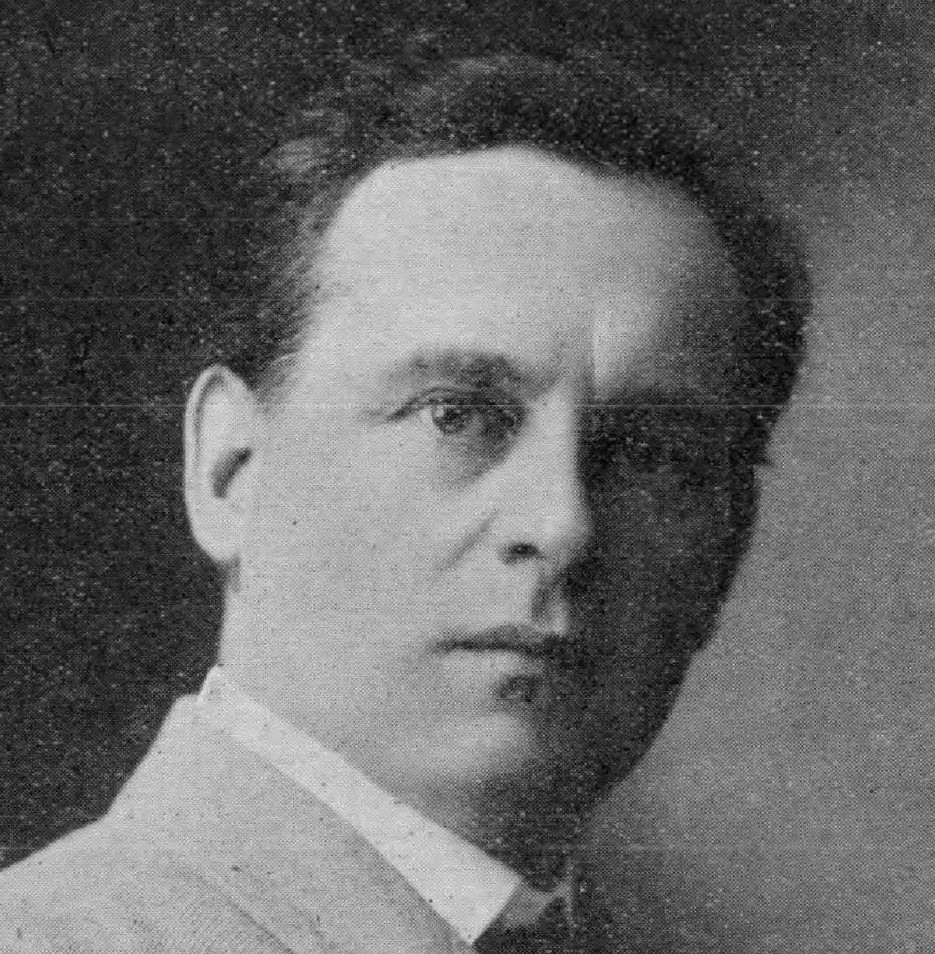
Because the distinctions are economic and material they are also social. They are mirrored in widely differing modes of life. The unskilled worker is poor. How poor, relatively, a visit to a local of the United Laborers will show. There you will see very few men of middle age showing that the stress of toil has already disposed of most of them early. Their clothing and tobacco are inferior, their attitudes tell the story of a life of hardship and physical overstrain. They, even their leaders, rise diffidently to make their speeches and stammer through their remarks, typifying their class which is struggling for articulate expression and just be- ginning to make itself heard. Contrast with this the good clothes, the confidence and the oratorical readiness of the members of trades which have established themselves and whose members are in reality a part of the governing class.
In California, as I write, the avenues to political preferment are crowded with aspirants from the organized labor bodies. Members of the skilled crafts are jostling the lawyers and in some cases each other for a chance to get on the tickets of all parties at the primaries. We find skilled organized craftsmen as candidates of every stripe and complexion, Republican, Progressive, Democrat, and occasionally, Socialist, though these last are few in number as the chances of election are slight. A fever for political preferment appears to have struck them. We have conspicuous trade unionists elected to prominent public offices, congressmen, mayors, supervisors, justices of the peace. Others have taken their bar examinations and graduated out of the unions, (in which, however, they still continue to hold cards), as assistants in the office of the district attorney. Scores occupy subordinate and appointive positions in the municipal, county and state administrations. Thus it is no exaggeration to say that the trades unions have achieved general recognition and have become a part of the governmental system.
This means that the trades unions and the smaller bourgeoisie are practically at one as regards their concepts of government at the present time. This in turn implies that the unskilled and migratory masses are outside of the pale and are subject, to a greater or lesser degree, to the oppression not only of the recognized exponents of capitalistic society but also of the trade union officials. The scorn with which a promoted trade unionist will treat an Industrial Worker can only be compared with that of the Los Angeles member of the Merchants’ and Manufacturers’ Association for a member of the metal trades prior to the strike of 1910.
In some instances, indeed, the ordinary trade unionist of the official type will actually go so far as to wage a physical force fight upon the representatives of the unskilled. In Sacramento, during the unemployed demonstrations, numbers of the union men hired out as specially paid thugs for the purpose of beating the harmless and starving hoboes who happened at that time to be a nuisance to the citizens of that city.
But the actions of these trade union officials and of the haughty skilled crafts are becoming ever less popular with the rank and file of the unions. The Sacramento union men who clubbed the unemployed were condemned by their unions. Every time the question of the unskilled and unorganized comes before the organizations there is greater and more evident sympathy for them. Action in their favor is received continually with more approval and constantly requires less explanation. The group which makes “solidarity” its makes “solidarity” its watchword grows ever greater in the local councils and this group naturally and indeed unavoidably makes the interests of the unskilled and unorganized its own.
In other words the mass of the skilled trades by very necessity are beginning to look downward to the proletariat instead of upward to the smaller middle class. middle class. They understand that their own fate is becoming ever more closely interlocked with that of the masses and that they cannot retain their exclusive and favored position forever. This fact in itself is pregnant with significance for solidarity.
On one occasion I called the attention of a prominent trade unionist to his statement that the trades would not strike on behalf of the unskilled. To which he replied that his statement must be modified by the additional clause “unless the unskilled are sufficiently well organized.” In other words, our trade unionist, who knows his subject thoroughly and who is quite exceptionally well trained, recognized that a sufficiently numerous and well organized unskilled group could enforce the active co-operation of the skilled trades and thus compel a solidarity which otherwise would not exist. This is no doubt true.
The only potential solidarity rests in the organization of unskilled labor. Such organization is the first step to a recognition of the existence of the masses of labor, for without it they cannot compel attention and they have no means of making themselves felt. To obtain recognition they must develop power, for recognition does not proceed from sympathy or pity. No solidarity can be founded on any such basis. Some of us who were idealistic socialists long ago fancied the organized trades as helping the unskilled and the miserable out of sheer altruism and because they were all members together of the working class. But such expectations were very vain. For in the first place, there is no reason to suppose that the working people are any less inclined to yield to motives of self interest than the rest of mankind, and in the second place the sole way in which the unskilled can make themselves felt is by a declaration of their own power.
That they cannot show this power in conjunction with the skilled trades is for the present obvious enough as we have seen. The only remaining path lies in the organization of the unskilled on their own account supplemented by such co-operation as the growing tendency to solidarity in the skilled trades may produce.
 Revolution's Newsstand