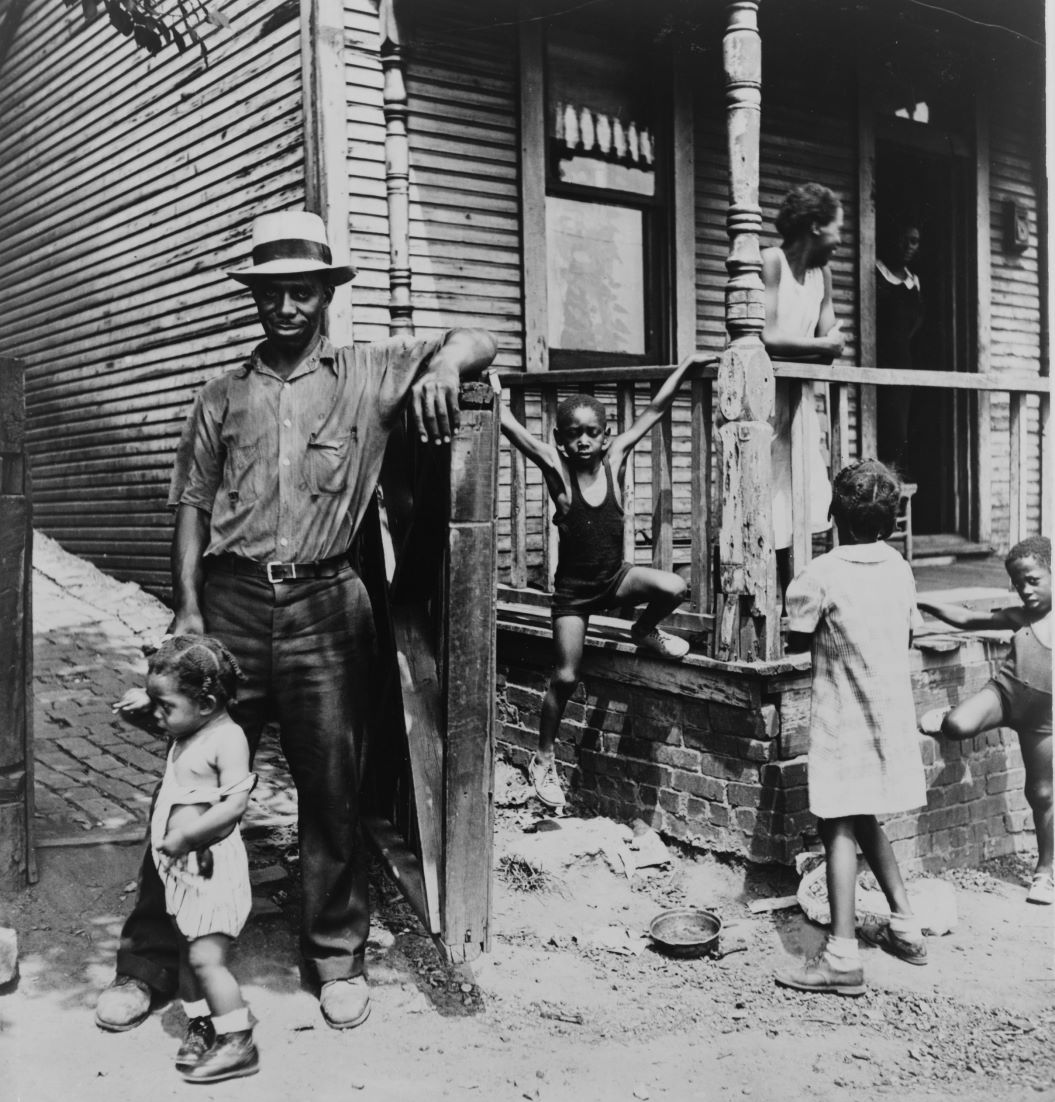
The concentration and super-exploitation of Black workers in steel foundries, still a reality today, was a central feature of the U.S. industrial landscape that demanded an approach from unions if that basic industry was ever to be organized.
‘Negroes in Steel’ by Paul Peters from Labor Defender. Vol. 6 No. 2. February, 1931.
IN the Pittsburgh district fully one man in every three in the steel mills is a Negro. But this proportion does not tell the real story of the black man in the steel industry. Where the work is hardest, the hours longest, the pay lowest you will find the bulk of the gangs composed of Negroes.
It would be hard to find more ugly or fierce work than falls to the lot of the common laborer in the open-hearth. Here a man spends whole nights sweating in a gassy checker-chamber. Or maybe he must crawl through the sewers of the furnaces, far under the ground, shoveling up slime in a bucket. Often he is put on a “hot job”; that is, tearing down the upper structure of a furnace while the bricks are still red-hot. About this heat in the steel furnaces there is a peculiar gassy, nauseating, sapping quality which I cannot describe. The worst effects of this work could be eliminated if furnaces were allowed to cool for several hours before repairs are made. But this of course would obstruct the efficiency program of the United States Steel Corporation self-styled “corporation with a soul” and what are the lives of a few common laborers compared with U.S. Steel profits?
Most of the men on the open-hearth labor gangs are Negroes. White men occasionally work with them, but only with the tacit understanding that as soon as there is an opening, they are promoted to the “floor.” “Up on the floor” a man becomes at once a third furnace helper–or “slagger.” From that position he may be advanced to second helper, first helper, eventually even smelter boss. The common laborer gets $4 for his eight-hour day. The slagger gets about $5 a day (he is paid by tonnage). Needless to say, it is the rare, rare Negro who gets on the slagging gang. Still rarer is the black man who becomes a second helper. There he must stop. Despite U.S. Steel propaganda about “no discrimination,” it is a bald fact that no Negro ever runs a furnace, no matter how able he may become.
The mill I worked in paid the highest wages in the entire steel industry. At Sparrows Point, Maryland, common labor gets as low as 25 and 30 cents an hour and puts in a twelve-hour day. In Birmingham, Alabama, conditions are still worse. Both Negroes and white men in such mills as the Allegheny Steel Company near Pittsburgh still put in 14-hour shifts, and every other week do “the long turn”—that is, work 24 hours at a stretch to give the other shift a day off.
Before I worked in the open-hearth, I was a day laborer in the masonry department and the general labor department. Here the gangs were half white, half black. We worked ten hours a day at 44 cents an hour. Every day we had to report to our shanty before the whistle blew to discover if there was work for us. If not, we were sent home. Even when we were on night shift and had slept the day through, we were often sent home. When the mill needed us, we worked eleven or twelve hours a day. They called this overtime and felt we ought to be grateful to get it. This generosity we were not allowed to refuse; nor were we given overtime rates. Sundays, holidays, an occasional rest day that every man needs.
In the labor shanties there is no segregation between black and white. In the bath houses, however, the races are kept distinct. A man quickly discovers too that when there is a lay-off, it is the black workers who suffer most. Just as they are singled out for the meanest jobs, so they are the first to be fired.
After the 1919 strike, when the U.S. Steel was forced to change from a two-shift to a three-shift day, they hauled in more Negroes from the South. They housed them five and six in a room. Negroes told me that even for such miserable accommodations they paid $4 and $5 a week; so scarce were living quarters. To a Southern Negro wages seemed high. But, as he soon learned, so were living costs. Four dollars a day does not go far, especially when you work only two or three days a week six months of the year. Besides there is the steel mill’s compulsory insurance: $1.15 a month whether you work one day or 30. And once or twice a year, so that the U.S. Steel may “go over the top” in this hospital or that “community chest’ campaign, each man is summoned before his department superintendent and forced to cough up two or three days’ hard-earned pay.
There’s a new generation springing up now. The sons of these Negro steel workers know what they are up against. A deep implacable rancor is brewing in them.
When the next big steel strike breaks, and it will break one of these days, despite desperate U.S. Steel attempts. to crush every move for unionization–the Negro in the steel mill will be heard from.
Labor Defender was published monthly from 1926 until 1937 by the International Labor Defense (ILD), a Workers Party of America, and later Communist Party-led, non-partisan defense organization founded by James Cannon and William Haywood while in Moscow, 1925 to support prisoners of the class war, victims of racism and imperialism, and the struggle against fascism. It included, poetry, letters from prisoners, and was heavily illustrated with photos, images, and cartoons. Labor Defender was the central organ of the Scottsboro and Sacco and Vanzetti defense campaigns. Not only were these among the most successful campaigns by Communists, they were among the most important of the period and the urgency and activity is duly reflected in its pages. Editors included T. J. O’ Flaherty, Max Shactman, Karl Reeve, J. Louis Engdahl, William L. Patterson, Sasha Small, and Sender Garlin.
PDF of full issue: https://www.marxists.org/history/usa/pubs/labordefender/1931/v06n02-feb-1931-LD.pdf
 Revolution's Newsstand