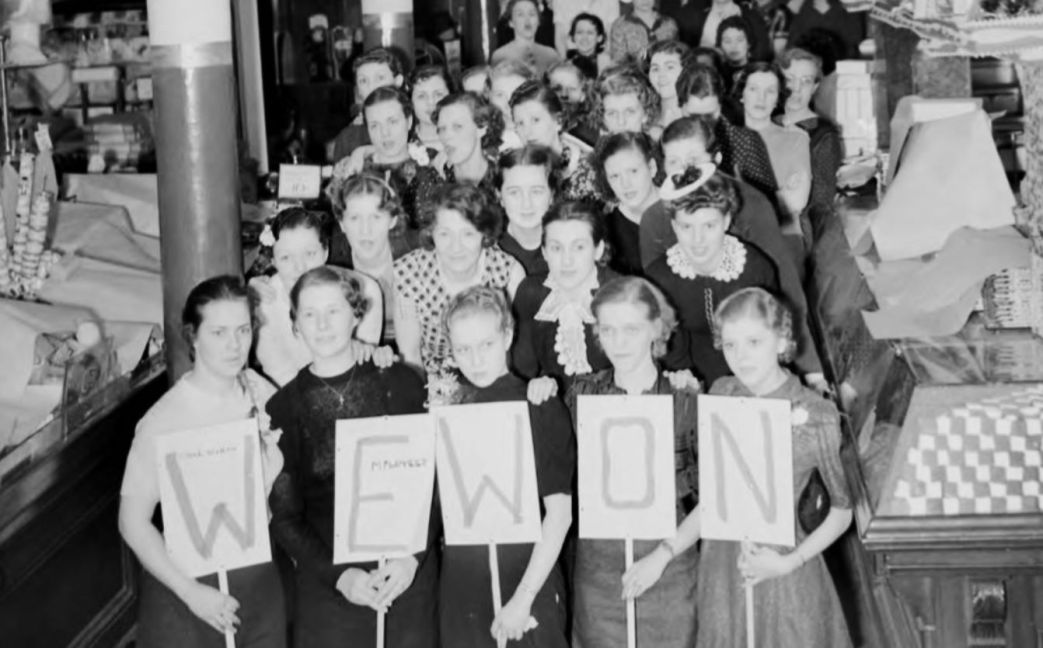
The Spirit of ’37. In terms of breadth of bringing in new workers and the depth of its reach to different sectors of the class, the wave of sit-downs and strikes triggered by the occupations in Flint, Michigan that swept the country in the winter into the summer of 1937 remains unprecedented. It is the before and after moment in U.S. labor history.
‘Sit-down Strikes Surging From Coast To Coast’ from Labor Action (San Francisco). Vol. 1 No. 13. February 27, 1937.
Workers Rush Into Industrial Unions By Thousands As Significant Aftermath Of General Motors Defeat
Stimulated and encouraged by the victory of the Auto Workers’ Union over the powerful General Motors Corporation, a great wave of strikes spread over the United States as the CIO drive gained real momentum this week. From the aircraft industry in Southern California to the shoe industry in the New England states workers occupied plants or stood on picket lines in firm resolution to better their conditions of life.
In autos, in steel, in rubber–in all the basic industries being organized by the C.I.O. the sit-down fever spread and workers flocked to join the unions. In a single day after the strike settlement in Flint, more than 3,000 Detroit auto workers joined the UAW, and similar gains throughout the country are reported by union leaders.
A battle raged in Waukegan, Ill., as 150 armed deputies attempted to oust sit-down strikers from the Fansteel Metallurgical Co. plant and were met by determined resistance and a hail of missiles, including acid. The strikers were attacked for two hours and a barrage of tear gas was laid down by the forces of “law and order.”
DEPUTIES BREAK DOORS
The deputies broke open the doors to the plant with steel battering rams and shot into the plant until the air was filled with choking gas. The steel workers retaliated with what weapons were at hand-bolts, nuts and wrenches. Only when the complete supply of “industrial munitions” furnished to the sheriff by corporation agents was exhausted did the attack cease.
Anderson, Ind., remained in a state of siege after a gun battle that wounded John Rose, member of the UAW, and Heaton Vorse, labor reporter. Eighteen men are under arrest and martial law was declared because a group of auto-workers demonstrated their solidarity and went to the aid of fellow-union members.

In California, sit-down strikers closed the big Douglas Aircraft plant in Santa Monica and stopped work on Army bombing planes, delaying work on contracts totaling $19,000,000. They jeered at threats of violence from Donald Douglas, president of the company, and successfully held the 3-block plant.
ARREST STRIKERS
Armament building for the Navy proceeded behind picket lines after strikers at the Electric Boat Co. were arrested by police. The plant, building submarines for the Navy, continued work with scabs while union leaders established picket lines around the gates.
Picketing of 85 shoe factories began as the newest union under the leadership of the C.I.O. demonstrated its strength to overlords of the leather industry in the New England states. The United Shoe and Leather Workers’ Union, recently formed by the amalgamation of three unions already in the field, demanded recognition and negotiations with the manufacturers.
Rubber workers in widely separated sections of the country acted in small plants to gain demands and recognition. Ohio, Michigan and Wisconsin plants were affected, while in Chicago, retail workers closed up six service stores of the Goodyear Rubber Co.
That the struggle for unionization in the auto industry has only begun is seen in the numerous reports of sit-downs and strikes in Detroit and the surrounding cities. Several plants manufacturing auto parts are closed, and the giant Timken Axle plant in Detroit, which supplies axles to Ford, General Motors and Chrysler, is the scene of sit down action.
FLOCK TO UNIONS
In Detroit, Flint, Lansing, Pontiac, and every other auto center, workers are flocking into the union ranks as a result of the GM strike. A demonstration of victorious strikers in Flint was the biggest celebration in the city’s history.
In a frantic scurry to stave off action of their employees, now imbued with the union spirit, Packard, Chrysler, Hudson, Budd Wheel and other plants boosted their wage scales. “The UAWA has already been worth many millions of dollars to the automobile workers of this country in these bonuses, wage increases, better working conditions, etc., that have been granted,” President Homer Martin estimated.
Briggs Manufacturing Co., one of the most notorious anti-union companies in the auto industry, signed an agreement with the UAW soon after the GM settlement. A series of spontaneous sit-downs in the major Briggs plant led to an influx of Briggs’ workers into the union and the company was forced to negotiate an agreement boosting wages and recognizing the union’s shop steward plan.
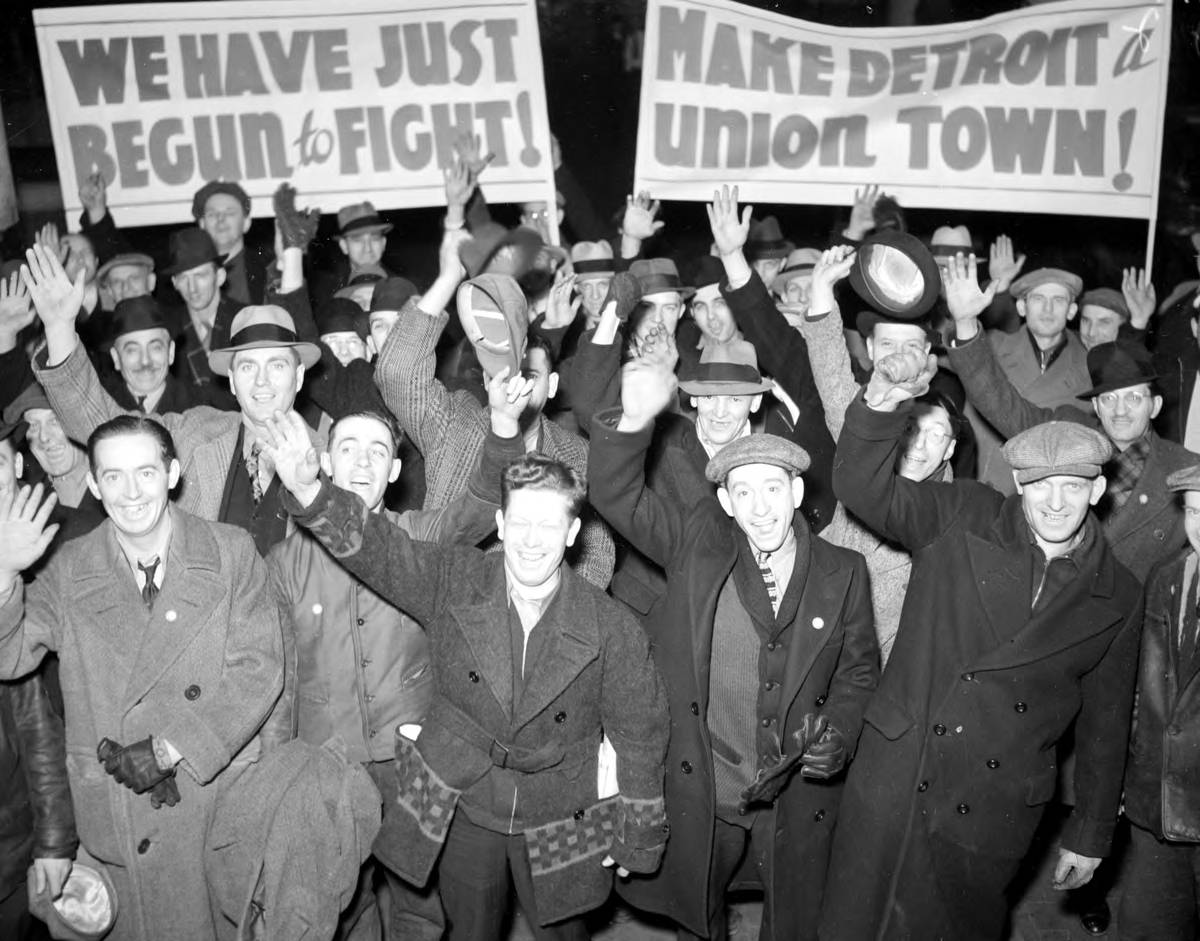
Meanwhile, workers returning to the Chevrolet plants are finding that agreements signed in the conference room must be enforced in the plants. In the No. 4 plant in Flint, key to all Chevrolet production, since all engines are made there, the company has hired many non-union men as thugs. These men are armed with clubs and paid extra cash. Top men of the company say the thugs are armed to prevent riots.
SLANDER UNIONISTS
In other plants hostile foremen attempt to prove union men to be inefficient by putting them on work they are unaccustomed to performing.
Already GM is trying to foist an anti-union seniority plan on the workers, judging seniority by the position of the worker in the plant and by the number of dependents, fictitious or otherwise, that each man claims. In negotiations, the GM officials refuse to discuss conditions in any plants besides the 17 recognized, and denies the right of the UAW to press forward demands for the other 52 plants.
But the hard-won strike of the last two months has conclusively shown the way to organized strength, and the new upsurge of union consciousness throughout the nation will sweep away the chiseling machinations of the corporation bosses.
The first big battle in the campaign to organize the broad layers of the American working class has been won. The road is clear. It is the road of militant industrial unionism. The mounting wave of strike action throughout the nation proves that the road will be traveled.
There have been a number of periodicals named Labor Action. This Labor Action was published weekly in San Francisco in 1936 and 1937, edited by James P Cannon, as the official organ of the Socialist Party of California, then dominated by Fourth Internationalist followers of Leon Trotsky engaged in an intervention, the “French Turn,” into the Socialist Party. This Labor Action played close attention to the CIO movement and contains a wealth of information on CIO history in the West of that time. The Trotskyists were expelled in late 1937, founding the Socialist Workers Party in early 1938.
Link to PDF of full issue: https://www.marxists.org/history/etol/newspape/laboraction-ca/v1n13-feb-27-1937.pdf
 Revolution's Newsstand