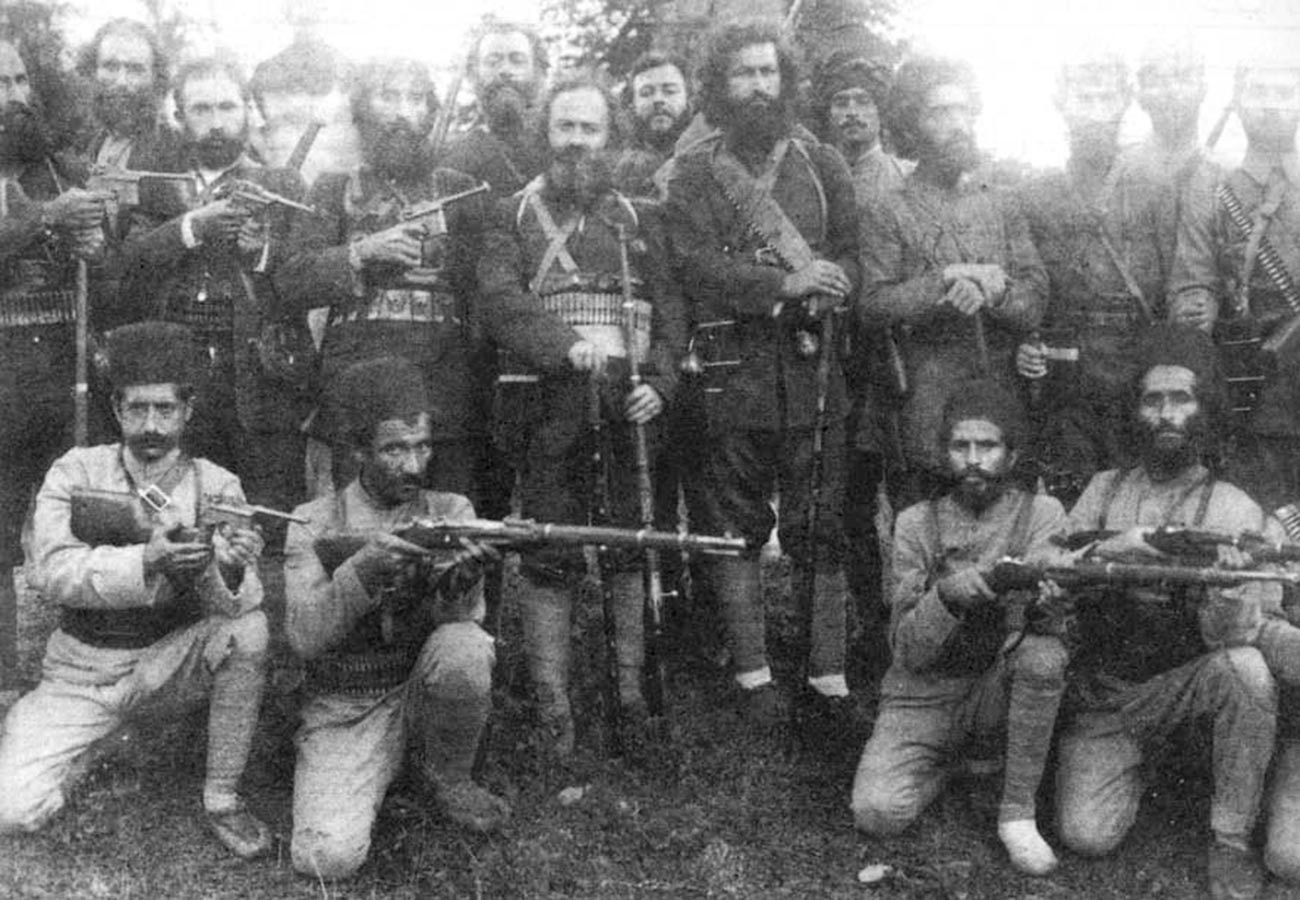
Victories for the Soviets in the Caspian during 1920. Fyodor Raskolnikov describes commanding the Red Navy’s Caspian fleet capture of Baku and Anfali, the defeat of Denikin’s army, the established of the Gilan Soviet Republic and the leadership Kuchuk-Khan and his Persian Red Army.
‘In Persia: An Interview with Raskolnikov’ by E.V. from Soviet Russia. Vol. 3 No. 17 October, 23, 1920.
[The following interview with Comrade Raskolnikov in which he gave a brief review of the conquest of the Caspian Sea and of the capture of Enzeli by the Soviet forces, appeared in the Petrograd “Pravda” of July 15, Comrade Raskolnikov was Commander of the Soviet Caspian fleet during the period described in the interview and has since been appointed Commander of the Baltic fleet.]
The Conquest of the Caspian
THE conquest of the Caspian Sea took two navigation seasons of 1919 and 1920. In 1919 our fleet waged an active defence of Astrakhan from the Sea and from the Volga, assisting at the same time the forward movement of the Red Army along the banks of the Volga, and helping it to drive the Denikin army from both banks.
In the beginning of 1920, after the capture of Petrovsk, our fleet took up the task of clearing the Caspian Sea of the British and Denikin fleets. The base of our fleet was transferred from Astrakhan to Petrovsk, whence the fleet commenced its active operations.

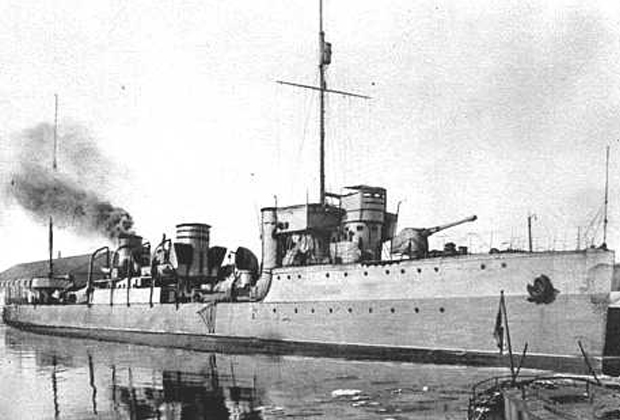
The first battle of our torpedo-boat Karl Liebhnecht with two cruisers of the enemy near the Alexandrovsk fort, showed clearly the fighting ability of our fleet and the demoralization of the enemy’s forces. As a result of this battle we seized two enemy boats and the remnant of the Ural White army of General Tolstoy, which consisted of 2,000 men.
Arriving at Baku, the crews of the enemy ships brought the news of the defeat which was inflicted upon them by our torpedo-boat. The Whites in Baku were confronted by the question whether they should remain in Baku and give battle there, or should go to Enzeli. Under pressure of the British command, it was decided to transfer to Enzeli the whole Caspian White fleet, a part of the army, and all the military stores. But a part of the crews and of the officers, who were demoralized by the defeat, resolved not to take part in the sea operations against our forces, refused to go to Enzeli, and disembarked at Baku.

When the White fleet entered Enzeli the British military command interned the White crews, believing that if the White ships were placed under British protection our Bed fleet would not attack them.
At this time the British began energetic preparations to convert Enzeli into a base for their rule on the Caspian Sea. They began to send their marines and officers through Mesopotamia and Persia to provide crews for our naval ships at Enzeli. Simultaneously they began to fortify Enzeli and make it ready for defence. They hoped by fortifying Enzeli to transform it into their foremost outmost which would cover the approaches to Persia, Mesopotamia, and what was most important for them, to India.
After an insurrection had broken out in Baku, and the insurgent workers had called upon the brotherly Bed troops and Red fleet to come to their aid, our fleet was sent from Petrovsk to Baku and arrived there on May 1, almost concurrently with the Red Army.
After the proclamation of the Azerbaijan republic, knowing that Soviet Russia and the Azerbaijan republic cannot be sure that the British will not make a new attack on Baku from Enzeli, I decided to seize Enzeli and to remove from there all the White ships, thus depriving the British of their main-stay on the Caspian Sea.
The Capture of Enzeli
On May 18, in the early morning, our fleet approached Enzeli and opened fire, bombarding not the city itself but Kazan, where all the staffs and military forces of the British were located. Simultaneous with the bombardment of Enzeli our torpedo-boat made a demonstration near Resht, whither the British immediately sent their cavalry.

To the east of Enzeli, about twelve to fourteen versts from the city, we landed a force which cut off the British from the road to Resht. They thus found themselves in a trap. At first the British tried to offer resistance and sent two detachments of sharpshooters against us. But after a few volleys from the ship cannon the British troops became disorganized and retreated. Finding the situation hopeless, the British sent emissaries to us to ask for an armistice.
I told the British emissaries they must immediately surrender Enzeli, in view of the presence in the port of ships and military stores belonging to Russia.
As to the future fate of Enzeli, I told them that this question would be settled through diplomatic negotiations between Russia and Great Britain. My ultimatum was reported to General Shampein, who asked for an extension of the two hour limit, pointing out that he could not so quickly get a reply from the Persian Government, whose interests he claimed to represent.
Some time after this, the Governor of Enzeli came to my ship and declared that he came to greet the Russian Bed fleet in the name of Persia. He agreed to evacuate Enzeli.
Since the British could not present an answer from the Persian Government before night, I proposed to General Shampein to allow the British troops to leave the city if he would turn over to us all the marine stores which he had seized from the Denikin fleet and part of which was still at Enzeli (a part he had already removed from the city). General Shampein accepted this demand and gave a formal promise to return all our stores unharmed. Shortly after this, Indian sepoys brought thirty cannon locks and turned them over to us.
After this I gave permission for the evacuation of Enzeli by the British troops, but on condition that they should not take along the Russian Whites. When the British troops were leaving the city we watched carefully that no Denikin officer should slip through with them.
The morale of the Indian troops, the English, the Turks, and the sepoys seemed to be very low. When we opened to them the road from Enzeli they started at a run, apparently eager to get out of Enzeli as quickly as possible. Before the evacuation of Enzeli the British announced to the local populace that they were leaving but for a short time, and that they would soon send an army a hundred thousand strong for a new occupation of Enzeli. But watching their hasty evacuation of the city and how submissively they turned over to us the military stores, the local populace did not believe their boast.
Reception by the Population, and Our Booty ai Enzeli
Before the British had evacuated Enzeli, we landed troops which occupied the city. All the streets and squares were packed with people. The whole city was covered with Red flags.

From the very first moment of our entry we announced that we had no intention of interfering in the internal affairs of Persia. The Persian Governor and other official representatives of the Persian authorities welcomed us as liberators from British oppression. The whole populace cursed the British as exploiters.
In Enzeli we captured an enormous military prize: Denikin’s whole fleet which had been armed by the British, and which consisted of armed ships and transports, came into our possession. In addition to this we captured over fifty cannon, 20,000 shells which were brought from abroad, 160,000 poods of cotton which had been removed from Ej-asnoyarsk and sold to the United States, but which is now being sent to Astrakhan, 8,000 poods of copper, 25,000 poods of rails, forty cars, over twenty ship radio stations and three field radio stations, six hydroplanes, and four destroyers. It is impossible to enumerate the smaller materials. We have removed these military stores to Baku and Astrakhan.
Kuchuk-Khan
After the occupation of Enzeli we entered into negotiations with Kuchuk-Khan, urging him to advance on Resht. When the British heard of this they hastily evacuated Resht and retreated toward Bagdad.
Kuchuk-Khan had been at one time a mullah, but disillusioned of religion and seeing how his people were exploited by the British, he changed the cassock for a rifle. Escaping into the mountains, he gathered a small band of reliable men and for seven years waged bitter warfare against the British, fighting for the liberation of Persia. The British repeatedly dispatched against him much stronger military detachments, but to no avail. The local populace supported Kuchuk-Khan and always notified him of the approach of British troops. After making a sudden attack on the British and inflicting heavy losses, Kuchuk-Khan would retreat into the mountains through paths which his pursuers could not use.

The arrival of the Bed fleet at Enzeli enabled Kuchuk-Khan to seize Resht and to form there a revolutionary government of Persia. The revolutionary government formed by Kuchuk-Khan was greeted with enthusiasm not only by the poor, but also by the landowners and even by a part of the khans, who had suffered under the British yoke.
Kuchuk-Khan is an idealist and revolutionist. He will act in cooperation with the wealthy classes until he drives out the bourgeois Persian Government and turns over the land to the poor. He does not like to be called khan, declaring that the khans are the oppressors of the people and that he is simply a representative of the people — Mirza Kuchuk.
Comrade Raskolnikov expressed the belief that the struggle of Kuchuk-Khan for the liberation of Persia from the British yoke would be successful, for the Persian Government has no real power in the country. The Persian cossacks and gendarmerie, the best organized troops of the bourgeois government, are in sympathy with Kuchuk-Khan and against the British. Knowing that the people of Persia hate them, and fearing a rebellion in India and Mesopotamia, the British will not dare to send any help to the Persian Government.
To fight the British, Kuchuk-Khan formed a revolutionary military council, of which he is a member. Kuchuk-Khan himself is fairly well acquainted with military operations, but he is more capable in guerrilla warfare than in field mass warfare. But since the topographical conditions preclude any other but guerrilla warfare, Kuchuk-Khan’s victory seems to be assured.
Kuchuk-Khan’s government is revolutionary in its composition and is made up of men who, like Kuchuk-Khan, fought for years for the liberation of Persia. Closest to the Communist Party is Comrade Ecsanula, who is the Commander-in-Chief of the armed forces of revolutionary Persia and a member of the Persian revolutionary military council.
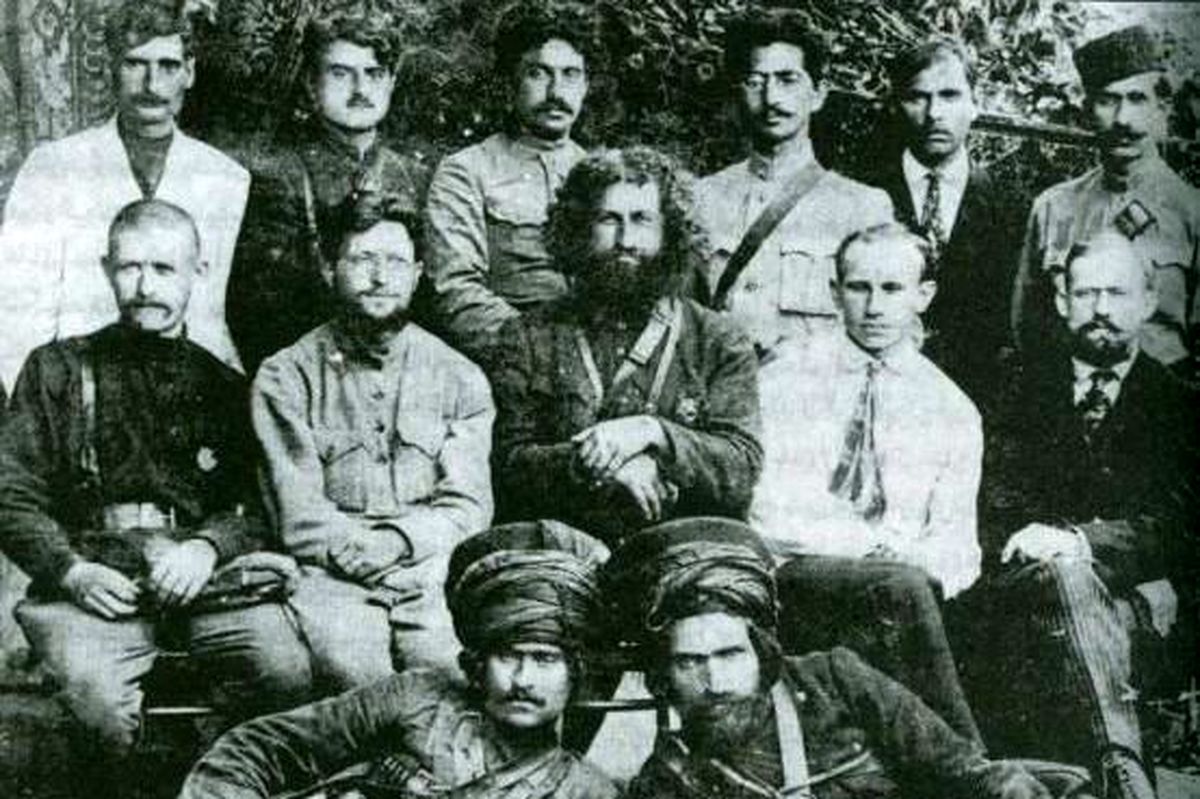
The government itself acts in close contact with the Communist Party of Persia. The government understands that the Persian revolution cannot be confined within narrow national forms, but must aid also in the liberation of other peoples of the Orient. The government is in touch with the revolutionary movement of Mesopotamia.
Kuchuk-Khan himself is an ardent sympathizer of Soviet Russia. “When I was leaving,” concluded Comrade Raskolnikov, “he asked me to give his sincere regards to Comrade Lenin and to tell him that he will act as his disciple, and that the alliance between Soviet Russia and revolutionary Persia will never be broken.”
Soviet Russia began in the summer of 1919, published by the Bureau of Information of Soviet Russia and replaced The Weekly Bulletin of the Bureau of Information of Soviet Russia. In lieu of an Embassy the Russian Soviet Government Bureau was the official voice of the Soviets in the US. Soviet Russia was published as the official organ of the RSGB until February 1922 when Soviet Russia became to the official organ of The Friends of Soviet Russia, becoming Soviet Russia Pictorial in 1923. There is no better US-published source for information on the Soviet state at this time, and includes official statements, articles by prominent Bolsheviks, data on the Soviet economy, weekly reports on the wars for survival the Soviets were engaged in, as well as efforts to in the US to lift the blockade and begin trade with the emerging Soviet Union.
PDF of full issue: https://www.marxists.org/history/usa/pubs/srp/v3n17-oct-23-1920-soviet-russia.pdf
 Revolution's Newsstand