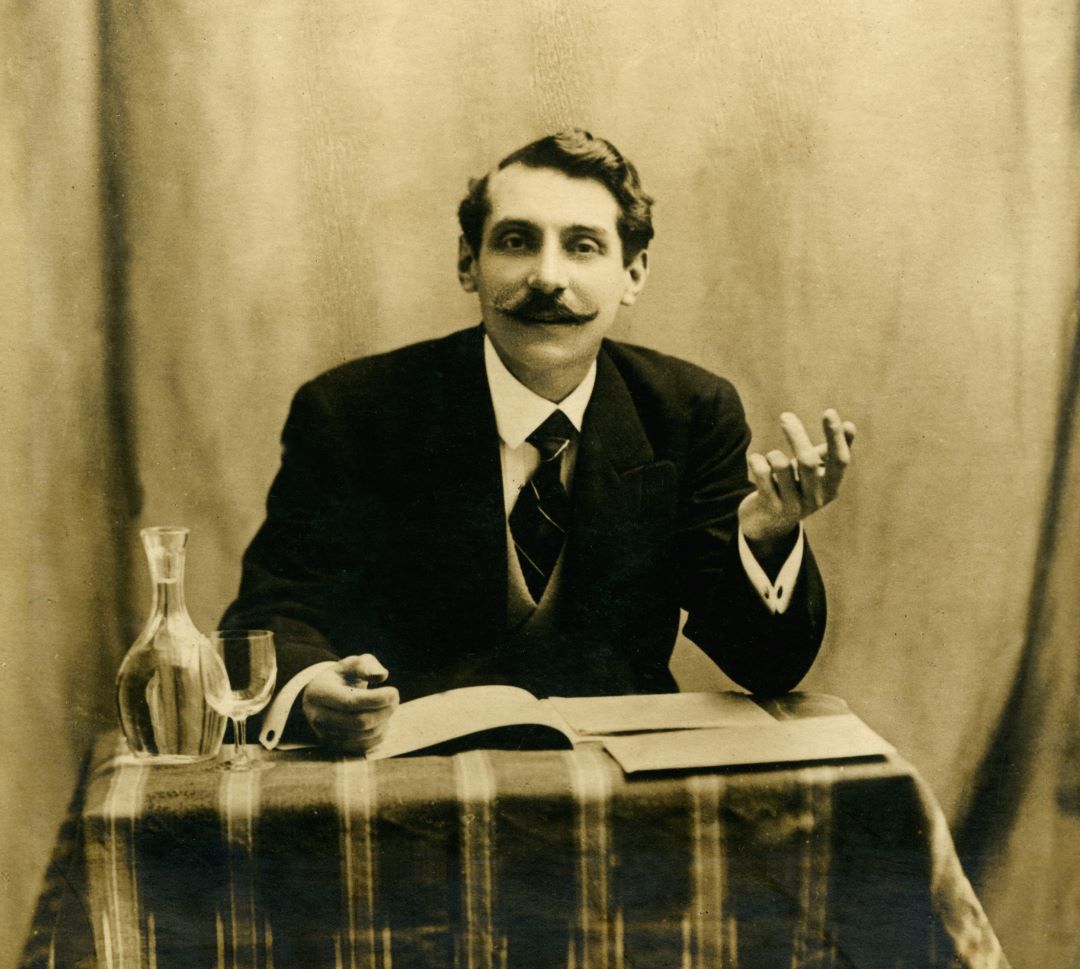
‘The Bourgeois Moral Ideal’ by Paul Lafargue from Social and Philosophical Studies. Translated by Charles H. Kerr. Charles H. Kerr Publishing, Chicago. 1906.
The heroic ideal simple and logical, reflected in thought the surrounding reality without disguises and without distortions. It erected into primary virtues of the human soul the physical and moral qualities which the barbarian heroes had to possess in order to conquer and preserve the material goods which classed them among the first citizens and the happy men of earth.
The reality of the rising democratic bourgeois society no longer corresponded to this ideal. Riches, honors and enjoyments were no longer the prize of valor and of the other heroic virtues any more than in our capitalistic society property is the recompense of labor, method and economy. Nevertheless, riches continued always to be the end of human activity and even became more and more its sole and supreme end. To reach this end, so ardently desired, it was no longer necessary to put in action the heroic qualities formerly so prized; but as human nature was not despoiled of these qualities, while in the new social conditions they had become useless and even hurtful for making one’s way in life, and as they became in the ancient republics causes of trouble and civil war, there was urgent need of subduing and domesticating them by giving them a platonic satisfaction in order to utilize them for the prosperity and preservation of the new social order.
The sophists undertook the task. Some, like the Cyrenaics, not trying to disguise the reality, recognized squarely and proclaimed loudly that the possession of wealth was “the sovereign good” and that the physical and intellectual enjoyments which it procures were “the chief end of man.” They professed boldly the art of gaining wealth by all means, lawful and unlawful, and of escaping the disagreeable consequences which might ensue from the unskilful violation of laws and customs. Other sophists, like the cynics and many of the stoics, in open revolt against the laws and customs, wished to return to the pre-social state and to “live according to nature.” They affected contempt of wealth; “The wise man alone is rich,” they shouted ostentatiously. But this disdain for the wealth beyond their reach, was too violently opposed to the trend of the day and the general sentiment, and was often too declamatory to be taken seriously. Moreover, neither group gave any tendency of social utility to their moral theories, and it was precisely this that the bourgeois democracy demanded. Other sophists, like Socrates, Plato and a great number of stoics faced the moral problem squarely. They did not erect contempt for riches into a dogma, but on the contrary they recognized they were one of the conditions of happiness, and even of virtue, though they had ceased to be its recompense. The just man ought no longer to call on the out side world for the reward of his virtues but to seek for it within his inner sanctuary, in his conscience, which should be guided by eternal principles placed outside the world of reality, and he could hope to obtain this reward only in another life.1
They did not revolt against the laws and customs, like the cynics; on the contrary they advised conformity to them and counseled each to remain in his place and to adjust himself to his social station. It is thus that St. Augustine and the fathers of the church imposed as a duty upon Christian slaves to redouble their zeal for their earthly master in order to merit the favors of their heavenly master.2
Socrates, who had lived in intimacy with Pericles, and Plato, who had frequented the courts of the Tyrants of Syracuse, were profound politicians, seeing in ethics and religions nothing but instruments for governing men and maintaining social order.
These two subtle geniuses of sophistical philosophy are the founders of the individualistic ethics of the bourgeoisie – of the ethics which can only end by putting words and acts into contra diction, and by giving a philosophical sanction to the division of life into two parts; the ideal life, pure, and the practical life, impure – one being the antithesis of the other. It is thus, that “very noble and very honorable ladies” of the seventeenth century had succeeded in making love in a double fashion, consoling themselves for their intellectual love with platonic lovers by solid enjoyment of physical love with their husbands, completed according to their need by one or several lovers for good measure.
It is impossible for the ethics of any society based on mercantile production to escape this contradiction, which is the consequence of the conflicts in which the capitalist struggles: if to succeed in his commercial and industrial enterprises, he must capture the good opinion of the public by adorning himself with virtues, he cannot put them into practice if he wishes to prosper. But he understands that these virtues of parade are for others imperious – “categorical imperatives,” as Kant says. It is thus that if he unloads worthless merchandise, he demands payment in good money.3 The bourgeoisie, if it maintains its class dictatorship only by brutal strength, has need of sapping the revolutionary energy of the oppressed classes by making them believe that its social order is the realization as nearly as possible of the eternal principles which adorn the liberal philosophy, and which Socrates and Plato had partially formulated more than four centuries before Jesus Christ.
Religious ethics does not escape this fatal contradiction. If the highest formula of Christianity is “love one another,” the Christian churches, to draw customers to their shops, think only of converting the heretics by fire and sword, in order to save them, as they assure us, from the eternal fires of hell.
The barbarian social environment, engendered by war and the communism of the clan, resulted in stretching to their extreme limit the noble qualities of the human being – physical strength and courage and moral stoicism, the devotion of body and goods to the community, to the city. The bourgeois social environment, based on individual property and mercantile production, erects on the contrary into cardinal virtues the worst qualities of the human soul, egotism, hypocrisy, intrigue, profligacy and pilfering.4
Bourgeois ethics, although Plato claims that it descends from the heavens and that it is on a plane above vile interests, reflects so modestly the vulgar reality, that the sophists instead of elaborating a new word to designate this principle, which according to Victor Cousin, who is a good judge of it, is “ethics in its entirety,” took the current word and called it the Good – to agathon. When the Christian ideal was formulated by the side of and in the train of the philosophical ideal, it underwent the same necessity. The fathers of the church impressed upon it the seal of vulgar reality.
Beatus, which the pagans employed for rich, and which Varro defines as “he who possesses much goods,” qui multa bona possidet, becomes in ecclesiastic Latin, “he who possesses the grace of God.” – beatitudo, which Petronius and the writers of the Decadence employ for riches, means under the pen of St. Jerome, heavenly felicity: – beatissimus, the epithet given by the authors of paganism to the opulent man, becomes that of the patriarchs, of the fathers of the church and the saints.
Language has revealed to us that the barbarians, by their habitual anthropomorphic way of proceeding, had incorporated their moral virtues into material goods. But the economic phenomena and the political events which prepared the ground for the mode of production and exchange of the bourgeoisie, dissolved the primitive union of the moral and the material. The barbarian did not blush for this union, since it was the physical and moral qualities of which he was the proudest which were set in action for the conquest and the preservation of material goods. The bourgeois, on the contrary, is ashamed of the low virtues which he is forced to put in play to arrive at his fortune, so he wishes to make believe, and he ends by believing, that his soul wanders above matter and feeds on eternal truths and immutable principles; but language, the incorrigible tell-tale, unveils to us that under the thick clouds of the must purified ethics hides the sovereign idol of the capitalists, the Good, the Property-god.
Ethics, like the other phenomena of human activity, is subject to the law of economic materialism formulated by Marx: The mode of production of the material life dominates in general the development of the social, political and intellectual life.
NOTES
1. The soul, a metaphysical entity, existing by itself, independently of the body which it animates during life and abandons after death, is an invention of the savages They had found nothing simpler to explain the phenomena of the dream than to divide man in two; the body buried in sleep, remained in its place deprived of life, while the soul, which they called the double, set off on a journey, hunted, fought, avenged itself and acted; then returned to reanimate its corporal envelope, which came to life. The double after death continued to live. Thus at funerals they sacrificed animals and broke weapons in order that their doubles might continue to serve the dead. The souls of savages and barbarians living the communal life of the clan, those of women as well as those of men, betook themselves after death to an extraterrestial dwelling where they lived again an existence analogous to that which they had lived on earth. The soul of the Esquimau hunted the seal; that of the Redskin chased the bison; that of the Scandinavian fought by day and banqueted by night in Valhalla with the Valkyries.
Following and resulting from the transformation of primitive communism, the notion of the extraterrestial dwelling slipped away from the human mind and that of the soul became obscured, – to the point that during the patriarchal period, the head of the family was the only one who was thought to live after death; but his soul instead of betaking itself to paradise, led a supremely sad life in his tomb. The head of the family, who in his quality of administrator of the property had centralized in his person the rights of the members of his family, equally concentrated in himself their immortal souls. Then another explanation of the dream was discovered. Dreams were communications from the divinity, which had to be interpreted to understand one’s destiny. I spoke above of the role played by the immortality of the soul of the head of the family in the establishment of the right of primogeniture. The new explanation of the dream gave birth to a new order of exploiters of human stupidity, practicing the trade of dream-interpreter. They flourished in the time of Socrates.
At the time of the dissolution of the patriarchate, all members of the family, women excepted, in regaining their independence, found again, at the same time with their rights, their immortal souls, which had been confiscated by the head of the family. But as most of those who had re-entered into the possession of their souls had on the contrary lost their house and terrestial goods, they were greatly embarrassed to know where they should lodge after death. They were obliged to reinvent the extraterrestial dwelling of the savages. Socrates and Plato were ardent in utilizing the immortality of the soul as an instrument for governing men, disengaging it from the ruins of the patriarchal family. They had been preceded on this path by the Pythagorians. But it was Christianity which carried the exploitation of the soul to its highest perfection.
2. The cynics, and after them the first Christians, could demand the abolition of slavery. They were revolutionaries, but Socrates and the fathers of the church undertook rather the mission of propping the existing social institutions by the aid of morals and religion.
3. The pagans did not try to disguise the truth and they put commerce under the patronage of Mercury, the god of thieves. The Catholics are more Jesuitical. The religious orders, which are not exclusively consecrated to the capture of inheritances, make of commerce and industry their principal and even their only occupation, although they pretend to worship a God pure of all falsehood and innocent of all fraud.
The first act of the capitalistic bourgeoisie on coming into power in 1789 was to proclaim the liberty of theft, by relieving commerce and industry from all control. The guild masters of the Middle Ages, working only for the local market, for their neighbors, had established a severe control over production. The syndics of the guilds were authorized to enter workshops at any hour in order to examine the material and the manner in which it was worked. To facilitate their inspection the doors and the windows of the workshop remained open while the work was going on. The artisans of the Middle Ages worked literally under the eyes of the public. The goods before being put on sale were controlled by the syndics and marked with a seal or some other sign attesting that the guild guaranteed their good quality. This incessant control, which hampered and repressed the flight of the thieving genius of the capitalistic bourgeoisie, was one of its most serious grievances against the guilds.
4. The bourgeois writers are accustomed to heaping all the vices of civilization upon the savages and barbarians, whom the capitalists rob, exploit and exterminate under pretext of civilizing them, and it is they who corrupt them physically and morally with alcoholism, syphilis, the Bible, obligatory labor and commerce.
The travelers who come in contact with savage nations not contaminated by civilization, are struck by their moral virtues; and Leibniz, who alone is worth all the philosophers of liberalism, could not refrain from paying homage to them:
“I know beyond doubt,” he wrote, “that the savages of Canada live together in peace, although there is no sort of magistrate among them. We never, or scarcely ever, see in that part of the world quarrels, hatreds or wars, if not between men of different nations and different languages. I should almost dare call this a political miracle unknown to Aristotle, and which Hobbes has not observed. Even the children playing together rarely come to blows, and when they begin to warm up a little too much, they are soon restrained by their comrades. Do not imagine that the peace in which they live is the effect of a sluggish and insensible character, for nothing equals their activity against the enemy, and the sentiment of honor among them is active to the last degree, as is testified by the ardor which they show for vengeance and the fortitude with which they die in the midst of torments. If these people, with such great natural qualities could some day add to them our arts and science we should by the side of them be mere abortions.”
The Charles H Kerr publishing house was responsible for some of the earliest translations and editions of Marx, Engels, and other leaders of the socialist movement in the United States. Publisher of the Socialist Party aligned International Socialist Review, the Charles H Kerr Co. was an exponent of the Party’s left wing and the most important left publisher of the pre-Communist US workers movement.
PDF of Book:https://archive.org/download/socialphilosophi00lafa/socialphilosophi00lafa.pdf
 Revolution's Newsstand