
This article by Maurice Spector, a founder of Canadian Communism, on the 1926 political crisis between Ottawa and London raises the larger context of Canada’s internal development, U.S. capitals growing dominance, changes in the Empire, Canada’s status within it, and the working class attitude towards the conflict. The ‘King-Byng’ affair where the Britain’s Governor-General Lord Byng refused the request of Prime Minister MacKenzie King to dissolve Canadian parliament and hold and election caused a constitutional crisis.
‘The Rebellion of Canada’ by Maurice Spector from Workers Monthly. Vol. 5 No. 11. September, 1926.
THE former prime minister, MacKenzie King, is talking in the House. The grandson of the “Little Rebel” William Lyon Mackenzie, whose short-lived insurrection of 1837 had been instrumental in forcing so-called “responsible government” from Downing Street, has just been given a taste of “irresponsible government”–and is swallowing hard. Beaten on the question of the Customs Scandal involving his cabinet, he had advised His Excellency, the Governor General, to dissolve Parliament. But instead, Baron Byng had called upon the willing Tory leader, Meighen, to form a government. An unprecedented course of conduct–this, King complains, for the Crown to refuse dissolution to its ministerial adviser. There has been nothing like it in Great Britain for the last hundred years–or are we to understand that Canada has reverted to the status of a Crown Colony? “Are you trying to start a rebellion?” shouts a Tory back-bencher. “No,” comes King’s unheroic retort. “I am trying to prevent one.”
Another “Rebellion of 1837?”
But can he? Can King or anybody else stop the political and social forces at work for the separation of Canada from the Empire? Is Canada heading for another but more important and larger scale “Rebellion of 1837?” Certain it is that the Dominion has run into the biggest “constitutional crisis” in its history–a crisis that may well mark a turning point in its relations with the Empire. The action of the Governor General in refusing dissolution to King, only to grant this privilege to the Conservative leader sixty-five hours later, has forced the issue of Canadian “status” well into the foreground of a general election. The revelations of the Customs Scandal, the immediate cause of King’s downfall, fade into relative insignificance. It is common knowledge that both capitalist parties are corrupt. Both, according to the evidence submitted before the Investigating Commission, had accepted contributions to their campaign funds from the liquor manufacturers. However much, then, Meighen may deny that there is any “constitutional issue” at all and Mackenzie King and his timid followers seek to interpret the crisis in terms of Gladstonian parliamentary tradition, the point at stake is fundamentally the status of Canada.
What is “Dominion Status?”
“After this war,” said Bonar Law while the world struggle was still going on, “the relations between the great Dominions and the Mother Country can never be the same.” Whether this utterance was prompted by sentiment or perception, it was true that the destiny of the Dominions was to be very deeply affected by the new re-grouping of forces arising from the war. But the actual “status” of the Dominion still remained a matter of suspense and debate. To those “extremists” who urged that the Dominion was not yet possessed of complete self-determination and who denied that national self-determination was at all possible within the bounds of the capitalist Empire, those loyal to the British connection replied that we were already a self-governing country. Had not the Dominions become signatories of the Treaty of Versailles? Had not the Imperial Conference of 1923 given them the right to negotiate treaties specifically affecting their own interests–such as the Halibut treaty between Canada and the United States? We were already completely self-governing equal partners of Great Britain within the “British Commonwealth.”
Canada a Colony.
On this question of self-determination, Lord Byng has finally put a stop to the confusion of tendency with accomplished fact, vindicating the position of the “extremists.” “Lord Byng,” writes the well-known British student of colonial development, Professor Keith, “in refusing the dissolution of Parliament, has challenged effectively the doctrine of the equality of status of the Dominions and the United Kingdom and has relegated Canada decisively to the colonial status she had believed she had outgrown.” Neither in actual fact nor in international law, were Great Britain and Canada ever equals. The British North America Act, which is the constitution of Canada, is an act of the Imperial Parliament and can be amended by that authority only. The interpretation of that Act or Constitution lies in the end not with the Supreme Court of Canada but with the Privy Council in London as, for example, when it declared the Lemieux (Industrial Disputes Investigation) Act outside of the power of the Dominion Government. Canada can declare neither war nor peace. When Great Britain is at war, Canada will be automatically treated as a belligerent by powers at war with England. The Governor General is not only head of the state but a commissioner dispatched from London to report on Canadian affairs. Byng reminds Canada that she is still a colony.
Downing Street’s Imperial Policy.
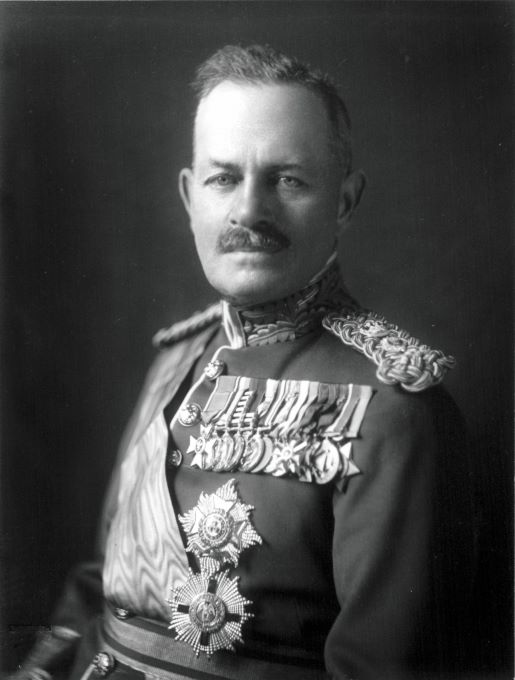
That Byng’s intervention was not accidental but bears the earmarks of a Downing Street policy of imperial self-assertion against centrifugal tendencies is attested by some recent Australian experiences. Not long ago a memorandum was signed by every state in Australia, except Victoria, asking the Dominion’s Secretary Amery to consider appointing local men in place of imperial products to the posts of state governors. Downing Street’s reply was that as the matter was not unanimous, it had better stand over. A few months ago the Governor of New South Wales deliberately refused the advice of his ministers to sanction the appointment of a sufficient number of labor senators to the Upper House to have given the Labor Government a complete majority. A direct appeal to Downing Street brought the reply that the action of the King’s representative “was above criticism.” Apparently, England is not going to loosen the bonds of Empire more than she is compelled to. The “wretched colonies” are no longer regarded, in Disraeli’s phrase, “as a millstone around England’s neck.” They are of immense strategic, political and commercial value. Imperial influence was brought to bear against Sir Wilfred autonomist Laurier in 1911 when his tendency caused him to refuse to accept wholly Churchill’s views on dreadnoughts for Imperial service. The tendency of Canada towards separatism since the conclusion of the war has far outstripped the pace of Laurier’s days and the position of the Empire is more precarious than it ever was then. England will not relinquish her hold on the colonies without a struggle.
American Penetration.
Among the Dominions it is Canada in particular which confronts the British Foreign Office with the problem of the waning British and the rising American Empire. Sir “The far-flung British Empire,” said Aukland Geddes, former British ambassador to Washington in his Page Memorial lecture (1924), “has yielded the leadership of the world in many respects to the compact empire of the United States. The Dominions look upon the government of Washington as of their own generation…and Washington, with its inviting eyes, looks back on them…” Some time ago, the U.S. Department of Commerce published a review of the extent of the American investment in Canada (which stated that “economically and socially Canada may be considered as the northern extension of the United States and our trade with Canada is in many respects more like domestic trade than our trade with other countries.” Between 1915 and 1922 the British investments remained stationary while the United States increased their investments six fold. Now one-fourth of all American investments are in Canada. In the eight years ending 1922, only two per cent of Canada’s borrowings were from Great Britain, but 33 per cent were from the U.S. Some 1,200 American branch factories have been established in the Dominion (fostered, ironically enough, by the very preferential tariff that was to bind Canada closer to Imperial Britain). The United States owns a third of all the industries and producing mines of the Dominion and at the rate of this economic penetration, it is just a question of time when U. S. capitalists will become the majority stockholders of Canadian economic enterprises. This growing American influence was fully recognized on the Canadian side when Frederick Hudd, Canadian Trade Commissioner in the U.S. and special delegate to the Pan-American Congress in New York last year, declared that:
“Canada is an integral part of economic America. The commercial economic and strategic problems common to us all furnish indestructible grounds for enduring and permanent co-operation. There is no problem too difficult for the countries of Latin-America to solve provided they stand together as a United States of the American Continent.”
Industrialization.
Another factor fostering the separatist tendency of the Dominion is its increasing industrialization (accelerated in a marked degree by the war and, since 1920, by the aid of American capital). Neither the Canadian Liberals nor the Conservatives are prepared to adopt economic policies to suit the requirements of British industry for a greater market for its products. At the Imperial Conference of 1923, British diplomacy failed to put across such preference, emigration, and capital export policies as would keep Britain the industrial metropolis of the Empire and the Dominions chiefly producers of primary products. Mackenzie King continually emphasized that Canada was the second largest manufacturing country in the Empire. As for the Tories, who politically parade about as the ultra-loyalists–theirs is a policy of economic nationalism and protection which opposes even the present preferential arrangement with Britain.
Economic Slump and War-Debt.
A third factor in this connection is the unsatisfactory Internal economic position of this country since the war. The fifteen years prior to the war were years of exceeding prosperity for the Canadian bourgeoisie. Immigrants flowed in by the hundreds of thousands. The third transcontinental railway was in the course of construction. Taxation was low. Military expenditures only amounted to twelve out of 130 million dollars of federal revenue. The war came. Immigration stopped. The heavily over-capitalized transcontinental systems went bankrupt and had to be centralized in a government-owned system with a deficit of a hundred million dollars a year. Increased military expenditures saddled the country with a huge war-debt. Tens of thousands of Canadians actually began to leave the country. The result of this economic slump has been to strain the structure of Canadian Confederation to the breaking point. Secessionist tendencies have arisen in both the Maritime Provinces in the extreme East and in the grain producing provinces of the West.
Both sections are dissatisfied with the results of Confederation, complaining of the exploitation at the hands of the manufacturing financial interests of Ontario and Quebec.
Imperial “Jag” Wears Off.
The whole post-war situation in which Canada finds herself, British Imperial decline, industrialization, American penetration, dragging economic development, have naturally made her very cautious of further imperial commitments. When Admiral Jellicoe semi-officially proposed that Canada should contribute 36 million dollars a year towards the maintenance of the Imperial Navy and provide a squad of four cruisers at an annual cost of maintenance of four million dollars there was no visible enthusiasm. All sorts of embarrassing queries arose, particularly in Quebec. After all, what real community of interest does there exist between Great Britain and Canada in matters of foreign policy? Is Canada interested in India or in the Suez Canal? “Our imperial policy!” exclaims the French-Canadian nationalist in the House, “I ask any honorable member of the House, have we the same interests in Arak or Mosul as the oil hunters of England have? That Europe should be reaping the results of a policy of national hatred and economic rivalry is no wonder, but why impose upon this country the consequences of that policy?” Take the possibility inherent in the Locarno Pact of an Anglo-French conflict. Is French-speaking Quebec, which was so indifferent about the war with Germany, likely to be more interested in fighting France?
“Aye, Aye, Ready!”
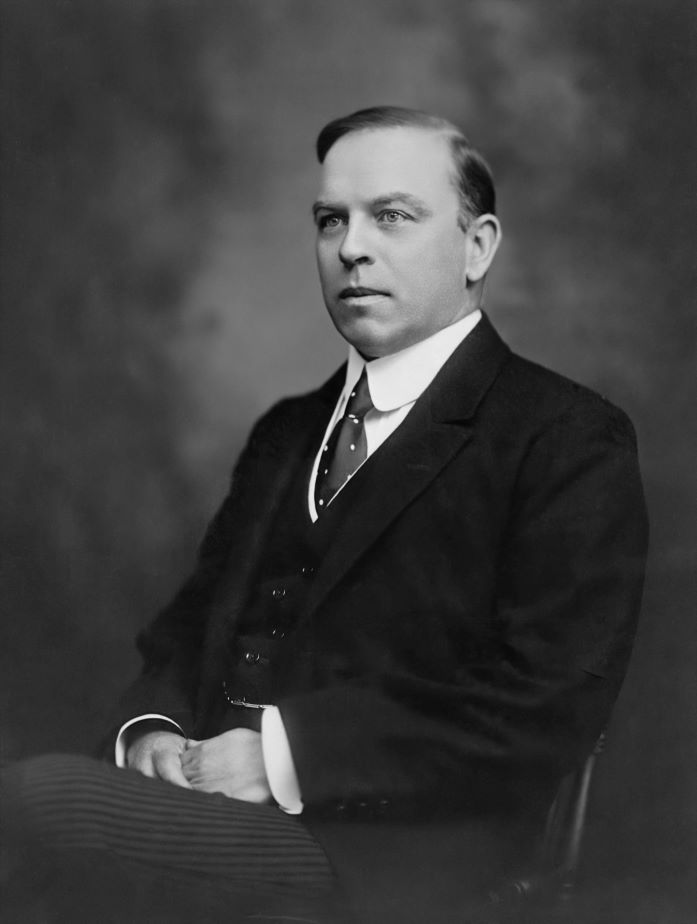
How serious this feeling of separatism in matters of foreign policy is may be gathered from the recent maneuverings of the leading capitalist politicians. It will be remembered that when Lloyd George attempted to embroil the Dominion in a war with Turkey at the time of the Chanak crisis, he was sharply rebuffed by the King Government. Meighen, leader of the Tory Opposition, thereupon derided the separatist attitude of the Dominion Government and claimed he would have replied to Downing Street’s appeal for war preparedness with a proud “Ready, Aye, Ready.” Meighen’s jingo speech, added to his imperialist war record generally, gave a further impetus to the political suicide of the Conservative Party in Quebec which, at the last elections, returned some three Tories out of a possible sixty. After this debacle, political expediency led Meighen to change his tune. In his now famous Hamilton “keynote” speech (delivered in the course of a Quebec by-election), he declared his “belief that it would be best that not only Parliament should be called upon but that the decision of the government, which of course would have to be given promptly, should be submitted to the judgment of the people before troops leave our shore.” Meighen’s speech was not taken too seriously in London which realized that he proposed a khaki election with his own fine Italian hand disfranchising the “alien-born” section of the electorate to make the country safe for the Empire. Still it was a sign of the times that Meighen should be forced to pretend a new orientation. When J.S. Woodsworth, the labor representative, moved his resolution that “in the opinion of this House Canada should refuse to accept responsibility for the complications arising from the foreign policy of the United Kingdom,” he was viciously assailed by a few Tory back-benchers but was received in silence by the official party leaders, who merely admitted that he was giving expression to an increasing body of public Dominion opinion.
Imperial Conference Issues. Meanwhile the Imperial Conference is nearing at which the chief topic of discussion, according to the “Morning Post,” semi-official organ of the Baldwin Government, is to be imperial foreign policy, particularly the questions of “imperial defense” and Locarno. In preparation for this conference set for October, King proceeded to move a resolution to the effect “that for the acceptance of any treaty, convention or agreement involving military or economic sanctions, the approval of the Parliament of Canada should be secured.” King reminded the House that such a resolution would be in accordance with the position taken by Canada at the last Imperial Conference, that the Dominions should be free to negotiate treaties which they considered affected their interests specifically and did not “involve the interests of the Empire as a whole.” The commercial treaty the Dominion signed with Belgium shortly after was negotiated by Canadian plenipotentiaries. Before the country could be committed to the obligations of the treaty of Locarno, he urged, Parliament should be given the opportunity of deciding for or against its ratification. The resolution carried without division-a development that did not escape the attention of the French press. “Quotidien”, at any rate, wrote that:
“Hitherto the great Anglo-Saxon communities have held themselves bound by negotiations carried on by the British Foreign Office. Canada’s decision has every prospect of establishing a precedent throughout the Empire for Australia is clearly separatist in matters of international politics and South Africa shows a similar mentality in discussing the problem of a flag for the Union. At the Imperial Conference the Dominion governments must make clear their policies in regard to Locarno and other questions.”
Governor General Heads Tories.
But Locarno and the problems of “imperial defense” are precisely what cause so much disquiet in the Dominions. In Australia the leader of the Opposition, Charlton, attacked the Treaty and Bruce, the premier, did not defend it very seriously. The Irish Free State is cold towards it.

Herzog of South Africa shows scant sympathy for the Pact. In India the government disallowed a resolution introduced disapproving it. It is not a very pleasant prospect for England to have the Dominion Parliaments openly discussing her foreign treaties with perhaps the chance of their altogether rejecting them. Under these circumstances, Meighen becomes decidedly preferable to Mackenzie King. To refuse dissolution to King in order to grant it to the Tory Meighen with his shadow cabinet was to hand over the election machinery to the latter. (In Canada, the party in office appoints the returning officers.) The British press has been quite cynical about the importance of the control of election machinery in Canada. They explain that Canadian politics are characterized by graft and corruption. Mackenzie King’s outburst of resentment is that Baron Byng should have taken the machinery out of his grasp. Byng has thus put himself practically at the head of the Conservative Party whose victory would be more conducive to British imperial interests. King, as a liberal capitalist politician, as parliamentarian and a constitutionalist, is of course very timid of attacking Byng directly. He throws the blame for the Governor General’s intervention on the misleading advice of Arthur Meighen. But a prominent Liberal, Principal Grant of Upper Canada College, has given utterance to the inner feelings of anti-Conservative rank and file when he said openly with Byng’s intervention that “if he gets away with it, it will set a constitutional precedent. If not, it brings the office of governor-general nearer to an end.”
The Constitutional Issue and the Workers.
There is then undoubtedly a constitutional issue in this election. But the issue is not merely why did Lord Byng refuse the advice of the late Premier and accept the advice of dissolution from the present Premier. The issue is-Why is Lord Byng here at all to govern as the appointee and representative of an outside power? Why is Canada still in leading strings? In other words, the “Constitutional Issue” is the issue of the constitution itself. This is an issue which the workers can- not afford to ignore. They are vitally affected by the regime of the British North America Act. It does matter to the workers whether the country in which they carry on their class struggle for social freedom is still a colony or has achieved complete sovereignty. workers are confronted not only with capitalism but with capitalist-imperialism. Not only are they interested that they shall not be the pawns of British foreign policy and imperialist wars, but that the concessions they wring in the way of immediate social legislation shall not be at the mercy of the British North America Act or of the interpretation of its powers and jurisdiction by the Privy Council in London. The Senate killed the Old Age Pensions Bill passed in the House of Commons. But assuming it had carried even in that Rich Old Men’s Home the right of the Federal Government to pass such legislation might still have been questioned on appeal to the Privy Council. Despite all statements to the contrary, Canada is still a colony of Great Britain, a part of the British Empire, one of the greatest political machines for the exploitation of the working class and subject peoples in the world. That is why the Labor Party, in its Ontario Section at least, takes a position in favor of the complete self-determination of Canada and why the left wing of the Labor Party headed by the Communists takes a more specific position for the annulment of the British North America Act, the separation of Canada from the Empire, and Canadian Independence.
The Workers Monthly began publishing in 1924 as a merger of the ‘Liberator’, the Trade Union Educational League magazine ‘Labor Herald’, and Friends of Soviet Russia’s monthly ‘Soviet Russia Pictorial’ as an explicitly Party publication. In 1927 Workers Monthly ceased and the Communist Party began publishing The Communist as its theoretical magazine. Editors included Earl Browder and Max Bedacht as the magazine continued the Liberator’s use of graphics and art.
PDF of full issue: https://www.marxists.org/history/usa/culture/pubs/wm/1926/v5n11-sep-1926-1B-FT-80-WM.pdf
 Revolution's Newsstand