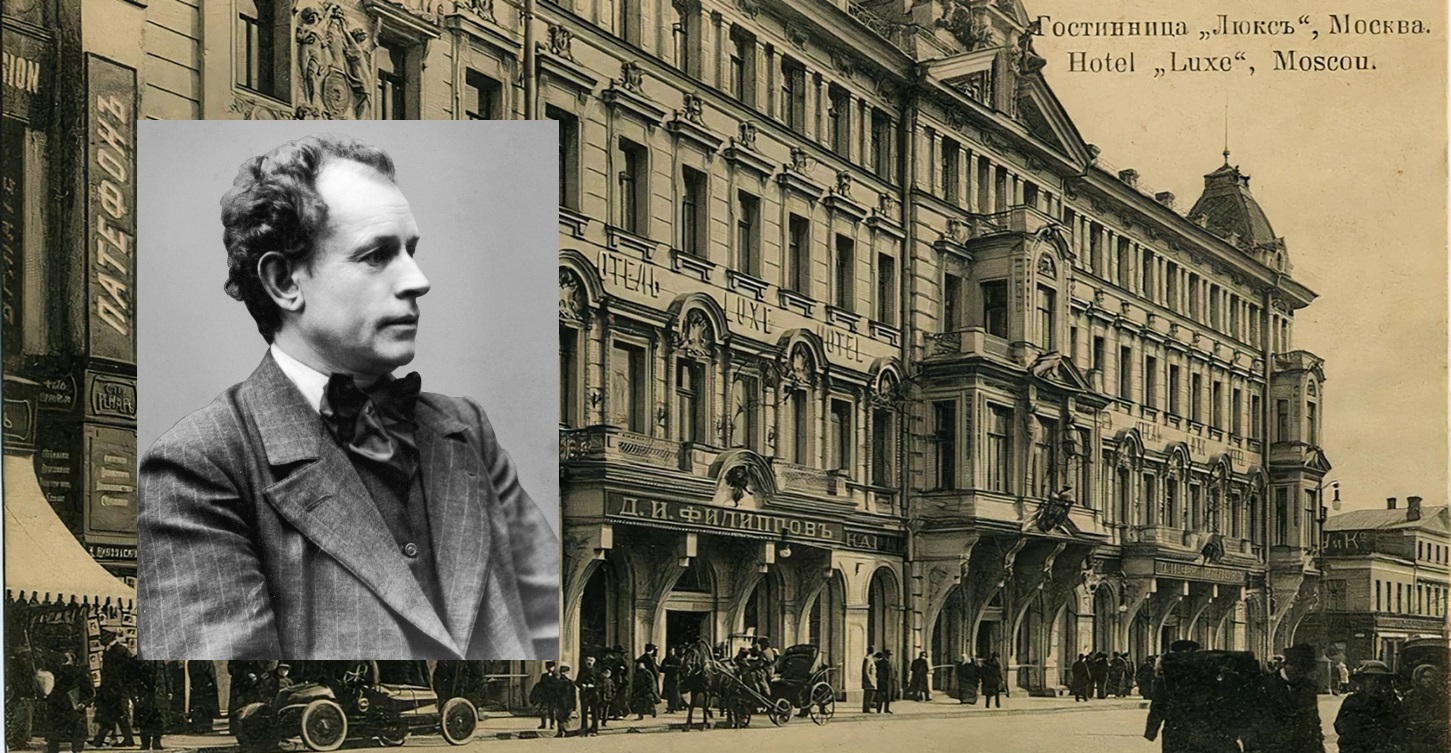
New Jersey’s ‘Mother’ Bloor is introduced to Danish author of ‘Pelle the Conquerer’ Martin Andersen Nexø by Finnish Communist Santeri Nuorteva at Moscow’s legendary haunt of internationals, Hotel Lux.
‘Martin Anderson Nexo’ by Ella Reeve Bloor from The Liberator. Vol. 6 No. 3. March, 1923.
ONE day Nuorteva had stopped in to see me at my room in the Hotel Lux. We were talking of the many interesting people who were flocking to Moscow.
“You have the best one of all as your neighbor” he said, “Don’t you know Martin Andersen Nexo lives right on your floor?” Of course this was good news, for Pelle the Conqueror and Ditti, Daughter of Man had brought me very close, in imagination, to this comrade from Denmark.

That very night, just after a beautiful opera, I met Nexo and Nuorteva in the hall in front of my room, with their hands full of bundles of cheese, bread and butter. They called out, “Oh, Mother, if we come in with our bread will you make us some coffee?” This was the first of many beautiful midnight suppers, memorable because of the long talks we had over the coffee. My room-mate, Anna Louise Strong, and other young folks, who always dropped in every evening, all listening eagerly to Nexo, who seemed to be the very spirit of Youth. The word that always comes to my mind when I think of him is “natural”; he was always so original and spontaneous, so pleased with others who could be natural. He often said, “I don’t like writers, do you? They seem so stilted, pose so much, are self-conscious. I like children, and simple country people real folks.” I asked him one night about a big opera and ballet which everyone was talking about.
“Well,” he answered, “I don’t like to sit in a big hall and watch people performing, all dressed up on a stage, singing loudly for the public about love, imitating love and life. That is what most art is–imitation. Real music, singing and laughter and all dancing must be spontaneous, springing up naturally from the people. Expression of real feeling. Do you understand what I mean?”
I asked him much about the boy Pelle, he always contended that Ditti, Girl Alive was much better than Pelle. I stood up for Pelle. Of course his own struggles as a shoemaker’s apprentice are woven almost unconsciously into Pelle’s story. I asked him if the Ark described so vividly, in the chapter The Great Struggle really existed in the Danish City.
“No,” he answered, “it’s just a picture of hundreds of arks in every city of the world.” And I knew it was all too true. “When the doors of the long passage opened and shut one heard the rumor of the innumerable creatures that lived in the depths of the ‘Ark.’ The crying of little children, the peculiar fidgeting sound of marred, eccentric individuals. For many a whole life’s history unfolded itself, within there. undisturbed, never daring the light of day. Across the floor of the courtyard went an endless procession of people, light shy creatures who emerged from the womb of the ‘Ark’ or disappeared into it. Most of them were women, weirdly clad, unwholesomely pale, but with a layer of grime as though the darkness had worked into their skins, with drowsy steps, and fanatical, glittering eyes.”
The passion of Nexo’s soul can be readily understood by reading of the childhood of Pelle and Ditti. He knows the shadows as well as the sunshine of childhood. Many times he showed me pictures of his own healthy children, five of them, all in a row.
Their mother came to us in Moscow during the great convention of the Third International as a delegate. And we all shared in his love of her. She was so sweet, and yet so intellectual, and a fine musician.
When the famine was so terrible in Samara, Nexo sent every scrap of his savings to found a Children’s home there for children whose parents had died of the Great Hunger. This home was named for him, “The Martin Andersen Nexo Home.”
When we were all in Petrograd he discovered that some of his books had been translated into Russian, and the publisher gave him some unexpected royalties. Delighted as a child he said to me, “I will give this money to my little children in Samara, don’t you think they will be pleased?”
Just before he left us to go to his home in Espergarde, Denmark, he made a visit to his little children of Samara. They received him with great joy. The men and women of the village, then holding their elections, elected him as a member of the local Soviet. When he returned, he told me with pride all about the doings of the children. He said, “They looked fat and seemed happy, but their cheeks were white, not rosy like those of our little children of Denmark.” He told some of the boys about it, and they said, “The trouble is we don’t get out of doors enough, because we have no heavy boots.” Of course the first thing Nexo did in Moscow, the day of his return, was to send a pair of boots for every child down in Samara.
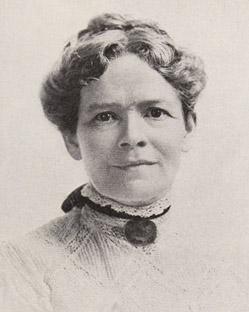
Always remembering the responsibility we all owe to children, I was constantly reminded in his presence of a little conversation in his book between Morton and Pelle. “The shadows of childhood stretch over the whole of life.” “Yes, and so does the sunshine of childhood,” exclaimed Pelle. “That’s why we mustn’t fail the little ones. We shall need a race with warm hearts.”
With his warm heart Nexo has a great brain. An earnest scientific Communist, he believes that the workers of every country should strive to fit themselves for future responsibilities. He believes the great co-operative movements by the organized workers in many European cities will make them more efficient, and more practical, and he himself feels hurt when he sees manifestations of inefficiency in the political or everyday life of the workers. He is a fearless man speaking out always against any wrong policy, even when expressed by his own comrades; but with high courage he believes in the coming leadership of the common people, his own people, the Workers.
When Pelle came out of prison and began to reason out the future, Nexo says of him, and I must say it about Martin Andersen Nexo:
“It was his firm belief that he and his followers should re- new the world, the common people should turn it into a paradise for the multitude, just as it had already made it a para-mind for this, but his army had been well tested. Those who, from time immemorial, had patiently borne the pressure of existence for others, must be well fitted to take upon themselves the leadership into the new age.”
The Liberator was published monthly from 1918, first established by Max Eastman and his sister Crystal Eastman continuing The Masses which was shut down by the US Government during World War One. Like The Masses, The Liberator contained some of the best radical journalism of its, or any, day. It combined political coverage with the arts, culture, and a commitment to revolutionary politics ay a pivotal time in Left history. The writings by John Reed from and about the Russian Revolution were hugely influential in popularizing and explaining that events to U.S. workers and activists. Increasingly, The Liberator oriented to the Communist movement and by late 1922 was a de facto publication of the Party and was sold to the Party by Eastman. In 1924, The Liberator merged with Labor Herald and Soviet Russia Pictorial into Workers Monthly. The Liberator is an essential magazine of the US left.
PDF of full issue: https://www.marxists.org/history/usa/culture/pubs/liberator/1923/03/v6n03-w59-mar-1923-liberator-hr.pdf
 Revolution's Newsstand