It is certain that the consequences of this history will be felt with the impact of the coming hurricane.
‘Tampa Negroes Must Live in Dirty Shacks: Evils of Segregation Are Widespread’ from the Daily Worker. Vol. 3 No. 103. May 12, 1926.
By a Worker Correspondent.
TAMPA, Fla., May 10. The property-owning class of Tampa has selected certain districts in which the Negro workers must live.
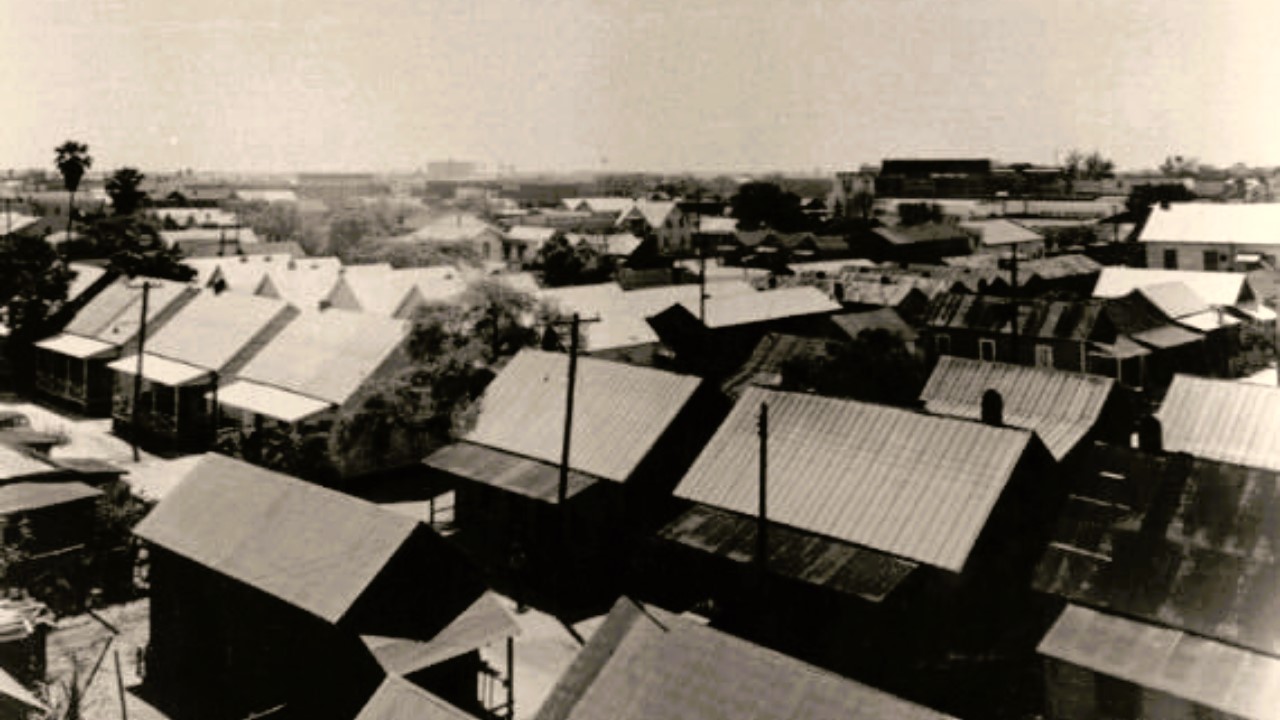
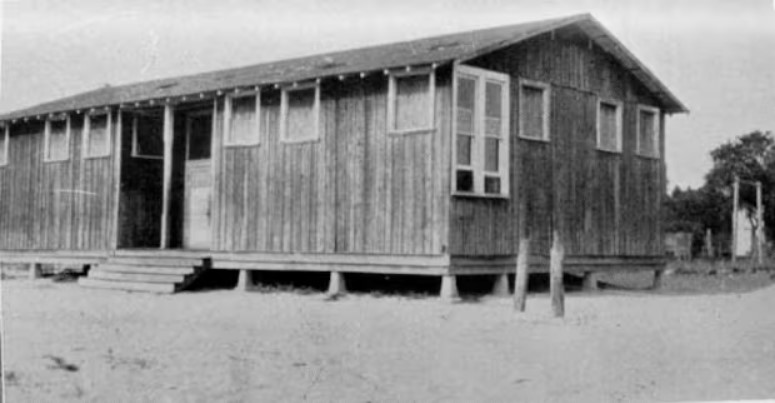
One of them is Lincoln Park, on the boundary line between Tampa and West Tampa. It is south of the Hillsborough River. All the sewerage runs into the river at that point. It is low and swampy, a ditch encircling this section. No bridge is over it. There are neither sidewalks nor pavements. It is more like a temporary camp. The hovels are built cross wise.
Housing Conditions.
In one case a lot 95 by 100 feet has ten hovels on it. The law calls for three feet of space between each hovel. Altho Tampa has all modern improvements the colored sections of the city are without such improvements as gas and water in the dwellings. This makes it necessary to have outside toilets very near them. Tampa’s torrid summer heat makes the odor almost unbearable. The insects, thriving in these swamps, add to the discomfort.
These hovels are constructed of used lumber from torn down buildings. They are not painted.
Tampa, like other parts of Florida, has very heavy rainstorms. Yet these hovels are so constructed that the rain pours in from every direction.
It costs only $400, all told to build one of these hovels of four rooms, each of which is seven by seven feet.
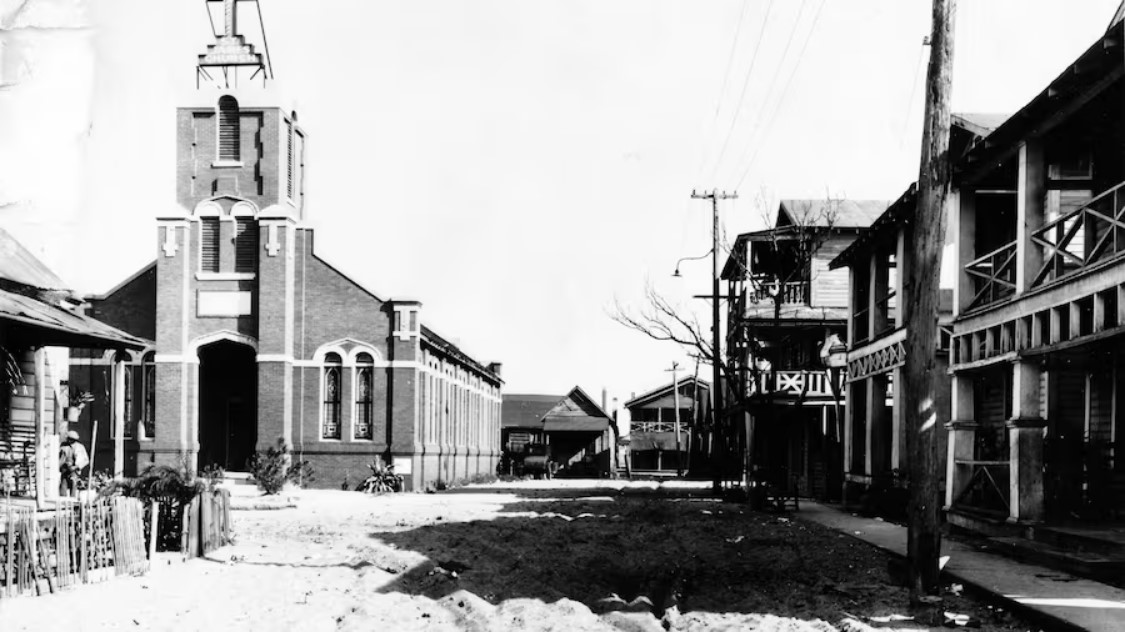
Another section reserved for Negro workers is near the business section of Tampa–one of the most up-to-date business districts in the southern states.
Boost Rents.
Here the rent is more than double that of the other section. One hovel in this section was rented for $4.50 a week in June, 1925. But the landlord, like other Tampa real estate men, increased the rent. In December it was $15 a week. He could not get more out of this tenant, so he gave him orders to move.
The next tenant had to pay $24 a week–which is a 500% raise within 8 months. To meet the landlord’s demands of $24 a week it is necessary for the tenant to take in three roomers for each room.
After a heavy downpour of rain the roomers threaten to move because their already inadequate supply of clothing is wet. The landlord refuses to do any repairing.
Forced to Pay for Lumber.
In another case, where used lumber was taken from an adjoining lot, the tenant was told to move. He pleaded piteously with the landlord because of the scarcity of shacks. The landlord then told him that he might remain if he paid $25 for the lumber which the landlord said was stolen.
The tenant, too poor to pay, agreed to pay $5 a week for the five weeks. Working conditions of the Negro in Tampa form another interesting phase of the condition of the Negro workers of the south.
The Seaboard Airline railway, the most important railroad entering Tampa, pays its workers in checks. In order to get these checks cashed, Negro workers must spend 25% of their wages in stores cashing them. The profits on merchandise sold in the Negro sections amount to from 50 to 200%.
Railroads Mulets Injured Workers.
One of the Seaboard Airline checks for $10 received by one of these merchants had written on the face of it:
“For full and final settlement of personal injuries to left knee, left leg, left side, shoulder and head.” When asked how long he was laid up the Negro worker replied that he was incapacitated for eight days with no pay. This worker was one of a number unloading a flat car of lumber. A switch engine backed against it, throwing this worker to the ground. The cable on another car broke just as it was hauling up lumber. The lumber struck the worker, breaking his jaw in two places as well as his arm. He was laid up in an hospital for six weeks. The doctor told him he would not be able to work for six months.
The claims agent of the railroad sent for him, while he was in the hospital. He offered him $25 as a final settlement. When the Negro worker refused to accept, the claims’ agent told him he would have him discharged from the hospital and thrown into the street. He was put out of the hospital.
The worker, of course, had neither money nor home.
When employes of the Seaboard Airline come to stores to do their shopping their foremen are with them. The foreman does the purchasing with their money, which, he carries in his own pocket.
Owing to the fact that they have been refused opportunities to go to primary schools many of these workers cannot figure out the cost of two or three small articles. The foreman does this for them and returns to them, at the end of the week, what he considers is due them.
Sub-Division Head Exploits Negro.
A land-owner started development of a sub-division of swampy land far removed from the city. The Negro workers doing this work had to live there. After a week’s work they would receive their pay. Invariably they returned to the city never to go back.
This held up rapid development of the sub-division. So in order to make them stay the landlord adopted on old but effective plan. He would send a worker to deliver a bottle of bootleg “whiskey” to another camp. On the way a man with a sheriff’s badge would overtake and arrest him.
Then the foreman would appear. The man with the badge would release the worker in return for $200 paid by the foreman and the worker would r turn to the camp to work out that amount. Over him, of course, would hang the threat of jail if he ran away.
Child Labor.
Child labor is common in the South. Little Negro girls ten years of age do domestic work in homes of people from eight in the morning until eight at night, the weekly wage running from $7 to $10 a week without room or board.
Little Negro boys, of the same age, work as ice wagon helpers from 5:30 in the morning until 4:30 in the after- noon every day in the week, including Sundays, for less than $10 a week.
The Negro worker, however, is not the only person exploited in Tampa.
Workers’ Conditions.
Street car operators of “one man cars,” for example, get 47 cents an hour for a 12-hour day every day in the week. When an effort was made to organize them 15 men were summarily discharged.
The cigar industry, the most important single industry in Florida, is completely demoralized.
The average cigarmaker makes $18 a week despite the fact that the cost of living is much higher than in the larger northern cities. The cigar-makers are very poorly organized.
Civic employes are no exception to the rule. City laborers received a cut in wages with a threat that if they did not speed up they would receive another cut of 15%.
The Daily Worker began in 1924 and was published in New York City by the Communist Party US and its predecessor organizations. Among the most long-lasting and important left publications in US history, it had a circulation of 35,000 at its peak. The Daily Worker came from The Ohio Socialist, published by the Left Wing-dominated Socialist Party of Ohio in Cleveland from 1917 to November 1919, when it became became The Toiler, paper of the Communist Labor Party. In December 1921 the above-ground Workers Party of America merged the Toiler with the paper Workers Council to found The Worker, which became The Daily Worker beginning January 13, 1924.
PDF of full issue: https://www.marxists.org/history/usa/pubs/dailyworker/1926/1926-ny/v03-n103-NY-may-12-1926-DW-LOC.pdf
 Revolution's Newsstand