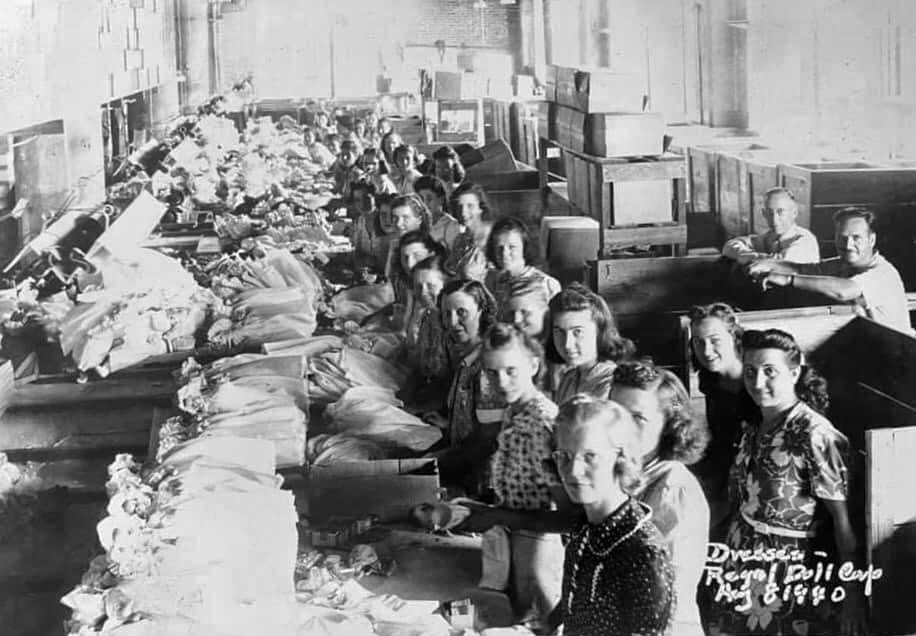
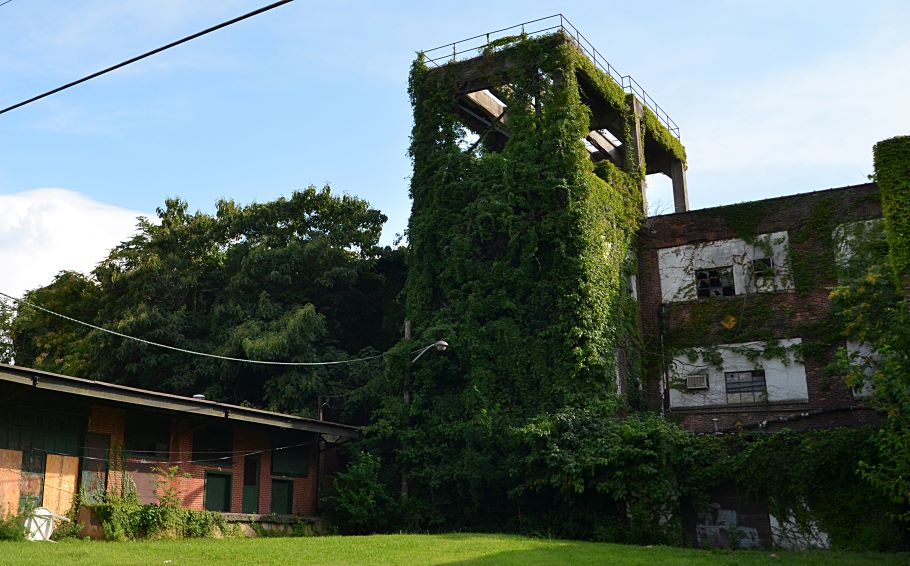
A Young Communist writes to the Party’s internal bulletin on the successful strike led by the T.U.U.L.-aligned Trenton Doll Workers’ Industrial Union at the Regal (Horseman) Doll factory in Trenton, New Jersey.
‘How We Prepared for the Trenton Doll Strike’ by A Y.C.L’er from Party Organizer. Vol. 5 No. 11-12. November-December, 1932.
THE successful conclusion of the strike of 850 workers, eighty-five per cent youth, in the Regal Doll factory in Trenton is of tremendous significance to the entire Party and Y.C.L. Not only did the workers gain an increase in wages, shorter hours, the recognition of their union and the shop committee, but this strike fully confirms the Fourteenth Plenum Resolution of our Party that “The first essential condition for successful work in the factory is daily contact with the mass of workers in it and thorough knowledge of the position of the workers in the factory and of the concrete conditions for struggle.”
How We Made the First Contacts
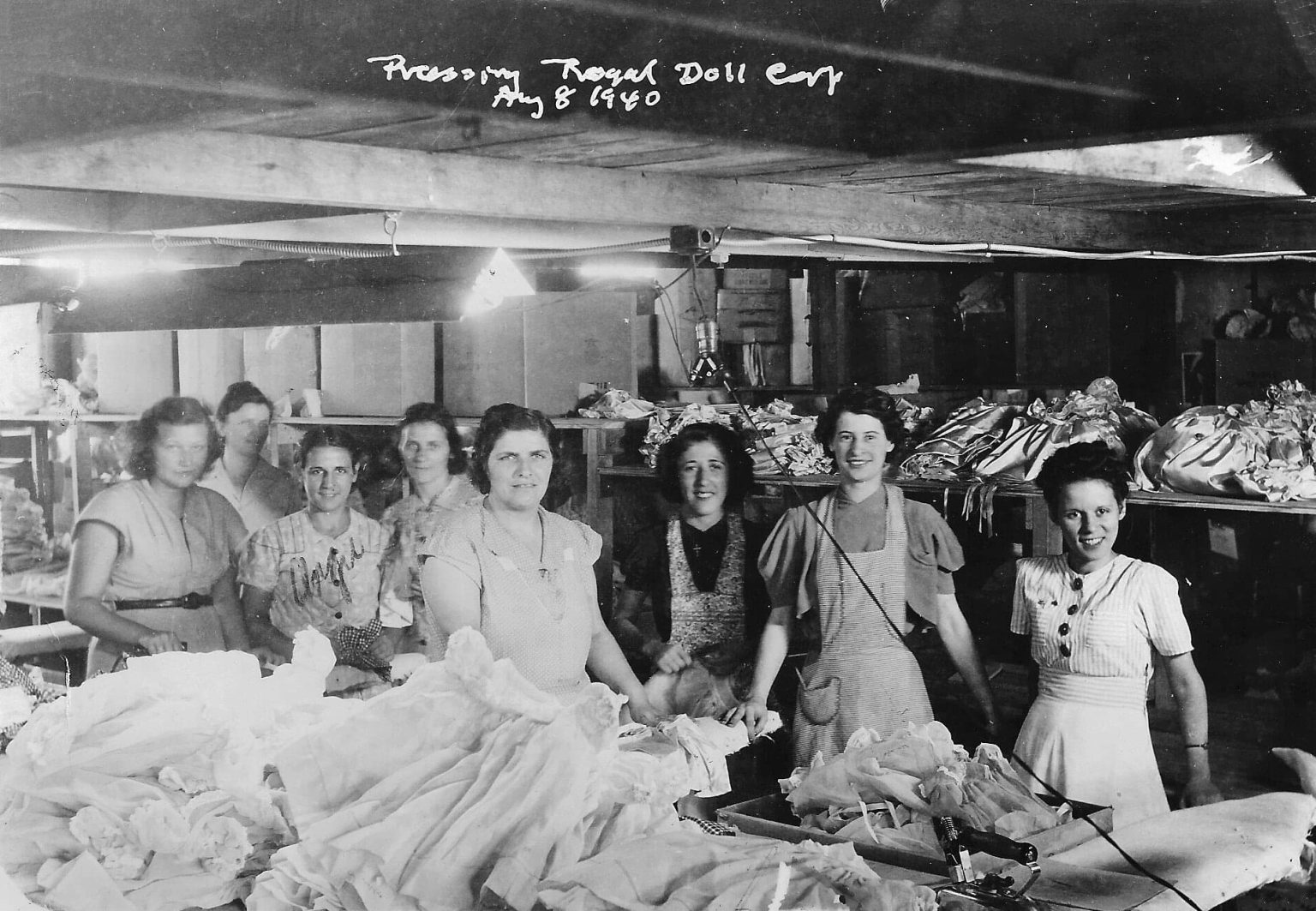
When we first started concentration on this factory we had no connections with any of the workers. The Regal Doll factory was known to the Trenton workers as “The Hell Hole”. The average hours in the plant ranged anywhere from 60 to 75 a week, with an average weekly wage of $8 to $10. Cases of girls receiving $2 and $3 a week, and of men working 91 hours a week, were numerous. We began by going around to the poolrooms, to the neighborhoods where these workers live, in front of the fac tory, particularly during lunch-hour, to get contact with the workers. Finally we succeeded in getting contact with some young fellows in one of the poolrooms. Through these we got information on conditions in the plant and further contacts.
On the basis of this we issued the first shop paper, the Fighting Doll. This paper dealt concretely with the conditions in the shop, it picked up the jokes that were cracked by the workers themselves and used them, it exposed one of the foremen by name. When it was distributed there was a favorable response in the shop. In the meantime we began to call meetings of the contacts we had. For a long time we made little headway. This led to some discouragement, even to conceptions that it was impossible to organize the plant. But we stuck to our work, continuing the personal visiting of workers.
Boss Attempts to Smash Demonstration Utilized to Build Organization
It was not, however, until after the International Youth Day demonstration that we broke through the ice. For this demonstration we issued a leaflet to the Regal Doll workers. The bosses feared that at this demonstration we would discuss the preparation of and organization for a strike. They demanded from the police that the demonstration should be smashed, but despite their attempts it was carried through.
On the basis of this action of the bosses’, a mass trial was organized in the neighborhood of the factory placing the bosses on trial and exposing the conditions of the workers. Seven hundred workers attended, among whom were many from the factory. The sentiment for struggle was great and unemployed workers who attended the trial pledged to give every support to the workers when they should decide to take action. This mass trial aroused much talk in the vicinity of the shop and among the workers and helped us in preparing the ground for the coming struggle.
Methods in Building the Shop Organization
We followed up the contacts made at this trial. We visited them personally. In order not to lose time, a car was used to go from one worker’s home to another. These workers were asked to bring a few workers together to small meetings. On the basis of this activity we saw the necessity of concentrating on the shop in real earnest for a few weeks, mobilizing every force available in order to actually get definite results.
We spent every night of the week–and particularly Sunday–visiting workers. Finally we decided to call a large meeting of all the workers we had contact with. In this we adopted conspiratorial methods to protect the workers, and to gain their confidence. We told the workers to be at their homes at a certain hour, wherever possible a group of workers at one place. We went to these homes in cars and drove them to the meeting place. At the central meeting place a League member or a young shop worker was stationed at the door and allowed no one to enter unless escorted by another trusted worker or a League member. On the basis of this meeting which was well attended, we decided to call separate department meetings, to prepare the workers for struggle, and at the end of the week to call a mass meeting to take a strike vote.
During this time, the shop paper continued to be issued. Some of the workers took them right into the shops and spread them everywhere in many of the departments. The workers read them right at the bench.
We then started the work of the department meetings. Every night another meeting was held and during the week we had met with 85 workers. However, here we had some difficulty in getting the girls to attend–only 8 or 10 came and we feared that they would be a factor to impede the strike. (However, in the strike itself, the girls were the most militant and fearless.) At these meetings the demands were discussed-and all the demands put forward in the Fighting Doll were accepted by the workers.
Defeat Attempts to Split Workers
In the meantime the boss smelled a rat and tried to split up the workers’ ranks. He began to negotiate with the pressers, the key section of the workers, promising them higher wages. We heard about it immediately. We knew that we must get word to these pressers at once–otherwise they might weaken. We devised a scheme. One of the boys was sent up to them with a bag of lunch. He told them to wait with the negotiations and arranged for a meeting immediately after work. The pressers remained solidly with the rest of the workers and turned down the proposals of the boss.
The Toy and Doll Workers Union in New York, controlled by the Socialists, tried to frustrate our work. They sent down an organizer but he could do nothing. Hearing about our plans for a mass meeting to take a strike vote, they immediately sent instructions to a Socialist who has a printing shop, telling him to print a leaflet calling for a meeting on Sunday, one hour before our meeting, in the same hall, signed, “The Committee”. We found out about it, and immediately prepared the ground to prevent that meeting from taking place. Every worker in the shop organization was informed about it. We exposed the Socialists and the A. F. of L. and told them to spread the word to the other workers. At the same time we organized a group of the pressers to prevent the Socialists from distributing the leaflet at the shop. We thus succeeded in frightening them away.
Initiative of Workers
At the Sunday meeting, despite a pouring rain, 150 workers came. A strike vote was taken and a strike committee elected. It was decided to begin picketing in the morning. During the first day mass picketing was carried out four times and we succeeded in pulling out every worker. In the evening 5,000 workers, young and old, supported the strikers in a militant demonstration. A truck with scabs tried to break through the demonstration, and a battle ensued. The workers broke up the sidewalks, smashed the windows of the factory, smashed the cars, beat up the scabs, broke through the police ranks and forced the bosses to lock the doors of the factory. During the battle the bosses and the police called upon the fire department for aid. The workers learned about it and immediately rang the fire alarms at different sections, thus defeating this last desperate attempt of the bosses to break the strike.
Negotiations began with the second day of the strike. But throughout the negotiations the strikers themselves fought the maneuvers of the bosses to divide the ranks, and they won a tremendous victory. Increases of 15, 20 and 25 per cent were won for the workers as well as a reduction in hours in some cases from 75 to 50, the establishment of the $7 and $8 minimum which increased the wages of some girls 100 to 200 per cent, and the recognition of the union. The shop is now a closed union shop and the workers through their shop committee, take up the daily grievances as they arise.
NOTE: It is significant to point out here also that the Regal Doll workers have decided to go out on an one hour strike when the Hunger Marchers pass through Trenton; not only to greet them, but to pledge their solidarity in the struggle for unemployment insurance.
The Party Organizer was the internal bulletin of the Communist Party published by its Central Committee beginning in 1927. First published irregularly, than bi-monthly, and then monthly, the Organizer was primarily meant for the Party’s unit, district, and shop organizers. The Organizer offers a much different view of the CP than the Daily Worker, including a much higher proportion of women writers than almost any other CP publication. Its pages are often full of the mundane problems of Party organizing, complaints about resources, debates over policy and personalities, as well as official numbers and information on Party campaigns, locals, organizations, and periodicals making the Party Organizer an important resource for the study and understanding of the Party in its most important years.
PDF of issue: https://files.libcom.org/files/Party%20Organizer%204.pdf
 Revolution's Newsstand