
An overview of the history of rail, its workers, and their organizations in the aftermath at a time when two million were employed in an industry bent on ‘restructuring.’ A year after this article, the conditions reported exploded into one of the largest strike in U.S. history; the Great Railroad Shopmen’s Strike of 1922
‘The American Railway Industry and its Workers’ by W.J. Lemon from Industrial Pioneer. Vol. 1 No. 8. September, 1921.
THE railway industry of America is not only the largest industry in the nation, but with its 2,000,000 employees in times of prosperity is in all probability the largest in the world. In America as in all countries it is the key of the key industries; it is the connecting link of all industries. Industry would cease should this vast network of railways cease to operate for any length of time.
As the nerves of the human body are connected to all its parts, so are the railways related, and connected to the industrial and economic life of the nation. It is true that the railways cannot exist and operate for long without the other essential industries, but still there are none that hold the important and strategic position of the transportation system.
The majority of our other industries, with the exception of a few, can store their products, and still continue to function so long as the transportation systems remain in operation, and continue to distribute their products. Not so with transportation. It is an everyday necessity. Social life starts to go to pieces at once when it stops functioning.
There is another prominent factor that we must now reckon with in the transportation problem, and that is the auto track, which is taking a great part these days, especially in the short hauls between urban and interurban localities, with every indication that in time as the good roads plan progresses and grows, it will be a strong competitor for long distance traffic. Who knows but that in time the auto service may outstrip the steam and electric systems of transportation?
What is necessary is to impress upon the minds of the reader, not the superiority of the railways or its workers over other industries, and their workers, but to make clear how the organized workers of the railways have failed to perform their duty to their class and themselves, and what they can do in the future if they only become conscious of themselves as a class, and organize in the proper form.
History of the Railroads
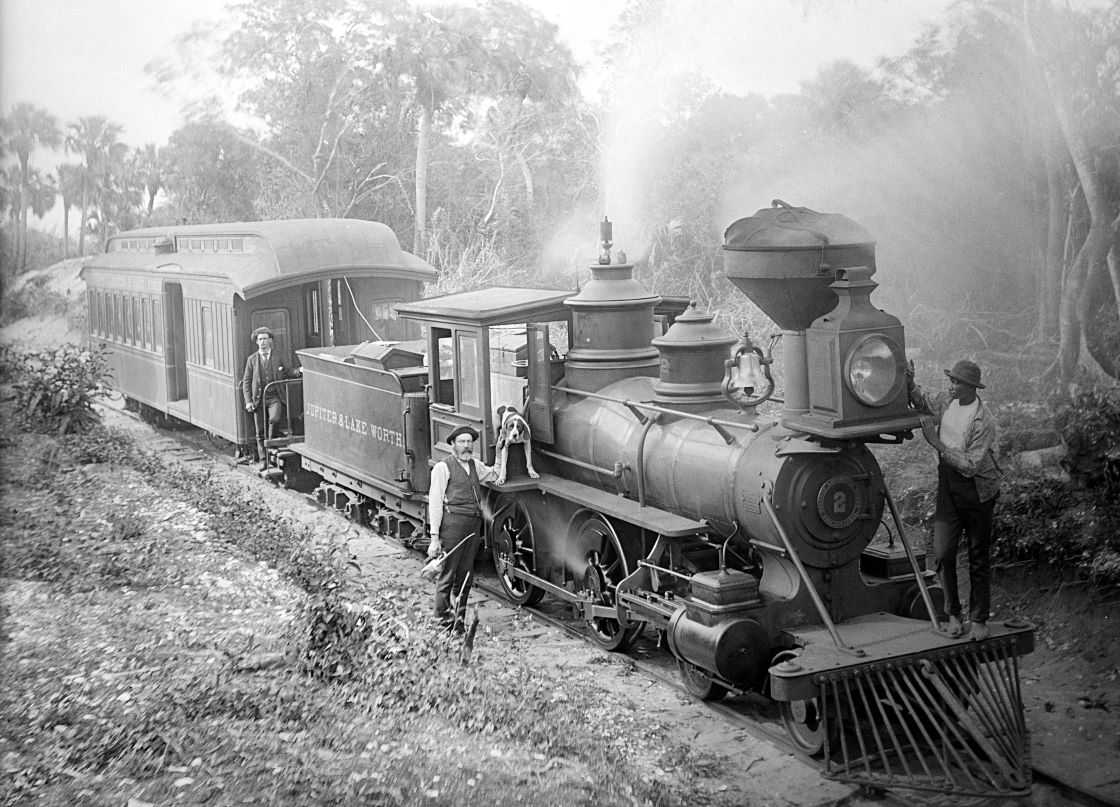
In less than a century, to be exact just 90 years ago, the first railroad was constructed in America. From an insignificant line of a few miles in length, the system now totals approximately 265,000 miles exclusive of yards and sidings. In comparison as the mileage and volume of traffic increased, so all other features of the railways changed, such as materials used in construction, and in the method of operation.
The first lines that were built used ties or sleepers as they are sometimes called, somewhat similar to those in use today; but the rails were made of wooden four by fours, with straps of iron nailed on for the wheels run upon The locomotive was a very simple affair, light of weight, and slow on speed, with about as much tractive power as two good span of mules. The cars for both freight and passengers were as crude and simple as the locomotive that pulled them, and the track upon which they ran.
The movement of trains was not directed by telegraph until near the sixties, because the telegraph was not invented until about 1850, or at least is was not demonstrated to be practical and useful until about that time. Neither could you purchase a ticket over more than one line of railway, and the same rule applied to shipping or checking your baggage, for interline traffic had not yet come into vogue.
The speed and the stopping of the trains were. controlled by the simple hand brake, which meant plenty of old-fashioned hand power. The electric-block system for safety, or the electric switches for speed and economy were things unheard of in the early days of railroading. Since those pioneer days a great and rapid change has taken place, both in the construction and operation of railways. This development was apparently much faster than the evolution in the workers’ unions.

Instead of the old-fashioned wood and strap iron rail, we have the steel rail weighing 110 lbs. to the yard, upon which the giant locomotive and the electric motor weighing hundreds of tons pull trains of a 100 cars or more. An ordinary car of today weighs more than an entire train of primitive days. Instead of the equipment being made of wood as of old, it is now constructed of steel. The coaches are marvels of beauty and comfort, and installed with every device for comfort and safety. Now we have the automatic air brake that is operated by one individual—the engineer, who controls the speed, or stops a train of 100 cars as easily and simply as he formerly stopped one. One can now buy a ticket, check your baggage or ship your freight from the Atlantic to the Pacific with no more trouble than is caused in going to the next cross road station. The merging of hundreds of small lines into a few systems has made it possible to simplify the clerical and accounting work.
We also have the automatic car coupler, the automatic electric block signal, and electric switches. We are told that all these appliances are installed for safety; in reality it is all done for economy, and dividends. Train wrecks, and damage suits are much more expensive than safety appliances. All this improvement has been brought about by the brain and the brawn of the workers. The despised immigrant from Mexico, Asia, and Slavic or Latin Europe, who have constructed the roads, and maintained the tracks, played the same essential part in this task as the so-called skilled aristocratic worker, for without their work these roads would not be here.
Finance
According to history railroads were financed to some extent by stocks (water) and bonds, but to a greater extent by bonuses, national subsidies, and government land grants. In the early period in the eastern states many of the old canal companies developed into railroad corporations, and financed their projects with the state grants, and municipal bonuses that had been given for the building of canals. In the western and Pacific states they were financed principally by national subsidies, land grants, and loans. From the year 1850 to 1872 the national government had given outright to the railroads 155,000,000 acres of land, and $140,000,000.00 in cash, besides many substantial loans.
The following is only a partial summary of the favored few. The Union Pacific was granted $16,000 per mile from Omaha to the Rockies, and $32,000 per mile through the Rockies. Meyer’s History of Great American Fortunes states that the Rockies were moved 200 miles east. $48,000 per mile was granted for track laid to its connecting link, the Central Pacific which ran from the Rockies to the coast.
The Union Pacific received a land grant of 13,000,000 acres, and later on a loan of $27,000,000. The Central Pacific received a grant of 9,000,000 acres; the Northern Pacific 47,000,000 acres; the Kansas Pacific 12,100,000 acres, and the Southern Pacific 18,000,000 acres. Only a few weeks ago the government handed over another cool half billion on top of what they had already given to the roads since their return to private ownership; and this right after congress had refused a bonus of $3,000,000,000 to the returned soldiers, for reasons which they asserted would practically ruin the credit and finances of the nation.
The Railroad Workers and Organization
No class of workers in America have been more brutally treated and exploited than the railway workers; both as to wages, general conditions, and excessive hours of labor. They have been slaughtered, maimed, driven and blacklisted without limit; and still they are one of the most submissive and servile groups that we have in America today.
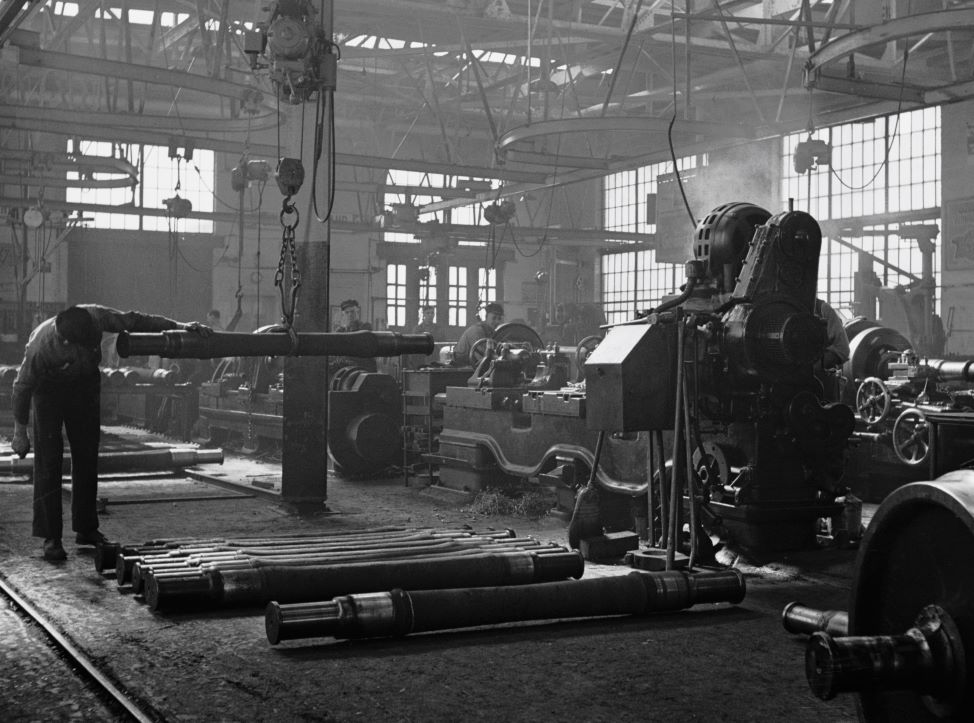
In the beginning there was no such a thing as organized labor on the railroads, unless it was among one or two of the skilled shop crafts, and that is doubtful. The pay was small, so much per hour, per trip, per day or month. No collective bargaining existed. It was all individual bargaining and the individual who got the best of everything was the boss. The day for the trackmen and shopmen was 10 or 12 hours without any bonus for overtime. For the enginemen and trainmen it was work until the trip was completed, whether it was a few hours or a week without any overtime allowance.
The first engineers were machinists, which no doubt explains why they received the highest pay. This fact once becoming an established precedent, it remained so for a number of years. Not until about 1856 was the first railroad union organized, when the engineers launched the Brotherhood of the Footboard, now the Brotherhood of Locomotive Engineers. In 1867 the conductors organized; in 1873 the firemen; in 1883 the brakemen, baggagemen, and switchmen, later on the telegraphers, but the unskilled were left alone and unorganized until just before the war when the Maintenance of Way and Shop Laborers united, but really did not make much headway until this country went into the war. The first railroad industrial union that opened its doors to all railway workers was the A.R.U., led by Eugene V. Debs and others in the early 90’s. It went down after the great Pullman strike in 1894, principally due to the treachery of the old-line brotherhoods to their class.
The U.B.R.E., another industrial union followed, but it, too, died out in a few years. The last independent industrial railroad union to come into existence which is still alive and organizing, is the United Association of Railway Employees of North America. Of course the I.W.W. has always been open to all wage workers, and today has an industrial union of railroad workers.
The U.A.R.E. of N.A. is the result of the outlaw movement of April, 1920, and the Los Angeles and Winnipeg outbreaks in 1919. It was formed because the Brotherhood executives failed to function in the interests of the workers, but lashed their members back on the job thus forcing the workers to scab on each other, and assisting the masters to gain a victory.
There is no denying the fact, however, that the present unions have accomplished good in the past when conditions were much different from now, but those days are gone never to return. The only real fundamental things they have accomplished is the raising of the wages, the shorter workday, and the arbitrary overtime. The railway corporations have likewise lengthened the trains, adopted improved mechanical, and other methods of operation that more than offset the gains of the workers. Likewise the cost of living has advanced ahead of the money rise in wages, so in reality the increased productive power of the railroad workers like all other workers, makes them cheaper slaves today than ever before.
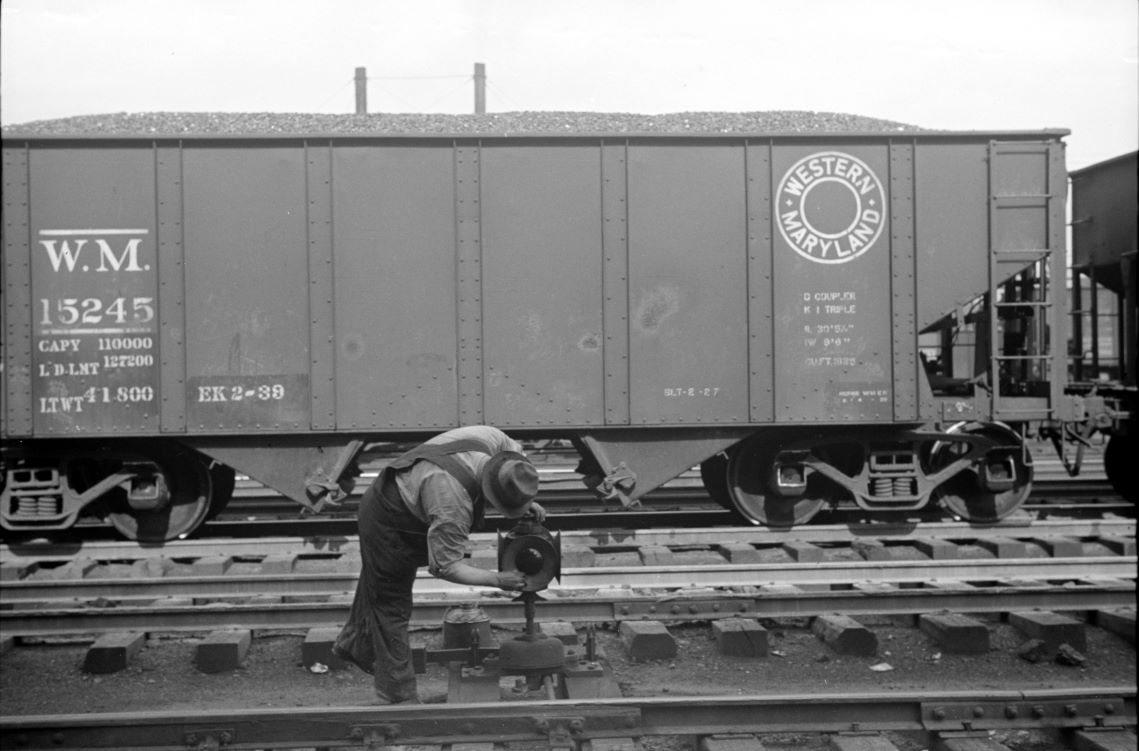
The Limit of Service Law, not to exceed 16 hours work in any 24-hour period was secured by act of Congress, not to protect the workers from performing unlimited hours of toil, but to protect the lives of the traveling public. In all the history of the Brotherhoods and the crafts there has never been a spirit of solidarity displayed on the part of the leaders, except in 1916 when the 8 hour day (Adamson Law) was forced through Congress by the strike ballot of the four Brotherhoods. On numerous occasions, organized crafts have scabbed on other organized crafts in order to gain one petty concession. We should mention two things in particular that have done an incalculable amount of damage to the railroad workers in the way of breaking and crushing their morale, and militant spirit. The first is the seniority and jurisdictional agreements introduced by the unions themselves which only tends to create friction and prejudice amongst the workers, thereby preventing solidarity, and only redounding to the benefit of the masters. The other is the age limit, and physical examination, introduced after the 1894 strike to punish the rebellious slaves; but is still in operation, and is used just as effectively in punishing the rebels of today. It is nothing more or less than a blacklist; a club in the hands of the masters, and none of the “recognized” unions has made any attempt to abolish it.
Times have changed wonderfully in the last year or so. It used to be two jobs for every man; now it is two men for every job. It used to be fight or work, now it is a fight for work. What the capitalists gave to the workers during the war, they are now going to take away, and more if they can.
On July 1st they took back the first slice in the way of a 12% reduction, and the next to come is the abrogation of the national agreement, which is the time and a half, and other arbitration awards. According to reports the decreases shall continue as far as the masters have the power to push us. And why shouldn’t they, so long as the workers are divided and lack the power of organization with which to halt them? The leaders of the unions are doing nothing to stop them, except using a lot of old-time threats and worn out phraseology, and appealing to capitalist politicians to help save them. They well know that they are powerless to save themselves under present conditions.
Some will no doubt take exception to the statement that railroad workers are poorly paid. It has been understood by many that the railway workers were the aristocracy of labor. Even the highest paid among them–the engineers–received no more than many mechanics. During the war there were many workers in war industries that received much more. The railroad workers’ pay was brought up to the highest rate when labor was scarce, when the profiteers were in competition with each other for labor power.
There was a time when most of the present unions were considered quite militant, with the exception of the Brotherhood of Locomotive Engineers, and the Order of Railroad Conductors; these two organizations were never accused of having any radical or progressive ideas. They always stayed on the job, let the other fellow do the fighting while they came in for the cream. For many years they held aloof from all other organizations, either feeling their superiority over the other workers, or else believing in that old quack idea that too many crafts in one union makes an unworkable piece of machinery. Later on, however, they found out that they could no longer get any of the increases unless they got in the harness, and helped to get it. They began to see that a lone union was of no use to get anything from organized capital, so they gradually associated themselves with other organizations of the train and engine service only.
Like many other craft organizations they have not yet learned the necessity of organizing on the One Big Union plan. They don’t yet seem to realize that that is why the bosses are whipping them now. The capitalist class is organized in the only real One Big Union, in the country, while the workers are divided and powerless to save themselves. The American plan, or open shop is condemning the Brotherhoods and the railroad crafts to death.
While the courts and the chambers of commerce, ably assisted by patriotic organizations, were busy persecuting I.W.W’s and other radicals for working class activities, the leaders of the A.F. of L and the Brotherhoods sat back self poised and quite contented, in fact more than pleased. They were saying to themselves they’ll never bother us, for we are “Respectable and Law Abiding Organizations.” Their hopes and dreams are being shattered–the masters are going to wipe their unions out of existence, as though they were chaff before the wind.
It is too late now for the old unions to recover and gather their fragments together, to present a solid craft front to the enemy. With no foreign markets to absorb the surplus goods produced by the American workers, industrial and social conditions must get worse, before they can get better. With industries closing, and millions of workers walking the streets looking for work, it is utterly impossible for the present unions to solve the problem of unemployment.
The first step towards a real solution is the forming of industrial unions. This is opposed strenuously by all the reactionary officials of the railroad brotherhoods and the crafts.

The second step in arriving at the correct solution of the problem of society is in putting into operation workers control of production and distribution. The master class cannot operate the industries unless there is a profit to be had. The working class can and must, if they intend to exist, operate the industries for use and not for profit of anyone.
The only solution to this age long struggle of the classes is for the railroad and other workers to build the One Union of all the workers, regardless of creed, race, color or sex, upon the ruins of the old, and through organized power take possession of the means of life, for only by the ownership of your own jobs can you be free men and women. Organize like the capitalist class; they have shown us the way to freedom.
The Industrial Pioneer was published monthly by Industrial Workers of the World’s General Executive Board in Chicago from 1921 to 1926 taking over from One Big Union Monthly when its editor, John Sandgren, was replaced for his anti-Communism, alienating the non-Communist majority of IWW. The Industrial Pioneer declined after the 1924 split in the IWW, in part over centralization and adherence to the Red International of Labour Unions (RILU) and ceased in 1926.
PDF of full issue: https://www.marxists.org/history/usa/pubs/industrial-pioneer/Industrial%20Pioneer%20(September%201921).pdf
 Revolution's Newsstand