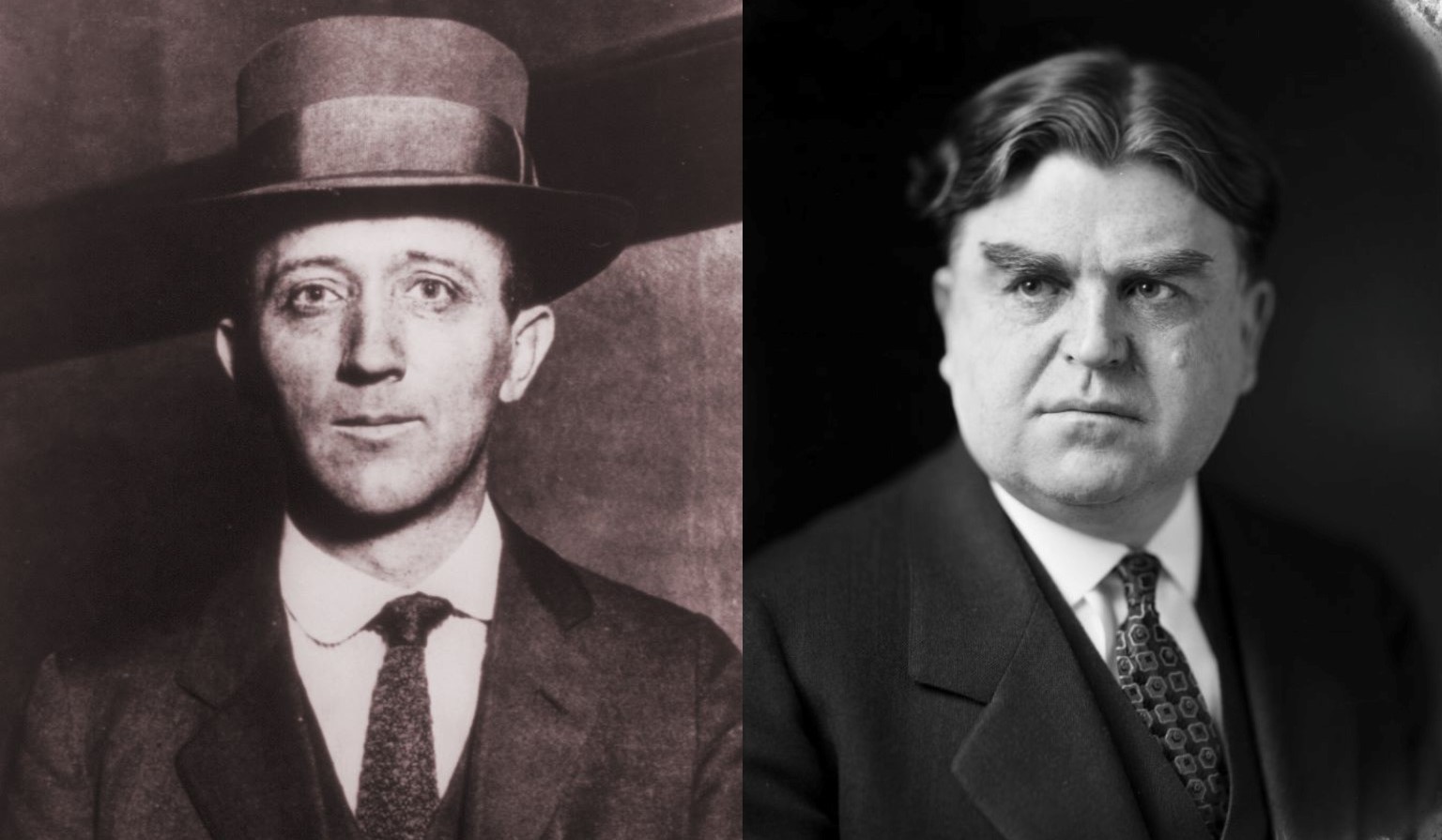
In the midst of the massive 1927-1928 coal strike, William Z. Foster contrasts the policies of the John L. Lewis leadership to the demands of the Save-The-Union. In doing so, Foster also outlines the fundamental differences in perspective between the bureaucracy of the labor movement and the interests of the rank-and-file.
‘Two Mine Strike Strategies’ by William Z. Foster from The Communist. Vol. 7 No. 5. May, 1928.
IN N THE epoch-making struggle now going on in the coal industry two diametrically opposing strike strategies find themselves in conflict: that of the black Lewis machine and that of the Save-the-Union movement. Never in the history of the American labor movement has there been a clearer, more basic, and more bitter clash between the strike policies of the reactionary wing of the labor movement and those of the left elements. And never were there more weighty consequences dependent upon the outcome of such a clash than in the present strike. In the recent congress of the Profintern great stress was laid upon the necessity of studying carefully the strike strategy and experiences in great strikes, and for us this is especially important in connection with the present struggle.
THE STRATEGY OF LEWIS
Lewis’ basic strategy is one of retreat before the attacks of the employers. Allied to the employers through the capitalist parties and various industrial combinations, as well as being corrupted by them in various other ways, the Lewis leaders refuse to fight them. Their policy is one of constant backing up before the advancing employers. These venal leaders, in reality tools of the operators, intent only upon holding on to their good jobs for a while longer, stubbornly refuse to take the offensive, even though they see the union going to pieces from the ruthless attacks of the employers.
This retreat policy has been followed consistently by Lewis ever since he got hold of the UMWA. In 1919 his famous back down in the face of the Federal injunction was a typical example of his runaway policy, which has wrought such havoc to the union. The betrayal of the Fayette-Westmoreland-Somerset miners in 1922, the splitting of the anthracite miners from the bituminous miners and the signing of the five year hard coal agreement in 1925, were additional outstanding expressions of the same destructive policy. His failure to invade the unorganized territory and to unite the workers there for struggles in the teeth of the operators’ opposition was also of the same category. For the past nine years the employers have been militantly on the offensive, the Lewis machine just as diligently running away, sacrificing the organization, wages and working conditions of the miners as they run.
In the present strike Lewis and the corrupt crowd affiliated with him continue this retreat policy. Even before the strike began they executed a vast movement to the rear by abandoning the policy of the Central Competitive Field agreement and by adopting the program of separate operator and district agreements. Their policy is ever to back up. One manifestation of this is their program of isolating the strike to as small a section of the industry as possible, to sacrifice the most sharply attacked sections if a few remnants can be pulled out of the struggle here and there by means of separate agreements. Likewise, they seek to narrow down the struggle ide logically, tactically, and every other way. They refuse to see in the present attack against the union a part of a general plan to wipe out the UMWA, a section of the nationwide open shop drive to smash the whole trade union movement. They pretend to see in it only the work of certain “bad” and “unfair” operators who can be brought to terms through appeals to Coolidge, Senate Investigations, etc. They systematically seek to kill off all militancy among the miners and to reduce the strike to a sort of friendly dispute between parties who for the moment misunderstand each other.
The general effect of such a strategy is of course disastrous. The operators are able to attack the union when and where they please. Never is the full power of the miners brought to bear against them. In consequence the operators are rapidly tearing the union to pieces.
THE STRATEGY OF THE SAVE-THE-UNION MOVEMENT
The basic strategy of the Save-the-Union movement is to defeat the offensive of the operators by a great counter-offensive of the miners. Lewis seeks to narrow down the fight; the Save-the-Union movement seeks to broaden and deepen it. The one is a policy of class surrender; the other of class struggle.
Especially the conscious elements among the miners recognize the basic issues involved in the present struggle and draw the proper conclusions from them. They understand that the attack of the coal operators upon the Miners Union aims primarily to wipe out the organization and to render the miners helpless in the face of the employers’ exploitation, and that, moreover, this assault, part of the general policy of American imperialism, is directed against the whole trade union movement. Hence they draw the basically correct conclusion, which is supported by the Save-the-Union movement in practice, that the miners’ fight is a broad class issue, and that not only should the entire body of miners be drawn into it, but also, to the greatest extent possible, the broad ranks of the working class.
To win the present strike is of the most basic importance. If it were lost it would throw demoralization and discouragement into the ranks of the miners for years to come. It can only be won by bringing to bear the greatest possible weight against the operators.
Hence the policy of the Save-the-Union movement is to extend the present strike into a national strike, drawing in all categories of miners. But inasmuch as the Lewis machine, which still controls the apparatus of the union, its funds, etc., is flatly opposed to this policy, it can be put into effect only as fast and as far as the opposition forces can break the power of the Lewis machine and win over the masses of organized and unorganized miners.
As against the narrowing down policy of Lewis, the Save-the-Union movement seeks to broaden out the struggle by (1) holding solid the present body of strikers through active picketing, extensive relief work, resistance to separate agreements, etc., (2) organizing the masses of unorganized miners and drawing them into the strike, (3) breaking down the isolation of the anthracite miners and bringing them into the struggle. The Save-the-Union movement also sharpens the fight generally through intensive mass picketing, mass violations of injunctions, and general clarification of the miners as to the real meaning of the strike. It systematically develops the widest possible counter-offensive against the operators.
THE CONFLICT OF THE STRATEGIES
Which of these two strategies shall prevail, whether the narrowing down policy of Lewis or the broadening out policy of the Save-the-Union movement, is decisively important. If the former, it means defeat for the miners; if the latter, victory.
One of the major aspects of the strike struggle is the battle between the Lewis forces and those of the opposition movement regarding which strategy shall go into effect. The decision hinges upon which group can control the masses of miners. The Save-the-Union movement is making the most energetic battle to win over the masses and to draw them into the fight. After a long process of stirring up the membership, the great Pittsburgh conference of April 1st was held. This is now being followed by movements in all the districts for the holding of conventions at which the opposition forces will proceed to declare vacant the offices of Lewis’ henchmen and take control of the union.
Besides in many local unions the opposition is now displacing Lewis’ henchmen from office and replacing them by those of the opposition.
The fight for control of the miners is also going on upon the picket line. As Lewis, following his strategy of narrowing down the strike, signs separate agreements and sends the men back to work, the Save-the-Union forces must picket the mines and keep them out on strike.
Similarly, the Save-the-Union movement seeks to win the masses of unorganized miners for its strategy by carrying on widespread campaigns of organization among the miners of Western Pennsylvania and West Virginia.
MACHINE TERRORISM
The Lewis machine makes no less energetic efforts to hang on to such control as it has. It is using every form of terrorism against the opposition forces. Large numbers of individuals and many local unions have been expelled. With the help of state police and other “peace” officers, the Lewis organizers have broken up meetings of the opposition. It will unhesitatingly split the union to prevent itself from being removed from control of the organization. It goes ahead signing individual agreements with whatever operators it can, depending upon hunger and the whiplash of the operators to drive the men back to work. Its latest crime in trying to coerce the men into following its strategy being the removal from the relief list of large numbers of workers, who have been on strike for over a year, because they support the opposition.
So far the opposition has got the best of it in this decisive struggle of strategies. Rapidly Lewis’ power is being broken in the union, especially among the bituminous miners. In many cases where Lewis has signed up mines the men, supporters of the opposition, have refused to go back to work. In the strike zone, due to the rise of the opposition movement, the struggle has become much more militant and intense. Among the unorganized the Save-the-Union forces have made decided headway.
Undoubtedly at the present time the tendency is for the opposition to force more and more its strategy into effect, in spite of the treachery of the Lewis machine. The strike gradually spreads and becomes more militant. But the battle is an exceedingly difficult one. The strikers in Pennsylvania and Ohio have been out for a year and in many cases they are on the verge of starvation. The tasks of organizing the unorganized, of drawing in the anthracite miners, are enormous. The need for strike relief is vast and imperative. The power of Lewis to betray the miners through individual agreements with the operators is great. If necessary, the Lewis machine will come to some sort of a company union agreement with the operators, accepting wage reductions, and seek to literally drive the men back to work.
Can the opposition break through all these obstacles? Can it pull the miners out and hold them out, in spite of Lewis treachery, in spite of the evident determination of the operators to break up the union, in spite of the persecution of the government? It is a terrific task. But it must be accomplished. It is one that calls for the fullest support not only of our party but of every intelligent militant in the country. Failure would have far-reaching and disastrous consequences to the workers generally. The Miners’ strike must be won at all costs. The strike-breaking strategy of Lewis must be broken down, and the strike-winning strategy of the Save-the-Union committee must be carried through to success.
There are a number of journals with this name in the history of the movement. This ‘Communist’ was the main theoretical journal of the Communist Party from 1927 until 1944. Its origins lie with the folding of The Liberator, Soviet Russia Pictorial, and Labor Herald together into Workers Monthly as the new unified Communist Party’s official cultural and discussion magazine in November, 1924. Workers Monthly became The Communist in March, 1927 and was also published monthly. The Communist contains the most thorough archive of the Communist Party’s positions and thinking during its run. The New Masses became the main cultural vehicle for the CP and the Communist, though it began with with more vibrancy and discussion, became increasingly an organ of Comintern and CP program. Over its run the tagline went from “A Theoretical Magazine for the Discussion of Revolutionary Problems” to “A Magazine of the Theory and Practice of Marxism-Leninism” to “A Marxist Magazine Devoted to Advancement of Democratic Thought and Action.” The aesthetic of the journal also changed dramatically over its years. Editors included Earl Browder, Alex Bittelman, Max Bedacht, and Bertram D. Wolfe.
PDF of full issue: https://www.marxists.org/history/usa/pubs/communist/v07n05-may-1928-communist.pdf
 Revolution's Newsstand